Poppaea Sabina: A Victim of Domestic Violence– But Why Does That Matter Now? by Stuart Dean

Poppaea Sabina as portrayed on a Roman coin minted 62-65 CE.
Poppaea Sabina as portrayed on a Roman coin.

It has been nearly 2000 years since the Roman emperor Nero kicked his pregnant and sick wife, Poppaea Sabina (hereafter Poppaea), killing her and what was probably the near full term fetus she was carrying.  That Poppaea was murdered deliberately should not be doubted, for not long after her death Nero had her son by an earlier marriage, who was then still a minor, killed by being drowned (a fishing ‘accident’).

Given that domestic violence has a history that repeats itself with sickening regularity it is necessary to explain why this particular case should matter now.  It is because at the time of her murder Poppaea was, with the sole exception of her murderer, the wealthiest and most powerful person in the world, whose attention was curiously focused not on Italy or Rome but on Judaea and Jerusalem.  There is evidence to suggest that had Poppaea not been murdered the history of Judaism and Christianity would have been substantially different than it has been, especially with respect to the role of women. Continue reading “Poppaea Sabina: A Victim of Domestic Violence– But Why Does That Matter Now? by Stuart Dean”

What is the F-word Anyway? by Kile Jones

kile jonesSocial justice. Progressive politics. Improper media depictions. What exactly is the F-word (feminism) about?
I have always understood feminism as a project that casts a very wide net, the goals and values of which can keep quite a few people dry under the shade of its umbrella. But more and more, I see a narrowing of who can count as a feminist. There are a few reasons for this constriction. First, the more the F-word becomes a pejorative in contemporary society, the greater the need is to circle the bandwagons and set up camp. Second, when a particular group has elevated levels of in-fighting occurring, it makes sense to start psychologically splitting people into “feminist” and “not feminist.” Or, on a spectrum, “strong feminist” vs. “weak feminist.” Third, there is a pragmatic need for groups to find an optimal tension with society. When social groups are too counter-cultural or revolutionary, they get branded extremist and fanatical, but when they are wishy-washy and lukewarm, they become another extension of the status quo and lose their prophetic fire.

As an atheist, I see all of this occurring in non-believing circles as well. And I’m not really sure how to navigate it. There is also no shortage of men in this social group–from Dawkins to Boghossian–who think of feminism in the negative. All of this has to do with what they think the F-word amounts to. Continue reading “What is the F-word Anyway? by Kile Jones”

Broken heart, soft heart by Oxana Poberejnaia

oxanaToday my topic is a bit weird – it is about broken heart, but in a good sense.

I’ll start with an example. My best friend and I once went to see “La Bohème” at the Leeds Opera House. It was great: the singing, the modern production. Nevertheless, the story, is, of course, heart-breaking. A working-class woman dies. However, although my friend and I were sad at the end of the opera, we also felt strangely uplifted. My friend commented on that and I said that I recall that in Christian Orthodoxy they say that a broken, shattered heart (сокрушенное сердце) is a way to God.

Open_Heart_by_charcoaledsoulIn Buddhist terms this broken heart could be described as shattered walls of an identity. It can be interpreted as a complete disillusionment with samsara: the world of the conditioned phenomena, where one thing begets another and everything revolves according to the law of conditioned arising. The broken heart may happen from realising that everything is subject to this law, but in particular: your own personality, or identity (which I discuss quite a lot in this blog).

Continue reading “Broken heart, soft heart by Oxana Poberejnaia”

A Women’s Mosque: An Interfaith Space for Feminist Spirituality by Vanessa Rivera de la Fuente

Vanessa Rivera de la Fuente. A Women MosqueIf you thought that all I could do in regards to feminism and religion is challenge Patriarchy and tease around ladies and gentlemen of good temper and better reputation with my corrosive comments, this post may change your mind.

As I said in a previous article, this year I started, with a small group of people, a social project called Imaan, whose goal is centered on inter-faith dialogue and better visibility of the actions and contributions of women in Islam (and religion in general,) plus critical thinking on religion from a feminist and progressive perspective.

As part of the activities of Imaan, we are developing “A Women’s Mosque” project; an initiative that aims to create a meeting place for women and our spirituality. The idea came after a reunion to talk on Islam and inter-faith dialogue with women from different denominations. At one point in the discussion, they asked me about sex segregation in mosques, which led us to a broader reflection on the position of women in the religious space, both material and symbolic, and how uncomfortable we were with that.

We realized that, in a variety of ways, places of worship displace women. Whether they relegate us to separate rooms, or refuse to allow us to speak, limiting our participation to “strictly female” issues such as maternity, caregiving, the role of wife and – of course- clothing, these prohibitions are always from a patriarchal “canonical” perspective.

So we decided to join together to create our own space. Continue reading “A Women’s Mosque: An Interfaith Space for Feminist Spirituality by Vanessa Rivera de la Fuente”

Is it a Feminist Act to Stay in a Patriarchal Tradition? by Gina Messina-Dysert

Should women (or men) maintain a religious identity within a patriarchal tradition?  Is it a feminist act to stay? Or is it only a feminist act to leave?  These are questions that regularly surface in conversations related to religion and are often the center of dialogue here on Feminism and Religion.

I have often thought that change can only take place from within.  Certainly we can see the progress made by foresisters who have struggled within their traditions for change; Rosemary Radford Ruether, Mary Hunt, Amina Wadud, Judith Plaskow, and the list goes on.  These women have greatly impacted our understanding of misogynistic practices within their respective traditions and have educated us on how religions need to live out their teachings. Continue reading “Is it a Feminist Act to Stay in a Patriarchal Tradition? by Gina Messina-Dysert”

I Look To The Sky by Martha Cecilia Ovadia

I was10298689_10104523891581853_7256973903379376739_n formed by traditions. I was formed by religious rituals. I was a part of a religious community.

I no longer have traditions. I no longer have religious rituals. I am no longer part of a religious community.

I constantly have to tell myself the “no longers” when I feel the echos and ghosts of my past creeping up behind me, reminding me of not only who I was, but who I no longer am.

I sometimes whisper to my husband, “I sleep with ghosts…”

I do not just sleep with ghosts. I wake with ghosts. I sometimes even feel like a ghost. Why?

For me, the act of being Catholic was very much a part of my be-ing. To no longer have Catholicism as part of my be-ing leaves me feeling haunted.

My normal schedule when I was 21 looked like this:

6:00 am: Morning Prayer (Liturgy of the Hours)
7:oo am: Daily Mass, rosary
12:00 pm: Meet people at our church hall (the youth room) to then go to lunch (where we would do midday prayers before eating)
5 pm: sometimes mass again
7 pm: adoration, rosary, and then evening prayer with praise and worship

If it was Saturday or Sunday, it was even more intense (because I was not in classes).

When I was an active Catholic, I had a very distinct language for everything. I had a ritual for all occasions. I was an integral part of a community with very defined roles. I do not have these things anymore and navigating without them has been exhilarating but terrifying. Continue reading “I Look To The Sky by Martha Cecilia Ovadia”

Emerging Energy Wisdom by Oxana Poberejnaia

oxanaWe women of this blog, of this movement to bring Feminism to Religion and vice versa, are planting seeds of a better future. One part of this future is educating young people. I do not want my daughter to repeat some of the mistakes I have done in my youth. One thing I would most certainly urge her to do would be:

Conserve Your Energy

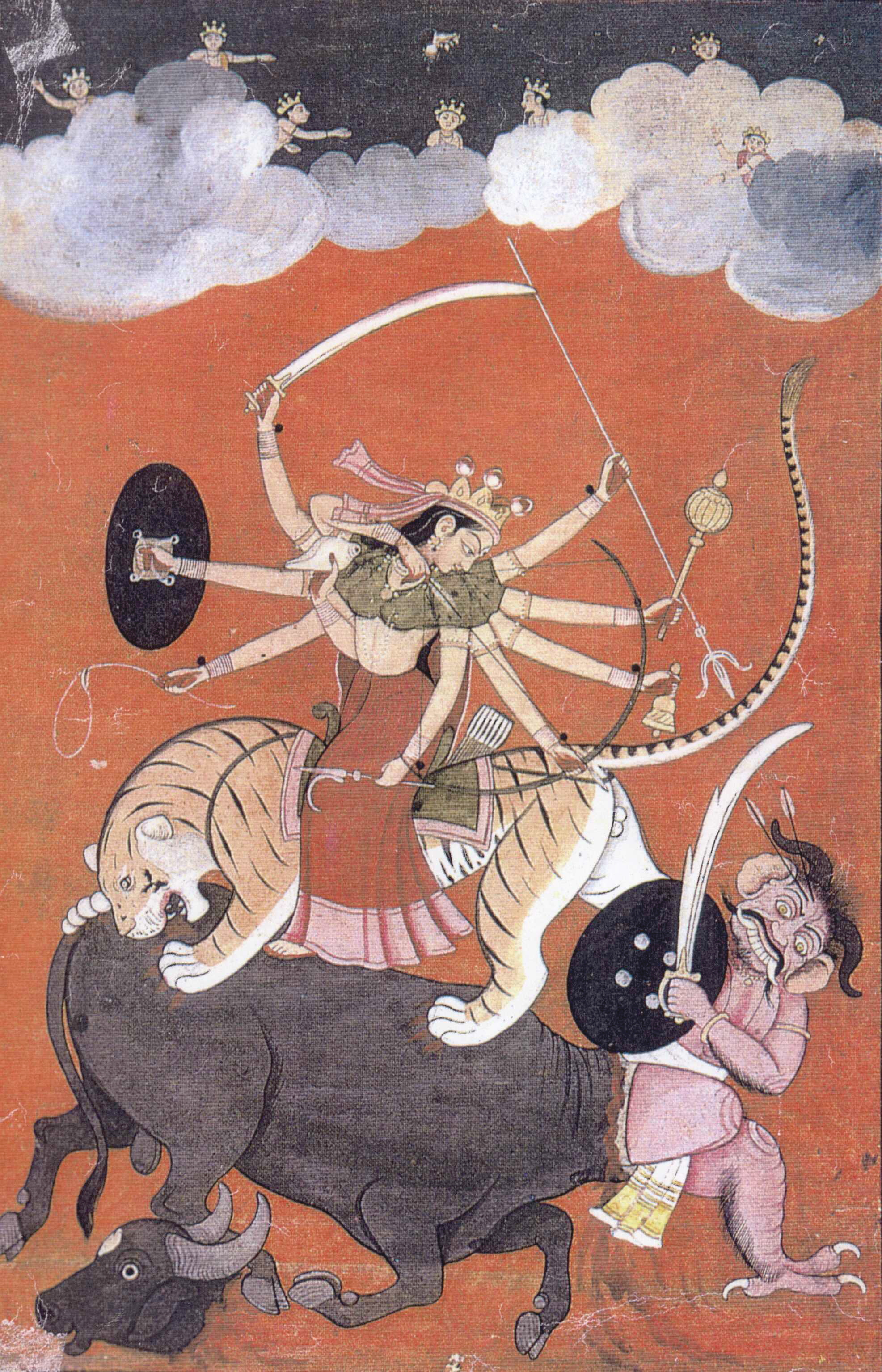
Durga_MahisasuramardiniOne of the Foremothers of the Goddess movement said that it is very easy to observe Goddess in everyday life: just look at teenage girls. They are uninhibited, creative, playfully sexual (I do not promote underage sex here, I am just emphasising that people can be sexual in their life cycle before and after they practice sexual acts with other people). Most of all, teenage girls are bursting with energy.

The question is: where would this energy go? What would it be spent on?

Continue reading “Emerging Energy Wisdom by Oxana Poberejnaia”

From Evangelical Christianity to Feminist Evangelism by Andreea Nica

AndreeaI always knew I was a feminist, despite my lack of knowledge in the movement and philosophy growing up. I did, however, have the religious support of my family and community to be an Evangelical Christian. I knew all the right words, mannerisms, and behaviors to represent myself as the proper Christian woman. I went on mission trips abroad, wore purity rings, attended sexual purity retreats and church camps, prayed fervently, spoke in tongues (glossolalia), contributed 10 percent of my meager earnings, and above all, fell in love with God.

As a first-generation college student, I was thirsty for knowledge and ready to take on the world. Some of my favorite courses during my undergraduate career included: “Psychology of Women,” “Women, Gender, and Ethnicity,” and “Psychology of Sexuality.” My coursework in gender, sexuality, and the social sciences compelled me to pursue graduate studies in gender, culture, and media at a university abroad. My studies in gender theory and feminist philosophy, and how it intersects with religion and social institutions ignited my spirit.

As a result, my relationship with god suffered. My newfound feminist beliefs were not solely to blame, however. Rather, a variety of reasons contributed to my detachment from god and the Evangelical church which I explain in my post, “Leaving Behind My First Love.” My new feminist identity was the main driver for questioning my relationship with god. Everything from the male-dominated language and rhetoric used in the church, to the discrimination and prohibition of female pastors, to the stringent gender roles expected of congregants. Continue reading “From Evangelical Christianity to Feminist Evangelism by Andreea Nica”

Anger is Not a Panacea: The “Next Stage” after Rage by Carol P. Christ

carol mitzi sarahIn a recent post Xochitl Alvizo cited Beverly Harrison’s much-loved essay “Anger as a Work of Love.” Harrison captured feelings that were in the air at the time of its writing several decades ago. Women were laying claim to the right to be angry at the silencing of our voices, the double standard, the media portrayal of women, income inequality, lack of access to good jobs, failure to prosecute rape and domestic violence, and a host of other injustices.

Most of all we were protesting the cultural stereotype that the “good woman” (understood to be white, Christian, and married or hoping to be) would not protest loudly or at all, would turn the other cheek, and would think about others rather than herself. (Jewish women and black women had to strive doubly hard to “live up” to this standard, as it was assumed that Jewish women were “overly assertive” and that black women were “too strong” and often “angry.”)

In this context Harrison’s essay and Mary Daly’s epithet “rage is not a stage” gave women—especially white women–permission to get in touch with our feelings of anger and to express them. We understood that “good women” had been hiding and repressing their feelings for centuries if not millennia with the result that the structures of injustice remained intact. Continue reading “Anger is Not a Panacea: The “Next Stage” after Rage by Carol P. Christ”

Feminist Questions by Marcia W. Mount Shoop

Marcia headshot“Do sports depend on gender stereotypes that prop up particular expressions of masculinity?”

This question is just one of the defining quandaries of my new book, Touchdowns for Jesus and Other Signs of Apocalypse: Lifting the Veil on Big-Time Sports, just released from Cascade Books (an imprint of Wipf & Stock) a few days ago. The quote above comes from my chapter on gender entitled “Man Up.”

My proximity to the world of football as the wife of a coach, who has coached for well over twenty years in both the National Football League (NFL) and Division I College, has long been a curiosity, and sometimes a demerit against me, among my feminist friends and colleagues. In fact, as I share in the introduction of the book, one of my professors in Divinity school (a prominent feminist theologian who shall remain nameless) expressed her disappointment in no uncertain terms when I shared the news that John and I were engaged while I was one of her students. She said, to my great consternation, that she was “very disappointed.” Her next sentence was something to the effect of what a waste this was—she had thought I was headed toward great things, and now, instead, my life was going to be consumed by football. Continue reading “Feminist Questions by Marcia W. Mount Shoop”