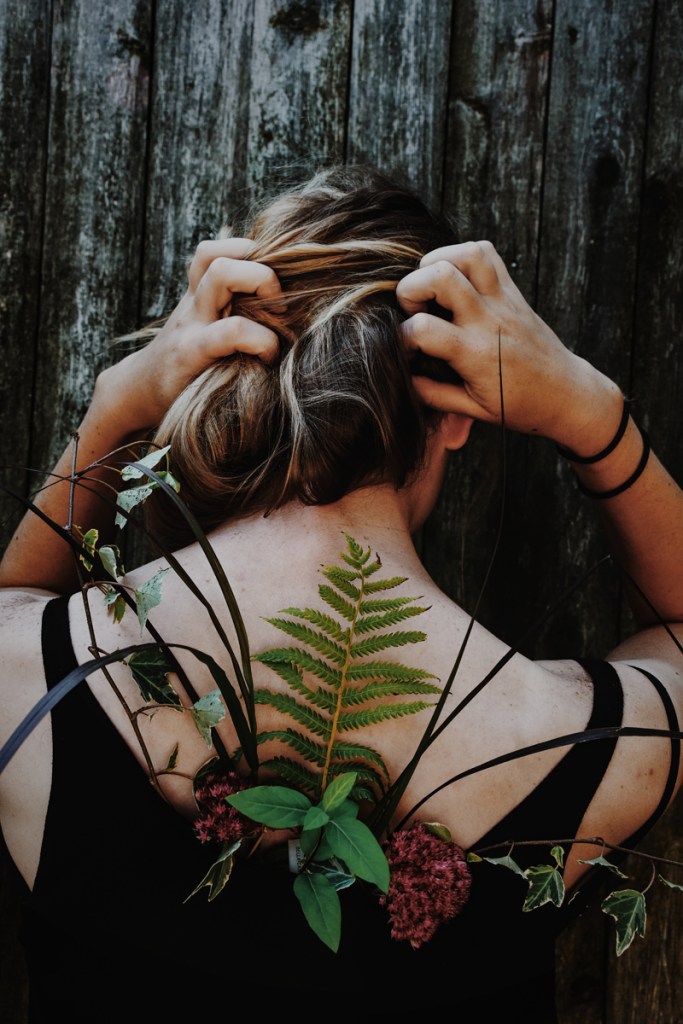
I am my Mothers
My Mothers are me
I am the Goddess
the Goddess is within me
As blood
as bone
as the spirals
of nuclei
as ova
as tears
as breath
I carry my Mothers
as my Daughters will carry me
And the Goddess carries us all

Exploring the F-word in religion at the intersection of scholarship, activism, and community.

I am my Mothers
My Mothers are me
I am the Goddess
the Goddess is within me
As blood
as bone
as the spirals
of nuclei
as ova
as tears
as breath
I carry my Mothers
as my Daughters will carry me
And the Goddess carries us all

The other night I hosted a First Moon Circle for my fourteen year old daughter. I have been hosting Circles almost a decade, but outside of having them on the ‘periphery’, walking through the sunroom where I host, talking and laughing with all of us after Circle as we eat, occasionally a short ‘sit-down’ in Circle, but nothing where they are included beginning to end.
Because my attitude up until now has been that Circles are work and so are they. Why mix the two?
But I find myself at new juncture: when you become very strong on who you are, feedback becomes so less relevant. And I have learned how to hold the rim of the Circle allowing it to flow and sway with minimum effort on my part.
Nowadays I find myself ‘receiving’ from Circles no matter who else is sitting in them and what they are contributing.
It is quite inspiring.
Continue reading “The Importance of Including our Girls in Our Women’s Circles by Caryn MacGrandle”
FAR was founded in June 2011 by four women, Xochitl Alvizo, Cynthia Garrity-Bond, Caroline Kline, and Gina Messina. They are and have been revolutionary thinkers in the world of feminism. Below is a portion of what they write on our “About” page
“There is no single definition of feminism and this is a place of many voices. Important work in women’s studies in religion continues as more attention is paid to the intersection between gender, race, culture, and sexual identity, within feminism and religion.” They go on to say: “We establish this blog in the hope that feminist scholars of religion — and all who are interested in these issues — will use this forum to share their ideas, insights, and experiences, so that this community of thinkers will be nurtured as we explore diverse and new directions.”
Continue reading “I Am Kaleidoscope by Janet Maika’i Rudolph”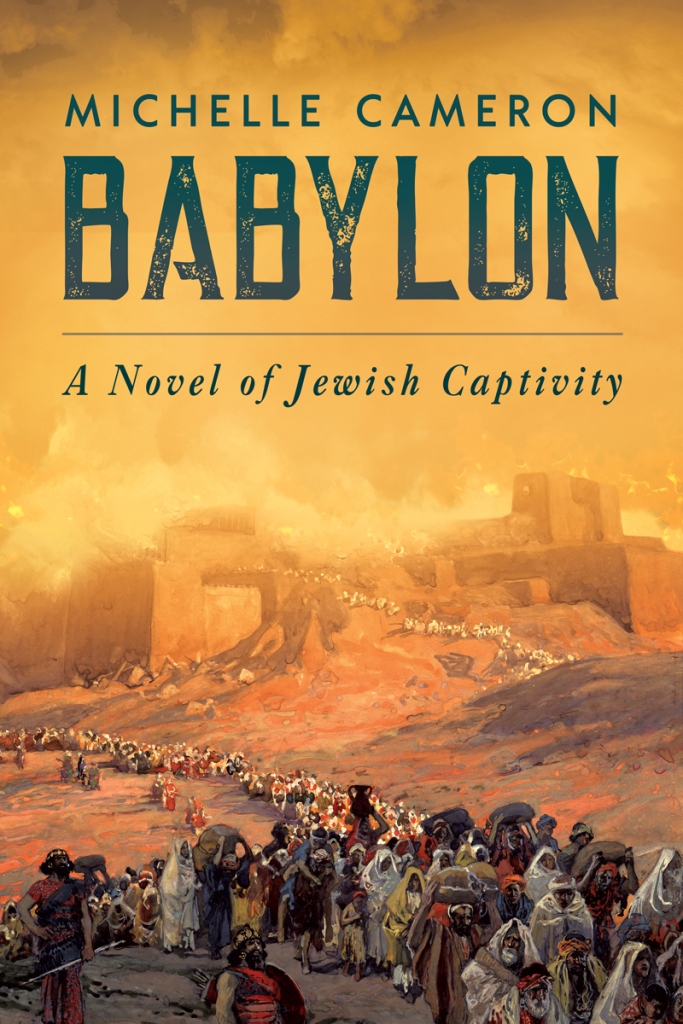
When one nation conquered another in antiquity, vanquished peoples typically switched allegiances to that country’s gods, since those deities were clearly stronger than their own. In my novel, Babylon: A Novel of Jewish Captivity, the prophet Daniel warns against this tendency, so the Judean exiles would remain faithful despite their captivity:
“You may be tempted to slip away from your Hebrew roots. Many of us struggle to remain steadfast to our faith. We are seduced by the lure of the gods of Ishtar and Marduk, Sin, Damkina, and Ea. Their temples overflow with riches and their ways are strange and compelling.
Continue reading “The Queen of Heaven Cakes: Asherah and Ishtar by Michelle Cameron”Judy Heumann should be a person that school children learn about, read about, and do research on. She is a quintessential element to our progress of humanity and the realization of true equity, equality, and accessibility. We first looked at the early years of Judy’s life in my July post. Also, I highly recommend watching the documentary Crip Camp available on Netflix and at the Crip Camp website.
Continue reading “Herstory Profiles: One Amongst Many: The Continual Activist Fight of Judy Heumann by Anjeanette LeBoeuf”This was originally posted on November 23, 2011. This is part of a project to highlight the work of the four women who founded FAR: Xochitl Alvizo, Caroline Kline, Gina Messina, and Cynthia Garrity-Bond. The author has added a note at the end.

I have the privilege of having radical lesbian feminism ‘work’ for me. I can’t explain why it does – but it does – it just works for me. I am not of the same generation as most feminists who experienced and awakened to radical feminism during the women’s movement of the 70s and 80s in the United States. I am not white nor was I middle-class when I encountered it (though I probably am middle class now). Nonetheless, as I encountered radical lesbian feminist writing, and eventually some of the women who wrote them, it spoke to me in the depths of my being and rattled my very core. Radical lesbian feminism liberated me and birthed me into a whole new way of Be-ing…and that is a privilege I must not take for granted and must hold loosely.
Continue reading “Archives from the FAR Founders: Privileged Feminist By Xochitl Alvizo”This was originally posted on September 15, 2014
In my Ecofeminism class we have been discussing essentialism because some feminists have alleged that other feminists, particularly ecofeminists and Goddess feminists, are “essentialists.” They argue that essentialist views reinforce traditional stereotypes including those that designate men as rational and women as emotional. I too find essentialism problematic, but I do not agree that Goddess feminism and ecofeminism are intrinsically essentialist.
Goddess feminists and ecofeminists criticize classical dualism: the traditions of thinking that value reason over emotion and feeling, male over female, man over nature. We argued that the western rational tradition sowed the seeds of the environmental crisis when it separated “man” from “nature.”
Goddess feminists and ecofeminists affirm the connections between women and nature in an environmental worldview that acknowledges the interconnection of all beings in the web of life.
Continue reading “Legacy of Carol P. Christ: Essentialism Reconsidered”This was originally posted on January 25, 2016
In recent years “the Sacred Feminine” has become interchangeable with (for some) and preferable to (for others) “Goddess” and “Goddess feminism.” The terms Goddess and feminism, it is sometimes argued, raise hackles: Is Goddess to replace God? And if so why? Does feminism imply an aggressive stance? And if so, against whom or what?
In contrast, the term “sacred feminine” (with or without caps) feels warm and fuzzy, implying love, care, and concern without invoking the G word or even the M(other) word–about which some people have mixed feelings. Advocates of the sacred feminine stand against no one, for men have their “sacred feminine” sides, while women have their “sacred masculine” sides as well.
Nothing lost, and much to be gained. Right? Wrong.
Continue reading “Legacy of Carol P. Christ: The Sacred Feminine or Goddess Feminism?”
I attended a beautiful women’s circle to celebrate my dear friend Gloria’s birthday recently. Each woman was invited to bring a sharing for Gloria – a poem, reflection, oracle card, song or dance – whatever felt right. Each sharing that day was not only a gift to Gloria, but to each of us.
I had met Gloria during the period of my life when I had written a play titled, “Dancers of the Dawn,” with a cast of seven women of different ages, shapes, sizes and colors. The play featured original music, drummers, myth, history, dance, even comedy for a sumptuous experience of the sacred feminine emerging in modern women. Gloria was a part of the women’s sacred circles that we co-created during that time – circles that continued for a decade and still retain heart-connections today.
Continue reading “Image and Likeness by Dale Allen”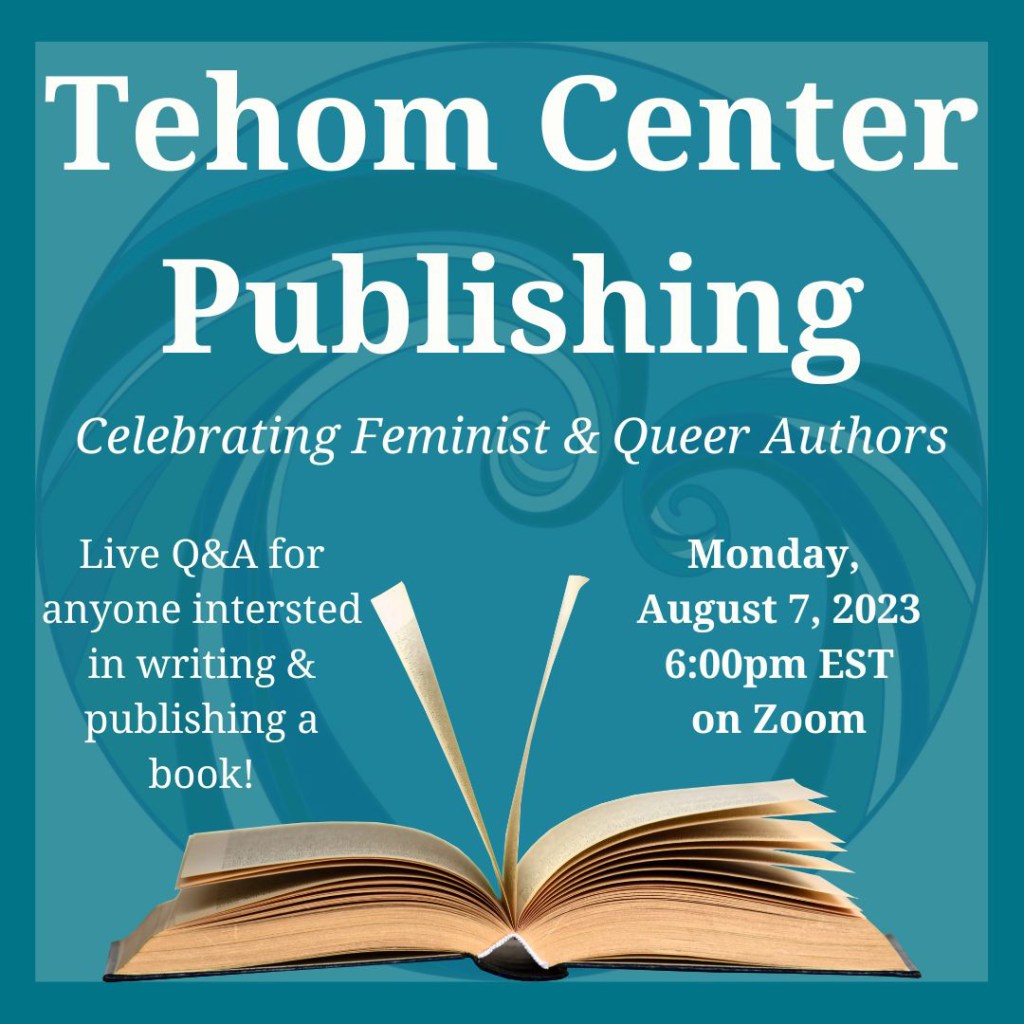
I believe more women—and particularly queer and/or BIPOC women—deserve to publish books. Let me explain why.
It was my first year of seminary. After majoring in religion in undergrad, I had a decent handle on feminist theology, but I hadn’t yet reconciled my strong, feminist upbringing with the faith tradition that held my ordination in their patriarchal hands. A seminary friend recommended I read Sue Monk Kidd’s Dance of the Dissident Daughter and everything changed.
This was twenty years ago. That one book helped me internalize the intersectional feminist theory that had always dwelled outside of me. Decades later, I find myself teaching in my own seminary classrooms and mentoring DMin students, requiring that same text, along with one of my own books, Queering the American Dream, and Christena Cleveland’s God is a Black Woman when discussing the power of feminist memoir in religious leadership.
Continue reading “The World Needs More Feminist Books…And Why You Should Write One of Them by Dr. Angela Yarber”
