Samhain and the Waters of Hurricanes Helene and Milton, part 2 by Susan Foster

Part 1 was posted yesterday

On Samhain we are given the opportunity to come together in community to grieve our losses. We grieve for all those we have known personally who have passed over. But this year we also grieve for all those who lost their lives and homes in Hurricanes Helene and Milton and in the many other disasters around the world. We grieve as well for the other losses that occurred—of homes, of jobs, of community, of pets (many of whom also died or were separated from their owners). The losses are so enormous and overwhelming that we need the support that community provides to cope with them. We need to bind together in the strength of community to express our sorrow. Being aware of the death from so many natural disasters helps us to listen to the earth to see what She is telling us, to hear Her crying because She is weakened and out of balance, breaking apart under the strain.

 Feeling the earth’s grief from the hurts inflicted upon Her enables us to take stock of our policies, to change our course while we still can. As we float downstream on our raft, we can ignore what we see around us until we see the rapids ahead and say to ourselves, before we plunge over them, “Why didn’t we change course earlier?”

Continue reading “Samhain and the Waters of Hurricanes Helene and Milton, part 2 by Susan Foster”
Samhain and the Waters of Hurricanes Helene and Milton, part 1 by Susan Foster

Moderator’s note: While Samhain is past for this year, we are still in the section of the Celtic calendar which makes this blogpost, and its part 2 which will be posted tomorrow, relevant.

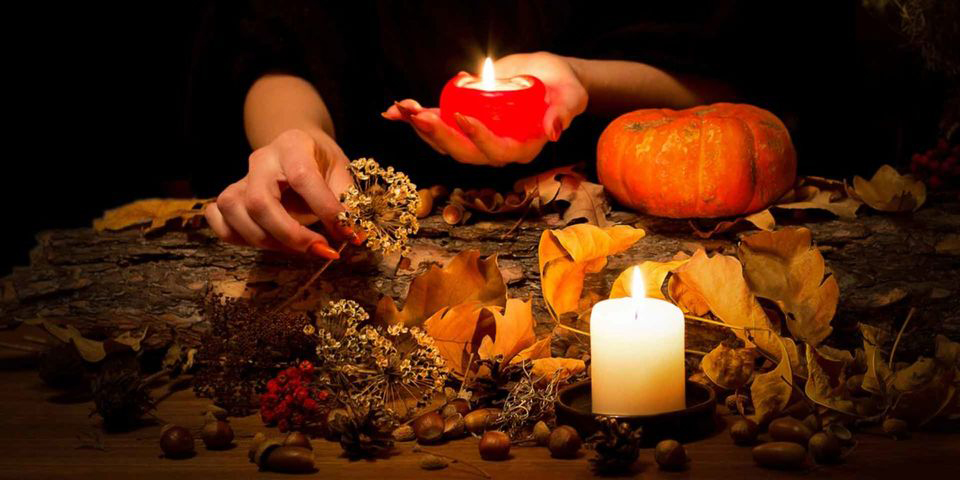
Samhain is an ancient Celtic festival, in fact the most sacred celebration in the Celtic year. Samhain is the New Year of the Celtic calendar. It is one of the eight holidays of the Celtic year—the solstices, equinoxes, and cross-quarter days—all of which mark the turnings of the seasons. Samhain is a time when the harvest had been completed; all the grains and late-maturing vegetables have been gathered in; the fields have been cleared, the old cast off, the fields lying fallow over the cold and dark of winter in order to make room for the eventual springing forth of new life. The New Year, begins in darkness at Samhain, is a reminder that all life emerges from the darkness, that death precedes rebirth. It is a time when the veil between the worlds of the dead and the living thinned, so that the presence of those who have gone before us is more clearly felt or even seen. It is a time to remember the ancestors as well as those newly departed—to grieve our losses, to let go so that we can move forward.

Samhain is the precursor of our Halloween. It was brought to this country by Irish immigrants during the potato famines in the 19th century. They brought their Celtic customs with them, but by that time Samhain was known as Hallows Eve, since the Irish were good Catholics. It struck a responsive chord with the American people, who called it Halloween. They adopted many of its customs, including lighting candles in gourds or pumpkins and dressing in costume. Today Halloween is celebrated as a spooky and fun time, observed with trick-or-treating and mischief-making, but originally it was a solemn holiday—a time to commune with the beloved dead, to honor the ancestors with food and drink, and to acknowledge death as part of a never-ending cycle of birth, death, and rebirth.

Continue reading “Samhain and the Waters of Hurricanes Helene and Milton, part 1 by Susan Foster”

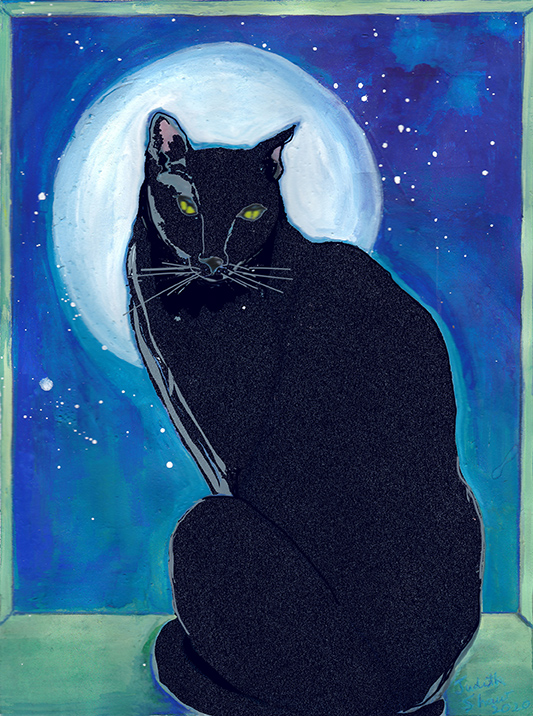
Samhain: The Cailleach, Wolf, and Black Cat  by Judith Shaw


Halloween, with its Celtic pagan roots in the sacred day of Samhain, which later morphed into a Christian holiday, is now mainly a nonreligious celebration in Europe and North America. It’s enjoyed by both young and old with scary outdoor decorations, parties, spooky costumes, haunted houses, carved pumpkins, and candy-giving.

Continue reading “Samhain: The Cailleach, Wolf, and Black Cat  by Judith Shaw”

Double, double… rhymes are trouble by Katie M. Deaver

I never considered myself one of those people who gets really “into” Halloween. But, as one might expect having an eight year old, especially an eight year old who celebrates her birthday shortly before the holiday, has made me much more in tune with the excitement and preparation which surrounds Halloween.

One of the traditions that I do very much enjoy is watching Halloween movies like Hocus Pocus and Double, Double, Toil and Trouble and, new to us last year, drinking warm mulled wine after coming home from a chilly (and this year possibly snowy!) night of Trick or Treating.

In my work as a church musician Halloween is book-ended by the celebration of Reformation and All Saints Day, so it tends to be a fairly busy time for my work schedule. As a result this is often the time of year that I reconsider my self-care and centering routines in the hopes of somehow preparing myself for the coming holiday season and the end of the year. This year, as I checked in on my current practices I realized that I haven’t been reading as much poetry as I used to when I was in grad school. As a result I have been trying to get back in the habit of reading some poetry a few times each week to help center myself. As luck would have it the last few weeks have found me stumbling upon poetry with connections to the Halloween season. I want to share with you a portion of two seasonal poems that I have encountered and are sticking with me.

Continue reading “Double, double… rhymes are trouble by Katie M. Deaver”

Embracing Darkness: All Hallows Eve in Old Lancashire


Come Halloween, the popular imagination turns to witches. Especially in Pendle Witch Country, the rugged Pennine landscape surrounding Pendle Hill, once home to twelve individuals arrested for witchcraft in 1612. The most notorious was Elizabeth Southerns, alias Old Demdike, cunning woman of long-standing repute and the heroine of my novel Daughters of the Witching Hill.

How did these historical cunning folk celebrate All Hallows Eve?

All Hallows has its roots in the ancient feast of Samhain, which marked the end of the pastoral year and was considered particularly numinous, a time when the faery folk and the spirits of the dead roved abroad. Many of these beliefs were preserved in the Christian feast of All Hallows, which had developed into a spectacular affair by the late Middle Ages, with church bells ringing all night to comfort the souls thought to be in purgatory. Did this custom have its origin in much older rites of ancestor veneration? This threshold feast opening the season of cold and darkness allowed people to confront their deepest fears—that of death and what lay beyond. And their deepest longings—reunion with their cherished departed.

Continue reading “Embracing Darkness: All Hallows Eve in Old Lancashire”

Ode to Mum – Source of My Being by Jassy Watson

For the Love of Gaia Jassy WatsonLately I have been contemplating my ‘source of being’. I had always assumed it was my connection to the earth. It is this of course, but my revelation came when I realised it was the connection to my mother, and my connection to her mother – me as mother, and not just my birth mother, but all mothers. The earth as mother, the universal mother, cosmic mother. All of them, my source of being.

My memories of growing up start from a very young age. In fact, so young, I have vivid memories of being born. I remember being breastfed and the smell of my Mum’s skin which was such a source of comfort. Thinking about my source and having these early memories re-surface has come at quite a pertinent time of  the year, considering that it is Beltane in the Southern Hemisphere, and Samhain in the North. At Beltane we celebrate the coming summer with fire and blessings of fertility, life and abundance. While at Samhain we are remembering our ancestors, those who have passed and loved ones who are still with us. Yesterday, the 31st, I flew from Australia to the USA  and I have been able to experience both transitions. This following poem and accompanying artwork represents these polar opposites;  birth and death. More importantly, it is an ode to Mum.

Continue reading “Ode to Mum – Source of My Being by Jassy Watson”

Entering Winter, the Season of Darkness by Barbara Ardinger

Halloween used to be spelled “-e’en,” with the apostrophe replacing the V in “eve.” The N was probably added so the word ends in a consonant and we don’t have “hallow-wheee.” But people get lazy, and since the late 20th century, both the V and “eve” have disappeared. This holy day is the true beginning of winter. In pre-Christian Europe, it was celebrated by the wild Celts, who called October 31 Samhain (pronounced approximately SOW-un). Today it’s a major sabbat, or holy day, celebrated by most modern pagans. Although religious fundamentalists keep trying to convince us that Halloween is an evil pagan festival (emphasis on the evilness of pagans) and pressuring retailers not to sell little collectable witches, the name of this day is in fact Christian: it’s Hallowed (or Holy) Evening, or the Eve of Holy Days. In the olden days and still today in, for example, the Jewish calendar, a holy day begins when the moon rises on the evening before. October 31 precedes All Saints Day (November 1) and All Souls Day (November 2). Like Christmas Eve, it’s a holy (but seldom silent) night.

All Saints Day, the Catholic Encyclopedia informs us, was instituted in the fourth century when dioceses began to divide up and exchange the relics of martyr-saints. At first, only martyrs and St. John the Baptist were recognized, but in 609 Pope Boniface IV consecrated the Pantheon in Rome to the Blessed Virgin and all martyr-saints. The theological basis for All Souls Day is the doctrine that “souls that have not been perfectly cleansed from venial sin are debarred from the Beatific Vision.” With prayers, the living can help the dead pass through purgatory. To commemorate “the faithful departed,” the Catholic Encyclopedia further tells us, the priest recites the Office of the Dead and celebrates a Requiem Mass. The vigil for All Saints, or Hallows Eve, was also first celebrated in the fourth century. The Mexican version of this holiday is Día de los Muertos, which is also celebrated on November 1 and 2. That’s when we see the wonderful costumed skeleton figures and the sugar skulls. Like similar festivals in cultures around the globe, this is a celebration of family and ancestors.

Continue reading “Entering Winter, the Season of Darkness by Barbara Ardinger”

Halloween Matters (Part II): An Immigrant Family, Christian, and Feminist Parenting Perspective by Grace Yia-Hei Kao


Halloween 2010

“[W]e have not gone the store-bought, costume-in-a-bag route, even though we recognize that the proliferation of ready-made options is a godsend to time-strapped, dual-career parents.”

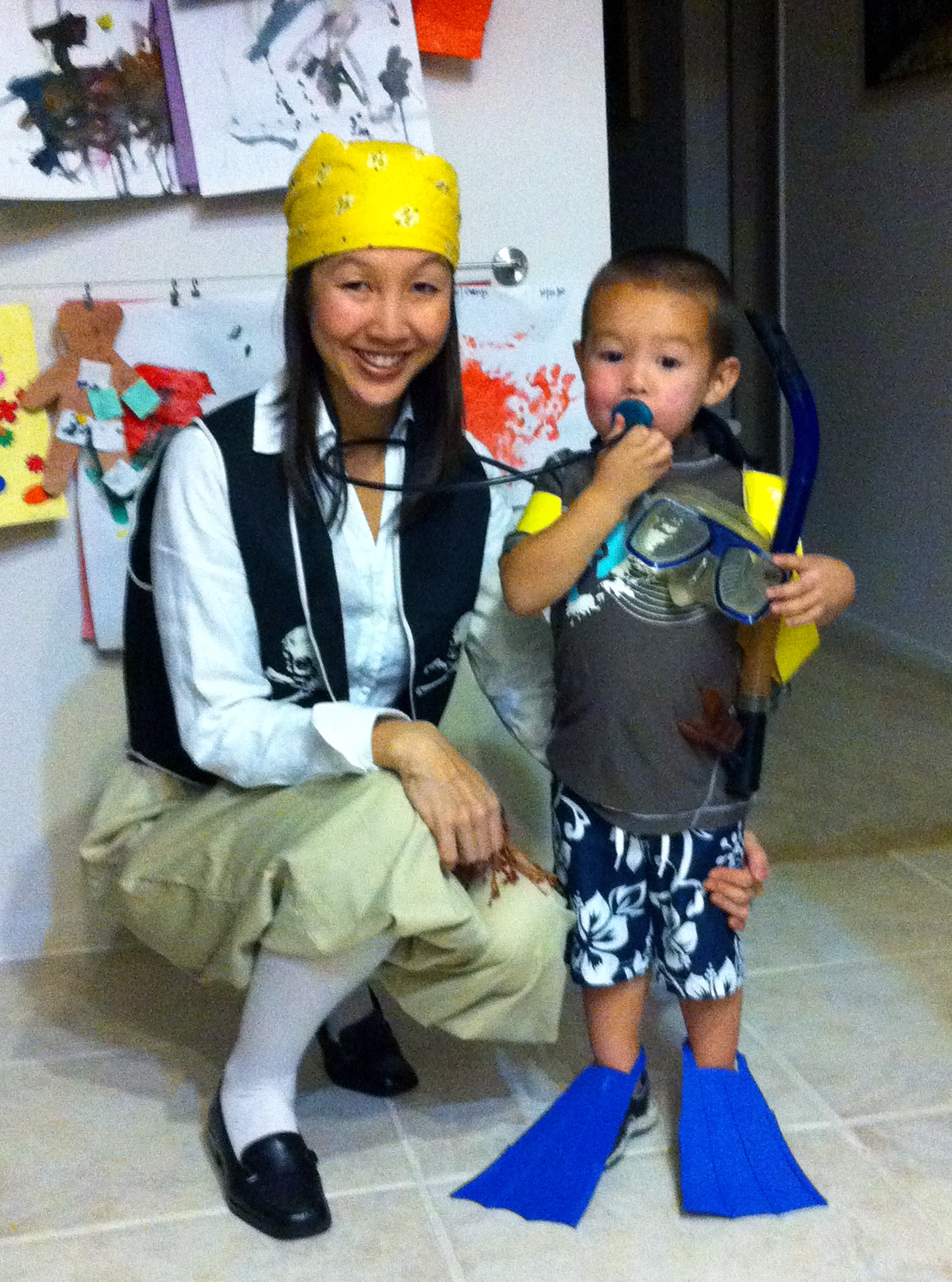
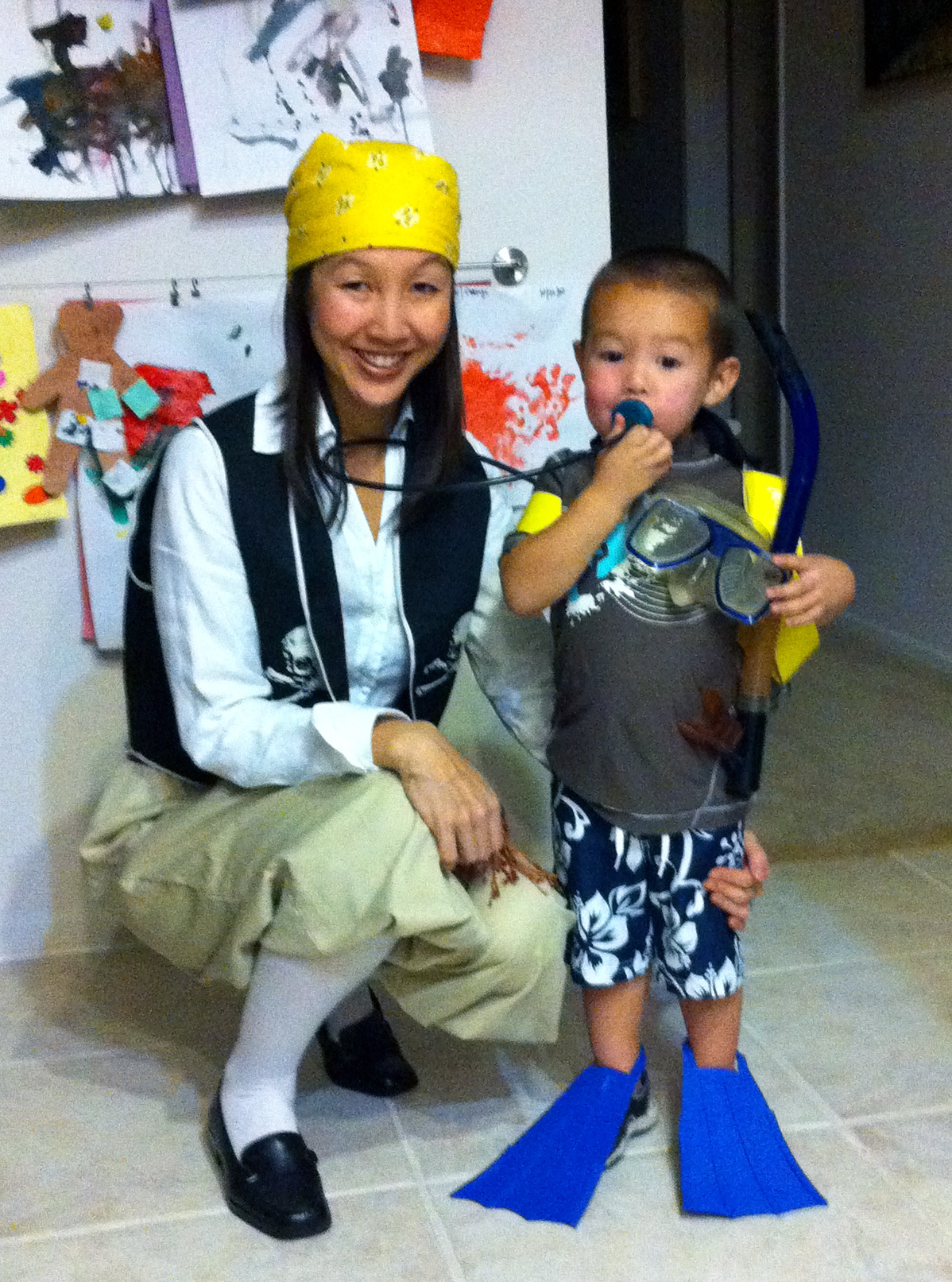
This is a second part of a previous post about the shifting personal importance of Halloween.  Now that I’m a mother of two young boys, I find that my husband and I are constantly looking for teachable opportunities. The holidays have accordingly become excellent ways for us not only to spend quality time together, but also to impart our values. We manifest our commitments even in something as simple as costume choices, as I explain below.

(1)    We do not indulge the Manichean-like stage that our four-year old child is in. As befitting a boy his age, our primo is fascinated by superheroes and has asked on a number of occasions if he could be one for Halloween.

Continue reading “Halloween Matters (Part II): An Immigrant Family, Christian, and Feminist Parenting Perspective by Grace Yia-Hei Kao”

Halloween Matters: An Immigrant Family, Christian, and Feminist Parenting Perspective by Grace Yia-Hei Kao

“I had realized that my parents legitimately had more important things to do than to carve pumpkins or buy costumes. But as a young child, I equated participating in the cultural phenomenon that is Halloween with being an American. I, as a daughter of immigrants, just wanted to fit in and join the fun.”

Continue reading “Halloween Matters: An Immigrant Family, Christian, and Feminist Parenting Perspective by Grace Yia-Hei Kao”

Infantilizing Women, Sexualizing Girls By Grace Yia-Hei Kao

Continue reading “Infantilizing Women, Sexualizing Girls By Grace Yia-Hei Kao”