I Really Like My Dirty Feet by Caryn MacGrandle

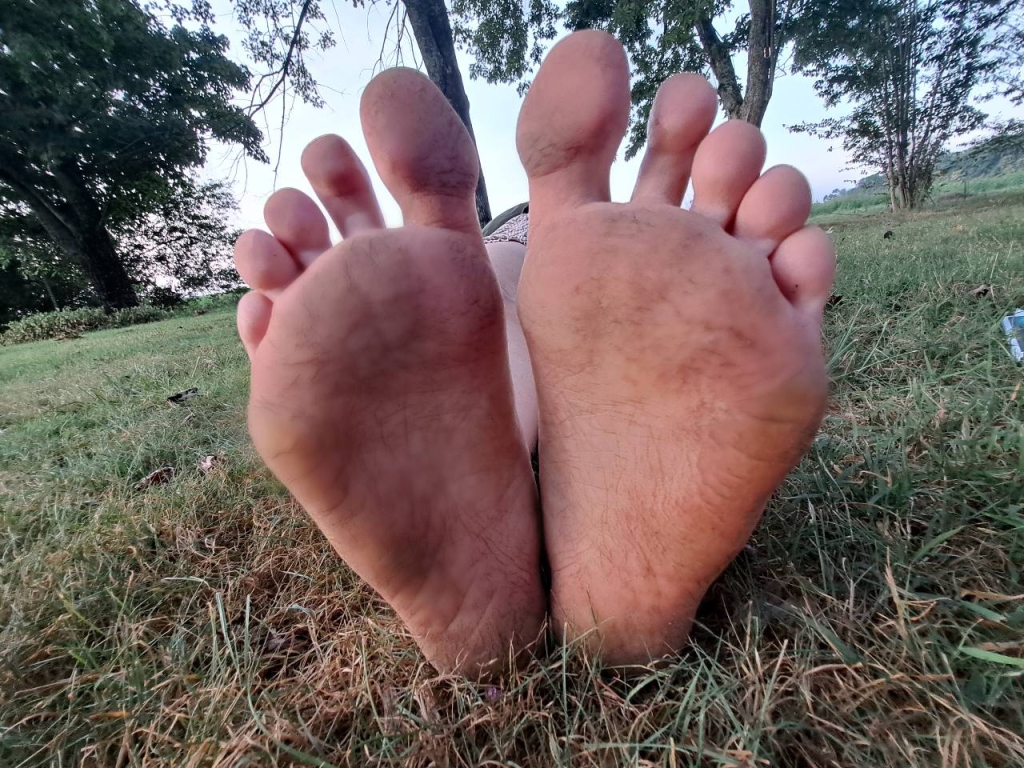
Last night, I had a dream where a nicely dressed woman leaned towards me and said, ‘Come with me, I’ll show you how to do it.’   

“I’ll show you how to get those feet clean,” and she looked down at my dirty feet in disgust. 

And I knew what ‘it’ she was referring to.  She had a nice car and a big beautiful home and a well coiffed outfit.   She was one of my children’s friend’s parents, successful the way that mainstream society defines it.  

And my small self said, ‘sure, okay’.   

But then my Large self said ‘wait a minute.  Stop.  I like my dirty feet.’ 

They’re part of me, you see.  

Continue reading “I Really Like My Dirty Feet by Caryn MacGrandle”

Finding that Feeling and Standing to Heal the Earth by Caryn MacGrandle

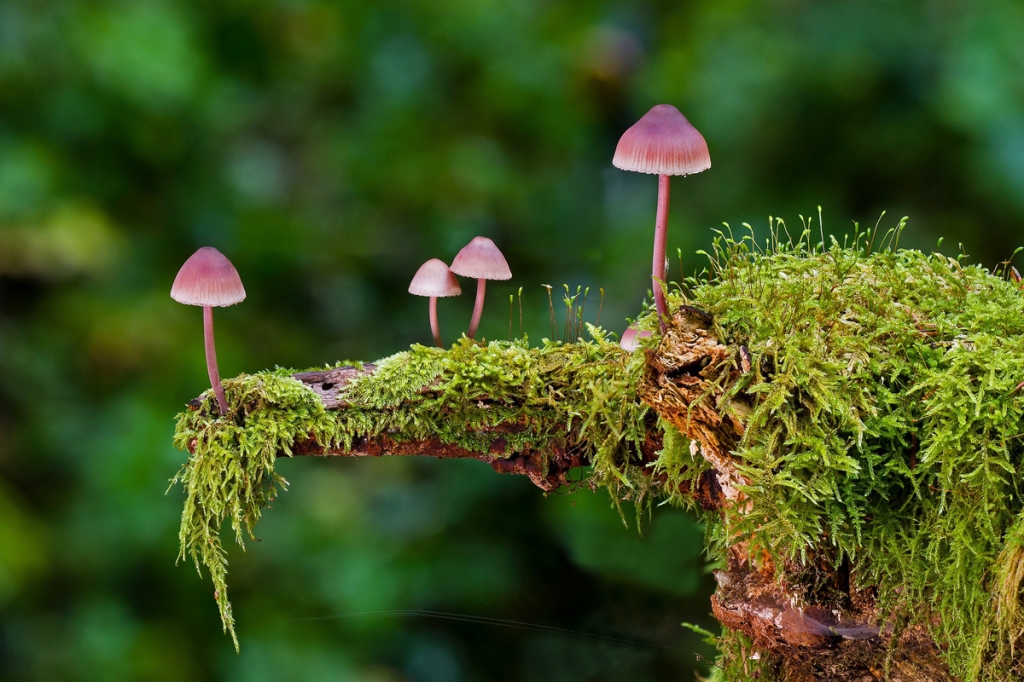
Something happened to me while listening to a song yesterday Mycelia by Yaima Music about the Mycelium Network: the largest living organism in the world underneath our feet, connected by synapses, communicating and assisting life. I found that feeling. 

The one where you know you are on Path.

Laney Goodman who just passed, I remembered her singing and drumming.  I remembered being at ALisa Starkweather’s Daughter of the Earth events, meeting the hundreds of Priestesses that ALisa has brought together and trained over the years. Being in awe. Wishing I was a person who could do that.

I remembered that I Am.

“Starting to Hear the Earth
Standing to Heal the Earth”

Continue reading “Finding that Feeling and Standing to Heal the Earth by Caryn MacGrandle”

The Mixed Bag that is Toldot by Ivy Helman.

The parshah for November 26th is Toldot, Genesis 25:19-28:9.  In it, we have the struggles of Isaac and Rebecca to conceive, the relations between Abimelech and Isaac’s family, the birth of Esau and Jacob, and the loss of Esau’s birthright and his father’s blessing.  As we will see, this is a tricky portion from a feminist perspective because of Rebecca, yet, from an ecofeminist perspective, I find the way in which the portion discusses the interconnection between the water, the land, and divinity helpful.

Let me begin with the water and then we will look at Rebecca.  Toldot takes place in and around the city of Gerar in Philistine territory, while Abimelech ruled.  Isaac and his family travel through the land quite a bit between verses 26:16 and 26:32.  Most of this section pertains to them moving and then digging new wells, the covering of wells, and the finding of water.  What I find particularly interesting here is the way in which water and peace seem to go together.  For example, in 26:20-21, Isaac and his family have constructed a well but it is causing them to have troubles with the locals.  Isaac seeks peace and thus leaves.  In verse 26:26, Isaac is visited by Abimelech and eventually a formal peace is declared.  This is followed in 26:32 by Isaac’s servants finding water in a freshly dug well.  In other words, Isaac is willing to uproot his family time and again to cultivate peace; he is not willing to go to war over what in the desert really is a quite limited resource.  

Continue reading “The Mixed Bag that is Toldot by Ivy Helman.”

Calling on the Ancient Ways to Make a New Future by Caryn MacGrandle

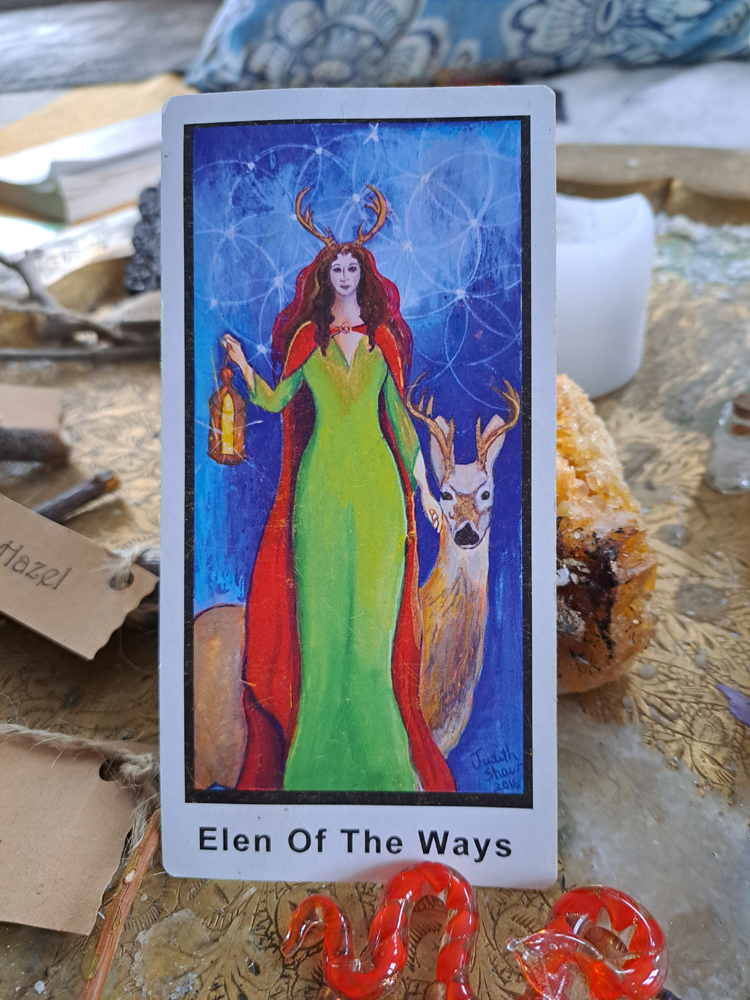
Dawn follows the dark. Call on Elen of the Ways for the ancient pathways revealing the mysteries of the deep wild wood where your heart resides.

Well, duh. Of course.

I camped out alone on my newly bought land in North Carolina for the first time this weekend.

From Judith Shaw’s incredible Oracle of Celtic Goddess deck, the Elen of the Ways card jumped out at me as I was packing, so I took her along with me.

This was a first for me camping alone in the woods, and I’m awfully proud of myself.

I met a new neighbor who told me to carry a gun at all times.

‘Well, I don’t have one,’ I told him, ‘but I do have a stun gun, extreme pepper spray and tons of knives. So that should do,’ I said with a smile.

Continue reading “Calling on the Ancient Ways to Make a New Future by Caryn MacGrandle”

On the Good and the Bad of Behar by Ivy Helman

The Torah portion for May 21, 2022 is Behar (Leviticus 25:1 – 26:2).  In it, the Israelites receive instructions for sh’mita and yovel – two types of sabbatical years.  These years attempt to set up right relations between the community, the inhabitants of the land, and the land itself.  From an ecofeminist perspective, not all is as idyllic as the Torah wishes it to seem.   

Behar begins with sh’mitah, a sabbatical year that takes place every seventh year.  During sh’mitah, the land must lay fallow.  Both humans and animals can eat from what the land will naturally grow.  

Continue reading “On the Good and the Bad of Behar by Ivy Helman”

THREE POEMS OF LIFE by Janet Maika’i Rudolph

As Above So Below

Yes, I believe we are made in god’s image.

If god is the wild, passionate, loud, sexual, sizzling, dancing fires of creation.

And should I ever forget my fiery, heavenly vision, the sun comes out every day to remind me.


And I ask myself, which is more miraculous? Our local star feeding earthly life?

Or me, reflecting the sun, feeling the passion, sizzling in response?

Jacob Dreams and So Do We

(inspired by Genesis 28:12)

As darkness slips into light,

dawn,

with its unique melody,

grows brighter.

As light slips into darkness,

dusk,

with its mysterious possibilities,

settles softly upon the land.


Creation is oneness, but we need duality to experience sex, symphonies, hot fudge sundaes.

Creation is pure love, but it is to the passions of the human heart that we owe our earthwalk


Dawn and dusk hold open the thresholds of mystery inviting our human hearts to experience . . .

The sacred dance where one becomes two becomes three.

The sacred song where three becomes two becomes one.
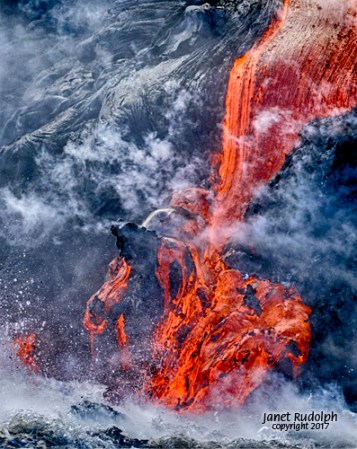
 

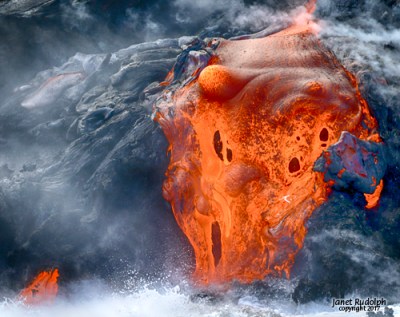
Pele’s Birth Dance

Twinkling stars ignite waves of fire that explode into a tumultuous, joyful noise:

“EH YEH, EH YEH, EH YEH.”


And Mother Earth awakens.


Matter bathed in Pele’s cauldron flares up, erupting into waves of baby earth while roaring:

“EH YEH, I AM, EH YEH.”


As seeds rise from great watery oceans of fire, my heart swells, breathing air into newly forged matter and causing my breath to become song:

“I AM, EH YEH, I AM.”


Fire,

that reflects flame-drenched stars,

that reflects Pele’s dance,

that reflects the passionate seed,

echoes within my belly until I glow with waves of love which burst forth to sing:

“I AM, I AM, I AM.”


And then . . .

Riding a watery wave that gushes forth new life, my newborn erupts from my body, then twinkles, then cries tumultuous joyful noise:

“EH YEH, EH YEH, WAHHHHhhhhhh.”

(Note: “Eh yeh” is God’s name in phonetic Hebrew as given to Moses in Genesis 3:14. “I am” is its traditional translation into English)


Janet Rudolph has written three books on the subject of ancient Biblical Teachings.  One Gods: The Mystic Pagan’s Guide to the Bible, When Eve Was a Goddess: A Shamanic Look at the Bible, and the just recently released book, When Moses Was a Shaman. For more information visit her website at /www.mysticpagan.com/

 

Epona – Goddess of the Land by Deanne Quarrie

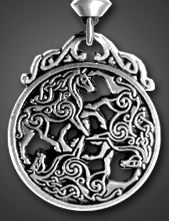
celtic-horseDeanne QuarrieThis week I bought a pendant that caught my attention.  It is Celtic knot work of horses, meant to represent Epona.  This triggered my interest in Epona and off I went to learn more.
Epona is a goddess from Gaul.  Sadly, any information about her from those early days of worship are lost to us. This is the case of the most ancient deities from that region and time in history. It is thought that she was picked up in Gaul by the conscripted soldiers of the Roman Army who saw a depiction of her upon her horse and they adopted her. Since this army rode across the land on horseback, she was the perfect deity to pay homage to and so, she traveled with them. She soon made it to Rome and is one of only a few deities, not originally Roman, to be worshiped in the Roman Empire. Continue reading “Epona – Goddess of the Land by Deanne Quarrie”

Goddess Communities in Australia by Patricia Rose

Australia has a very diverse and rapidly expanding number of people for whom the Goddess, however She is understood, is significant. The 2006 census revealed that there were over 30,000 Pagans or followers of other earth-based religious traditions in Australia and, given the way in which religions are classified in the census, this is undoubtedly a serious underestimation. We await the findings of the 2011 census with great interest.

Prior to European settlement in Australia, Aboriginal and Torres Strait Islander peoples followed their own rich spiritual beliefs, which were based on the forces of nature, a reverence for the land and its creatures, and the influence of ancestral spiritual beings. Recently, non-indigenous Australians have become increasingly interested in the indigenous connection to the land and indigenous spirituality.

While it is important not to appropriate indigenous culture, Goddess women and men in Australia are keen to express their spirituality in ways that are relevant to this land and to the Australian culture. We recognize the need to become more attuned to the ways of Australia, to her seasons and her natural cycles, and we can learn from the experiences of indigenous peoples, garnered from millennia of living on and with this land. Continue reading “Goddess Communities in Australia by Patricia Rose”