It’s been wonderful to read so many posts remembering Carol Christ. The FAR community was so important to Carol: as has been pointed out, she not only offered her own posts each Monday, she also read and responded to every post, every day. Through the FAR ‘family’ I feel comforted by connecting with others who knew and loved her and miss her as as I do.
Online Memorial Gathering On December 20, Carol’s birthday, all friends of Carol and friends of FAR are warmly invited to an online Memorial Gathering and ritual in Carol’s honour. Many of Carol’s friends will share cherished memories (please email me if you would like to say a few words) and I will show some photographs from her personal archive. (If you have photos of Carol you would like to share, please email them to me at laura@laurashannon.net.) We’ll also talk about the future of Carol’s Goddess Pilgrimage in Crete. Please register with your email address at this link.
, elders are people who have illuminated my path, inspired me to see my own potential. To open my eyes, all my senses, even those I did not know I had. Elders show bravery and model for us how to be strong.
What is an Elder?
The word elder comes from an Old English word which also meant ancestor or chief. A lot can change in a thousand years and many of us no longer honor older people or seek out them out for advice.
In my experience, elders are people who have illuminated my path, inspired me to see my own potential. To open my eyes, all my senses, even those I did not know I had. Elders show bravery and model for us how to be strong.
My first wise woman teachings came from my family. My mother, and her mother, taught me to be myself, to love being outdoors and the importance of having a garden. Feeling the joy of flowers, cooking with fresh herbs, planting a tree to honor the dead. These are a few ancient traditions of my ancestors that have survived even in a modernized and urban setting.
As I rediscover my connection with the earth, my eco-consciousness inspires me to transform. As I go back to nature, I re-awaken my ancient cellular memories of living in harmony with the earth. I feel called to dance barefoot, play drums, make offerings, bathe in moonlight, harvest with my own hands. As I move forward on a path which is both new and old, it is my beloved elders who have shown me how to find my way.
What is an Elder?
The word elder comes from an Old English word which also meant ancestor or chief. A lot can change in a thousand years and many of us no longer honor older people or seek out them out for advice.
In my experience, elders are people who have illuminated my path, inspired me to see my own potential. To open my eyes, all my senses, even those I did not know I had. Elders show bravery and model for us how to be strong.
My first wise woman teachings came from my family. My mother, and her mother, taught me to be myself, to love being outdoors and the importance of having a garden. Feeling the joy of flowers, cooking with fresh herbs, planting a tree to honor the dead. These are a few ancient traditions of my ancestors that have survived even in a modernized and urban setting.
On a hilltop between the horned peak of Mount Psiloritis and the wide blue expanse of the Libyan Sea, Ellen Boneparth, Tina Nevans and I prepare to enter the Kamilari tholos tomb. This round vaulted structure served as a communal and egalitarian burial site for thousands of years, from Neolithic through late Minoan times, and Carol brought more than 40 groups of Goddess Pilgrims here to honour those who have gone before. This is where Carol asked the three of us to perform a farewell ritual for her; she wanted no other ceremony. We each don a scarf and necklace which belonged to Carol and enter the sacred space. Kostantis stays behind to guard the gate, in case any other visitors arrive during our ritual.
2. Invocation
On this spot, hundreds of women have honoured thousands of ancestors. We ask for the benevolent presence and the blessing of all those who knew and loved Carol, living and dead. We ask permission of the spirits of the place to enter for this ceremony. We ask Carol’s own ancestors, and the Minoan ancestors of this place, to bless and welcome Carol as a beloved daughter and granddaughter of both lineages.
When I was 17, I left the US to live and study in Europe for a year, with Womanspirit Rising crammed into my backpack. This book, edited by Carol P. Christ and Judith Plaskow, gave me the solid ground of a feminist worldview which honoured women, the body, and the earth. My favourite chapter was the last one: Carol’s foundational essay ‘Why Women Need the Goddess’, where she writes, ‘The simplest and most basic meaning of the symbol of Goddess is the acknowledgement of the legitimacy of female power as a beneficent and independent power’. These words, indeed that whole essay, became the pole star for my journey through the world, helping me name what was missing in both the academic world and the world of dance.
Today, May 1, we celebrate Beltane, the Celtic festival between the Spring Equinox and the Summer Solstice. Starting tonight, we also celebrate Greek Easter, with its ritual drama of life and death.
In the Western Church, Easter never falls as late as May, but in the Orthodox calendar, Easter and Beltane more or less co-incide every few years. It’s a reminder of connections between Christian and pre-Christian traditions, both in the archetypal cycle of life, death, and regeneration, and in links between the Christian Mary and the pre-Christian Goddess in her various names and forms.
All week we have been warming our spirits at the sacred fire of Candlemas / Imbolc, the Celtic holiday in honour of Brighde, Irish saint and Goddess of poetry, smithcraft and healing. Imbolc falls approximately 6 weeks between the winter solstice and the spring equinox, one of the 8 festivals of the Celtic year.
In the Greek Orthodox Church, February 2 is celebrated as Ypopantis, the presentation of Jesus at the Temple, 40 days after his birth, in accordance with Mosaic law. This day also marks Mary’s ritual return to the world after forty days of postpartum seclusion. This practice was known in the Western Church as ‘churching’ or blessing a new mother after 40 days; Hindu tradition also recommends women spend up to 40 days in rest and isolation after childbirth.
Mosaic of the Nativity
In the west, the customs of confinement and churching have dwindled since the 1960s, but in Greek Orthodox tradition until very recently, these forty days of isolation for mother and child were routine. A special word, lechóna (λεχώνα), from the ancient Greek for ‘bed’ or ‘couch’, denotes a woman in this special time. Continue reading “Forty Days After Childbirth, Mary Returns to the World by Laura Shannon”
In Part One of this article, I described dancing Jewish, Romani, and Armenian dances for forgiveness and reconciliation with groups in Germany and all over the world. I also offered danced rituals of remembrance at former concentration camps and other places scarred by the atrocities of war.
I went to camps including Dachau and Auschwitz, to genocide memorials and sites of massacre throughout Eastern Europe, in Australia, and the Americas. At first, my prayers were private: I brought flowers, lit candles, danced my grief, and spent time in meditation. I tried to visualise the prisoners in those places, sending them my deep sorrow and regret back through time. I wanted to let them know that they are remembered and mourned by people from their future. My prayers contained a fervent apology as well as a soul commitment to do my part in this lifetime to overcome prejudice and stand for peace.
In time I invited others to dance with me for healing and peace. We danced at former camps in Germany, including Bad Gandersheim, a subcamp of Buchenwald, and on many occasions in Steyerberg, a former prison camp and forced-labour munitions factory which is now the site of an intentional community called Lebensgarten (‘Garden of Life’), a centre for permaculture, non-violent communication, and other ecologically and spiritually oriented ways of living.
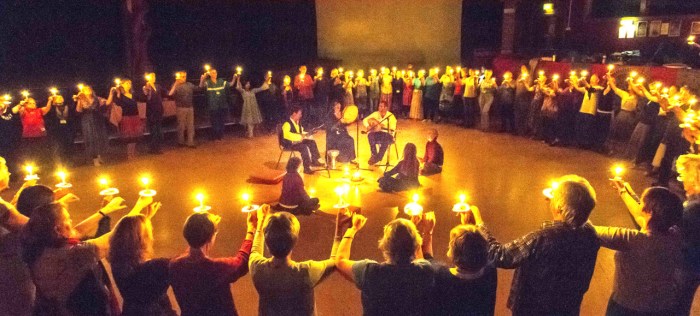
Armenian Candle Dance with Laura Shannon, Findhorn 2015 (photo: Hugo Klip)
When I first began researching traditional circle dances in the mid-1980s, I was amazed to find that the peoples who have suffered the worst of human experience – oppression, exile, genocide, war – also produce the most vibrant and joyful music and dance. Armenian, Jewish, Kurdish, and Romani (Gypsy) dances, in particular, were passionate affirmations of life, despite the horrors these peoples have gone through in their history. The dances seemed to hold clues to the mystery of moving on with life after trauma.
This was something I was desperate to learn how to do. Barely 20 at the time, I was struggling to keep my dignity and optimism while growing up female in a woman-hating world. The trauma of a violent rape on my 18th birthday had robbed me of my joy for life – but I could experience joy again in those dances.
Early on in my research and teaching, therefore, alongside the women’s dances which were always my main interest, I began to focus on the traditional dances of persecuted peoples, which I called Dances of Exile and Homecoming. These songs and dances seemed to have an inherently therapeutic potential, profoundly moving for people from any background and any culture.
Today, August 1, 2020, is Lammas, the Celtic festival of late summer, the ‘feast of bread’, time of harvest and of golden grain. Here in the UK, Lammas arrives just as we are emerging from our coronavirus lockdown. It’s hard to feel a personal sense of ‘harvest’ when most people’s lives have been on hold since the spring.
Confined to our homes, many people could throw themselves into tending their own gardens (if they had one), but most of us could not cultivate the symbolic gardens of our lives and work in the way that we wanted. Many have faced deep loss, the withering of seeds planted in the past which could not now come to fruition.
Despite the tragic times, the earth continues to dance to the sacred rhythms of sun and moon. The trees are full of fruit, the fields are full of grain. Although I too have had my share of sorrow and grief in recent months, today I feel moved by the season to look at what we can harvest from our experience of the coronavirus pandemic.
My previous post on this site, Trauma Healing through Communal Dance, on February 1, told of a traumatic event and its lingering effects, including insomnia, brain fog, nightmares, tearfulness, migraines, anxiety, and fear. Now I’m hearing reports of similar symptoms from virtually all of my friends who are affected by the trauma of the coronavirus pandemic.
Three months ago, Greek communal dance helped me recover from my traumatised state. Now, nobody has access to communal practices like circle dance to help us get through it.
So how do we heal when we all need healing? When we don’t have access to the things which would normally help us heal?
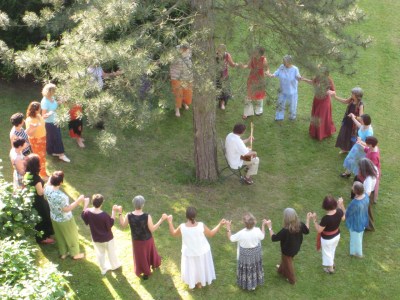
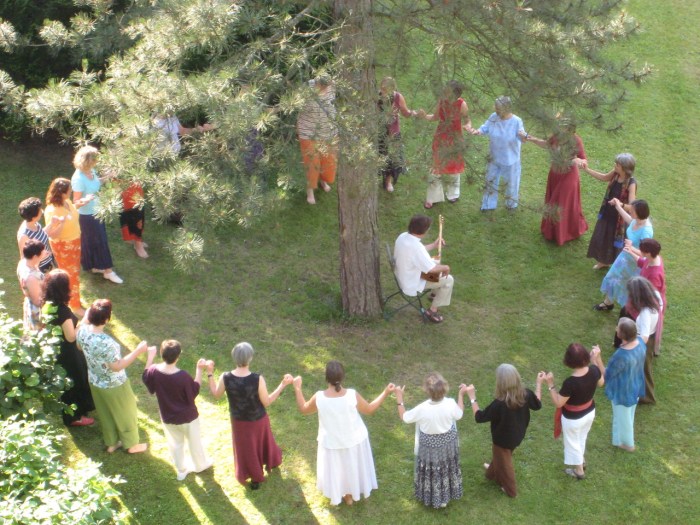
Circle Dance with Laura Shannon, Germany 2008 (photo: Beate Frey)
There is a lot of talk right now about strategies, small and large, which can keep us sane in this crazy time. Many speak of the ‘silver linings’ we can find in this enforced retreat, and I have found a few myself. But I have also heard from people who aren’t in a safe place, or who just aren’t coping well.
Even if you are blessed with a peaceful home, access to nature, and continuing income, not everyone is made for isolation. The lockdown can be particularly hard on extroverts. And many people may find that high stress levels in this time of separation, loss, and uncertainty awaken old ghosts of unhealed trauma.
My earlier blog named some of the therapeutic aspects of communal circle dance, including connection with others, shared movement synchrony, realignment with ‘my self, my body, my place between heaven and earth, and my home in the human community.’
Armenian Candle Dance with Laura Shannon, Findhorn 2015 (photo: Hugo Klip)
As I wrote in Medusa and Athena: Ancient Allies in Healing Women’s Trauma, “Past trauma can be transformed through ‘physical experiences that directly contradict the helplessness, rage and collapse that are part of trauma’ and which foster a renewed sense of self-mastery. Because trauma tends to be experienced in ‘isolated fragments’, treatment particularly needs to engage the entire organism, ‘body, mind, and brain’.”
So, dancing is perfect. Circle dance, particularly, is my ideal method of trauma healing. But how can we dance without a circle?
A lot of us are dancing on platforms including Skype and Zoom, but the slight time lag with this technology means that true synchrony is impossible; everyone’s movement appears slightly off the beat. Nevertheless, I love seeing cherished faces, talking together, and dancing despite the distance.
My favourite way to dance ‘in circle’ is without any online technology, simply connecting in heart and spirit. Since the start of the lockdown, my network of dance students, friends, and colleagues in different countries have been ‘meeting’ at set times twice daily, and it is deeply moving to join together in this way. We light a candle for loved ones, health workers, key workers, and anyone who is unwell or needs extra support at this difficult time. Then we each dance the same sequence of circle dances, plus our personal favourites. Knowing that my friends are all dancing in their own homes, and that we are all thinking of each other at the same time, is very precious.
Candle (photo: Laura Shannon)
If you too are separated from your loved ones, you can choose a time every day to stop what you are doing so you can think of one another, with no need for online technology. You don’t have to dance; just put on your favourite music and know you are connected.
Doing things you love can also provide an antidote to trauma – cooking favourite foods, lovingly repotting houseplants, or embarking on a fun creative project – anything you enjoy can connect you to your own power and experience of mastery as a source of healing. With my housemates here in Canterbury, we created a beautiful Easter feast – twice, first for Western and then for Orthodox Easter – with photos of our missing loved ones on the table. It was such a simple act, but nourishing on so many levels.
Time in nature connects us with the flow of life force which is in each of us. As we walk outdoors, feeling the earth below and the sky above, we can remember when we have come through challenges in the past, and let those memories reassure us that we will come through this now too. It was the same earth under our feet then, and it’s the same sky around us now and so it will be in the future when all of this is behind us.
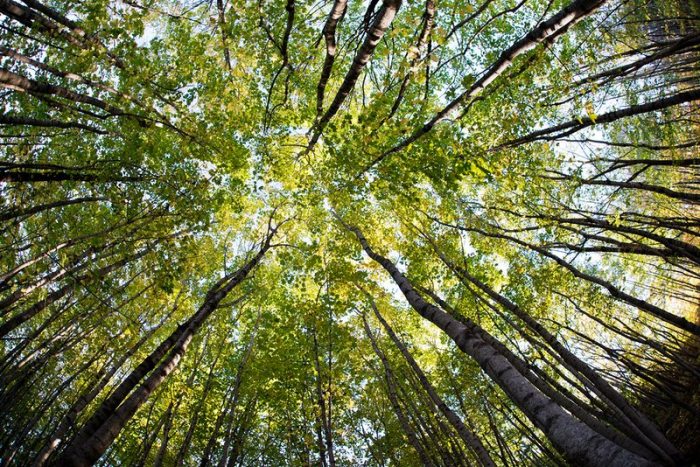
Trees (photo: public domain)
Sometimes a larger crisis, like this pandemic, can put things in perspective, and bring us closer to forgiveness and healing. To support this inner process, I have found the Hawaiian indigenous practice of ho’oponopono to be very powerful. Hawaiian scholar and educator Mary Kawena Pukui describes it as a practice of forgiveness and reconciliation, for family members to ‘make right’ broken relations and prevent problems from erupting.
What can we do to foster forgiveness, move beyond blame, and focus on what we have in common? One recent story on the Karuna website tells how rival gangs in South Africa are now cooperating to deliver food to the vulnerable in their community. Amazing!
There is always something we can do, for ourselves and for others. And let’s not forget the larger context: life as we knew it has hit the pause button, and we have a chance to make some different choices in preparation for when we once again press ‘play’. Maybe we will find that all of us – and all of humanity – are suddenly dancing to a more beautiful tune.
Laura Shannon has been researching and teaching traditional women’s ritual dances since 1987, and is considered one of the ‘grandmothers’ of the worldwide Sacred / Circle Dance movement. She trained in Intercultural Studies (1986) and Dance Movement Therapy (1990), and is currently pursuing postgraduate studies in Myth, Cosmology, and the Sacred at Canterbury Christ Church University in England. Her primary research in Balkan and Greek villages seeks out songs, dances, rituals and textile patterns which descend from the Goddess cultures of Neolithic Old Europe, and which embody an ancient worldview of sustainability, community, and reverence for the earth. In 2018 Laura was chosen as an Honorary Lifetime Member of the Sacred Dance Guild in recognition of her ‘significant and lasting contribution to dance as a sacred art’. Her articles and essays on women’s ritual dances have appeared in numerous publications, including Re-Enchanting the Academy, Dancing on the Earth: Women’s Stories of Healing Through Dance, She Rises! Vol. 2, Inanna’s Ascent, Revisioning Medusa, and Spiritual Herstories – Call of the Soul in Dance Research. Laura is also Founding Director of the non-profit Athena Institute for Women’s Dance and Culture. She lives in Canterbury, Greece, and the Findhorn community in Scotland.
Medusa and Athena: Ancient Allies in Healing Women’s Trauma in Revisioning Medusa: from Monster to Divine Wisdom, edited by Glenys Livingstone, Trista Hendren and Pat Daly. Girl God Press, 2017, 206-222. www.thegirlgod.com. This excerpt cites Bessel Van der Kolk, The Body Keeps the Score (2014), pp 4, 40, 53.
Mary Kawena Pukui Karuna website: This site collects positive stories in the time of coronavirus. ‘Karuna’ is a Sanksrit word meaning compassion. Their site motto: ‘Karuna spreads faster than corona.’



 All week we have been warming our spirits at the sacred fire of Candlemas / Imbolc, the Celtic holiday in honour of Brighde, Irish saint and Goddess of poetry, smithcraft and healing. Imbolc falls approximately 6 weeks between the winter solstice and the spring equinox, one of the 8 festivals of the Celtic year.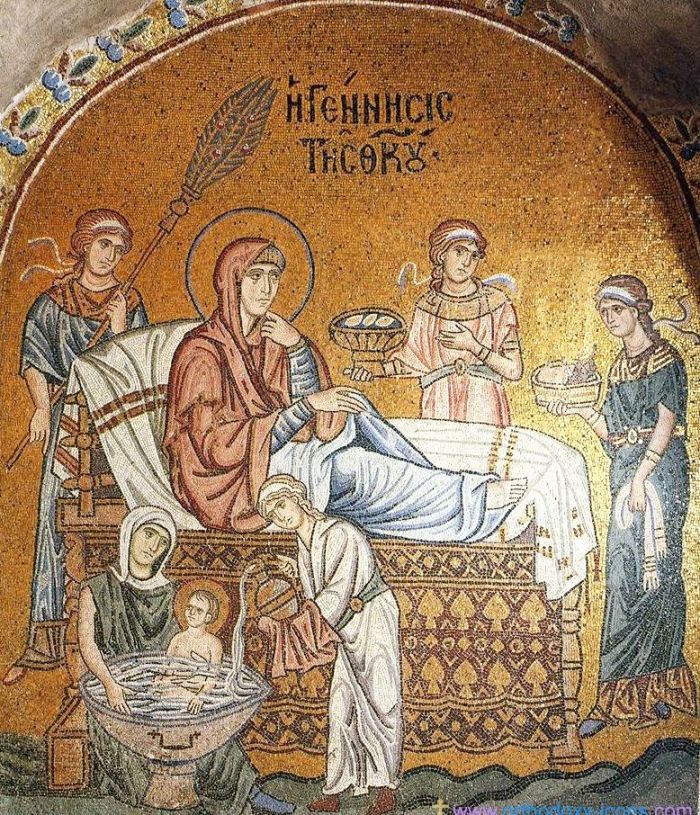
 In Part One of this article, I described dancing Jewish, Romani, and Armenian dances for forgiveness and reconciliation with groups in Germany and all over the world. I also offered danced rituals of remembrance at former concentration camps and other places scarred by the atrocities of war.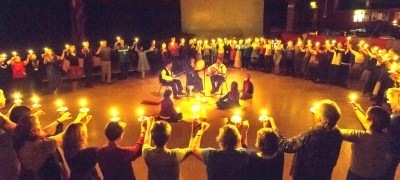

 Feminism and Religion