
Birthing God at the Edges of Life, Death, and Beyond: Reflections on Mary, Motherhood, and Kali Part II By Tracy Sayuki Tiemeier

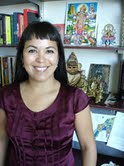
Tracy Sayuki Tiemeier, Ph.D., is Assistant Professor of Theological Studies at Loyola Marymount University in Los Angeles, CA. She teaches and researches in the areas of women and religion, interreligious dialogue, comparative theology, Asian and Asian American theology, and Hindu-Christian studies. Tracy also co-chairs the Los Angeles Hindu-Catholic Dialogue.

Mary, her purity, and her role as Virgin Mother have become the primary language for talking about women and women’s place in the Church. The late Pope John Paul II held up Mary, both virgin and mother, as the perfect model for women. For the Pope, women’s sexuality and spirituality are united in a vision of woman’s personhood as that of nurturing self-gift. The calling of physical and spiritual motherhood is connected to women’s more receptive and nurturing nature. Men lead the Church, as Christ did, while women receive Christ and others in their homes and in the world, as Mary did. Mary’s receptive openness to God is manifest from the beginning in her consent to Jesus’ conception. Such receptivity is both biologically natural and spiritually essential. Mary as Virgin Mother shows both women and men the value and depth of the receptive, self-giving reality of womanhood. Continue reading “Birthing God at the Edges of Life, Death, and Beyond: Reflections on Mary, Motherhood, and Kali Part II By Tracy Sayuki Tiemeier”
Birthing God at the Edges of Life, Death, and Beyond: Reflections on Mary, Motherhood, and Kali Part I By Tracy Sayuki Tiemeier

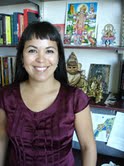
Tracy Sayuki Tiemeier, Ph.D., is Assistant Professor of Theological Studies at Loyola Marymount University in Los Angeles, CA. She teaches and researches in the areas of women and religion, interreligious dialogue, comparative theology, Asian and Asian American theology, and Hindu-Christian studies. Tracy also co-chairs the Los Angeles Hindu-Catholic Dialogue.

I grew up in St. Louis, MO, in the decades following Vatican II. My parish, like many at the time, was an odd mash-up of old and new. Contemporary praise music co-existed with smells and bells, informal homilies by hip priests with solemn novenas. It was an exciting time to grow up Catholic. I was on fire for God, but the opportunities for ministry as a little girl were limited. Boys were taught to follow Christ and were groomed to be priests. They got to skip class to receive training as altar boys. We all knew that boys were special. Girls were taught to be like Mary.  While shut out of most ministries at the church, we were essential for the yearly May crowning. Every year, I prayed I would be chosen to crown Mary. I was never chosen; but I nevertheless became incredibly devoted to Mary, talking with her often and leaving little gifts outside my door for her to take to heaven. My favorite game was to pretend to be Mary.  Continue reading “Birthing God at the Edges of Life, Death, and Beyond: Reflections on Mary, Motherhood, and Kali Part I By Tracy Sayuki Tiemeier”

Mary’s Feast Rooted in Lesbian Goddesses Diana and Artemis By Kittredge Cherry

Kittredge Cherry

The following is a guest post written by Rev. Kittredge Cherry, lesbian Christian author and art historian who blogs about LGBT spirituality and the arts at the Jesus in Love Blog.  Her books include “Equal Rites” and “Art That Dares: Gay Jesus, Woman Christ, and More“.

August 15 was once the festival of the lesbian goddess Diana (Artemis), but it has been adapted into a feast day for the Virgin Mary.

Midsummer feasts have celebrated the divine feminine on this date since before the time of Christ.  Now devoted to Mary, August 15 carries the torch of lesbian spiritual power to a new generation.

Saint Mary, mother of Jesus, is honored by churches today in a major feast day marking her death and entrance into heaven.  Catholic and Orthodox churches call it the Feast of the Assumption or Dormition, when Mary was assumed into heaven, body and soul.

The Virgin Mary’s holiday was adapted — some would say appropriated — from an ancient Roman festival for Diana, the virgin goddess of the moon and the hunt.  Diana, or Artemis in Greek, is sometimes called a lesbian goddess because of her love for woman and her vow never to marry a man.  The ancient Roman Festival of Torches (Nemoralia) was held from Aug. 13-15 as Diana’s chief festival. Continue reading “Mary’s Feast Rooted in Lesbian Goddesses Diana and Artemis By Kittredge Cherry”