

I have always been old by association. My husband is nine years older than I am, and so for most of our life together I have lived a little ahead of my own age, attending to the questions of the next decade before I reached it. I never minded. In truth, I think I was born looking forward to growing old.
I grew up surrounded by elders who were accomplished and gifted people, men and women whose wisdom shaped the way I saw the world. Chief among them was my Savta, my grandmother. She initiated me into a Kabbalah tradition that had been passed down through her mother-line, from woman to woman, across generations. I watched her and I knew what I wanted: to grow up to be just like her, wise, kind, gifted, and fully present to the world as it is. With elders like her around me, aging never looked like something to fear. It looked like something to anticipate with joy.
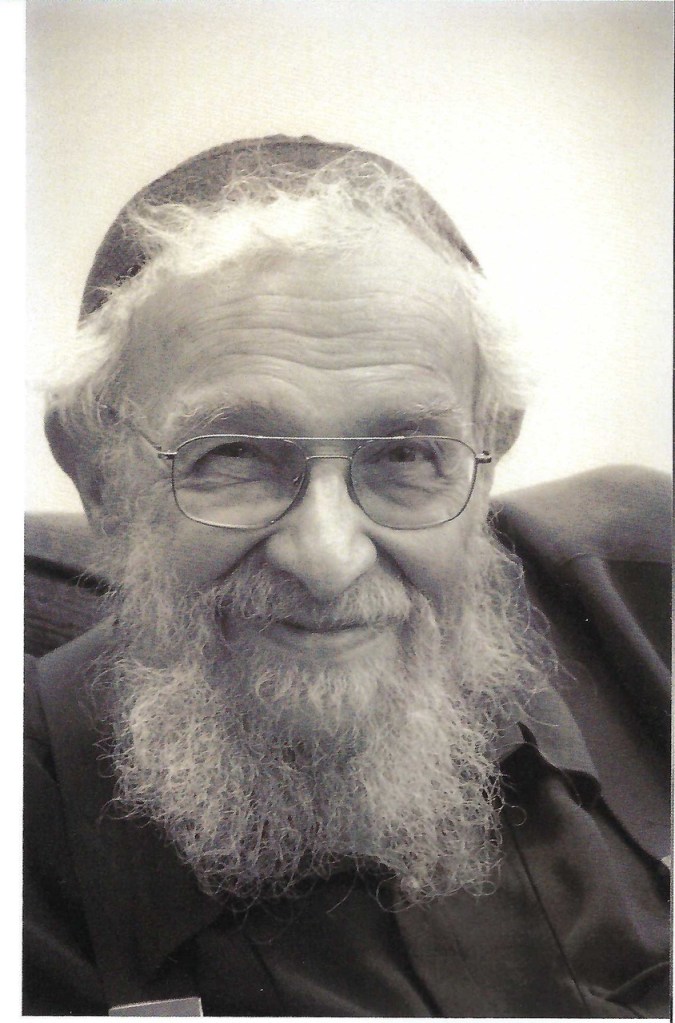
Some time before I turned fifty, I was introduced to Reb Zalman Schachter-Shalomi’s Sage-ing® work in a workshop led by my dear friends, Rabbi Shaya Isenberg, of blessed memory, and his beloved, Bahira Sugarman. At the time I was working in the field of death and dying. In 2003, I had developed one of the first trainings for end-of-life doulas, and my husband and I were invited into the Sage-ing work to bring a deeper engagement with mortality to its teaching. Reb Zalman understood that we cannot fully live our later years until we have made our peace with their ending. Facing death honestly is part of what turns aging into eldering.
What I didn’t expect was how much the work would give back to me. Sage-ing offered me tools to heal old wounds, to forgive myself and others, and to live more fully in the present moment. And because I was teaching it, I could never set it aside. For the past twenty-five years, every class and every circle has asked me to engage the practices again, to review my life once more, to release what needed releasing, and to keep choosing the elder I want to become. The teacher, as always, has been the first student.
That engagement eventually found its way onto the page. Together with my dear friend Rabbi Malka Drucker, who is ten years my senior, I co-wrote Embracing Wisdom: Soaring in the Second Half of Life. Once again I found myself in conversation with someone walking a little ahead of me on the path and writing alongside her taught me as much as anything we put into the book.
Reb Zalman spoke of something he called the unlived life: the dreams we set aside, the paths we didn’t take, the parts of ourselves we never had time to live. Many of us arrive at our later years carrying that quiet weight. He taught that the unlived life isn’t gone. It’s waiting.
I wish more of us knew that. It saddens me when I see people, and women in particular, absorb our culture’s judgments about aging and begin to feel invisible. Some tell themselves and others that they must become outrageous in order to be noticed. Others accept the verdict and quietly make their lives smaller. Neither response is freedom. Both are reactions to a story someone else wrote.
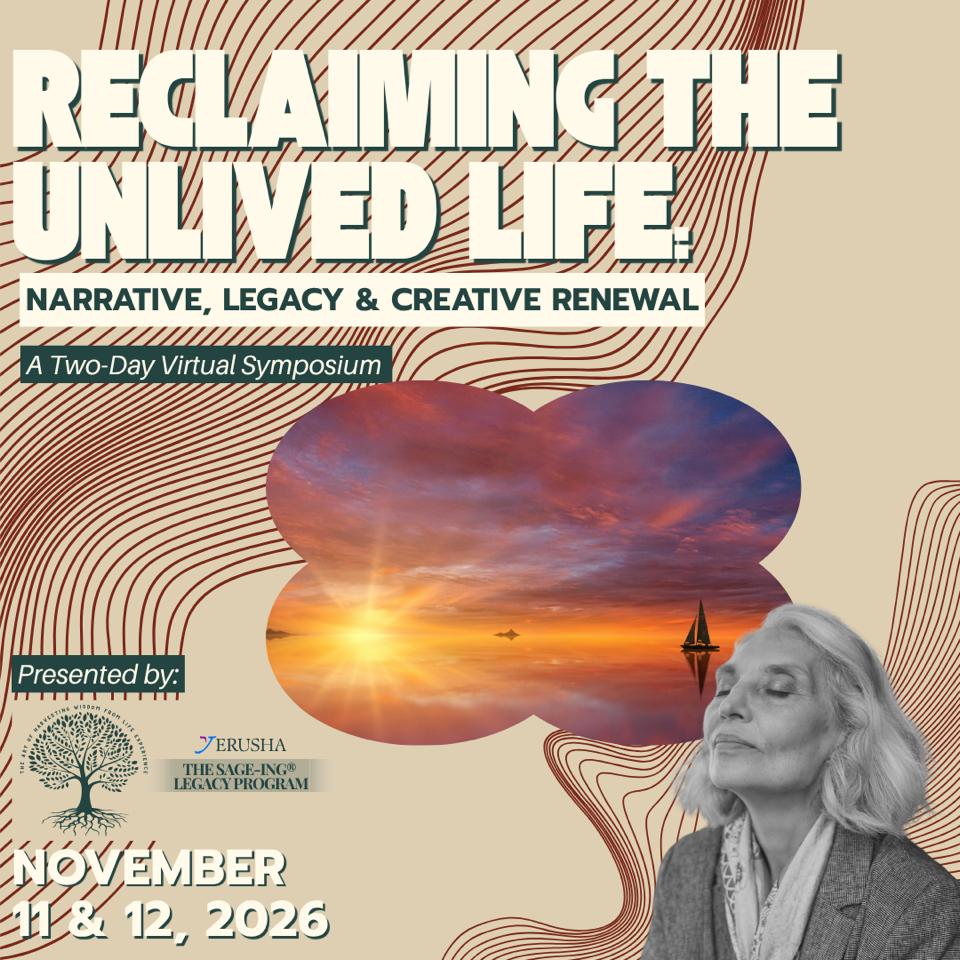
That is why, at Yerusha, we continue to teach the Sage-ing/spiritual eldering work. And it is why, this November, we are hosting a symposium to inspire elders to embrace this most blessed season of life.
Reclaiming the Unlived Life: Narrative, Legacy and Creative Renewal
For two days, we will gather elders around some essential questions. What story have I been living? Who wrote it? And can I write the next chapter myself?
This isn’t about nostalgia, and it isn’t about regret. It’s about liberation. We’ll look at the eighties and beyond not as a time of decline but as a season of real power and possibility.
Eighteen sessions and a keynote open several doorways into the same question: what is still possible for me? Some invite us to look back with fresh eyes, like Reweaving Our Tapestry, on reviewing our lives and legacy, and From Flaw to Legacy, which helps us find the hidden wisdom in our hardest experiences. Others turn toward creativity itself: poetry as medicine and prayer, the making of Jewish ritual objects, and the power of dreams in later life. Still others look straight at the road ahead, like 80+: The Season of Special Strength and Living Life Into the 90s: Full Circle.
I especially love the title What Got You Out of Egypt Will Not Get You Into the Promised Land. The skills that carried us through our working and parenting years aren’t always the ones we need now. Eldering asks us to learn something new.
Grandparent as Elder is about rewriting an inherited script. Many of us learned to be grandparents by watching our own, and that model doesn’t always fit who we are or what our grandchildren need today. Done consciously, grandparenting can be one of the most powerful ways we pass wisdom forward. I think of my Savta, and of how much she passed to me simply by being who she was.
We are also making room for an honest conversation about psychedelics in the elder years. There is a growing body of research and experience around how these medicines, used with care and intention, can help people face mortality, release old fears, and open to a larger sense of meaning. We’re not promoting anything. We are listening to how elders are expanding their vision of what this stage of life can hold.
And one of my favorite surprises on the program is a session on AI as a reflective companion, something that can help elders gather their stories, organize their thoughts, and pass their wisdom on. Elders are so often left out of conversations about technology. This one puts them at the center.
Our keynote speaker, Dr. Marc Cooper, is eighty-one, and he has lived many lives: academic, researcher, healthcare provider, entrepreneur, consultant, teacher, and now great-grandfather. He speaks not from theory but from experience, and he is candid that his path toward elderhood has been profound and often messy, full of failures and reinventions. His message is simple and challenging: growing old is inevitable, but becoming an Elder is a choice. We are taught how to build careers and plan for retirement, he says, but no one teaches us how to turn decades of living into wisdom. He describes the invisible suitcase so many of us carry, packed with postponed dreams and futures we quietly gave up on, until by late life it can weigh more than the person carrying it. He wants to help us set it down. He has even given the symposium his own name: Reclaiming Your Unmet Future.
The world needs its Elders now more than ever. And I believe, as my teachers showed me, that some of the most creative and authentic chapters of our lives may still lie ahead.
Join us
The symposium is virtual and takes place November 11 and 12. Every presentation will be recorded, and all registered participants will receive links to the recordings within two weeks of the event. Because many sessions run concurrently, choosing one doesn’t mean losing the others. And if you can’t set aside two full days, your registration still opens the whole program to you afterward.
Still, I hope you’ll be with us live as much as you can. Your presence lets you engage fully with the presenters and with one another, and it enriches the experience for everyone gathered. At the close of each day, we’ll meet in small breakout groups to share what we’ve experienced and to begin building connections with other elders on this path.
Learn about our presenters and register here.
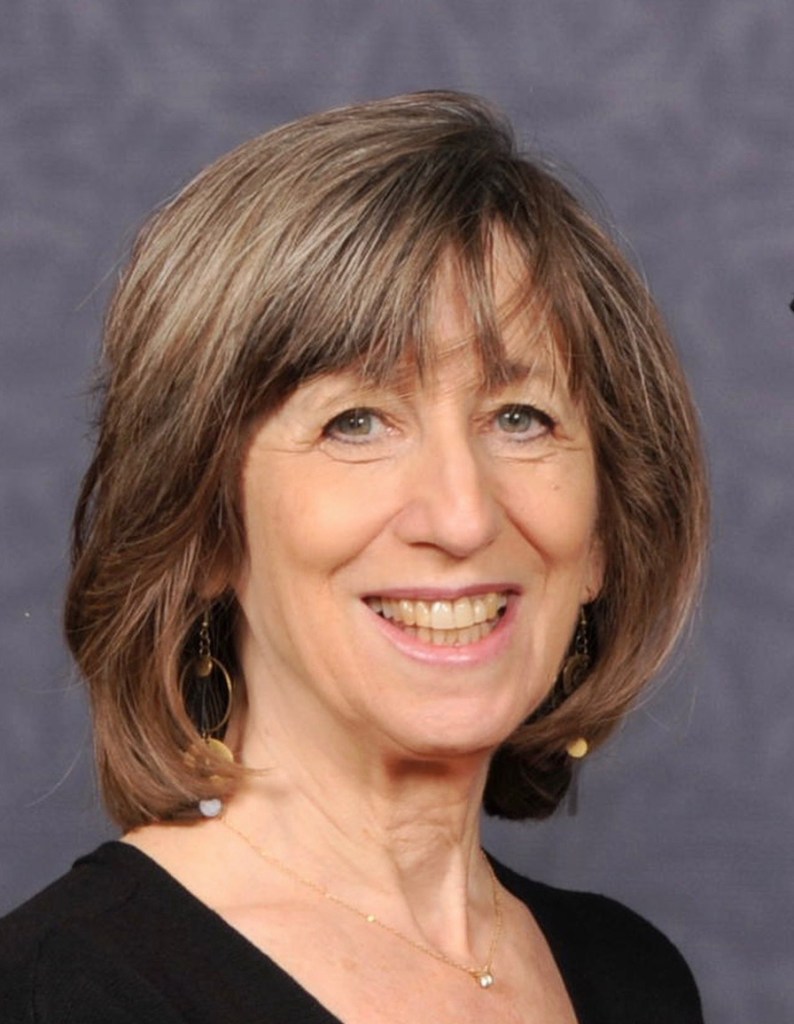
BIO: Rabbi Nadya Gross, is a Founder and Chief Programming Officer of Yerusha, a progressive, multi-faith educational organization committed to interfaith diversity and paradigm shift. Trained in a Jewish indigenous mystical tradition by her grandmother, she transmits the teachings in a two-year wisdom school: Secrets My Grandmother Told Me. Nadya is also a congregational rabbi, spiritual director and teacher. She and her husband, Rabbi Victor Gross, serve Congregation Pardes Levavot, in Boulder, CO which shares space, study, occasional worship and good works in the community with Shepherd of the Hills Lutheran Church. This has been a living laboratory for the practice of Deep Ecumenism – a concept first articulated by Rev. Matthew Fox and developed by her teacher, and founder of the Jewish Renewal movement, Rabbi Zalman Schachter-Shalomi.
Discover more from Feminism and Religion
Subscribe to get the latest posts sent to your email.

