Two Poems: Crucifixion and Renewal by Sara Wright

(The Mark of the Bear is Upon Her)

CRUCIFIXION

Part I

She listens
to those
who intone
Betrayal
break hearts
open

love
pours golden
honey
healing
blood
soaked
wounds

truth
often
lies hidden
deep
beneath
kindly words

torment
tears holes
in fragile
skin

without
closure

Continue reading “Two Poems: Crucifixion and Renewal by Sara Wright”

Poetry by Mary Saracino

Mary Saracino’s statement on poetry: Poetry is based on intuition, emotion, something that is not really express-able other than through the poem. It’s a dialogue or conversation between the poet and the Soul (the collective unconscious, in my opinion), which then presents itself to the world. It can be a powerful medium for restoring, reviving, and revitalizing the memories of the Divine Female and reclaiming female sovereignty. Our planet, humankind and our plant and animal kin are in dire need of a paradigm shift, returning us to the time before patriarchy defiled women and usurped the natural order of the world. 

Resurrection By Mary Saracino

Deep in the coils of memory our DNA
sings ancient songs of life, death, regeneration.
We each turn on our own axis,
as the Earth turns through her seasons,
winter’s fallow followed by spring’s eternal greening.
All sacred litanies arise from her soil,
take to the sky, return their blessings
to the wells, the rivers, the oceans.
Why can’t we remember?
Our souls are hung on crosses,
our limbs bound, our hands and feet
nailed to unrelenting dogma,
our tender ribs pierced with thorny spears,
our vulva-wounds ooze with bloody amnesia.
We have forgotten where we come from:
the dank caves of consciousness
littered with the bones of
stone age lovers painted ochre-red
to honor menstrual blood, the original river,
to honor, too, its womb-source, our  primal passageway
the portal from which we all emerged, mouths open, wailing
for our mother’s breast,
seeking the milk that sustains us.
Like spring we are born again and again;
we circumnavigate our lives, spiraling forward,
circling back, orbiting our hearts
until we open to the sun
like red tulips in a once-fallow field,
dancing in the breeze, loose with joy,
sharing our subterranean secret,
reviving the buried bulb’s dormant hopes,
reveling in our resurrection.

Previously published: “Resurrection,” April 5, 2013

Subterranean Rage By Mary Saracino

Deeper than bone
deeper than muscle or sinew
or tenacious tendon
this howl of ages
rivers through bloodlines, ancient as oceans
salty as the primeval seas
this is what happens to women who
out-step their bounds
dare to be bold, brazen
speak up, name the subterfuge
women who grit their warriors’ teeth
fight on, for their children
their lovers, their nation
their homes, their hearts’ desires
branded as heretics: witch, bitch, cunt, whore
they race through forests and fields
trying to outrun the acrid scent of their own sweat
running from the hellish hounds
the priestly proclamations
the wrenching bite of the strappado*
running for their lives
caught between sinner or saint
rarely allowed sovereignty over Self
over mind & womb, over laws meant to undo them
Thousands of straggled cats launched the Plague
tender necks swinging from tree limbs
flaccid, cold paws an omen: the rats will have their day
Crucibles of change, cauldrons
of sorrow, voices stymied for ions by the threat of extinction
womb-wisdom silenced by public outcry
burned at the stake of cultural conditioning
the subterranean outrage
seeps out, sharp as knives
sharp as memory
sharp as justice denied
sharp as the bloodied knives
eviscerating their midnight powers
Deep is this grief
Deep this anger
A dirge of rage lost to the winds of time.
The weeping memory wails, still.
Hear it the moonless night sky,
touch it in the hot light of noon
smell it in the poisoned soil
taste it on your remembering tongue
see it in the burning irises
that bear witness to this unyielding genocide.

* Strappado is a form of torture, employed by the Inquisitional tribunals against women accused of witchcraft. Victims were suspended in the air by means of a rope attached to their hands which were tied behind their backs, causing their arms to be dislocated.

Previously published: “Subterranean Rage,” October 30, 2013

Tharros, Sardegna By Mary Saracino

The stones share their secrets with the sea,
the brilliant blue sky, the tasseled grasses,
the trees—and any humans who will listen—
defying history’s edicts to remain silent.
Parched by the wind and the rain,
the stones speak fiercely of love and of times lost
as outcroppings of brilliant wildflowers
sing sacred songs in the sunlight.
This ancient place is nestled
against a rugged shoreline,
its far-away culture castaway like a forgotten dream,
buried beneath rocks and earth;
here, the outcast souls bloom once more
in the red poppies
whose bloody tongues
whisper: “Remember, remember, remember.”

Author’s note: This poem was inspired by the ruins at Tharros, Sardegna during a visit I made in 2004 as part of a Dark Mother Study tour of that island led by Lucia Chiavola Birnbaum. I think of these ancient places as sanctuaries, containers, wombs, collecting and holding the memory of the Great Cosmic Mother; I see the flowers, the red poppies (sacred to Astarte) sprouting up among the archeological ruins, as Her resurging; blood red poppies, blood lines, blood flow; menstrual memory, carriers of life of memory, of lineage—blood-red, like flowery blooming tongues, telling their stories; reclaiming their truths; waving in the breeze, bending into the wind, but not submitting, allowing the wind to carry their message, carry their poppy seeds of memory out across the fields; kernels of memory—like an amnesic remembering, then speaking.

Previously published: “Tharros”, June 19, 2015

Mary Saracino is a novelist, poet, and memoir writer who lives in New Mexico. Her most recent novel is Heretics: A Love Story (Pearlsong Press 2014). Her novel, The Singing of Swans (Pearlsong Press 2006) was a 2007 Lambda Literary Awards Finalist. She is the author of the novels, No Matter What and Finding Grace, and the memoir Voices of the Soft-bellied Warrior. Mary’s short story, “Vicky’s Secret,” earned the 2007 Glass Woman Prize. Her poetry, fiction and creative nonfiction have been published in a variety of literary and cultural journals and anthologies, online and in print.

The Furious Sun in Her Mane: Nine Poems to Goddesses by Annie Finch

Poet’s Note: I composed this sequence of poems for performance, for chanting, and for devotion. I wanted people who would hear, read, memorize, and speak each poem to channel the original energetic patterns that the poets who best knew that Goddess used to connect with Her. So for each poem, I researched the meter and prosody of the original language in which that Goddess was first worshipped.  Then I carried the exact rhythmical pulse of Her language into my poem to Her in English.

The sequence was set to music by composer Laura Manning and choreographed by Georgia Bonatis, and I directed and performed a devotional dance collaboration version of it in 1994. That archival video of this performance has just been recovered for the first time in 31 years. It is now posted on my Youtube channel.

Continue reading “The Furious Sun in Her Mane: Nine Poems to Goddesses by Annie Finch”

She Spoke My Name: Finding the Feminine Divine in Silence, Fire, and Verse by Madeleine F. White

Two years ago I was in Pembrokeshire in South Wales. The retreat I’d taken myself to consisted of a collection of stone and flint buildings  half way up a mountain and set around a farmhouse and chapel. I had come to find a way through my writer’s’ block and also to deal with a couple of really painful family issues.

My room was only a half corridor away from the chapel itself. It was four o’clock in the morning and because I was quite close to the kitchen on the other side I had my earplugs in. Despite all this, on the second night, I quite clearly heard a woman’s voice calling “Madeleine,” loudly enough to wake me and send me looking down a deserted corridor. It was not imagined or metaphorical, but distinct and unmistakably real. The experience startled, not because I was afraid but because I recognised the truth of it. This familiar, maternal and sacred truth led directly to the writing of Maiden Mother Crone, my second poetry collection just a few months later as well as a resolution of the two other issues that had weighed so heavily on my mind.

Continue reading “She Spoke My Name: Finding the Feminine Divine in Silence, Fire, and Verse by Madeleine F. White”

Three poems by Rebecca Rogerson

Don’t Take Me to Church

He never let me eat communion because I wasn’t a catholic, but it was okay for me to eat his dick. My tiny palms forced to stroke him, the same dextrous hands that coloured in the lines. 

I knew his God wasn’t my God. I knew she saw everything there was to see and that he wouldn’t reach salvation; no matter how many Hail Marys he said at mass in Ireland.

The Virgin Mary knew what he stole from me, what they steal from all of us.

I couldn’t fall apart on Sundays at noon when he took me to church—before he took me home after he did what he did—to the little Jewish girl who didn’t know she was Jewish.

I couldn’t remember it because I buried it in Survive, until, it was resurrected by nightmares and demons who professed caring and brought me to altars of despair to vomit up all the darkness, and when there was no more left to cleanse or tear out; light ripped in.


No one talks about the embarrassment that goes along with the telling, sharing and surfacing of sexual violence. How it comes up, how it comes back. How we’re always haunted by the deadbeat dead and grabby grandfathers who try to reach from there into here, pretending they are made of heaven.

I fled a friend’s choir concert because perpetrators keep stealing time, moments, sleep, joy, and friendship, in churches and baths. On my flight, I hunted for nature, soil and anything else that felt most alive in the hilly town of Nelson. Pretending I was like everyone else, I hid the panic that strikes broken hearts.

Continue reading “Three poems by Rebecca Rogerson”

Two Poems by Rebecca Rogerson

ROSE WATER

I am the holy place somewhere in the stars of eternity,
 someone’s daughter who seeks reprieve somewhere.

Yetta changed her name to Mary. She tried to erase her past, not as a Jew, well maybe some of that, but more as a Jew molested by her father—a frum[1], “Monster”, his daughters called him.

On my altar sits my tallit alongside a Menorah with seven brass holders. No stars of David—before or after the decimation of Gaza. Can rose water sweeten our hearts? We pour it graciously in our hands, hoping the lost petals heal our guts and brighten our thoughts. She searches hungrily for hope in glass bottles adorned with Farsi, that cost $4.29 each.

Continue reading “Two Poems by Rebecca Rogerson”

Regeneration by Annelinde Metzner

This time one year ago, our world here in Appalachia seemed like it hadn’t changed in a thousand years.  The giant, churning, awesome power of Hurricane Helene had not yet whipped our waters into a frenzy, and caused the mountains to slide downhill, carrying our lives away.  And yet, from just below the earth’s surface, Spring reappears with all Her perseverance, Her steadfastness, Her fertile abundance.  The slow, steady regeneration of our Mother inspires me to keep going, day by day, hour by hour.

Primavera

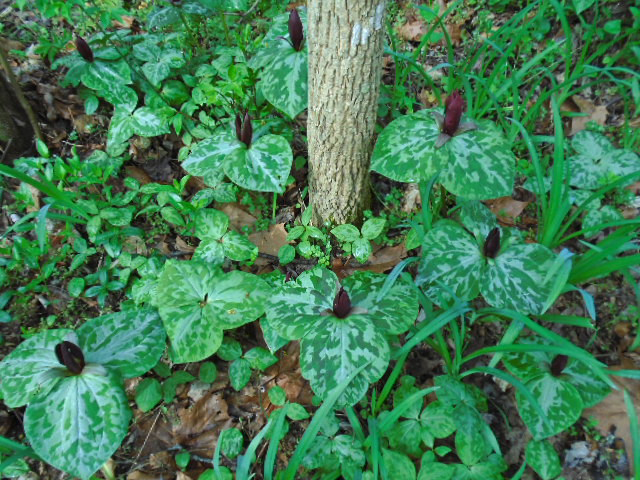
Toadshade Trillium

The newness of Spring, Primavera,
”first green,”
soft petals that banish Winter’s icy grip,
the return of the Galax, the trillium,
the return!
Full-blown rebirth,
bright, brilliant green shining in the sun,
Spring!
Rebirth decked out like a debutante
with a roomful of courtiers,
flipping the world from darkness to light.
Ferns unfurl,
fiddleheads play on the forest floor,
insects awaken and buzz 
in a hundred keys of life.
Humans awaken too, reminded once more
of the richness of the return.
A breeze blows over the galax,
the Mayapples spread their elegant leaves
The promise of the Great Mother:
we will begin again.

Continue reading “Regeneration by Annelinde Metzner”

The John Howard Society: Poetic Justness & Hope by Margot Van Sluytman

COMMUNITY

Unexpected comfort
Permeated raw, cold ache.
Warmth melted sorrow.
Embraced we are.
Once again
Knowing we are loved.
And loving too.

©Margot Van Sluytman

~~~
“Supporting neighbours. Protecting communities. Providing supports. Rebuilding lives.”
Donna De Jong, Executive Director of The John Howard Society, Hamilton-Burlington, Ontario, Canada.
~~~

I think often about why and how community matters. About joy and justice and hope and healing. And indeed, the importance of spaces such as our own here on FAR, this community of poets, writers, artists, activists, advocates, allies, academics. Each whose choice to put pen to page, affords light and life to throb and to thrive.

Continue reading “The John Howard Society: Poetic Justness & Hope by Margot Van Sluytman”

Ice Above and Below and the Coming of the Light by Sara Wright

January’s twilight
hours draw me
into her pale embrace
stalactites and frozen
streams whisper
that winter’s skin
is thin even with
months to go
flowing water
is muted
under seeded snow
underground roots
pulse
with light
 sleeping
forest boughs
wake in wild winds
crack and moan
rest in peace
 at dawn
bears sleep
fox and weasel
seek slivers of
open water
I walk in slow
motion to
stay upright
at the edge
of a meandering
serpentine stream
listening for
the scent
of just one
hemlock singing
feeling the tangles
of gray and green
 Indoors
standing at the window
I ask
 how many
forested eyes
are meeting my own?

Continue reading “Ice Above and Below and the Coming of the Light by Sara Wright”

Two Poems by Alice Bullard, PhD

Dear FAR Community, These poems arise from feminist spiritual practice with syncretic dimensions. The Irish-American Catholicism of my family mixes with the popular American confessional-style that charts and embodies emerging spirit, yet this very American path of self-styling and narrative self-creation has been refined via the influence of Zen practices, originally via the influence of the Soto practictioners of Green Gulch in Marin and then later via the teachings of Vietnamese refugee and Zen Buddhist monk, Thich Nhat Hanh. The feminism here is deeply personal, political, and spiritual.

This post was inspired by one written my Janet Maika’i Rudolph about Alice Munro which you can read here.

About Alice Munro: I experienced the revelations of her daughter very personally … I’ve read Alice Munro since I was very young and used to read my parent’s copy of the New Yorker. Because we shared the name Alice and also shared the cold Midwestern prairie though she was further north and across the border, I had always felt some affinity for her but also I felt something I really didn’t get. To me her stories took inexplicable turns and now we know why. Her daughter’s experience is dreadful and probably much more common than anyone would care to admit. That Alice Munro was famous doesn’t make that type of negligent mothering something rare.

Continue reading “Two Poems by Alice Bullard, PhD”