 As I mentioned in my January 30, 2016 post, Grace Jantzen in Foundations of Violence makes a compelling case that Diotima is a fictional figure. She does not, however, adequately distinguish her from the poetizing female figures Parmenides and Boethius portray as instructing them in their respective works. If nothing else, the quality of the poetry of Parmenides and Boethius betrays the influence of a very real woman: Sappho.
By contrast, Plato essentially portrays Diotima as the personification of his philosophy–his metaphysics–and it is hard to believe there was such an ancient Greek woman. Although the term ‘metaphysics’ derives from a neologism coined in Greek centuries after Plato and Aristotle lived, its meaning (‘beyond’ (meta) the ‘natural,’ or ‘embodied’ world (physics)) appropriately characterizes what Diotima and hence Plato’s philosophy is all about. A key passage is where she characterizes the most intense love as “gazing at and being with” the beloved, without even the need to “eat or drink.” That leads her to ask rhetorically whether it would not be best to gaze at what is not “infected” by flesh and blood (Symposium (211 d-e)).
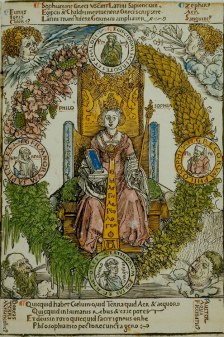
Continue reading “Plato’s Diotima as a Symptom of Psychosis by Stuart Dean”
 One of my morning practices is
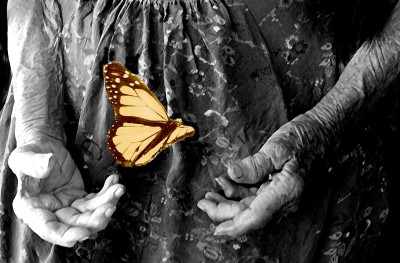
 The summer is getting late. School supplies are coming in, and it is time to try on the uniform pants in order to get them hemmed before the first day. I always feel a little funny at this time of year, almost queasy from my mixture of nostalgia for waning days at the pool and excitement for crisp plaids and fresh notebooks. I continually miss the scents of summer skin, chlorine and suntan lotion, even while I look forward to the autumnal fragrances of newly sharpened pencils, cinnamon sticks, and rubbery Halloween costumes. Time, at this transitional time, is always pregnant with the promises of both bounty and loss, so I am not surprised by my wistfulness as we turn to fall. I am, however, taken by its depth for me this year. For, this transition has been a little heavier than usual as I ask myself, “Where did it go?” and “What did I do?”


 Let the creative word romp begin! Our exercise will be simple, yet challenging. I invite you to write one devotional poem per day for the next seven days about whatever moves you spiritually that day in whatever poetic format the words emerge.
 I concluded