
If Jesus Ran for President by Gina Messina

Gina Messina-Dysert profileIf Jesus ran for president, what would his campaign look like?  Where would he stand on social policy? Who would be his running mate? Who would (not) vote for him?  With our current political dialogue dominated by supposed Christian views and a nation that overwhelmingly claims the teachings of Jesus as the basis for its morality, what would the response be if we came face to face with the (unintentional) founder of the tradition?  How would we really respond to Jesus’ teachings in contemporary society? And maybe more frightening, how would Jesus respond to us?

Imagine that Jesus was in the US today and launched his bid for the Whitehouse. Don’t imagine him announcing on the deck of an Aircraft Carrier, he’s more of a Homeless Shelter guy. Would he be the conservative “Christian” he is often labeled by the right? Would he be a Democrat as so many book titles have claimed? A libertarian? Green party? How do his teachings measure up with the various political parties and would there be room for Jesus at any of their tables?

What would Jesus think of our current and past presidents, nearly all whom have invoked the Lord’s name during their time in office.  What would he think of both Jimmy Carter and George W. Bush claiming that God wanted them to run for POTUS?  What about Bush’s (and Ronald Reagan’s) claim that God guided all of his policy making decisions while in office? And what about Barack Obama’s statement that when it comes to his politics, at the end of the day, “God is in control”?

Although not bringing God into the conversation would be career suicide for any politician and a large population of voters in the US claim a Christian identity, few would actually vote for Jesus if he ran for president.  Many of the values and ideologies associated with Christian views are in direct contrast to the teachings of Jesus.  For one, Jesus was anti-materialistic and we are living in one of the most gluttonous nations in the world.  Let me say upfront, I am guilty.  I have an unhealthy obsession with handbags and little makes me happier than a good sale at Nordstrom. I own it. But that doesn’t change who Jesus was or his teachings. Even if he was alive today I don’t think Jesus would be swayed by Nordstrom—-although I have seen amazing sandals there.

We have adopted Jesus as an American Icon, and in doing so, have twisted his words and teachings to support our own ideas.  It’s enough to make one think those WWJD bumper stickers stand for “What Wouldn’t Jesus Do?” And so, if Jesus did run for President, it is impossible to imagine, in a country that has adopted him as its icon and claims a “Christian” identity, that Jesus would ever be elected. His understanding, loving  approach would probably bar him from even getting a reality show—which appears to be key for a presidential resume these days.
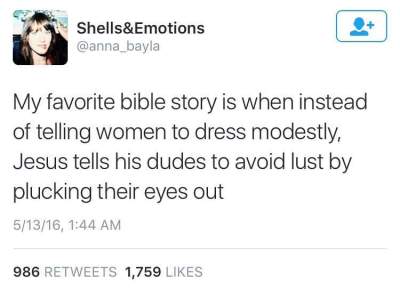
Jesus Tweet

That’s right.  Likely no Christian would vote for Jesus and most would attack him for his teachings and politics – yes, Jesus was highly political. Some might like his message, but the media would label him unelectable and the GOP would go after him for being a left-wing, pro-union, welfare supporting, Obamacare enthusiast and democrats would argue that Jesus is a nice guy but doesn’t know a thing about running a country. If it came down to it, and the country was under threat, Jesus would never push the red button. Both would rather him be a mascot for their campaigns – “Jesus the carpenter” – AKA the new “Joe the Plumber.”

While Jesus the American Icon might have a chance in a presidential election, Jesus the Jewish carpenter of the Gospels would be laughed off the ballot.

This article is an excerpt from  If Jesus Ran for President coming from the Far Press in Fall, 2016 and was co-written with Steven Mazan.comingspring 2016
Gina Messina, Ph.D. is Assistant Professor of Religion and Gender Studies at Ursuline College and Co-founder of Feminism and Religion. She writes for The Huffington Post, has authored multiple publications and is the co-editor of the highly acclaimed Faithfully Feminist: Jewish, Christian, and Muslim Feminists on Why We Stay. Messina is a widely sought after speaker and has presented across the US at universities, organizations, conferences and on national platforms including appearances on MSNBC, Tavis Smiley, NPR and the TEDx stage. She has also spoken at the Commission on the Status of Women at the United Nations to discuss matters impacting the lives women around the world. Messina is active in movements to end violence against women and explores opportunities for spiritual healing. Connect with her on Twitter @FemTheologian, Facebook, and her website ginamessinadysert.com.

Kasich Cuts Women by Gina Messina-Dysert

Gina Messina-Dysert profileKasich is cutting women from Ohio’s budget. In an attempt to prove himself a conservative and worthy of the title of POTUS, he has taken a step towards joining the ranks of Trump and Cruz using fear and misogyny as primary tactics.
Beginning with his defunding of Planned Parenthood in Ohio, Kasich is participating in the ongoing marginalization of women in the US based on supposed Christian values. His comment that “women are coming out of the kitchen to support me” demonstrates his inability to recognize the important role that women play in this nation. Likewise, it shows support for the ongoing notion that women belong in the home, and idea firmly entrenched in Christian dogma.

The former Catholic now Anglican presidential candidate continues to buy into the idea of complementarity, that men and women have distinct roles, a teaching Pope Francis calls “an anthropological fact.” And what does this mean? That women belong in the home, rearing children, and cooking for their husbands while men do the “important” work. Continue reading “Kasich Cuts Women by Gina Messina-Dysert”

Pope Francis, Complementarity, and US Politics by Gina Messina-Dysert

Gina Messina-Dysert profileA theology of complementarity, referred to by Pope Francis as an “anthropological fact,” has had  a strong influence on American politics.  According to the Vatican teaching, women and men have distinct but complementary roles, meaning that women’s value is found in the home as wife and mother and men are responsible for providing for the family.  Such a teaching is highly problematic in that it demeans women’s value and places women on the underside of dualism.
As a woman with an ongoing struggle with infertility, I find it troubling that my church sees my value as less because my womb is barren. Likewise, do women have less value if they choose a career over motherhood?  What if they choose not to marry?  There are also clear implications for single parents, LGBTQ parents, and so on.  In addition, societal norms make clear that women’s work in the home is not valued as the work of men in society.  Likewise, it is damaging to men in that it refuses to acknowledge the critical role men play in the household, in the lives of their children, and their responsibilities to be partners and co-parents.

The idea of complementarity upheld by Pope Francis greatly contributes to economic injustice for women.  The Vatican’s refusal to value women’s roles outside the home influences US social policy on women’s issues. The continued struggle to close the pay gap, implement paid parental leave, and create viable options for childcare and early childhood education are directly connected to complementarity. If women are supposed to remain in the home and be wives and mothers, then there is no need to address any of these issues. How can we possibly have women in leadership roles if they are supposed to be at home cooking dinner and caring for children? And so, when women do pursue careers the social attitude is that women do not belong. Such an idea is even more problematic for women of color who suffer a lower pay rate – $.64 on the dollar for African American women and $.54 for Latina women. Furthermore, many have have been forced to work outside of the home as a result of economic and racial injustice.  In this secular nation, Christian values dominate our political debates and perpetuate the idea that women are subordinate to men. And to be frank, these are community issues that impact men as well as women; yet they have been deemed women’s issues as a result of the manifestation of theological teachings.

As republicans focus on defunding Planned Parenthood, ending marriage equality, protecting religious freedom, and claiming issues like parental leave are not federal issues, women continue to be relegated to second class status. In a time of turmoil and multiple threats to the progression of our nation, there is greater concern for regulating women’s bodies than guns.

https://www.youtube.com/watch?v=17RJfgsTQUc

Pope Francis has been praised for his commitment to the poor; yet he has been unable to make the connection between poverty and the women’s issues that exist as a result of complementarity.   Likewise, the Church’s stance on reproductive justice continues to perpetuate the very issues that the pope seeks to address.  As Sr. Joan Chittister points out:

I do not believe that just because you’re opposed to abortion, that that makes you pro-life. In fact, I think in many cases, your morality is deeply lacking if all you want is a child born but not a child fed, not a child educated, not a child housed. And why would I think that you don’t? Because you don’t want any tax money to go there. That’s not pro-life. That’s pro-birth. We need a much broader conversation on what the morality of pro-life is.

No doubt, his lack of relationships with women is a major contributing factor to his ignorance when it comes to such issues – by the way, which could be easily fixed by embracing women’s ordination. And so, as Pope Francis has become an international figure deemed a savior to the people, these disconnects fuel ongoing US political debates that keep women in a marginalized position and continue a cycle of poverty and oppression.

Pope Francis has called for a “Year of Mercy” in which he has stated that if a woman confesses having an abortion, she will be forgiven.  Many have praised the pope for taking such a step towards healing; yet, I can’t help but think, “how judgmental and irresponsible.”  Without knowing a woman’s circumstance, her decision making process, her doctor’s concerns, etc., why should one be told to repent? To deny women the right to reproductive justice is to deny women the ability to make decisions about their physical, emotional, and financial health – and we see this play out in the US as a result of the influence of complementarity in our political system. So, in this “Year of Mercy,” I wonder will the Vatican confess its sins against women, LGBTQ persons, and others it has marginalized?

comingspring 2016Portions of this article are excerpts from If Jesus Ran for President coming from the Far Press in Spring, 2016.

Gina Messina-Dysert, Ph.D. is Assistant Professor of Religion and Gender Studies at Ursuline College and Co-founder of Feminism and Religion. She writes for The Huffington Post, has authored multiple publications and is the co-editor of the highly acclaimed Faithfully Feminist: Jewish, Christian, and Muslim Feminists on Why We Stay. Messina-Dysert is a widely sought after speaker and has presented across the US at universities, organizations, conferences and on national platforms including appearances on MSNBC, Tavis Smiley, NPR and the TEDx stage. She has also spoken at the Commission on the Status of Women at the United Nations to discuss matters impacting the lives women around the world. Messina-Dysert is active in movements to end violence against women and explores opportunities for spiritual healing. Connect with her on Twitter @FemTheologian, Facebook, and her website ginamessinadysert.com.

Gun Control and Party Lines by Gina Messina-Dysert

Gina Messina-Dysert profileGuns and bibles have somehow become linked in this nation. Particularly throughout the midwest and the south, many associate their right to own a gun with their Christian religious values.  I personally find this confusing given Jesus’ stance on non-violence.
Many call me a “gun hater,” and that might not be too far from the truth.  But with that said, I need to be honest and share that there are guns in my home. They belong to my husband, Chris, but they exist in my space. It was a major issue that we debated before and after we were married.  Growing up in Ohio, Chris started hunting at a young age and continues to do so today (yes, he does eat what he kills).  We have a six year old daughter and I find it very difficult to cope with the fact that we own guns with a child in the house.  Nonetheless, we own a gun safe and take proper precautions.  And although I don’t like guns and I don’t like hunting, after fifteen years of marriage, I finally told my husband that I am going to stop judging him for his hunting lifestyle – it seems like the Jesus thing to do. *read sarcasm

I share this to say that the gun debate that exists in this nation also exists in my home.  Both my husband and I feel very strongly about our stances.  But we love and respect each other and so we find ways to compromise and ensure that in some ways we are both getting what we want, our rights our being honored, and safety is always our first concern.

The gap in the gun control debate has grown substantially in the last few decades.  During his presidency, Ronald Reagan argued that “I do not believe in taking away the right of the citizen for sporting, for hunting and so forth, or for home defense. But I do believe that an AK-47, a machine gun, is not a sporting weapon or needed for defense of a home” (February 6, 1989).  I don’t disagree with this position, and I don’t think many would.  However, the debate over gun control has become about party lines rather than a reasonable law that honors rights and is committed to safety.

In 2015 there were more mass shootings in the US than days in the year. In fact, the US has one of the highest murder rates of developing countries with nearly three quarters of those murders being committed with a gun. In addition, gun control is a serious women’s issue given that most women murder victims are killed by a gun by someone they know. Following the mass shooting at Umpqua Community College on October 1, 2015, Obama commented, “Tally up the number of Americans who’ve been killed through terrorist attacks over the last decade and the number of Americans who’ve been killed by gun violence, and post those side-by-side.”  So here are those numbers:

From 2005-2015:

  • Americans killed in terror attacks on US soil: 71
  • Americans killed by gun violence in the US: 301,797

Whether you are an Obama supporter or not, you have to admit, the numbers don’t lie. Also important to note, mass shootings only account for about two percent of gun deaths annually. Most of those killed by guns are murdered in various situations from domestic violence, to arguments at the bar, to road rage; there are numerous situations that result in someone being murdered with a gun in the US each year.  When I hear Trump propose that there should be no such thing as a gun free zone, I wonder if he is really looking at the issue with a critical eye?

Many republicans don’t disagree that some level of gun control is needed. For instance, in January, 2013 now Speaker of the House, Paul Ryan stated “I think we need to find out how to close these loopholes and do it in such a way that we don’t infringe upon people’s Second Amendment rights.” He continued, “We had this issue, 2001, 1999 I think … when I first got into Congress. At the time I remember thinking, ‘You know, there is a loophole here. We should address that.'”

However, in January of 2016 when President Obama announced his executive action aimed at reducing gun violence, Ryan criticized him for being “dismissive” and called his actions unconstitutional.  Focused on expanding background checks, registration for licensed gun dealers, and narrowing the gun show loophole, Obama’s executive action mirrors Ryan’s call for change in 2013.  However, once the plan was proposed by a democrat, Ryan argued, “We all are pained by the recent atrocities in our country, but no change the president is reportedly considering would have prevented them…At a time when the country wants the president to lead the fight against radical Islamic terror, this is yet another attempt to divide and distract from his failed policies.”

Likewise, Marco Rubio took to the airwaves claiming that Obama wants to take away everyone’s guns.  In an interview on Good Morning America, Rubio made this argument and was quickly called on the carpet by George Stephanopoulos.  Backing down, barely, Rubio acknowledged that the executive action would not take away gun owner rights, but continued that he strongly believes this is the ultimate goal of Obama. Rubio then followed up calling all citizens to purchase guns.  Appearing on Face the Nation with John Dickerson, Rubio argued, “If ISIS were to visit us, or our communities, at any moment, the last line of defense between ISIS and my family is the ability that I have to protect my family from them, or from a criminal, or anyone else who seeks to do us harm. Millions of Americans feel that way.” It seems that fear mongering rather than facts continues to play a critical role in our gun control debate.

While our politicians are obsessed with battling party lines and maintaining partisan stances, our “Christian” nation continues to be one of the most violent.  As a Catholic and a feminist, I would personally like to see harsher gun control laws.  But that said, I wonder, if we fought so vigorously for every person’s right to have food, clean water, and health care as we do for guns, where would we be as a nation? As a people? A global community?  When will our politicians stop focusing on personal vendettas and instead put the needs of the people first?


This article is an excerpt from Jesus in the White House coming from the Far Press in Spring, 2016.

Gina Messina-Dysert, Ph.D. is Assistant Professor of Religion and Gender Studies at Ursuline College and Co-founder of Feminism and Religion. She writes for The Huffington Post, has authored multiple publications and is the co-editor of the highly acclaimed Faithfully Feminist: Jewish, Christian, and Muslim Feminists on Why We Stay. Messina-Dysert is a widely sought after speaker and has presented across the US at universities, organizations, conferences and on national platforms including appearances on MSNBC, Tavis Smiley, NPR and the TEDx stage. She has also spoken at the Commission on the Status of Women at the United Nations to discuss matters impacting the lives women around the world. Messina-Dysert is active in movements to end violence against women and explores opportunities for spiritual healing. Connect with her on Twitter @FemTheologian, Facebook, and her website ginamessinadysert.com.

On the Syrian Refugee Crisis: Unity not Fear by Gina Messina-Dysert

Gina Messina-Dysert profileIn the midst of the Syrian refugee crisis, our humanity is being tested and we are not fairing so well.  Twenty-six US senators have called to refuse entry for refugees in their states, presidential candidate and governor of my home state of Ohio, John Kasich included.
Speaker of the House Paul Ryan who claims to be deeply committed to Catholic social teaching, argues that we must “pause” in responding to Syrian refugees so there can be greater scrutiny.

Presidential candidate Mike Huckabee has also continued his deplorable speech and xenophobia saying “How come they never end up in the neighborhood where the limousine liberal lives? …Behind gated communities and with armed security around. Mrs. Clinton, you have suggested we take in 65,000 refugees. How many can we bring to your neighborhood in Chappaqua?” Continue reading “On the Syrian Refugee Crisis: Unity not Fear by Gina Messina-Dysert”

The Politics of Being a Woman in a “Christian Nation” by Gina Messina-Dysert, Jennifer Zobair and Amy Levin

FF Editors.001

The far right is pitting God against women. Mike Huckabee’s support for the decision to deny a 10-year-old rape victim an abortion is just another example in a long history that continues this election season.

At Fox News’ Republican Presidential debate in Cleveland, Jeb Bush boasted that, informed by his faith, he “defunded planned parenthood and created a culture of life in my state.” When Megyn Kelly asked Scott Walker if he would “really let a mother die rather than have an abortion,” he refused to temper his position that there should be no exceptions to his “pro-life” position.

Ted Cruz professed “God speaks to me every day through the scriptures and this informs my position on religious liberty, life, and marriage.” And Marco Rubio argued that even in the case of rape, women should not have the ability to make choices about their pregnancies. Sadly, such proclamations ignore individual rights, freedom of religion, and the fact that faith as a guiding principle can be dangerous when the foundational teachings of social justice are ignored. Continue reading “The Politics of Being a Woman in a “Christian Nation” by Gina Messina-Dysert, Jennifer Zobair and Amy Levin”

Why I’m Not Watching by Katey Zeh

Katey HeadshotI just can’t. The Planned Parenthood sting operation videos. The GOP debates earlier in the month. I can’t bring myself to watch them. I used to jump without hesitation into the thick of the most vitriolic political exchanges and stand my self-righteous ground with the best of them, but I just can’t anymore.

I can’t. And I won’t. I do recognize that when I choose to tune out the noise of public debate, I am opting out of the conversation, at least in part. I shouldn’t be commenting directly on events of which I am not aware and informed. Nor should anyone else for that matter. I do end up relying on a community of commentators to fill in what I’ve missed by not watching. Continue reading “Why I’m Not Watching by Katey Zeh”

Genderqueering by John Erickson

We find our versions of home in these communities and it is within these spaces where our home not only begins to define who we are but we, as a reflection of that space, begin to outwardly redefine the spaces we exist in. If we slowly begin, through our experiences to shape our homes based on privilege and power without self-reflection and acknowledgment of others, then we are no better than those oppressive forces we say we’re against.

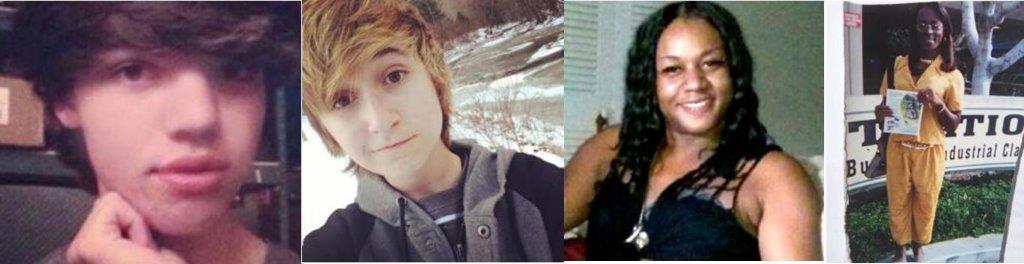
Leelah Alcorn, Ash Haffner, Aniya Knee Parker, Yaz'min Shancez
Leelah Alcorn, Ash Haffner, Aniya Knee Parker, Yaz’min Shancez

This post is a response to a recent blog entry titled “Who is Gender Queer?” on this site from Carol Christ.  The post can be read by clicking here.  I want to thank my friend, advocate, and upcoming scholar Martha Ovadia for reasons only she knows!  Stay brave, speak up, be heard!
_________________________________________

It is terrifying to know that something is wrong but not be able to speak truth to power.

It is even more terrifying to know something is wrong, be able to speak to it, and then silence those voices that do not have that same privilege, power, or position.

The struggle that many of us in positions of privilege and power face is not just that of being ostracizing and essentializing forces—it is that we, as allies, members of communities, or even those dedicated to a cause, can ourselves participate in the oppression we are fighting against and can do harm.

It’s taken me a long time to not only be comfortable with who I identify as, but also how I go about fighting and defining my life based on said identity and experience. However, the one thing that I have the ability to do is choose that identity more freely than others. Unlike Leelah Alcorn, Ash Haffner, Aniya Knee Parker, or Yaz’min Shancez pictured above, I did not have to face the types of oppressions they did, to which they sadly lost their lives, as a result of the fact that we exist in a society that can’t deal with the inability to leave things undefined or to allow people to define who they are on their own terms.

It is vital that although my lived experiences could never meet nor match the same types of oppression that these brave individuals had to face, I, as a white, cisgendered gay male, do not become part of their oppression through my own position and privilege.

As a man who exists in the world of feminism and within various women’s communities, I walk a daily tightrope of privilege and power to insure that I do not silence those that I consider allies, friends, mentors, or colleagues. As a man who exists in the world of the LGBTQ community, I walk an additional tightrope to additionally not take away from or diminish the experiences of those members of our community that do not have the same type of lived experiences as myself.   Even within minority communities, there are positions of hierarchy and within these hierarchies of knowledge, identity, or power, comes a responsibility to insure that the oppressed do not become the oppressors.

We find our versions of home in these communities and it is within these spaces where our home not only begins to define who we are but we, as a reflection of that space, begin to outwardly redefine the spaces we exist in. If we slowly begin to shape our homes based on privilege and power without self-reflection and acknowledgment of others, then we are no better than those oppressive forces we say we’re against.

I can’t speak for what identity feels like –I can only speak for what essentializing does, and what it does is reflected in the deaths of Lelah, Ash, and the many others who die nameless.   It is our responsibility, as allies, members of communities, and those fighting to end sexist, patriarchal, and, even now, homonormative oppression, to make sure that no more deaths occur on our watch or that truth is spoken to power even when power is masquerading around as truth.

John Erickson is a Ph.D. Candidate in American Religious History at Claremont Graduate University. He holds a MA in Women’s Studies in Religion; an MA in Applied Women’s Studies; and a BA in Women’s Literature and Women’s Studies.  He is a Non-Fiction Reviewer for Lambda Literary, the leader in LGBT reviews, author interviews, opinions and news since 1989 and the Co-Chair of the Queer Studies in Religion section of the American Academy of Religion’s Western Region, the only regional section of the American Academy of Religion that is dedicated to the exploration of queer studies in religion and other relevant fields in the nation and the President of the University of Wisconsin Oshkosh’s LGBTQA+ Alumni Association.  When he is not working on his dissertation, he can be found at West Hollywood City Hall where he is the Community Events Technician and works on policies and special events relating to women, gender, sexuality, and human rights issues that are sponsored or co-sponsored by the City of West Hollywood. He is the author of the blog From Wisconsin, with Love and can be followed on Twitter @JErickson85

The Politics of Miztvot by Ivy Helman

headshotRecently, Ben of Ben’s Tallit Shop commented on an older post of mine on this website entitled: “How Literal is Too Literal? My Experience with Tallit Katan.   He wrote, “In my opinion, it makes sense to first try the mitzvah of tzitzit in private for a month or two to ensure you are undertaking it for the right reasons.  Making a political statement is not a valid reason (though some people, I imagine, would argue otherwise).  Mitzvahs and politics don’t mix.”

First of all, this comment is both sexist and patronizing!  A man would never suggest to another man to do what he suggested I do and “try the mitzvah… in private… to ensure you are undertaking it for the right reasons.”  I’d dismiss it entirely if I was that kind of person, but I’m not.  Sexism and patronizing aside (as if one could do that really), I would like to engage with his thoughts on the mixing of politics and mitzvot because I think that can lead to great reflection and insight for Jewish feminists.

Not all mitzvot have an inherently political nature, but many do.  In fact, one could even argue something as seemingly apolitical as lighting Shabbat candles could be political.  Lighting candles ushers in Shabbat peace for one’s household and ideally for one’s community even if that peace is only for one day a week.  Since this is at odds with the world’s political environment of fighting, war and violence, it could be interpreted as a political act.  After all, won’t every day in the redeemed world be Shabbat? Continue reading “The Politics of Miztvot by Ivy Helman”

Incarnating the Mystery with Psychological Awareness by Jean Benedict Raffa

image010As a college professor I taught Children’s Literature. Mythology, stories about humanity’s relationship with the gods, always raised a few eyebrows. Students tended to feel uncomfortable when this term was applied to their own faith traditions since it generally connotes “untrue.” So I found it helpful to note up front that myths are not necessarily literally or historically true, but they’re always psychologically and spiritually true.

From his extensive study of myths, psychologist Carl Jung concluded that we are all born with a “religious function,” an inherent sense of awe about, and longing to connect with the Sacred Mystery of life. He saw it as a faculty of our central archetype, the Self: our core and circumference, our god-image.  Myths, rituals and religious symbols are our attempts to incarnate the Self so that we can be infused with love, hope and holy wonder. Some myths are helpful in this endeavor. Others are dysfunctional; for example, myths which justify the dominance, exclusion or destruction of others considered less worthy or entitled.

When our primitive ancestors reflected on the miracle of life, the Self prompted the thought that because humanity is gendered, the Mystery must be as well.  Since Earth was the foundation of existence and had an inexhaustible fruitfulness, it felt like a Mother. This shaped our earliest images of God. Mircea Eliade noted: “In some cases, the sex of this earth divinity, this universal procreatrix—does not even have to be defined. A great many earth divinities…are bisexual. In such cases the divinity contains all the forces of creation—and this formula of polarity, of the coexistence of opposites, was to be taken up again in the loftiest of later speculation.” Continue reading “Incarnating the Mystery with Psychological Awareness by Jean Benedict Raffa”