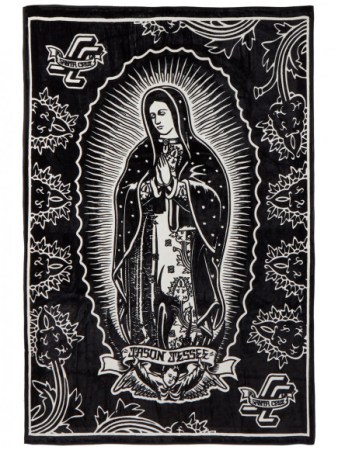
Witness by Sara Wright

Witness


It was dark

when I first heard Her

whooing overhead

bearing witness,

ushering in

the First of the

Harvest Moons.

The seasonal wheel turning towards

ripe fruit and swelling seeds.

Summer’s Bounty.

This goddess

is cloaked

in feathery mole brown splendor

a Sphinx flying

through the night.

S/he heralds the

Gift of Water

answering earnest prayers…

As ‘Changing Woman’ she brings rain

to soften cracked desert ground…


Hidden in a tangle of branches

Owl observes my approach…

When I pass

under the Cottonwood tree

she takes flight in silence.

lands on a snag –

luminous eyes glowing.

Fiery embers

sweeten the night.

Her beneficent

Presence floods me

with wonder –

Oh, I know Her well.

Love seeps through

a body punctured by holes.

Seen at last by my Beloved

I give thanks for Owl

whooo calls my name.

Continue reading “Witness by Sara Wright”

In the Shadow of Santa Rosa by Sara Wright

Last night I had a nightmare.

I am dressed in a white cloak that obscures all but my face. The robe is splattered with paint and blood. I am awash in every color of the rainbow and dripping paint. I have been raped by strangers and no one is accountable.

This morning I could not get this frightful image out of mind but I had the strong sense that it had an impersonal aspect that had nothing to do with me.

This weekend at the Pueblo of Abiquiu the community celebrates the feast day of the first official saint of the Americas, Santa Rosa, and I planned to attend…

The people of Abiquiu call themselves Genizaros. Representing Apache, Navajo, Comanche, Kiowa, Pawnee, Ute and Wichita, detribalized Native peoples from the Plains that were captured and traded during the Indian wars of 18-19th centuries, and sold to New Mexicans as slaves and servants where they were stripped of their identity, instructed in Hispanic ways, and baptized as Christians. The People survived by incorporating Hispanic and Christian cultural practices into a distinct Genizaro consciousness, one that is distinct from the Indigenous Tewa speaking peoples (descendants of the Anasazi) who also live here in six pueblos along the Rio Grande. Continue reading “In the Shadow of Santa Rosa by Sara Wright”

La Llorona by Sara Wright

The legend of La Llorona has been a part of Hispanic culture in the Southwest since the days of the conquistadores. Though the tales vary from source to source, the one common thread is that La Llorona is a woman named Maria who is always dressed in a white gown, the spirit of a young Mexican mother who drowned her children in the river in a moment of rage or abandonment by her lover and then took her own life in her deep shame and sorrow. La Llorona’s disembodied spirit is said to haunt the rivers at night – especially the Rio Grande – where she can be heard weeping in remorse for her dead children. Children are cautioned not to go out after dark because La Llorona might murder or drown them too. Because the tale of the Weeping Woman originated with the Patriarchal Spanish conquest I have always been suspicious of the various versions of this story believing that its meaning has been distorted.

Immediately what comes to mind is the Mater Dolorosa, Our Lady of Sorrows, or Mother of Sorrows. All refer to the Virgin Mary, the only goddess left in Christianity. Our Lady of the Seven Sorrows is another name used to refer to this goddess. The Mater Dolorosa is also a key subject for Marian art in the Catholic Church.

Continue reading “La Llorona by Sara Wright”

Singing up the Dawn, a poem by Sara Wright

My walk to the river
is a joyful entrance
into the eternal Now.
The water flowing,
  crushed fresh mint,
trilling bird song
desert air so sweet
  my body vibrates
drumming with all that is…

Returning under
the bowing cottonwoods
I touch a heart shaped leaf
in reverence…
For Life. Continue reading “Singing up the Dawn, a poem by Sara Wright”

Israel Francisco Haros Lopez by Sara Wright

Borderless Haiku:

We have forgotten the names of each other underneath the shedding skin those names written in our blood that have danced to tonantzin tonatiuh before they knew they were lovers. (IFHL)

Last week I was fortunate to have attended a poetic reading and performance by a remarkably gifted young Mexican man named Israel Francisco Haros Lopez who was born to immigrant parents in Los Angelos. He is both a visual and performance artist, and his work transcends borderlands of all kinds. Israel believes that it is critical to honor and remember the ancestors so that we may once again become one with the winged ones, all those who crawl or walk on this earth, the Four Directions, Earth Air Fire and Water,  Tonanztin and Tonatiuh – the Aztec Earth Goddess and the Sun God – Israel’s expression of unity in divinity, and the universe as a whole. His visual motifs are drawn from Pre – Columbian America and his work is an attempt to search for personal truths within the context of today’s world incorporating Mexican/Indigenous stories into the whole.

Continue reading “Israel Francisco Haros Lopez by Sara Wright”

Review: In Search of Pure Lust, author Lise Weil by Sara Wright

In this remarkable memoir one woman’s life is set in the collective context of the women’s movement as a whole, and through Lise Weil’s eyes we get to see the “both and” quality of her struggle to understand the wound caused by what went wrong not only in her personal relationships with women, but between the powerful women who inspired the women’s movement in the first place. We can only heal this wound personally and collectively if we are willing to self-reflect, ask difficult and painful questions, and take responsibility for our actions, something that the author is willing to do. By addressing our own mother-daughter and woman to woman betrayals, choosing to respect one another’s differences regardless of sexual orientation, color, race, religion etc. we can finally unite with one purpose – to save ourselves and the planet.

What Lise proposes – namely, that Lesbian Visionary Thinking opened the door to women re–imagining women as powerful agents in their own lives even as they became women who acted upon these visions – is, I believe, truth. Lesbian visionaries envisaged a woman centered culture and created one. Many of us realize today that without a feminist standpoint, the ravages of patriarchy are going to destroy us all.  We have much to learn from reading this story. Continue reading “Review: In Search of Pure Lust, author Lise Weil by Sara Wright”

Emergence: Poem to a Plant Goddess by Sara Wright


Her name is Datura.

Delicate fluted deep-throated trumpets open to

humming honey bees and summer rains.

She communicates through scent.


 In the fall I collect her sharp-needled pods.

They rattle like dry bones.

I chill them.

In the spring I coax seeds to sprout

wrapping each in papery white cloth,

sing love songs  –  siren calls

to rouse each root from winter’s sleep.


I am patient…

 a woman in waiting for the heat of the sun

to unfurl the mystery of becoming

 that is re-acted in spring.


Only seeds know when to swell and burst.

Continue reading “Emergence: Poem to a Plant Goddess by Sara Wright”

Nichos Embody Natural Grace by Sara Wright

A ‘Nicho‘, is a three-dimensional or recessed area used to honor an important figure, saint, or loved one. Nichos originated as an adaptation of the Roman Catholic ‘retablo‘, painting of a patron saint on wood or tin.

When I was a little girl my parents spent a year in Europe and my mother brought me home a small Greek Orthodox retablo of the Virgin and Child made of silver. It had two small arched doors with tiny nobs that opened onto an etched picture of the Madonna and Child. I placed the retablo on a table next to my bed where it remained throughout my childhood. I opened and closed ornate silvery doors frequently drawn in by something that at the time I couldn’t name. When I became an adult this small silver story moved from night table to table in each house I lived in for about 45 years. Continue reading “Nichos Embody Natural Grace by Sara Wright”

 Witches in the Weeds by Sara Wright

In folklore Old women are believed to control all aspects of Nature – Fire, Earth, Air and Water, but in myth and story they have a special relationship with water.

The title “witches in the weeds” emerged after I did some research on the Datura plant. This plant is usually associated with old women and sorcery in myth and story. For example, in European mythology, the dark goddesses, Hecate, and Baba Yaga are associated with Datura. Datura is considered to be a ‘witch weed’ and is categorized as a poison along with deadly nightshade, henbane and mandrake. The seeds and flowers have a history of creating visions, delirious states, and causing death. Datura thrives in wilderness areas. Old women, dark goddesses and Datura have a lot in common.

Women and birds have been associated since Neolithic times. Scholar and mytho-archeologist Marija Gimbutas unearthed many bird-women sculptures that were fashioned out of clay in “Old Europe”. Old women in particular are most often associated with owls, herons, crows, ravens, and black birds of all kinds. It is probably the relationship between women and birds that is one of the roots behind the belief that old women can fly. The other root behind flight can probably be found in the relationship between women healers and the plants they used. Plants like Datura contain alkaloid properties (scopolamine, hyoscyamine, and atropine) that are capable of producing visions of flight and are used by folk healers and medicine women and men. Continue reading ” Witches in the Weeds by Sara Wright”

Querying in the Context of Religion and Science by Sara Wright

How do we respect materialistic/mechanistic science – the myth of our time – when it continues to use non-human sentient beings for it’s own gain?

How do we respect religions for the harm or damage that these beliefs may cause for animals, plants and people who live on the Earth?

These are important questions, and for me the two are intimately related. Science and religion are two lenses humans use to perceive the world. Continue reading “Querying in the Context of Religion and Science by Sara Wright”