Of Resistance and Risk, Community and Kin: A Thanksgiving Reflection by Beth Bartlett

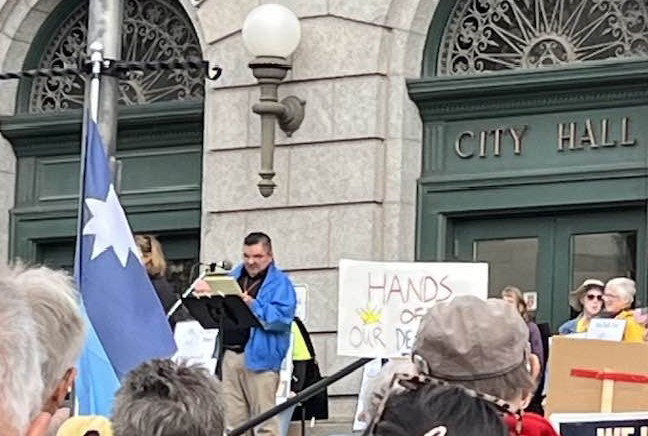
Ricky DeFoe

At the No Kings rally on October 18th, Anishinaabe elder Ricky DeFoe affirmed to the gathered crowd that “the natural response to oppression, ignorance, evil, and mystification is wide-awake resistance.” Such resistance, he claimed, calls for an “ethic of risk.”  I was immediately struck by his use of the term, paralleling feminist theologian Susan Welch’s A Feminist Ethic of Risk.[i]Returning home, I picked up my copy and found many of the same points DeFoe had articulated.[ii] Both asserted that an ethic of risk recognizes that “to stop resisting, even when success is unimaginable, is to die,” and by this they meant not only the threat of physical death, but also “the death of the imagination, the death of the ability to care.”[iii]

Continue reading “Of Resistance and Risk, Community and Kin: A Thanksgiving Reflection by Beth Bartlett”

Margaret Fuller (1810-1850): A Thanksgiving Revelation by Maria Dintino

Moderator’s Note: This piece is in co-operation with The Nasty Women Writers Project, a site dedicated to highlighting and amplifying the voices and visions of powerful women. The site was founded by sisters Theresa and Maria Dintino. To quote Theresa, “by doing this work we are expanding our own writer’s web for nourishment and support.” This was originally posted on their site on November 19, 2024. You can see more of their posts here. 

As the Thanksgiving holiday rolls around, I am reminded of Margaret Fuller’s Thanksgiving revelation, one she later wrote about in her journal. This revelation resonates annually for its gentle reminder of the value of being willingly and patiently engaged, of releasing resistance in the face of what cannot readily be altered.

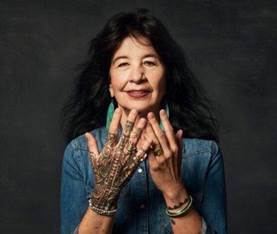
Joy Harjo, American poet, musician, playwright, and author. She served as 23rd US Poet Laureate, the first Native American to hold that honor. (Wikipedia) Learn more at joyharjo.com.

As I re-read Fuller’s account, I think about something former US Poet Laureate Joy Harjo said when she joined us a few years back at Flagler College in St Augustine, Florida for a virtual event. I don’t remember the exact question one of the listeners asked, but I’ll never forget Harjo’s response. She answered, “Every job is a service job.”

The truth in this statement struck me. I’d never considered my many jobs over the years, both inside and outside the home, as service jobs, but indeed they were.

Continue reading “Margaret Fuller (1810-1850): A Thanksgiving Revelation by Maria Dintino”

Thanksgiving by Beth Bartlett

When I offered to write the FAR post for Thanksgiving a month ago, I had no idea how difficult I would find that task to be. I suppose I had a different vision of what these days would be like.  I had no idea how heartsick and wordless I would become in the wake of a second and even more bizarre and dangerous Trump presidency.  It hardly feels like a time for celebrating a national holiday. 

Thanksgiving in the United States and the colonies before has gone through several iterations – from the mythologized feast of the Puritan colonists in Plymouth, Massachusetts with the indigenous Wampanoag following the successful corn harvest – corn the Wampanoag had taught the Puritans how to plant after half of them had starved to death the previous winter; to George Washington’s Thanksgiving proclamation giving thanks for the successful ratification of the US Constitution; to Abraham Lincoln in 1863 acceding to Sarah Josepha Hale’s 36-year quest to establish Thanksgiving  as a national holiday — “to heal the wounds of the nation.” Goddess knows we could use that now, but it seems farther out of reach than ever.

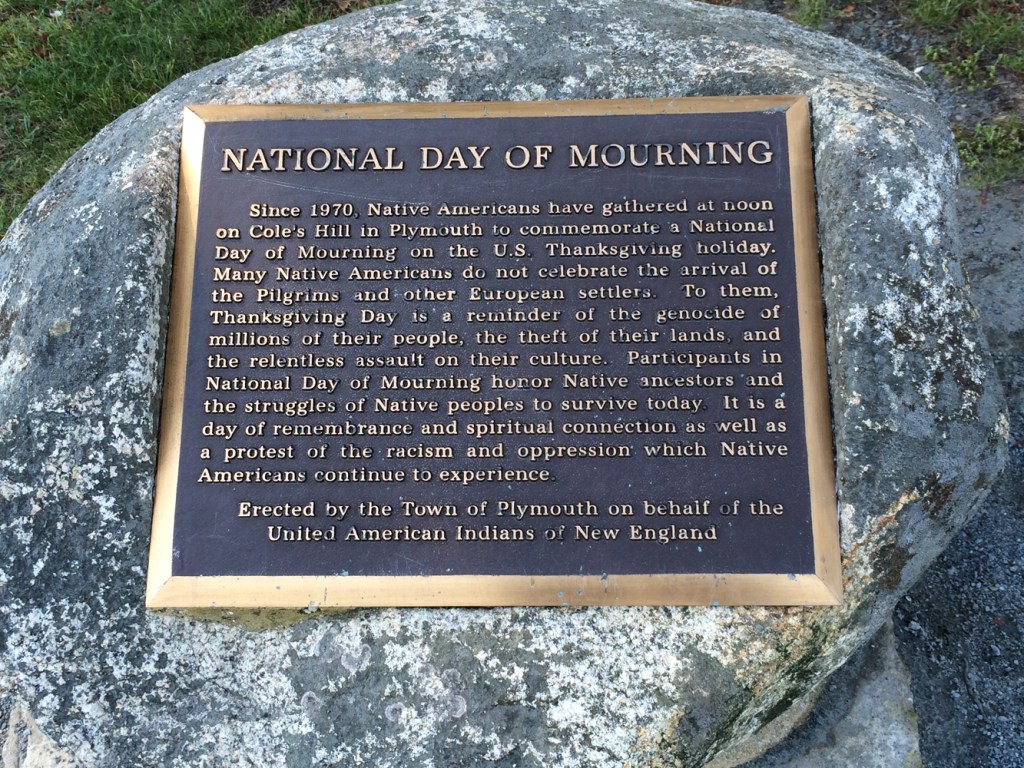
Lesser known is the proclamation of a day of thanksgiving by the Massachusetts Bay Company to celebrate their defeat of the Pequot nation following the Pequot Wars of 1636-1638 in which most of the Pequot peoples were killed or enslaved, giving rise to many indigenous peoples observing Thanksgiving as a National Day of Mourning.

Continue reading “Thanksgiving by Beth Bartlett”

From the Archives: A Ritual for Thanksgiving, by Molly Remer

This was originally posted Nov. 22, 2022

Find some pine trees
and a wide rock in the sun.
Settle down and feel gratitude
curl around your shoulders.
Listen to the wind
sense that there is sorrow too
in this place,
deep and old,
threaded through the
lines of sun
slices of shadows.
It tells of what has been lost,
what has been stolen,
of silenced stories,
and of fracturing.
Make a vow,
silent and sacred,
to do what you can,
to rebuild the web
to reweave the fabric.
Lie on your back in the pine needles,
feel your body soften into the ground
and become still.
Allow yourself to feel held,
heavy bones and soft skin
becoming part of the land.
Wonder how many of your
ancestors kept other people
from becoming ancestors themselves.
Watch the sunlight making tiny rainbows
through your eyelashes and pines.
Find a pretty rock.
Don’t take it.
Leave it where it belongs,
on the land that gave it birth.
Go home.
Keep your promise.

Continue reading “From the Archives: A Ritual for Thanksgiving, by Molly Remer”

THE OTHER SIDE OF THANKSGIVING by Sara Wright

THE GRANDMOTHER THREAD

November is the month when the veil is thin and permeable and it is possible to engage with the ancestors …I recently received information that for me November’s moon belongs to the grandmothers, and the liminal space in between and not to the hunter/killers. How is it that what seems so obvious was wrapped in the shroud of my unknowing?

On all hallows I crossed a threshold when the hunters moon transmuted from male to female. trusting my senses, I called up the archetypal grandmothers while grieving my lost connection to my own grandmother. I honored these elders as a powerful force of nature… and left it at that.

Continue reading “THE OTHER SIDE OF THANKSGIVING by Sara Wright”

Miigwech – Thank You by Beth Bartlett

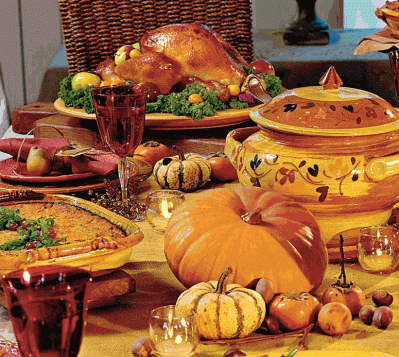
Thanksgiving is a complicated holiday. As a child, it was simple – a happy day of family and feasting.  I would awake at dawn to help my mother stuff the turkey that would roast all day in the oven, and while she prepared all the rest of the meal, the younger of my brothers and I would head downtown with my nextdoor neighbor to delight in the Christmas displays in the department store windows. Our home would be filled – my older siblings returned from college and their adult lives, with a roommate, or girlfriend, and in later years, spouses and children.  We would stuff ourselves with turkey, stuffing, and cranberry jelly, mashed potatoes and gravy, black cherry Jello, squash with mini marshmallows, and as my mother would always say, “corn for the Indians.”  That would be the only mention of Native Americans on this day celebrating what has become a romanticized version of a harvest feast, shared by a few of the Waumpanoag people and the English settlers who owed their survival to their generosity.

Continue reading “Miigwech – Thank You by Beth Bartlett”

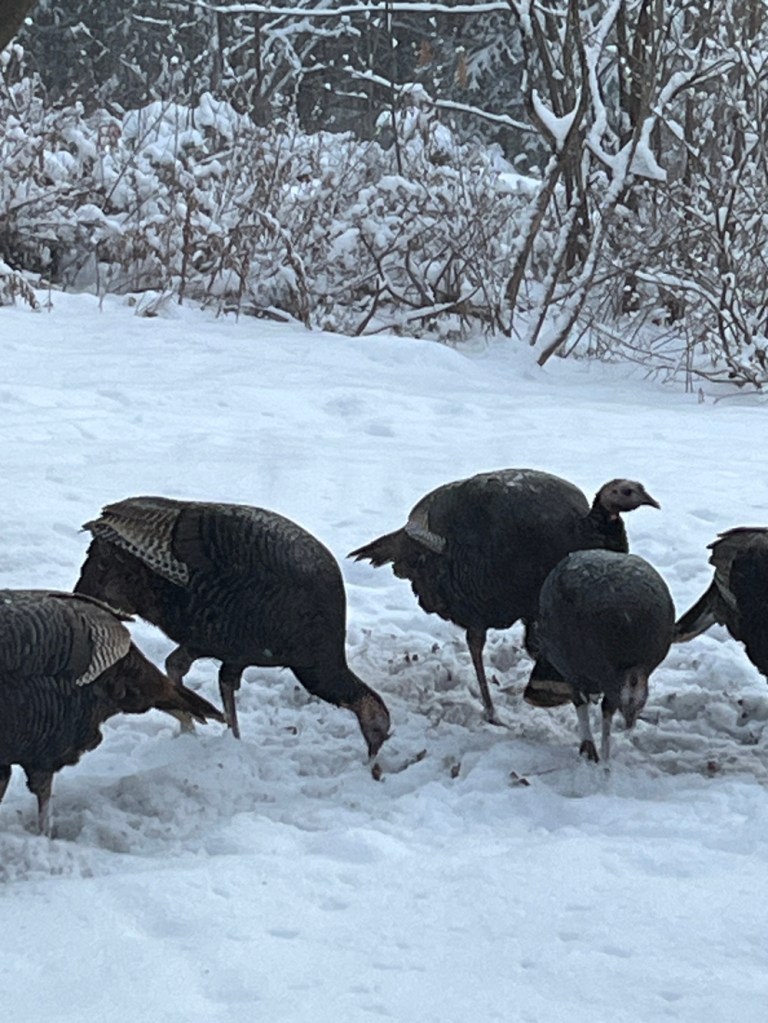
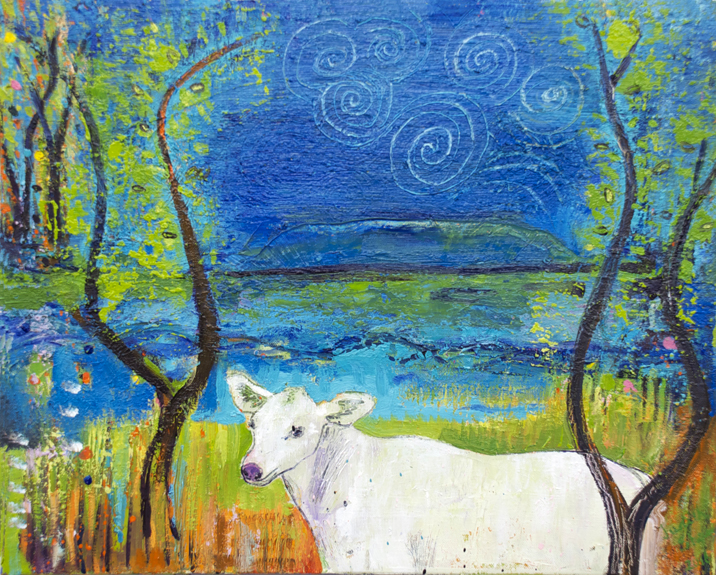
Embracing Gratitude: the Wisdom of Cow and Turkey by Judith Shaw

Even though the world is full of injustices, system breakdowns, and wars, I am thankful to be alive.

Even though the current trajectory of climate change, together with inaction to change the way society is organized, promises the collapse of modern industrial civilization, I am thankful to be alive.

Even though my own life has had many set backs and personal disappointments, I am thankful to be alive. 

Practicing gratitude helps me deal with these adversities. But practicing gratitude goes beyond its ability to deal with adversity. It helps me to feel more positive, to appreciate small everyday occurrences like sunsets and running water, to treasure good experiences, and to build strong relationships. 

Continue reading “Embracing Gratitude: the Wisdom of Cow and Turkey by Judith Shaw”

Legacy of Carol P. Christ: Thinking About Thanksgiving

This was originally posted on December 3, 2012

Thanksgiving evokes deep memory and raises questions about what we are celebrating, now that we know the stories we were told about the Pilgrims and the Indians are not the whole truth about America’s early history.  I thought about all of this as I prepared for Thanksgiving this year and cleaned up for days afterwards.

Although I do not live in America, I have celebrated Thanksgiving with a group of friends in my home in Greece many times during the past twenty years.

Continue reading “Legacy of Carol P. Christ: Thinking About Thanksgiving”

From the Archives: Thanksgiving and Service by Sara Frykenberg

This was originally posted on December 3, 2103

Growing up in an evangelical Christian church, I was taught that human beings should serve one another and put others before themselves.  These two different teachings, paired with patriarchal misogyny, have sometimes been very problematic for me.  I tend(ed) to give too much.  Too many demands with which I complied were self-negating (which after all, helped me to make other people more important than myself).  It took me a long time to learn how to appropriately prioritize my own needs, to stop mistaking self-esteem for the”‘sin of pride,” and how to say no when I needed to… Actually, I am still learning some of these lessons.

Conversely, my ritualized service to the church was sometimes confusing, awkward or embarrassing.  I clearly remember having the opportunity to serve as something like an usher during Thanksgiving at our family’s church as a child.  This involved wearing a pilgrim costume, which for me meant finding a Puritan style costume in the church’s closet that fit my overweight childhood frame.  This was not an easy task and left me feeling ashamed.  Later as an adolescent, my youth group asked us to wash one another’s feet as Jesus did for his disciples.  Now, don’t misunderstand me here— I do believe that this ritual has the potential to be very powerful and meaningful for those involved.  However, my teenage self could not identify with the symbolic gesture beyond realizing that:

1)    I thought touching other people’s feet was gross, as was having my dirty feet touched and,
2)    I knew I ‘should’ get something out of the ritual but did not, so I felt spiritually guilty or inadequate.

Overall, I often associated Christian service with guilt, inadequacy, my role as a daughter or woman or my sacrificial duty.

Despite these issues, I usually genuinely enjoy serving others and giving to other people.  I love to host people and care for them.  I like to help.  I even prefer to help.  Serving one another we can express and allow others to express love.  But this past week, one day before Thanksgiving, a dear friend of mine gently challenged me to allow myself to be served or, as she put it, “to give someone else the gift of giving to me.”  Specifically, she was referring to a pending holiday meal for which I expressed my anxiety and frustration with not being allowed to help—which somehow makes me feel like a child.  Even writing this phrase, “makes me feel like a child,” I know that I have touched deeper feelings of helplessness or vulnerability that at some point, I learned to battle with competence and over-achievement.  I do often feel like a child or guilty when other people do for me what I think I could or should do for myself; and my friend’s brief words encouraged me to explore this relationship to being served.

“Service” can sometimes feel uncomfortable for the reasons I mention above, but more so, for its connection to the coercive “servitude” required by existent hierarchies within andro-kyriarchal oppressive systems.  I have been subject to this coercive servitude, and also, its beneficiary.  As a white, middle class, Western woman I have far too much privilege that is contingent upon the forced labor and oppression of other people.  This kind of forced servitude is very wrong; and I am still learning how and where to choose other than to be complicit in this abuse.  But, there have also been many distinctive instances in my life where I have felt reciprocally and undeniably “served” by people around me, without abuse and without manipulation.

Driving to Colorado one summer to see the friend I mentioned above, my two companions and I served one another.  The individual in the back seat was responsible for cutting bagels and spreading cream cheese on them for the driver and navigator, while the navigator held the drink, food or whatever other item that the driver could not.  This may sound like a small thing, but it wasn’t.  I felt taken care of and loved in this small and traveling community.  We also had a safe word that meant, “leave me alone, I’m grumpy” on our long trip.  We made agreements to account for one another’s  discomfort and effort.  We respected one another and cared for each other.

Beginning my work as an adjunct professor, I encountered a great deal of stress and often long and awkward work hours.  Many times I felt like I needed help, but there was nothing I could ask for help with when it came to my job: I needed to grade my own papers, plan my own lectures, and yes, write my own blogs.  My husband has responded by taking care of me in other ways.  He makes me dinner, goes to the store and makes sure I take breaks.  We take turns taking care of one another, and I am grateful for him.

This past week after talking to my friend, I noticed how willing people were to touch me to soothe aching muscles.  I’m not sure how to describe what I felt, but it was like something invisible in certain spaces was suddenly visible.  I also realized that it had been a very long time since I had freely and openly received this touch.  Later during the weekend, a friend came to my house  and she made me dinner!  My husband rubbed my chest after a long night of coughing yesterday because I still haven’t completely rid myself of the smoldering in my lungs.  I was defensive for so long.  Shedding my defender allows me to rediscover all those things for which I am thankful.

Gratefulness is an action.  It can be found in those expressions that return, receive and allow for mutual loving.  I am learning new rituals that help me to remember that this kind of mutual serving and being served is sacred.  In a summer ritual, my friend and I washed one another’s hair instead of our feet.  I am still learning to ask for assistance from the goddess after freeing myself from an abusive omnipotent god, but I am starting to ask.

I am starting to pray again.

BIO: Sara Frykenberg, Ph.D.: Graduate of the women studies in religion program at Claremont Graduate University, Sara’s research considers the way in which process feminist theo/alogies reveal a kind transitory violence present in the liminal space between abusive paradigms and new non-abusive creations: a counter-necessary violence.  In addition to her feminist, theo/alogical and pedagogical pursuits, Sara is also an avid fan of science fiction and fantasy literature, and a level one Kundalini yoga teacher.

Reflection: Winter Light by Sara Wright

Norfolk Pine

What does this little narrative have to do with feminism you ask? Why everything! It speaks to the journey of one woman from young adulthood into old age, a woman who learns along the way that Nature/ Earth/Immanence is also the Way of the Goddess, and that living a life of meaning (in a finite loving body) is the path the goddess set her upon at birth…

It is the day before thanksgiving. For too many years, this was a time of great sorrowing – a day on which a young motherless woman said goodbye to her grandmother… a grandmother she couldn’t afford to lose, and later, much later, a grandmother she couldn’t become….

Continue reading “Reflection: Winter Light by Sara Wright”