
Toni Cade Bambara: How to Care for Oneself While Healing The All (American Woman Writer 1939-1995), part 2 by Theresa Dintino

Part 1 was posted yesterday

The mud mothers, ancestors, began to make themselves visible to her when she was a girl, in the movie theater, on one of the walls in a cave like indentation, “with enormous teeth painting themselves with long hair brushes, painting pictures on the walls of the cave”( SE 254), at church, and in her attic. “In the attic they came in the mirror once. Ten or more women with mud hair, storing yams in gourds and pebbles in cracked calabash. And tucking babies in hairy hides. They came like a Polaroid. Stepping out of the mouth of the cave, they tried to climb out of the speckled glass, talk to her, tell her what must be done all over again, all over again, all over again. But she hung an old velvet drape over the mirror and smothered them. They were not going to run her off her own place, Not the attic “(SE 255). In church and at the theater she avoided looking at them.
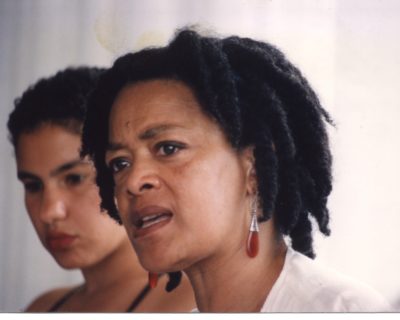
For Velma and for Bambara, it is the spiritual roots of her ancestors and ancestry from Africa that come calling, the mud mothers. In Velma’s town there are mentors and guides and Aunties and godmothers, all levels of support and care available in claiming her gifts that Velma has left behind, rejected. Yet, when the book ends she will return to this, she has agreed to take up the mantle in order to be well.

For African Americans in particular, Bambara believes reconnecting with the ancestors—the ancestors that their ancestors were taken from— is part of the healing wanting to happen. That this was left out of the civil rights movement. That honoring ancestors is part of this lineage and that the ancestors are there and waiting. That slavery often disrupted this connection but it is there, the ancestors are there, for the reconnection if one is willing.

Continue reading “Toni Cade Bambara: How to Care for Oneself While Healing The All (American Woman Writer 1939-1995), part 2 by Theresa Dintino”
Toni Cade Bambara: How to Care for Oneself While Healing The All (American Woman Writer 1939-1995), part 1 by Theresa Dintino

Moderator’s Note: This piece is in co-operation with The Nasty Women Writers Project, a site dedicated to highlighting and amplifying the voices and visions of powerful women. The site was founded by sisters Theresa and Maria Dintino. To quote Theresa, “by doing this work we are expanding our own writer’s web for nourishment and support.” This was originally posted on their site on August 11th, 2020. You can see more of their posts here. 

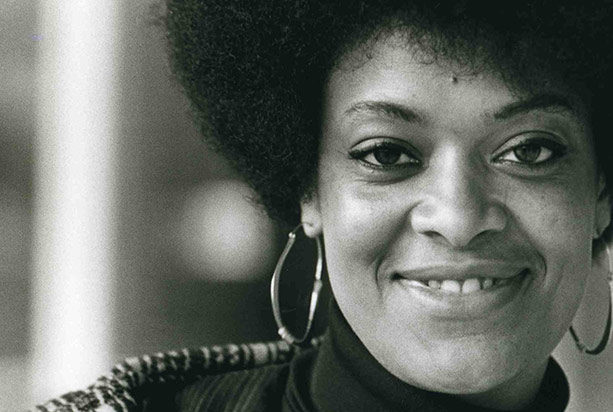
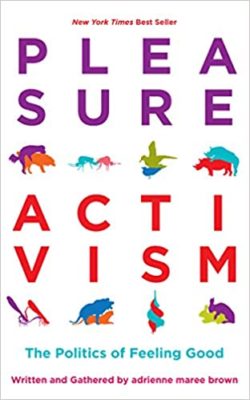
While reading adrienne maree brown’s Pleasure Activism for #NastyWomenWriters, I was stopped in my tracks by the praise coming forward in that book for black feminist, writer, activist, film maker and mentor Toni Cade Bambara (1939-1995).

brown writes:

“Toni Cade Bambara, author of The Salt Eaters, the one to tell us writing was a tool for the revolution, that our task was to make revolution irresistible. Bambara is a main stream in the lineage of pleasure activism, not just because of what she put on the page and into words, but also because of the ways she wove community, the way she supported other writers and organizers, the way she engaged in healing work” (45).

In the chapter “The Sweetness of Salt,” author and activist Alexis Pauline Gumbs, archivist and scholar of Bambara’s work, writes about five women who have been instrumental in her life and work: “scholar Farah Jasmine Griffin, filmmaker and activist Aishah Shahidah Simmons, artist and abolitionist Kai Lumumba Barrow, healer and organizer Cara Page, and editor and intellectual activist Cheryll Y. Greene”(46), who were all personally influenced, mentored, “sistered” and “mothered” by Bambara. It was these women’s recounting of their experiences with Bambara that caused me to go find her for myself.

Continue reading “Toni Cade Bambara: How to Care for Oneself While Healing The All (American Woman Writer 1939-1995), part 1 by Theresa Dintino”