

Moderator’s Note: This piece is in co-operation with The Nasty Women Writers Project, a site dedicated to highlighting and amplifying the voices and visions of powerful women. The site was founded by sisters Theresa and Maria Dintino. To quote Theresa, “by doing this work we are expanding our own writer’s web for nourishment and support.” This was originally posted on their site on August 11th, 2020. You can see more of their posts here.
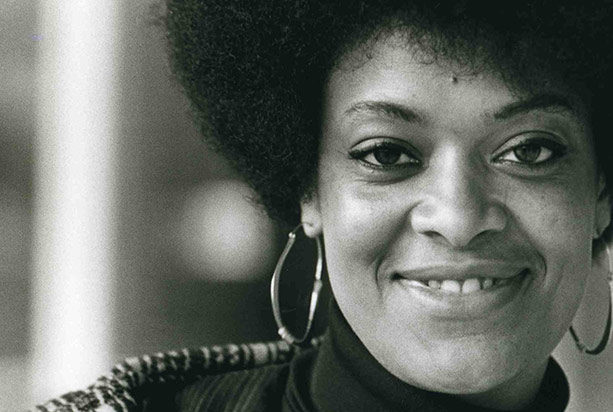
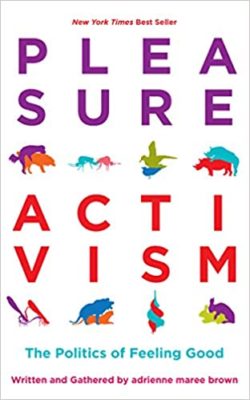
While reading adrienne maree brown’s Pleasure Activism for #NastyWomenWriters, I was stopped in my tracks by the praise coming forward in that book for black feminist, writer, activist, film maker and mentor Toni Cade Bambara (1939-1995).
brown writes:
“Toni Cade Bambara, author of The Salt Eaters, the one to tell us writing was a tool for the revolution, that our task was to make revolution irresistible. Bambara is a main stream in the lineage of pleasure activism, not just because of what she put on the page and into words, but also because of the ways she wove community, the way she supported other writers and organizers, the way she engaged in healing work” (45).
In the chapter “The Sweetness of Salt,” author and activist Alexis Pauline Gumbs, archivist and scholar of Bambara’s work, writes about five women who have been instrumental in her life and work: “scholar Farah Jasmine Griffin, filmmaker and activist Aishah Shahidah Simmons, artist and abolitionist Kai Lumumba Barrow, healer and organizer Cara Page, and editor and intellectual activist Cheryll Y. Greene”(46), who were all personally influenced, mentored, “sistered” and “mothered” by Bambara. It was these women’s recounting of their experiences with Bambara that caused me to go find her for myself.
Read Nasty Women Writers’ post about the connections between women writers: Invisible Connections: The Hidden Web of Women Writers
Gumbs writes:
In Toni Cade Bambara’s worldview, “Everything is relevant. Everything is connected…one of the most persistent lessons that The Salt Eaters offers me in this life. The message, lesson, reminder is this: my spiritual and physical well-being and the well-being of the community, planet and cosmos are ONE THING.”
Gumbs speaks of Velma, the main character in the novel as,
“someone that many of us can recognize. She is a champion for the people. She is a revolutionary artist who can’t sleep. Who doesn’t sleep. Who literally does not rest, because she believes to create any space of comfort for herself is to distract from the urgency of her work as an artist for the movement. So she works. Always. She is in it. Always. And she doesn’t rest until she involuntary falls down, and in the opening moment of the novel Velma Henry has fallen so hard that she is barely alive after a suicide attempt that requires the work of a healing community and a circle of ancestors and deities to gather in her name. This is the line we repeat again and again out of Toni Cade Bambara’s work, in the face of attempted suicide, the healer, Minnie Ransom asks, “Are you sure, sweetheart, that you want to be well?”(https://thefeministwire.com/2014/11/well-being-of-the-community/)

Bambara’s novel, The Salt Eaters is a veritable soup of personal, community and collective healing. But a soup it is, with so many disparate components, narratives, plot lines and philosophical ideologies weaving and interweaving through it that it is hard to capture what all is in that full and boiling-over pot on the first read. But it’s worth it and also worth a reread after the first time through.
With its wandering points of view, seemingly disparate characters and events, interspersed with memories, dreams and spiritual visitations all connecting in the end, the text accomplishes its mission in showing how everything is interconnected and deeply webbed, including and extending back to the ancestors and forward to the unborn. It leaves no doubt that the personal is also the collective and the political. It accentuates that to heal the collective one must be personally healthy. It encourages the reader to understand: to care for oneself is worthwhile and important for the community.
Velma has so much going on. She is a successful computer programmer whose most recent job in Transchemical, the chemical plant which employs much of black population of the fictional city of Claybourne, Georgia where she lives, has gotten her into trouble. Velma has been pulled into a scheme to steal data that will expose the toxic nature of the plant, both environmentally and its treatment of employees. She is about to be interrogated about the missing data.
Velma, an activist all her life, who has run successful campaigns and forged community action, has also taken on the sexist behavior of the men in the activist movement, both in her town and the larger civil rights movement.
“Who’s called in every time there’s work to be done, coffee made, a program sold? Every time some miscellaneous nobody with a five-minute commitment and an opportunist’s nose for a self-promoting break gets and idea, here we go. And we have yet to see any of you so much as roll up your sleeves to empty and ashtray”(SE 36).
Velma is married but her marriage is falling apart, she is told by her husband because she is too busy and distracted but Velma is seething with rage because while she is out doing all this work, her husband is having multiple affairs. Her marriage has hit an impasse. Velma has moved out and started an affair with another man who does not seem too healthy for her, according to the conversation of her friends, and Velma’s own reflection. In an absolutely devastating scene with her husband Obie, Bambara captures and names the painful experience and gaslighting experienced by so many successful career women:
“You’re sleeping around,” she said, stopping abruptly to say it, to watch how it caught him at the back of the neck, the back of the knees, feeling how it caught her at the pit of the stomach…We’ve known each other too long, Obie, been through too much, been too much to each other. Why lie about such simple shit. And you been lying for months now, complaining about my aloofness, my fatigue, my job, willing to totally mess with my sense of what’s real in order to throw up this smoke screen. You are sleeping around Obie, and not very discreetly. And it sets one lousy example for your brother Bobby and all the little brothers”(SE 231).
As noted previously, one of the main themes of the novel is the connection between the health of the community and the well-being of each individual. Bambara is shining a light on something well known but hard to live by: that we can’t save anyone or help anyone if we are not well ourselves, that activism and activity can become addictions and how surrendering to despair is lethal.
And that is the place to which Velma has arrived. The book opens with Velma sitting on a stool in the infirmary in front of the local healer after a suicide attempt.
“Are you sure, sweetheart, that you want to be well?”(SE 3). The question asked of Velma by the local healer, Minnie Ransom, opens the book, repeated again here for it is the most famous line from the book. Later Minnie asks, “Just so’s you’re sure, sweetheart, and ready to be healed, cause wholeness is no trifling matter. A lot of weight when you’re well”(SE 10).
Because, Bambara is teaching, being well holds responsibility to ourselves and others, again, not only those who are alive in the three-dimensional world. This is a huge subject but one that Bambara illustrates and articulates in stunning clarity in this rhythmic and passionate tale. As we ride the waves of Velma’s healing at the hands of Minnie Ransom and Minnie’s spirit guide, “Old Wife,” the two of them surrounded by the circle of twelve or “The Master’s Mind,” we feel the ripples of healing flow out into the community and on to the land of the spirits, the “haints,” the “loa” and the mud mothers, absorbed by the sacred tree where offerings are made and beyond.
The healer Minnie
“learned to read the auras of trees and stones and plants and neighbors, far more colorful, far more complex. And studied the sun’s corona, the jagged petals of magnetic colors and then the threads that shimmered between wooden tables and flowers and children and candles and birds.
On the stool or in the chair with this patient or that, Minnie could dance their dance and match their beat and echo their pitch and know their frequency as if her own. Eyes closed and the mind dropping down to the heart, bubbling in the blood then beating, fanning out, flood and shining, she knew each way of being in the world and could welcome them home again, open to wholeness”(SE 47).
Part of Velma’s healing has to do with her owning and accepting her own spirituality, one she has been called to since youth but has ignored and avoided. She too, like Minnie has been called by the ancestors and spirits to claim her gift of spiritual healing.
Part 2 tomorrow
Discover more from Feminism and Religion
Subscribe to get the latest posts sent to your email.


WOW – I am hooked – I have to read this novel if I can get it – thank you so much – must have missed this – see that it was posted in 2020….”The message, lesson, reminder is this: my spiritual and physical well-being and the well-being of the community, planet and cosmos are ONE THING.” EVERYTHING IS CONNECTED – if you think for a second that it isn’t – the climate catastrophe perfectly mirrors the collapse of what has become a very ugly culture
LikeLike