Water Dance by Janet Maika’i Rudolph

A woman’s water breaks before she gives birth. Holy water confers blessings. Water is the purifying agent of baptism. When we’re “in the flow,” we’re being creative. Water is often depicted with qualities that signify life and healing. But water is also violent and destructive.

Think of what Hurricane Katrina did to New Orleans in 2005, and Superstorm Sandy to the Northeast in 2012. The movement of the Earth shapes these violent tempests. Earth is in perpetual orbit and rotation thereby continuously invigorating the air and waters.

There is a mythological vision of a defined space where the mixing of elements occurs. It is a cauldron. Magical cauldrons contain the raw materials that are necessary for the creation and sustenance of life. Our precious Earth can be considered The Grand Cauldron of Creation, a vessel encircling all these elements. Add in motion, or agitation, or rotation and you not only get storms, but the recipe for genesis.

Continue reading “Water Dance by Janet Maika’i Rudolph”

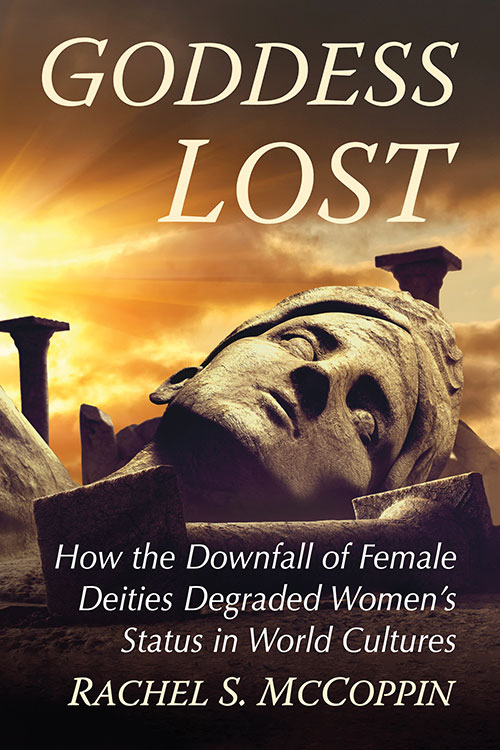
Goddess Lost: How the Downfall of Female Deities Degraded Women’s Status in World Cultures by Rachel McCoppin, Ph.D

In this blog post, I would like to take the opportunity to promote my new book, entitled:  Goddess Lost: How the Downfall of Female Deities Degraded Women’s Status in World Cultures. This book makes the assertion that women must be educated about the history of goddess worship around the world in order to adopt a comprehensive spirituality that fits what it means to be a woman.

Continue reading “Goddess Lost: How the Downfall of Female Deities Degraded Women’s Status in World Cultures by Rachel McCoppin, Ph.D”

Reclaiming Forgotten Voices by Freia Serafina

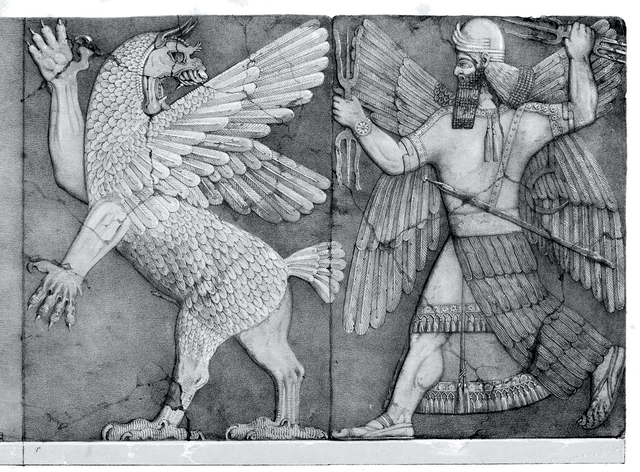
Marduk fighting Tiamat

Last night I found myself crying over Tiamat. Tiamat is one of the most ancient Babylonian Creatress Goddesses. She is known as the Goddess of the Salty Sea and is considered the primordial Creatress in Sumerian religion. Tiamat was slaughtered in the vilest of ways to demonstrate the death of the Goddess and the rise of the God. She was defiled and written about in such a way as to discredit women and provide justification for the slaughtering, defiling, and enslavement of “enemy” women abroad and “bad” women at home.

As I was reading Carol Christ’s Rebirth of the Goddess, I found myself shaken to the core at the ways in which Tiamat was defiled and destroyed in the “epic” called the Enuma Elish. As someone who is well aware of the ways in which the Goddess and women have been usurped throughout time and space, I was still so broken down after reading it that I had an actual ugly cry in my living room. I want to tell you to read the Enuma Elish to understand why I feel this way, but I also want to warn you about the way you might feel afterwards. It is a difficult read.

Continue reading “Reclaiming Forgotten Voices by Freia Serafina”

The Serpent and The Seed by Janet Maika’i Rudolph

I was so inspired by Judith Shaw’s blog post, “The Serpent and the Goddess” (Feb 26th) that I began to dust off my old notes on serpent imagery. I was reminded a concept that kept jumping out at me. In discussing the Kabbalah, Rabbi David A Cooper, writes that mystics describe the universe as the “the skin of the serpent.”[1] What a beautiful yet puzzling concept! I wanted to dig deeper.

The serpent’s connection to the Great Goddess has been an excellent place to begin this quest. Barbara Walker notes the etymological connection between the serpent, and the Great Goddess from the Bible whose name is Eve. Walker writes, “The names of Eve, the Serpent, and ‘Life’ are still derived from the same root in Arabic.”[2] But the Goddess connection is not the totality of the serpent’s magic. Continue reading “The Serpent and The Seed by Janet Maika’i Rudolph”

Tiamat’s Tale by Nancy Vedder-Shults

nancymug_3About 15 years ago, I was writing a book entitled Embracing the Dragon: A Myth for our Times.  In it I critiqued the so-called heroic myth, which I call the dragon-slaying myth.  My research led to the discovery of many Western dragon tales, which I retold from the dragon’s perspective. “Tiamat’s Tale,” transcribed below, was one that I offered orally – as a storyteller.  

 ~~~~~~~~~

“The ocean is the beginning of the earth.  All life comes from the sea.”  And at the outset Her name was Tiamat.  Tiamat, the watery womb where all is amorphous and malleable. Tiamat, the primeval cauldron where one thing shapeshifts into another in the eternal whirlpool of creation.  Tiamat, the unfathomable abyss. Before Her there was nothing.  Without Her there is nothing.  And after Her there will truly be nothing.

Those who learn to trust Her, discover Tiamat’s bliss, the creative ebb and flow of Her salt flood.  Foremost among these was Apsu, Tiamat’s husband and lover, for he was the first to issue from Her tidal wave.  His sweet waters mingled with Her salty brine, and together they brought forth gods and goddesses as silt precipitates from a stream or sand washes up on a shore.  Tiamat’s undulations and Apsu’s wet dreams stirred the ardor of their children in turn, and soon there were many generations of gods and goddesses. Continue reading “Tiamat’s Tale by Nancy Vedder-Shults”

Stories for (Re)creation in the New Year by Natalie Weaver

Natalie Weaver editedTwo New Years’ Eves ago, I came to the realization that I did not need to watch the television countdown to ring in midnight and begin the New Year.  I had always watched the show with my family as a child, and even while it made me feel curiously bad, I still somehow felt like it was an obligatory component of the day, right up there with kisses, well wishes, blowers, horns, and sparkling wine.  Since we seldom went to an actual New Year’s party, it was a way of connecting with the world.  I gave it up, though, when I ultimately deemed the musical guests and hosts to be unviewable.

I was not looking to make a new tradition per se that year when I decided to light a hunk of myrrh in the fireplace.  The myrrh had come to me as a gift in a Three Kings Christmas set.  It made a pretty decent blaze because I had placed it atop a bed of shallow candle wax from an old votive candle.  Let me say, while it smelled lovely and burned a long time, I do not recommend doing this – the fire became alarmingly vigorous for a little while.  Anyway, I spread a cloth on the floor and set out some food, calling my family together to sit in a circle by the hearth.  We dimmed the lights, and by fire I read the Epic of Gilgamesh (with some tasteful PG 13 edits) from 11:00 pm until 1:00 am.  I had been reading great epics to the kids, and it seemed somehow appropriate to return to Babylon that year.  We did not mark the New Year at a precise moment but rather sailed into it on the tides of an ancient tale.  It was a revelation to us all, mostly because we were reclaiming that night from the media usurpers who had defined it for us for most of our lives.

This year, we intended to do something similar until we ended up throwing an impromptu party for some friends and their children.  I knew they would all have limited interest in my second annual fire reading, so we just fed them and eventually counted down the final moments of 2014 on my watch.  But, after they left, we returned to the myth, this time reading the Babylonian Epic of Creation.  We hit the mark, as the story itself was ritually performed at each New Year.  It carried us deep into the first day of 2015 and was also a great revelation. Continue reading “Stories for (Re)creation in the New Year by Natalie Weaver”

Painting Tiamat/Tehom by Angela Yarber

angelaToday I am honored to give a lecture on “Queering Iconography: Holy Women Icons from Sappho to Pauli Murray” at the North Star LGBT Center in Winston-Salem, NC. So, I want to continue the theme of featuring some of my queer Holy Women Icons. Joining Virginia Woolf , the Shulamite, Mary Daly, Baby Suggs, Pachamama and Gaia, Frida Kahlo, Salome, Guadalupe and Mary, Fatima, Sojourner Truth, Saraswati, Jarena Lee, Isadora Duncan, Miriam, Lilith, Georgia O’Keeffe, Guanyin, Dorothy Day, Sappho, Jephthah’s daughter, Anna Julia Cooper, the Holy Woman Icon archetype, Maya Angelou, Martha Graham, Pauli Murray, La Negrita, and all my other Holy Women Icons with a folk feminist twist is the often overlooked and misunderstood primordial goddess of creation: tehom.

In Genesis 1 we read, “In beginning, God created the heavens and the earth, the earth was a formless void and darkness covered the face of the deep, while a wind from God swept over the face of the waters.” It is the creation narrative held dear, formative, and meaningful for countless Jews and Christians. Interestingly, this word, deep, in Hebrew is tehom. Tehom translates as “deep or depths,” but it’s also a cognate for Tiamat, a Babylonian Goddess of creation. Out of the face of the deep, the world begins. Out of tehom, God creates. Out of Tiamat, the earth comes into being. This dancing Babylonian goddess syncretistically intermingles with the creation myth so pivotal to the faith of Christians and Jews in a way that could be terrifying, or beautiful, or—like the chaotic body of Tiamat that brings the world into being—both. Continue reading “Painting Tiamat/Tehom by Angela Yarber”