

This was originally posted on April 20, 2015 and was updated by Carol on August 23, 2019
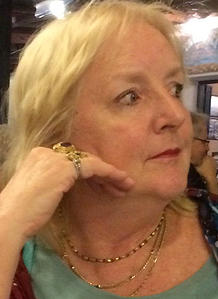
In recent weeks Judith Plaskow and I have been revising the manuscript of our new book Goddess and God in the World in preparation for sending it to the publisher. Yes, we have a publisher. We signed a contract with Fortress Press a short time ago. The book should be out in 2016.
We have been hard—and I mean very hard—at work revising the four chapters in the book that are jointly written. The versions have been going back and forth and forth and back as we revision what we want to say and revise each other’s revisions of the drafts we have. We both want the final manuscript to say things just right and it is very hard not to make one more set of (alleged) improvements.
In the process we have realized that while we often disagree on words and wording, we have come to think alike on a wide variety of issues to the point that it becomes hard to say who had the ideas first. In addition we have both become so familiar with each other’s positions that we can each easily articulate both sides of our dialogue on the issues on which we disagree.
All of this has gotten me to thinking again about authorship and co-authorship and original and shared ideas. This train of thought led me back to the subject of Judith’s and my first essay together originally titled “Against My Wife” but published as “For the Advancement of My Career: A Form Critical Study in the Art of Acknowledgement.” We discussed 5 formulaic tropes used in acknowledgements to wives in academic books, ending with “the wife as unacknowledged co-author.”
While rewriting one of our joint chapters for the ump-teenth time, I sent Judith an email asking: “I wonder if the wives who edited their husband’s manuscripts were as free in adding their own words and opinions as we are when we write together?” Judith responded that she has one friend who actively rewrites all of her husband’s scholarly work to the same degree.

Late one night when I had nothing better to do I decided to revisit the question of Karl Barth and the mistress who was his unacknowledged co-author. Although I certainly never heard a word about Charlotte von Kirschbaum during the years of my graduate study when the great man’s name was uttered in hushed tones, it is now well-known that for thirty-five years Karl Barth, his wife Nelly Barth, and, while they were living at home, his five sons shared their home with the theologically-trained “secretary” and “editor” of his work.

Suzanne Selinger wrote a book about their relationship, hoping to trace the extent of von Kirschbaum’s contributions to Barth’s writing. In the end, she had to admit that the story of an independent von Kirschbaum could not be recovered because “the life we would speak of was not lived.”
Next, I googled Paul Tillich and was reminded of his well-known womanizing (another subject not spoken about when I was in graduate school). I found his psychiatrist son Rene Tillich’s reflections on his parents’ deeply troubled relationship illuminating, but that is another story. I did not find out anything about who edited Tillich’s work, but there must have been someone, not only because there usually is, but especially because Tillich’s first language was not English.

From there, I moved on to the third great Protestant theologian of the twentieth century, Reinhold Niebuhr. Though I taught at Columbia University in the years following Reinhold Niebuhr’s retirement and death, I never heard a single mention of his wife Ursula Niebuhr, who founded the Barnard Religion Department and served as its chair for many years.
Ursula, who was fifteen years younger than Reinhold and on a graduate fellowship when they met, had a much more independent life than von Kirschbaum. However, like von Kirschbaum, she was devoted to her husband’s work and published very little in her own right. People remember her as having carried on a lively theological conversation with her husband during all of his productive years.
Those who have pursued the question find that Uruslua Niebuhr was an unacknowledged co-author, perhaps of all of his works. Urusla left documentation of transcriptions of their on-going theological conversations, which if studied in detail, might document the extent of her contributions. I note here that Reinhold Neibuhr did not publish any of his major works until after they met. Still, the quest to discover the independent thinking of Ursula Niebuhr may founder on the rocks of “a life not lived.”
What are we to make of the unacknowledged contributions of wives, mistresses, secretaries, and editors to the works of great men? To say that intelligent intellectual women happily chose the role of helpmeet says something about their times, but nothing about their choices not to become theologians, as the option to become one was not available. Indeed, Charlotte and Ursula may have considered themselves lucky to have gotten as far as they did by hooking up with great men. They may have recognized that there was no future for female theologians in their days.

Reinhold Niebuhr’s older sister, Hulda Niebuhr, who must have been as intelligent and capable as Reinhold and their younger brother Richard (also a leading theologian), was told by their father that a woman’s desire for an education was an example of the sin of “egotism” and would hinder her chances of marriage. Hulda enrolled in college after her father’s death, earning a bachelor’s and a master’s at Boston University, and later completing “all-but-dissertation” towards doctorate at Union Seminary. Hulda Niebuhr remained unmarried, a status that would have been pitied in her time, and instead of pursuing a career in the masculine field of theology, chose Christian education. It will do no good to search for the contributions of Hulda Niebuhr the theologian, for this too was “a life not lived.”
The question I am having a hard time asking is: what would women in our time or theirs have been able to do if we had “helpmeets” like Charlotte von Kirschbaum and Ursula Niebuhr? I cannot answer this question because it seems obvious that no woman I know would want a relationship in which one person’s talents are swallowed up by the other.
I would rather have a collaborator who is an equal, who is acknowledged, and who has a life of her own. I am very lucky to have exactly that!
See: For the Advancement of My Career by Carol P. Christ and Judith Plaskow Goldenberg
Discover more from Feminism and Religion
Subscribe to get the latest posts sent to your email.

 Feminism and Religion
When I was in college (early 1970’s) and some male friends of mine were Divinity students; I was able to explain Tillich’s theology to them when they couldn’t get it. Later when I had done my own studies in theology – completed an M.A. in it (1982), I used to say (for years) that it was a useless degree for a woman to have, since I knew by then that I was not interested in ministry or teaching in a seminary. Eventually it was the basis for Ph.D. in Social Ecology, and priestessing – so it did come good (in these times).
LikeLike
“What are we to make of the unacknowledged contributions of wives, mistresses, secretaries, and editors to the works of great men?” Carol forgot to mention Einsteins Wife who co authored E’s relativity theory… what are we to make of it? In my opinion two things: no one wants the public to know and the women themselves had little sense of self – their role was helpmate – ugh.
LikeLike