

This was originally posted on March 18, 2013
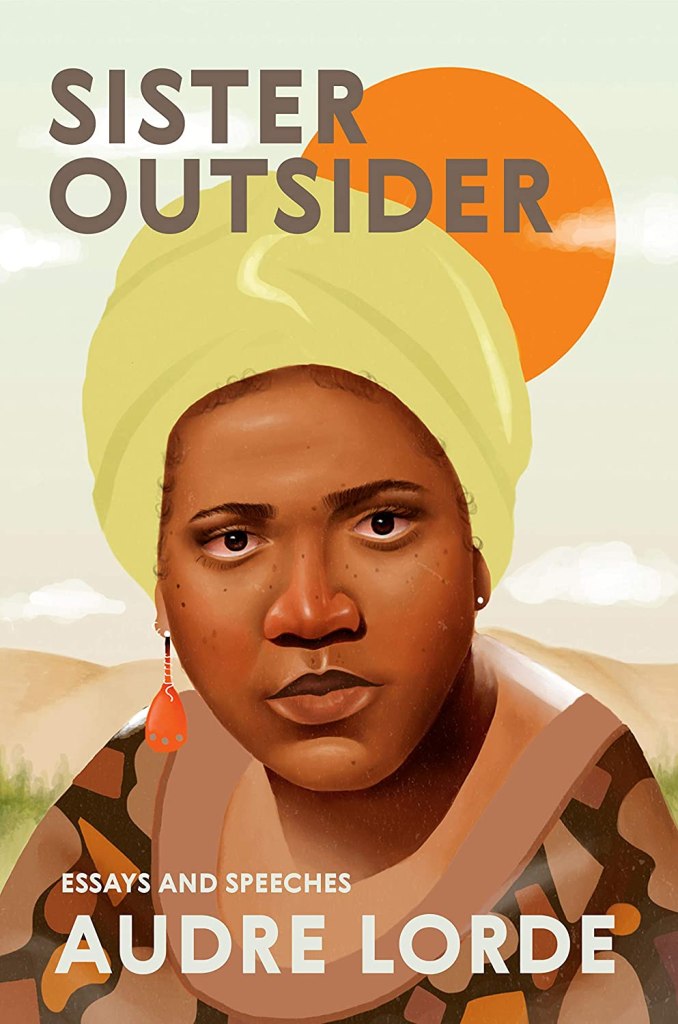
I was given a copy of Audre Lorde’s essay “The Uses of the Erotic” in my first year of teaching at San Jose State by a young white lesbian M.A. student named Terry. It was 1978. I was in my early 30s. This essay came into my life and the lives of my students, friends, and colleagues at “the right time.” It became a kind of “sacred text” that authorized us to continue to explore the feelings of our bodies and to take them seriously.
The second wave of the women’s movement was about to enter its second decade. We had already been through years of consciousness raising groups. There we learned to “hear each other to speech” about feelings we had learned to suppress because we had been told they were not acceptable for us as women to have or to express. Those early days of the women’s movement were one big “coming out” movement. We were bringing our feelings and ourselves out of the closet.
Many of us had been exploring various forms of body and feeling based therapies broadly called “humanistic” that encouraged the open acknowledgment and expression of feelings. It was also the time when large numbers of women were beginning to “come out” as lesbian. Some of these were women who had theretofore not “known” or even had any idea that they were lesbian. The song by Lavender Jane Loves Women with the refrain “any woman can be a lesbian” was well-known in feminist circles. Women who did not stay lesbian explored their sexuality with other women. Women who did not do that were naming and recognizing the importance of female friendship and its life-saving and life-transforming part in their lives—an act that was in itself transgressive.
Audre Lorde told us that all of this was not only good–it was sacred. “The erotic is a resource exists in each of us on a deeply female and spiritual plane.” Feminist gatekeepers of today might immediately attack this statement as essentialist. But without necessarily being essentialist–Lorde does not say men have no power of the erotic—these words spoke to the feelings women were having in company and community with other women at the time. Lorde told us that there is something good about being a woman, about attending to and cultivating our feelings and the feelings of our bodies in relationships and in communities with other women. Not only that, there is something spiritual about this process.
Lorde chose a word that has sexual overtones and undertones yet she defined it more broadly. In those days of the sexual revolution women were exploring our sexuality, claiming the right to have sexual feelings, to enjoy sex, and to tell our partners how to please us. The days of women closing their eyes until “it” was over were coming to an end.
Lorde told us that the erotic is a power that has to do not only with sex but with feeling everything we do as deeply as we were feeling sex. Many women were feeling their bodies most deeply in sexual relationships. Audre was telling us we could have the feelings of being alive and alive through our skin to the world all the time. WOW!
In the 35 years that have passed since I first read Lorde’s essay, “the power of the erotic” has become something I experience in my daily life. Recently I experienced it on a day that felt like spring was coming. Accompanied by my new kitten and one of the tortoises who did not sleep very well in this winter of global climate change, I weeded the lower terrace of my garden. There I have been creating a herb bed with thyme, sweet william (baby carnations), and alyssum. My whole garden is an herb garden, because when I created it, I discovered that many herbs and aromatics are native to the Mediterranean.
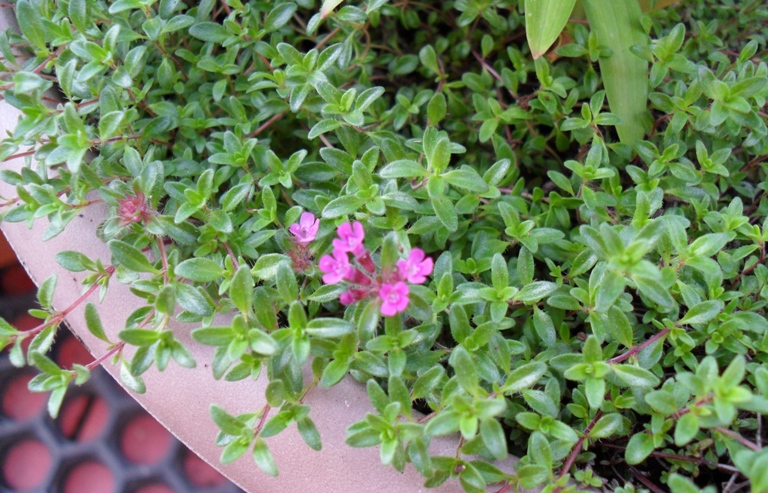
As I worked, I put my hands into mud because we had had heavy rains. This allowed the weeds to come out easily. I also tried to remove much of the “volunteer” fennel that could take over the bed if I am not careful. It smelled particularly strongly–of licorice? I marveled that a plant that I had not known was creeping thyme was doing the best of the thyme varieties. The other thymes had grown in scraggly ways and had a lot of dead parts that I carefully removed, trying not to uproot them. All of this was very sensual.
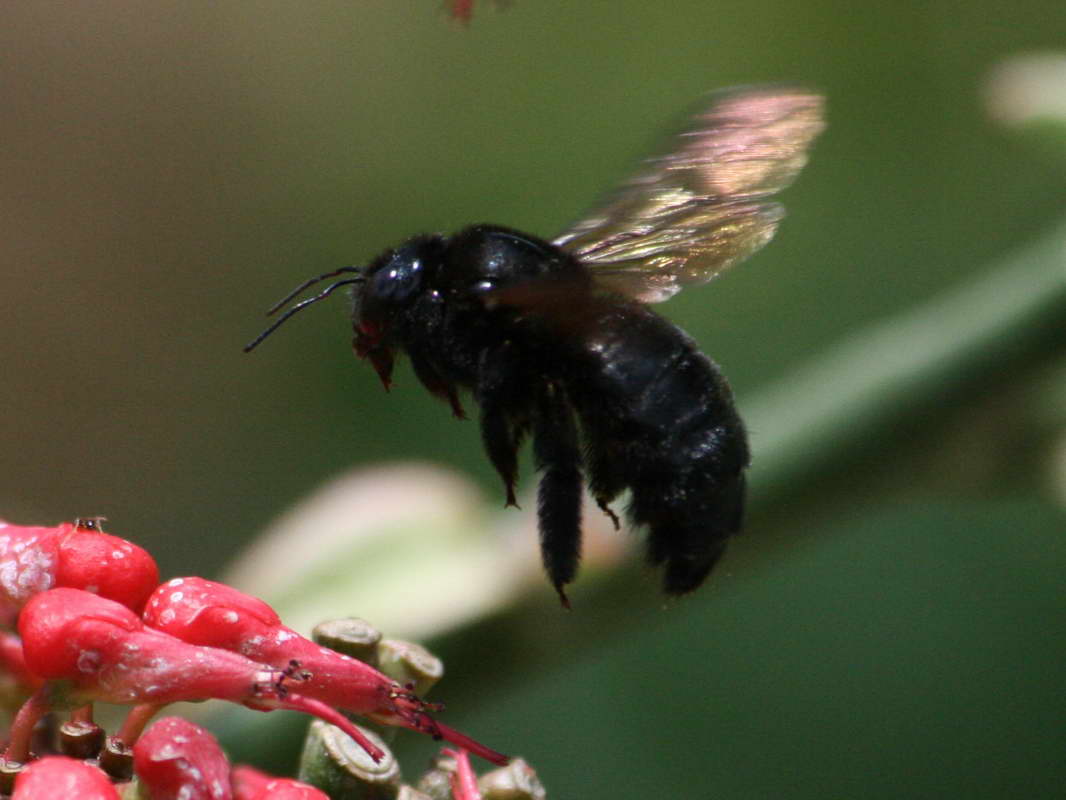
The sun warmed my back. I have not seen much of it this winter because we have had a lot of rain and grey, and because I have been inside writing on sunny days. I took off my jacket and enjoyed the coming of spring. Two of the sweet williams and the allysum were already in bloom, pink and white and lavender, as was the creeping rosemary with its more acridic scent. A big black bumblebee buzzed around. Aromatic plants opened my sense of smell. I felt life coming into my body through my connection to life. I needed this after writing 4 essays in 4 weeks, itself an erotic experience, but one that left me feeling too much in my head.
Audre Lorde also told us that the power to feel in our bodies is a subversive power. If we listen to it she said, we can change the world–which is organized by patriarchy and advanced capitalism to keep us from our true feelings–replacing them with plastic feelings that can be bought and sold. At around the same time Muriel Rukeyser asked, “What would happen if one women spoke the truth of her life? The world would split open.” Adrienne Rich wrote “two women eye to eye a whole new poetry beginning here.”
Lorde’s “Uses of the Erotic” along with Alice Walker‘s “God passage” from The Color Purple was widely quoted by feminist theologians for years–including by me. Kathleen Sands finally wrote a critique in which she reminded us that bodies and feelings of bodies are complexly shaped by culture and experience. She said that all of the feelings of the body are not” good”; if they were, we would have to affirm rapists and pedophiles.
In my own journey I found that “the power of the erotic” is not always a reliable guide. What seemed to be the most powerful feelings of my body could give me the “wrong” message—for example that a relationship in which sex was “transcendent” was “meant to be.” The power of the erotic is an important teacher, but it is one that must also be questioned and reflected upon.
The power of the erotic is not as simple as I once thought, but I still think that feeling the feelings of our bodies is one of the keys to changing the world. I agree with Audre Lorde that we are meant to live in a world in which we can feel alive and connected to others through our bodies all the time.
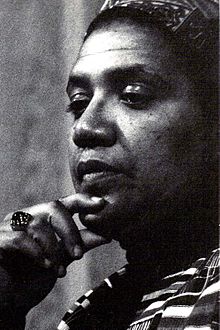
Blessed be the memory of Audre Lorde.
Discover more from Feminism and Religion
Subscribe to get the latest posts sent to your email.

 Feminism and Religion
“The power of the erotic is not as simple as I once thought, but I still think that feeling the feelings of our bodies is one of the keys to changing the world”. Carol understood the power of the erotic as an invitation to be with nature as I do. In my body. This is when I feel joy. Feeling the feelings of our bodies is a hurdle most feminists don’t jump. Why? Because when we are with our bodies we also feel pain. Jumping into mind relieves anguish but separates us from ourselves. What works best for me is to merge mind/body as one accepting that sorrow/rage/negative feelings is part of the whole. And this is hard…. I am so sad that so few respond to these wise posts from a woman who understood…
LikeLike