

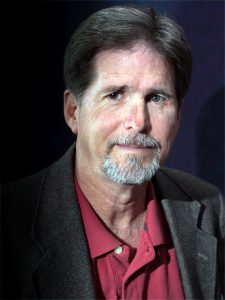
I am a fan of Jim Rigby, a minister who serves St. Andrews Presbyterian Church in Austin, Texas. Among other things, Jim identifies as a humanitarian who believes everybody, no matter their faith tradition, or even in the absence of a faith tradition, can affirm their core values through meaningful symbols in ways that do not lead to intolerance and oppression of our neighbors and all that lives upon the Earth. Sounds wonderful, positive, and life-affirming, yet nothing short of transforming our authoritarian, hierarchical, ecclesiastical institutions will achieve that kind of peace.
This is one of Jim’s recent, regular postings on Facebook:
THE LIVING HEART OF RELIGION IS A REVOLUTION
Lovers of humankind seek to liberate us not to make us obedient to religious hierarchy.
The founders of great faiths come to awaken our minds not to suffocate the torch of our reason under bushels of dogma and platitudes.
The institutions that bear the names of these founders too often focus on consolidating power and on resisting alternative insights. They are like the dead fig tree cursed by Jesus.
Fundamentalism is often but the stiffened cadaver of faith. Fundamentalism is all that is left when the hot passions and honest uncertainties of human authenticity have been drained.
Fundamentalism is all root and no blossom.
The living pulse of religion is restored by returning to our own trembling questions, not to someone else’s unblinking answers.
If we cannot question the dogma, and disobey the hierarchy, of any religion we are called by all that is sacred to flee without looking back- lest we be turned into incurious and unfeeling pillars of salt.
The living heart of religion is not an institution, it is a revolution.
I like the popular saying in some circles, “If you meet the Buddha on the road, kill him.” The Buddha here is a symbol of religious/spiritual certitude. Relying on another’s understanding and interpretation of a faith tradition numbs and eventually kills us—both literally (Remember Jim Jones and the Kool-Aid? https://www.theguardian.com/world/2018/nov/17/an-apocalyptic-cult-900-dead-remembering-the-jonestown-massacre-40-years-on) and metaphorically (the lack of personal power we often experience when we are “othered” by our religious institution’s hierarchical structure). So, in this saying, we are being admonished to kill (not literally) whoever interferes with our own unique understanding, and expression of faith.
Fundamentalists spew “truths” from their “stiffened cadavers,” often asphyxiating people under their influence. Sometimes they do not even realize the stifling nature of their own message. When that deadly message becomes institutionalized in our faith traditions, nothing short of a revolution is in order.
Come January, my friend Dale (if all goes according to plan) will become an ordained priest in The Episcopal Church. Right now he serves in a lively, Virginia parish. When I taught Religious Studies at a local university, Dale came regularly to speak with my students. Dale has told me he’s drawn to a “revolutionary Jesus.” Students often asked him if he believed in the literal resurrection of Jesus from the grave. Dale is not a fundamentalist and doesn’t find it useful to speak of a literal resurrection (enshrined in Christian creeds and confessions) as essential to the gospel message. There are ways to understand the story of Jesus’ resurrection in ways that don’t rely on literalism. I don’t believe any Scripture was written to be understood literally. Dale wants to start a revolution of love and peace by working in the here and now towards a decent and fair society—ending gun violence, living wages for workers, bodily autonomy for women, and universal health care are but four things he would like to see come about through a revolution in how the Church “lives out” the gospel story in society.
Gun violence is not inevitable, but we behave as though it is. Practically every day we hear about somebody or a group of people gunned down. We shake our heads in dismay, launch those worn-out, dismal thoughts and prayers towards the bereaved, and go about our business—most often feeling powerless to effect change of any kind. Dale is convinced the “revolutionary Jesus” gives us hope as Jesus consistently went up against the stifling, fundamentalist power structure of his own day. “Woe to you, teachers of the law and Pharisees, you hypocrites! You clean the outside of the cup and dish, but inside they are full of greed and self-indulgence” (Matthew 23:25). How many times have we heard? “My right to bear arms is protected by the 2nd amendment.” The 2nd amendment is the polished outside of the cup! We refuse to see the death and destruction inside that cup perpetuated by our society’s power structure’s refusal to rock their hierarchical boat.
Dale created a 4-part series on gun violence aptly titled, “Beyond Thoughts and Prayers.” The first part was a service of community lament over gun violence. The problem was named and the community’s expression of sorrow followed. The service was meaningful to me. Yet, the litany’s first prayer began with the leader addressing “God the Father.” The people responded “Have mercy on us.” Then he implored “God the Son.” The congregation responded again, “Have mercy on us.” Finally, he beseeched “God the Holy Spirit.” By this time, we who identify as women were put on the outside of the congregation’s attempt to communicate with the Divine. Can the Christian Spirit be anything other than male after calling on the Father and the Son? Does addressing the deity as male matter? I contend it does. Gun culture is inextricably connected with “being a man” in our patriarchal society.
I applaud Dale’s efforts within his church community to make a dent in the gun violence all of us experience. I think qualities such as aggression, leadership, and strength—qualities we attribute to men—need to be rethought in light of a male deity and the bloodbath we experience daily. Might what follows be a possibility?
Divine Mother, Daughter, and Guide, may we develop stamina and fortitude working with You to create safe communities where our guns have been “beaten down to ploughshares.”
(Quote in sentence is from the prophet Isaiah.)
Discover more from Feminism and Religion
Subscribe to get the latest posts sent to your email.

 Feminism and Religion
Thank you Esther for sharing. His work sounds very worthy, and I love the phrase, “The living heart of religion is not an institution, it is a revolution.” And yet at the same time (something I often find), still peppered with dominator patriarchal thought (God the Father, the Son and the Holy Ghost). I have a good friend, a hospice minister who regularly does her trinity as the Father, the Mother and the Child. Now that is balance.
LikeLike
Thanks for commenting, Caryn. I do like the evocative nature of Father, Mother, Child as an image to symbolize the ineffable–a lot more inclusive than Father, Son, Spirit.
LikeLike
Gosh, any discussion around Jesus needs to include nature since Jesus spoke in parables… I am the vine… and as far as I’m concerned ANY religious perspective that doesn’t include the natural world and what is happening to Her is missing it’s own core.
Agreed about gun violence but this too is a symptom of a greater evil – the astounding lack of compassion – the rise of hatred for all humankind.
LikeLike
Yes, thank you Sara! Jim Rigby has posted recently (he posts on FB 4-5 times a week) on the very thing you mention. When Jesus taught, Jim reminds us, he took his followers and others outside their day-to-day toils and into nature–birds, wheat, vine (as you mention) and other such examples. I think that we (humans) in order to hold onto “truth” feel we need to mummify it through absolutisms in creeds. Jesus never taught in creeds. He pushed back against them.
LikeLiked by 1 person
You are so right!
LikeLiked by 1 person
What an insightful post full of essential questions! It makes me think of Carol Christ’s description of divinity as “She Who Changes.” I think so often we fall into the western trap of thinking that everything naturally stays the same and we have to push hard to make positive change, when really, I think, the whole universe is in a constant state of change and we can think of ourselves as working with the universe/Goddess/God to move our society in the direction of peace, environmental sustainability, justice, and compassion for all. Those little actions make a difference to get that momentum going in the right direction! I think your suggestion of changing the language of “Father, Son, and Holy Ghost” to “Mother, Daughter, and Child” or Caryn’s “Father, Mother, and Child” is a perfect example of moving the trajectory of change positively. I wonder if we could add “Earth” – “Earth, Mother, Daughter, Child” – to acknowledge Earth’s essential role as part of “She Who Changes” and to bridge the false divide between spirit and our physical environment?
LikeLiked by 1 person
Beautiful words, Carolyn! The only thing we can count on in this world is change. Am convinced our work as human beings is to act as catalysts for positive change. I love the inclusion of “Earth” in what we might call a “worship paradigm.” After all, we are intrinsically entwined with Her wisdom.
LikeLike
Thank you for this Carolyn. It was unbelievably difficult for me to hear “love the sinner, hate the sin” from Christian fundamentalists as I was leaving the Christian faith many years ago. At the time, I was a lay minister for a very progressive Christian church that would never spew this dogma. However, I still felt stabbed in my gut because I am lesbian and the speakers were “Christian”. I don’t actually believe any one who espouses “inclusion” unless I see the actual words “queer” or LGBTQ or Two Spirit in their speech or writing, and then see actual physical evidence of their so called convictions.
LikeLiked by 1 person