

The approaching winter has felt darker than usual. Here in the north, where usually we are blanketed with snow this time of year, this year we have none. All around town people are putting up Christmas lights, but without the snow to reflect the light, the beams and sparkles of light do not carry. Without the softening effect of billows of snow, they can even seem a bit garish.
But it is not just the lack of snow that renders these days darker. With the wars raging in the Ukraine, Gaza, Yemen, Sudan and smaller conflicts around the world; the rise of hate crimes against both Jews and Palestinians in this country; the alarming possibility of a misogynist fascist man – who, echoing Hitler labels his political opponents “vermin” – becoming President of this country again; the ongoing climate crisis — these can seem dark days indeed, rendering our attempts at holiday cheer a bit garish as well.
And yet, we go in search of light, both physical and metaphysical. In the city I call home, cars line up for more than a mile to get to “Bentleyville,” a walking tour of more than five million lights in the shapes of Christmas trees, poinsettias, snowmen, Santas, reindeer, snowflakes, and archways covered in lights. It’s become one of the city’s main tourist attractions, drawing people from hundreds of miles away.
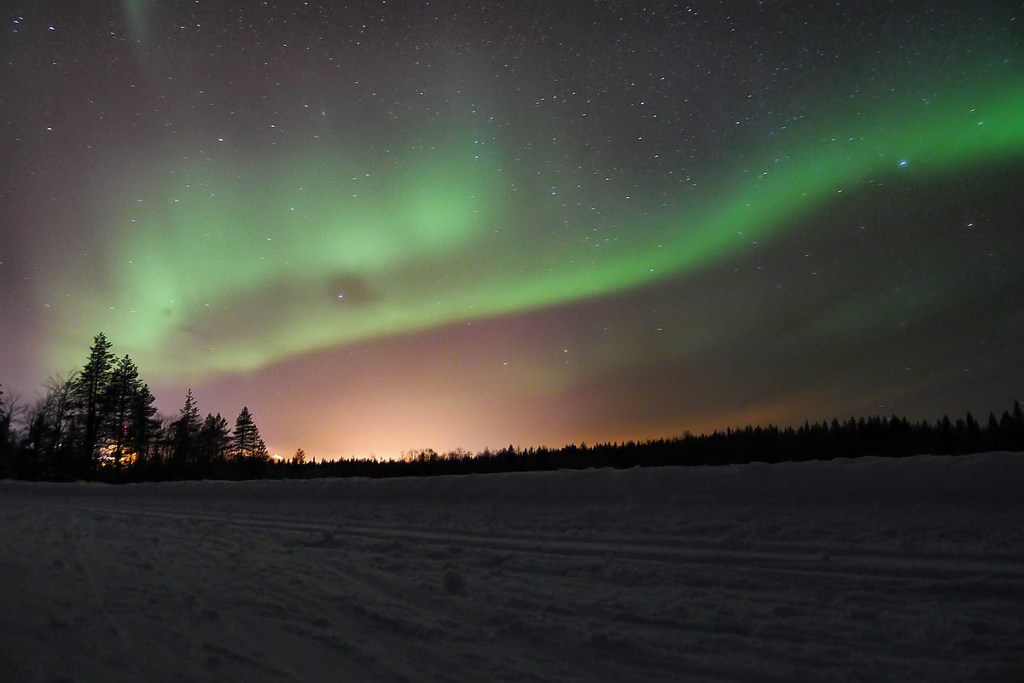
This year, the heavens are providing their own light display. With the current solar storms, we’ve been blessed with night after night of “northern lights” – the Aurora Borealis. While they’ve eluded my search so far this year, my Facebook page lights up nearly every morning with photos from friends who have seen them. People will stay up far into the night to catch these magical curtains of light in their pink and green array – a truly magical sight.
In pre-pandemic days, every Wednesday evening of Advent, I played music for “Prayers Around the Cradle.” It was a meaningful time of contemplation in the darkened sanctuary, with the reading of short inspirational verses, the singing of Taizé chants, and the lighting of candles – each with a blessing or prayer. By the end, the sand tray table would be ablaze with light, carrying our hopes for the world and loved ones near and far. Some of us would stay long, listening to each other, providing comfort, or simply taking in the light. No matter what cares or concerns I may have been holding, I always felt lightened by the time together.
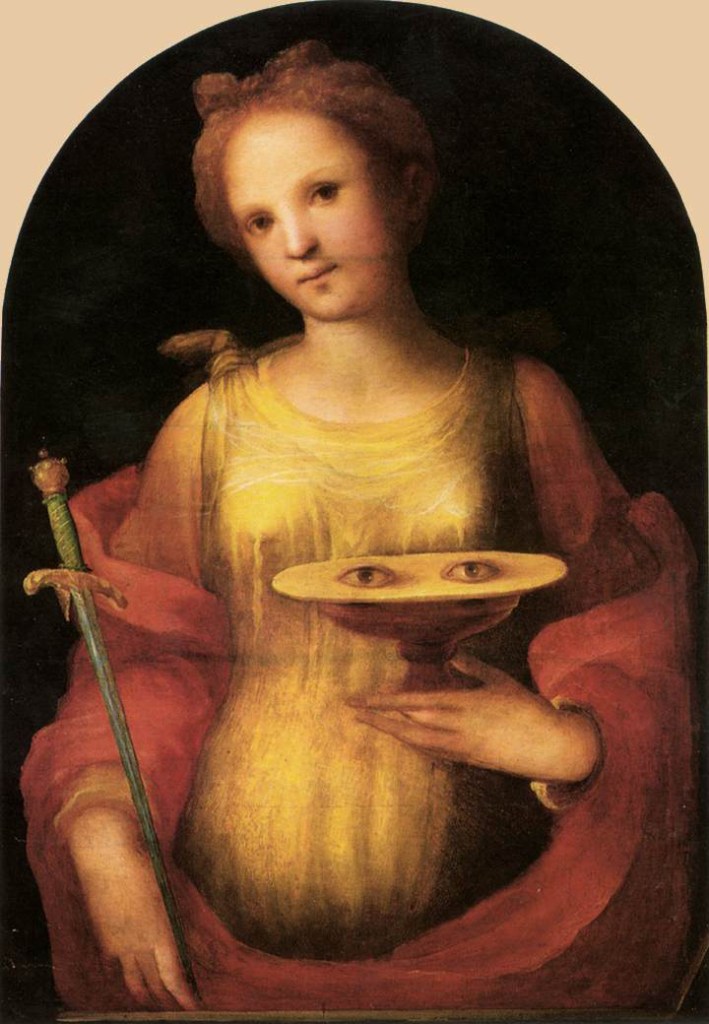
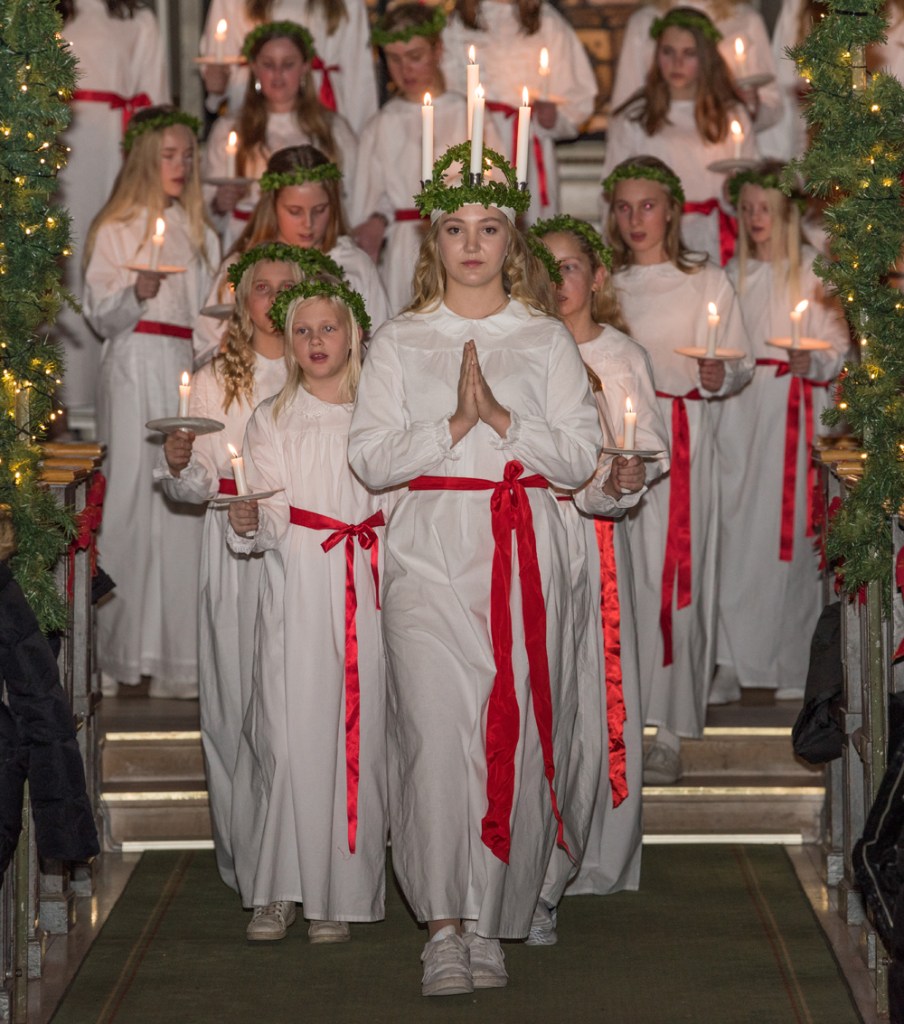
And then there is the Swedish “Festival of Lights.” Before I moved to Minnesota, I had never heard of the celebration of Saint Lucia Day, but here in the land heavily populated by Swedish, Finnish, and Norwegian immigrants, it is widely celebrated. Saint Lucia, whose name means “light,” was born into a wealthy, noble family in Sicily, and raised by her mother as a Christian. In hopes of curing her mother of illness, she pledged her virginity to God and planned to distribute her dowry to the poor. According to the legend, her angered spurned betrothed reported her to be a witch to the Roman authorities who sentenced her to a life of prostitution. However, when the time came to take her to the brothel, she was immovable. Neither was she able to be consumed by fire. Finally, she was executed by sword in 304, and later was venerated as a saint by the Catholic Church. According to Swedish legend, after her death a ship carrying a young woman believed to be Lucia, “clothed in white and crowned with light,” appeared on Swedish shores during a great famine. There she distributed food and clothing to the needy, carrying candles on her head in order to carry more food. This endeared her to the Swedish people, who celebrate her every year on her feast day of December 13th. Once thought to be the longest night of the year, her celebration ushers in the coming of the light and the Christmas season. Girls dressed in white with red sashes, wearing wreaths of lighted candles on their heads, process into the hall or family living room, carrying coffee and lussekatt (saffron buns) to be given in honor of she who gave food to the poor.
At some point, probably during the times of the witch-burnings, another less-known legend of Lucia circulated that she was Adam’s first wife, who, just as St. Lucia refused her betrothed, left Adam. Like Lucia, she was accused of being a witch who rode at night with her accompanying spirits, the Lussiferda. Her name was also seen as connecting her to Lucifer, which is in line with the beliefs at the time that witches consorted with the devil. In addition, she was considered to be the goddess who helped birth babies, bringing them from the dark into the light – another connection with the demonization of midwives at that time. During this period, on Lussinatta – or Lucy’s Night – families huddled inside, keeping watch all night to protect themselves and their children from Lussi’s evil powers.
I thought of St. Lucia the other day as our local chapter of Grandmothers for Peace distributed food and warm clothing to anyone in need. On Friday noons, you will also find us standing vigil with Women in Black, calling for a ceasefire in the Middle East. I’d like to think we are both faces of Lucia/Lussi – women claiming power, standing up to the authorities, immovable, but also spreading the light that we are most seeking at this time – the light of care, of peace, of love.
Whether we celebrate Hannukah, Christmas, Diwali, Kwanzaa, the winter Solstice, or St. Lucia’s Day – we light candles, build bonfires, hang garlands of lights inside and out – in part to light the darkness, but also to remind us of the light of love that fills the season. May we, like the snow, reflect the light of love in our actions for peace and goodwill toward all.
References:
Saint Lucy | History, Patron Saint, Eyes, & Feast Day | Britannica
The Festival of Saint Lucia – Swedish Legend | St. Lucia (gustavus.edu)
The Witchy, Feminist Story Behind St. Lucia Day | Ravishly
Discover more from Feminism and Religion
Subscribe to get the latest posts sent to your email.


Wow, I have Italian roots – maiden name Pottetti and I named one of my dear ones – Lucy for Lucia – because I knew the name meant Light. Curiously, this little dog was abandoned as a show dog with problems and by the time I took her in she hadn’t even been housebroken… ten years have passed and my beloved Lucy the sweetest little dog in the world has been plagued with illness since she was half her present age. yet she is the embodiment of LIGHT. I cherish every moment… I had no idea that Lucia had live such a brutal life and died so horribly… we have so many stories like this – Women of the Light branded as witches and brutalized – Only after their deaths do they become the’ lights of the world.’ I want them to be lights while alive… I wonder what the historical message is here… too much light seems to constellate the worst kind of darkness – yes?
LikeLike
I had a dear Lucie, too. Also named for “light.” She embodied light, too. She died just before Christmas several years ago, so I wrote an Advent piece all about the ways she brought light into the world.
You are right that Lucia had an awful death. I have agonized about her being sentenced to a life of prostitution just for refusing a man. It says so much about being a woman in the height of patriarchy.
I’m glad you had your dear Lucy.
LikeLiked by 1 person
You have perfectly expressed my experience of this holiday season. We, too, don’t have snow and the few decorations people have up seem somehow out of place. I recently volunteered at our little Village’s holiday festival with some others. In the past the group has given out cocoa, etc., but this year one of the younger members suggested that we give people the opportunity to write what they wish for the world on ribbons that we hung up on a nearby arch. I was surprised at how meaningful this seemed to be for people and how seriously they took it, as if they had been waiting for an opportunity to express what was in their hearts. Many wrote simply “peace” or “kindness” and many children wrote “family” (one wrote “ice cream” which has a charm of its own!) I love your idea of using the lights of the season for peace and goodwill, making it even more meaningful this year.
LikeLiked by 1 person
Thank you for all of this, Carolyn. There’s no snow in our dear northern Michigan either. I love what you shared so much — hanging their wishes for the world on ribbons — the “ice cream” made me smile.
LikeLike
The darkness/ shadow has always challenged the light. Light illuminates the dark and the shadow fears that more than anything. Thank you, I will be lighting candles for peace and goodwill this Christmas/Winter solstice. Whatever our spiritual paths, we can come together and shine whatever light we have into the world. I would like to see a crown of stars instead of a crown of thorns. Lucia’s Crown of Light reminded me of those words I received during a meditation. I would also like to see the crucifixion cross replaced with a chalice symbolizing communion/coming together/ life, instead of suffering and death. The latter was an idea put forward by Wellesley Tudor Pole the founder of Chalice Well Trust in England.
LikeLiked by 1 person
Thank you, Iona. I love a crown of light instead of a crown of thorns, a chalice instead of a cross. The latter is one of the things I appreciate about the UU church I attend online. The service always begins with the lighting of the chalice. May you find light in the darkness this holiday season.
LikeLiked by 1 person