

In what I believe was an attempt by my daughter to ease my “mother guilt” for the ways I felt I had let my kids down, she once told me that “the world’s problems can’t be attributed to crappy mothering.” While I appreciated her apparent effort to soothe my inner turmoiI, I can make a solid case that to a significant degree, they can be. In fact, the most critical issues we face in the modern world have everything to do with the fact that our social, economic, and cultural structures are materially thwarting, rather than effectively supporting and nurturing, the human animal – our entire species – and particularly children, in our efforts to survive and thrive.
It is true that mothers are not to blame for all of the ills of the world (though popular psychology can certainly make us feel as if everything is our fault). Nonetheless, in real and profoundly palpable ways, there are aspects of the human condition that are not receiving the attention, tenderness, and nourishment that we know very well – both by instinct and science – are crucial for physical, emotional, and spiritual resilience. Predictably, the Earth Herself is suffering in much the same way.
It’s not a stretch to imply that well-developed mothering behaviors provide an irreplaceable foundational pillar for healthy societies. Tending our humanness is the very embodiment of mothering – a constellation of life-honoring attitudes, priorities, and tasks so vast, imperative, and diverse that it is perfectly reasonable that they would be understood and practiced as the collective responsibility of entire societies. Thus, the matriarchal practice of social mothering within the matrilineal family offers a compelling alternative to the patriarchal family unit for collapsing modern societies to seriously consider as a viable possibility for course correction.
Matriarchal spirituality, woven throughout the daily lives and cultural activities of diverse peoples, holds that society benefits from the development of each individual’s creative, intellectual, and political potency, as well as their creative motherly potency. Thus, women are not relegated to biological “motherhood,” and men are not excluded from activities that nurture life. Mothers, grandmothers, sisters, aunts, brothers, and sometimes even fathers directly participate in the activities of child-rearing. Thus, women are not forced in matriarchal societies to choose between being a mother or being a professional, artisan, or politician. A woman can, practically, emotionally, and spiritually, and with the caring support of her whole community, evolve wholistically.
According Dr. Heide Goettner-Abendroth’s pioneering research on matriarchal societies of the past and present, “In archaic matriarchies, matriarchal spirituality permeated all social phenomena—including the scientific, artistic, and political—as an all-encompassing interpretation of the world, not as a spiritualistic or clerical superstructure but as a comprehensive view that united all manifestations of life. It was expressed in the rich and profound texture of the seasonal cycle in the ring of recurring festivals.” Reverence to a “Great Mother” or “Triple Goddess” is common in matriarchal spirituality, a benevolent personification of the infinite phases of birth, death, and regeneration inherently and interdependently relevant to people and planet.
‘Separation of church and state,’ as far as I can tell, has never been an actual thing in Euro-American cultures. How could it be? Divorcing politics, economics, and social spheres from the spiritual lives of a constituency is akin to the absurd notion of a mind-body dichotomy, or a human body fragmented according to areas of medical specialty. Matriarchal societies unapologetically integrate spirituality into all aspects of life. That all of life is divine is the un-dogmatic worldview, as well as the organizing principle, for matriarchal politics, economy, culture, and social life. In beautifully diverse yet astonishingly consistent expressions throughout time and continents, this reverence is almost invariably associated with an image, a myth, and/or many manners of art and celebration of a Great Goddess.
When ‘we the people’ wear corporate logos, engage in divisive politics, medicate our feelings, and consume soft drinks from plastic vessels made in factories and infused with capitalist intention, we are spiritually hijacked and dismembered. Our relationships, the conditions of our communities, our children’s turmoil, and the earth are showing us the consequence of sabotaged spiritual potency. A conscientiously chosen spiritual path cultivates human aptitude and skill for life-enhancing politics, economy, social organization, and culture.
The nightmarish social experiment we are living through has clearly demonstrated that when underlying human needs are not met, the predictable consequence is a downward spiral of chronic dis-ease, exploitable vulnerability, and reactive violence. Matriarchal societies show us that values of caring and sharing need not be relegated to do-as-I-say-not-as-I-do kindergarten jingles meant to influence children’s behavior while it’s open season for adults in business and politics. In studying matriarchal societies, we learn that nurturing and sharing the earth’s bounty as well as the gifts of our humanity are sophisticated behavior patterns of highly intelligent, self-responsible, and sovereign peoples.
I would be remiss not to acknowledge in this discourse that the vitally significant mother-daughter bonds characteristic in matriarchies have suffered painful and crippling ruptures in the sociocultural realities of life-as-we-know-it. My daughter and I continue our dialogue, and I am learning to forgive myself for what I didn’t know and the support I didn’t have when my primary tasks were to nurture and educate her. The bonds of heart, womb, and soul among women must be painstakingly and sensitively rewoven; the remnants of our lost lineages, ancient artifacts, and the carnage of modern warfare are the composted materials we have to work with.
References:
Gimbutas, Marija. The Language of the Goddess. Thames & Hudson, 2001. (US printing)
Goettner-Abenroth, Heide. Matriarchal Societies; Studies on Indigenous Cultures Across the Globe. Peter Lang Publishing, Inc., New York. 2012, 2013.
Goettner-Abendroth, Heide; Krause, Maureen T. (Translator). The Dancing Goddes: Principles of a Matriarchal Aesthetic. Beacon Press, Boston, Massachusetts, U.S.A. 1991
Iglehart Austen, Hallie. The Heart of the Goddess. Wingbow Press, 1990.
Waring, Marilyn., & Martin, Kent. Who’s counting? Marilyn Waring on sex, lies and Global Economics. Quebec; National Film Board of Canada. 1995. https://youtu.be/WS2nkr9q0VU?si=IjD_CHhAWE3vLtUN
Worldwide Bibliography on Matriarchal Studies, Curated by Heide Goettner-Abendroth and Barbara Alice Mann: https://www.hagia.de/en/worldwide-bibliography/
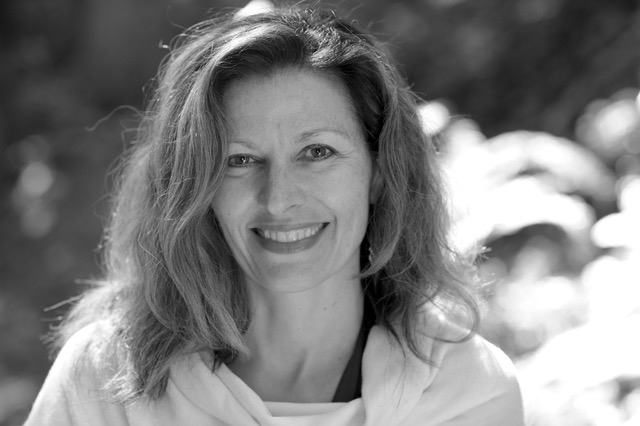
BIO: Jennifer Eva Pillau is mother of two and has received formal education in several fields, as well as through world travel. She holds a bachelor’s degree in business administration, a master’s degree in Traditional Chinese Medicine, and is a Certified Ayurvedic Practitioner. She studies matriarchal societies and matriarchal theory at International Academy Hagia, based in Germany, with the institute’s founder, Dr. Heide Goettner-Abendroth. She has traveled to Greece, Israel, and The West Bank with Acupuncturists Without Borders, as well as to China to enhance her education in Chinese Medicine. She studied Odissi Classical Indian Dance for several years, and traveled to Orissa, India, twice on dance pilgrimage. She is an experienced facilitator of Red Tent circles for women, and has been actively involved in movements to improve school food, oppose genetically engineered foods, stop medical mandates, and to bring critical aid and humane support to individuals affected by forced migration. She currently lives on the Island of Crete, where Neolithic and Bronze Age egalitarian high society once thrived. Her pen name is the name of her mother’s Estonian lineage.
Discover more from Feminism and Religion
Subscribe to get the latest posts sent to your email.
 Feminism and Religion
wow
LikeLiked by 1 person
This is probably the most powerful essay I have read in a long time about the importance of mothering to self/child/others/culture/ religion/ the earth. I am so impressed by the level of interconnectedness between every aspect of the importance of mothering from self to planet. This essay flows like water. “It’s not a stretch to imply that well-developed mothering behaviors provide an irreplaceable foundational pillar for healthy societies”. I hear the Carol Christ’s voice echoing through yours. How much I long for that Big Picture thinking, Voices that unite … I was interrupted at this point by my vet who is the most mothering person I know – a man who is taking my dogs for x -rays this morning – reminding me that mothering is as much about men as women – it is a way of being in the world that supports all life… One point I want to address is the critical importance of integrating spirituality into every aspect of our lives – “a comprehensive view that united all manifestations of life. It was expressed in the rich and profound texture of the seasonal cycle in the ring of recurring festivals”. I can only speak to my own experience but it is clear to me that my relationship with nature has taught me more about mothering and fathering than any human and it has connected me to the sanctity of the earth on a level that is impossible to express through words because it is experiential. Because of this relationship I live my life through the big picture, and so far at least as difficult as it has become to witness what is happening to all of nature as well as humans, this relationship has sustained me. I have come to believe that our global collapse has everything to do with our spiritual separation from self/earth/whole. This relationship is the foundation of all life. Just yesterday I was glimpsing the beginnings of all life through a microscope viewing slime molds and lichens the first animal/plants (we don’t know where the boundaries are) and feeling such a sense of wonder for what lies just below our feet – this mycelial network, the skin of the earth holds the key to future life… and I am hopeful for those like Dr Suzanne Simard now in her late 60’s who heads the 100 year Mother Tree Project and Dr Merlin Sheldrake (who is YOUNG in his mid thirties) and is opening the door to this magical world on a level that includes spiritual engagement at a time when global collapse is imminent.
LikeLiked by 1 person
I really enjoyed receiving your comment Sara. Thank you. I am pleasantly surprised and astonished to hear that you heard Carol’s voice resonating through my words. Though I never knew her directly, I do feel her presence and her legacy nudging me along in several ways.
It’s encouraging to know others are feeling into the essence of the “big picture” and these important and profound interrelationships.
Thank you for mentioning the scholars at the end of your comment. I am curious and will look them up.
LikeLiked by 1 person
PS I didn’t mention my own mothering struggle with two babies, one at 20, the other at 21. I was a mother before I became a person and lived with my guilt for never being good enough as mother for most of my life. It’s important that we acknowledge how mothering is perceived by the culture – we don’t even need to blame ourselves – the culture does it for us – and now climate change old mother earth is being demonized – naturally. You covered so much in this one essay that I could write at least 5 more comments. That carol is coming through you is reality….
LikeLiked by 1 person
Thank you for being candid about your personal struggle Sara… I relate. I was also a young mother. I’ve often said I had to grow up with my children, while I was raising them. By the time I was 35 or so I realized I had no idea who I was outside of the role of ‘mother’ and ‘wife.’ I’m still unpacking this, and it’s one of the key personal experiences that has led me to inquire into matriarchal sociocultural patterns so deeply.
LikeLiked by 1 person
I also wanted to add however that through being strongly identified as a mother, I learned a whole lot about myself, the world, service, medicine, nutrition, market and cultural manipulations, our educational system, how politics work in the US, and much more. There was a switch that went off in me as a mother; where I had previously been perhaps easy to push around, when maternal instinct came alive in me I got fierce and stood up and participated in ways I didn’t have the desire or courage for previously. Mothering has been a profoundly potent life experience, through which I grew immeasurably. I feel it’s crucial to acknowledge this together with the struggles and perceived failures.
LikeLike
unfortunately this didn’t happen for me until active mothering was on the wane and my children were young adolescents. Sad
LikeLike
I feel you Sara… the ache of that sadness. As well as the great resilience that propelled you forward into your professional purpose. Magnificent.
LikeLike
Oh, how I identify with you – and like you by the time I was 35 I realized I had absolutely NO idea who I was…. lack of mothering left me in sea of doubt as a mother – what I remember best is GUILT – it has taken me a lifetime to forgive myself for ‘bad mothering’. I used to say I never got the script – and my children turned on me…both are male – no matter what I tried to do – like counseling etc – they refused. The positive part of this story is that I went on to develop my own life accruing degrees in the process, became a teacher and counselor and worked with women – eco feminism, a term no longer used, married my life as a naturalist with feminism and world mythology helping me to develop into a woman I am proud to be. You will surely do the same.
LikeLiked by 1 person
This is probably the most powerful essay I have read in a long time about the importance of mothering to self/child/others/culture/ religion/ the earth. I am so impressed by the level of interconnectedness between every aspect of the importance of mothering from self to planet. This essay flows like water. “It’s not a stretch to imply that well-developed mothering behaviors provide an irreplaceable foundational pillar for healthy societies”. I hear the Carol Christ’s voice echoing through yours. How much I long for that Big Picture thinking, Voices that unite … I was interrupted at this point by my vet who is the most mothering person I know – a man who is taking my dogs for x -rays this morning – reminding me that mothering is as much about men as women – it is a way of being in the world that supports all life… One point I want to address is the critical importance of integrating spirituality into every aspect of our lives – “a comprehensive view that united all manifestations of life. It was expressed in the rich and profound texture of the seasonal cycle in the ring of recurring festivals”. I can only speak to my own experience but it is clear to me that my relationship with nature has taught me more about mothering and fathering than any human and it has connected me to the sanctity of the earth on a level that is impossible to express through words because it is experiential. Because of this relationship I live my life through the big picture, and so far at least as difficult as it has become to witness what is happening to all of nature as well as humans, this relationship has sustained me. I have come to believe that our global collapse has everything to do with our spiritual separation from self/earth/whole. This relationship is the foundation of all life. Just yesterday I was glimpsing the beginnings of all life through a microscope viewing slime molds and lichens the first animal/plants (we don’t know where the boundaries are) and feeling such a sense of wonder for what lies just below our feet – this mycelial network, the skin of the earth holds the key to future life… and I am hopeful for those like Dr Suzanne Simard now in her late 60’s who heads the 100 year Mother Tree Project and Dr Merlin Sheldrake (who is YOUNG in his mid thirties) and is opening the door to this magical world on a level that includes spiritual engagement at a time when global collapse is imminent.
LikeLike
Great essay, Jennifer. I think the heaviest burden for me when my children were young and living at home was that I felt their entire outcome in life rested on my shoulders. Employers have no interest in understanding how our (USA) society constricts mothers’ ability to live fully engaged in the world. The phrase, “It takes a village,” is somewhat overused, but you show how we can live more fully as we become more communal. Thank you.
LikeLiked by 1 person
I’m totally feeling you Esther. Thank you.
LikeLike
Your daughter sounds like a bright woman. Girls and women need to know how patriarchy works, how it set women up to be “mother.” What most people do not know is that almost fifty percent of our culture is single mothers raising children on their own, we do not hear about that, do we. he greatest number of seniors living in poverty today were single mother’s that raised children on their own, we do not hear about any of this, do we. What i do notice is that when politicians (men), want something, they exploit children and women, by having us believe they care about us, manipulative you bet though surely not caring about children nor women.
LikeLike
My daughter is indeed a very bright woman! Thank you for reflecting that back to me.
Astonishing statistics you mention. I have deep respect for the journey of single motherhood… I was not a single mother and felt adrift in many ways nonetheless. The entire parenting paradigm needs radical change, in my opinion.
LikeLike
This is a great article, you are so right. After the breastfeeding period which doctors estimate to be a year, either men or women can parent, there is no more women are “mother,” that’s just another patriarchal leg trap.
LikeLiked by 1 person
Thank you, Cate. I agree. I envision a culture that is dedicated to caring holistically, where mothering activities are part of everyday responsibility for everyone. Even as adults we will benefit from participating in community that holds care and nurturance as a core value, as well as an ideological and practical priority in daily life. Care for people and planet first, then everything else.
LikeLike
Great article.
Due to the unexpected farming death of my father, my mother was pushed into work and studying for a nursing degree. Mothering duties were shared by my much older sister, grandmother, our next door neighbor, aunts, and church ladies. I had dozens of mother figures, which has enriched my life.
I feel for the current children and mothers. They’re busily engaged in shuttling children to various activities all in the belief it will result in a good childhood. Those mothers who can’t afford such activities feel like they’ve failed their children somehow.
Growing up poor, I enjoyed exploring the woods, imitating bird calls as opposed to be driven to a pay league soccer game twice a week. When we moved to the city, I heard on the news our neighborhood was the worse in the city…that was simply economics. People looked out for one another.
Conversations with the women of our neighborhood stuck with me. Unfortunately, these conversations are becoming out of fashion with children rejecting the experiences and the advice of their elders. Having been connected to a variety of women, I feel blessed.
I mother my own children, my students, and animals. Mothering is so basic, so important, and so devalued.
LikeLiked by 3 people
Thanks for this personal share… touching, and so powerful.
LikeLiked by 1 person
Such a clear essay, championing the work and value of mothering without trapping women as the sole providers. Thank you!
LikeLiked by 2 people