

In her book Pentimento, author and playwright Lillian Hellman describes a phenomenon that often occurs when we return to a piece of art we once worked on after much time has passed: “Old paint on a canvas, as it ages, sometimes becomes transparent. When that happens it is possible, in some pictures, to see the original lines: a tree will show through a woman’s dress, a child makes way for a dog, a large boat is no longer on an open sea.” Hellman speaks of the way the aging paint allows for older layers to show through, offering an opportunity to see, in her words, “what was there for me once, what is there for me now.”
Like the painting Hellman describes, Torah, too, is a work in process. Layers and layers of interpretation have been added to it over time, according to the needs, desires, fears, and longings of those who devoted their lives to making meaning out of these sacred words. Some layers add to the beauty and power of the overall piece, strokes and shapes that bring the picture more clearly and compellingly into focus. And some accrue like varnish, making the painting hard and impenetrable. Each one of us is invited into this process of excavation, of peeling back layers of what we have been taught or what we think we know, and seeing, as Hellman writes, what is there for us now. And each of us is called to our creativity — to bring our brush back to the canvas anew, reencountering and reworking the stories, ideas, and images that lie at the very foundation of who we are and who we could be.
While “Torah” is a Hebrew word used by Jewish people to refer to our most sacred text, the impact of how we interpret the stories contained within the Torah extends far beyond the Jewish community. Though understood in different ways, and used for different purposes at different times, these stories and teachings have been and continue to be foundational for myriad cultures throughout the world, from the ancient Middle East to medieval Europe, from the American Civil
Rights movement to modern art, from literary theory to new age spirituality. Whether we consider ourselves “religious” or not, we are all likely familiar with the stories of Adam and Eve, Moses on Mount Sinai, and the Exodus from Egypt.
Archetypes, stories, and symbols that originate in the Torah have become ingrained in many cultural frameworks, and can be found in everything from children’s stories to protest songs, to blockbuster movies, and even Super Bowl ads.
Regardless of whether we identify as atheist, spiritual, or religious (or somewhere in between), these stories have undoubtedly seeped into us on some level, often without us even being conscious of it. Even if we don’t have any personal connections to them, they’ve shaped our society, for both good and bad, through the values and laws that have been derived from them. For example, from the Torah we get the right to a fair trial and mandated days of rest (hooray for the weekend!) — as well as opposition to gay rights and support for capital punishment. The essential point here is that the interpretations that led to these laws are not the only possible interpretations of the text. In fact, Torah has been interpreted in numerous, divergent ways for at least three thousand years, often to radically surprising ends.
Take the story of Adam and Eve. The most widespread interpretation of this story is that Eve tricked Adam into eating the forbidden fruit and was then punished by God. In this version, Eve is responsible for the expulsion from the paradisiacal Garden of Eden — and, by extension, for all the suffering we humans experience in our post-Edenic world. She is the symbol of women as cunning, manipulative, and deceitful beings who ultimately lead men (and humanity) astray. However, Jewish tradition teaches that there are “seventy faces to Torah,” that is, there are countless ways to interpret and make sense of any word, line, or myth (or even letter!). While the interpretation most of us know may seem like the most obvious or straightforward way of reading the text, it often only seems that way because that is the version we’ve been taught, or the one we’ve heard the most, that has been codified as “truth.” However, from the ancient rabbis to modern-day commentators, in every generation there have been those who found other ways of reading the text — staying true to the words but deriving different meanings, and lifting up different lessons and values.
For example: one possible reading of this story, which still stays true to the text, is that rather than a sinful act that led to the downfall of humanity, Eve’s eating of the apple was a brave choice that propelled humanity forward. While God warns Adam that if they eat of the fruit, they will die, the snake tells Eve that is not true, she will not die, but rather that her and Adam’s “eyes will be opened.” Indeed, the text mirrors this exact language after Eve and Adam eat the fruit: “The eyes of both of them were opened.” Rather than being “duped” by the snake, Eve draws on her own powers of perception; the text says she “saw that the tree was good for eating and a delight to the eyes, and that the tree was desirable as a source of wisdom.” One could argue that for humanity to move out of an infantilized state of existence, and to allow for moral development and the evolution of human consciousness, the fruit had to be eaten. In this reading, Eve is a heroine — brave, wise, and resourceful, acting in collaboration with the more-than-human world (the snake), and trusting her own intuition and desire. Rather than negate the more widespread interpretation of Eve, in Jewish tradition, both of these interpretations live side by side.
To be sure, given the immense harm that certain interpretations of Torah have done, it is only natural to want to definitively disprove, or erase, the perspectives we do not agree with. This, however, goes against the ethos of Jewish textual interpretation, which seeks to amass ever more varied understandings of the text. Notably, the Talmud records dissenting opinions alongside accepted rulings, preserving the polyvocality of rabbinical debate for future generations. Not only does this provide us with a wider and more diverse range of ideas to turn to as we, and the world, continue to change, it also maintains the value and power of holding many things to be true at once. Rather than attempting to remove the “undesirable,” or discarded, interpretations from the record, instead we are all invited to add ever-new interpretations to the discussion. Writer and mythologist Sophie Strand refers to this constant compilation of interpretation and retelling as “the compost heap” of collective meaning. It is only by adding to the “heap,” so to speak, that Torah (or any mythology) becomes, as Strand calls it, “good soil” from which new life can grow — and from which ever more possibilities can emerge.
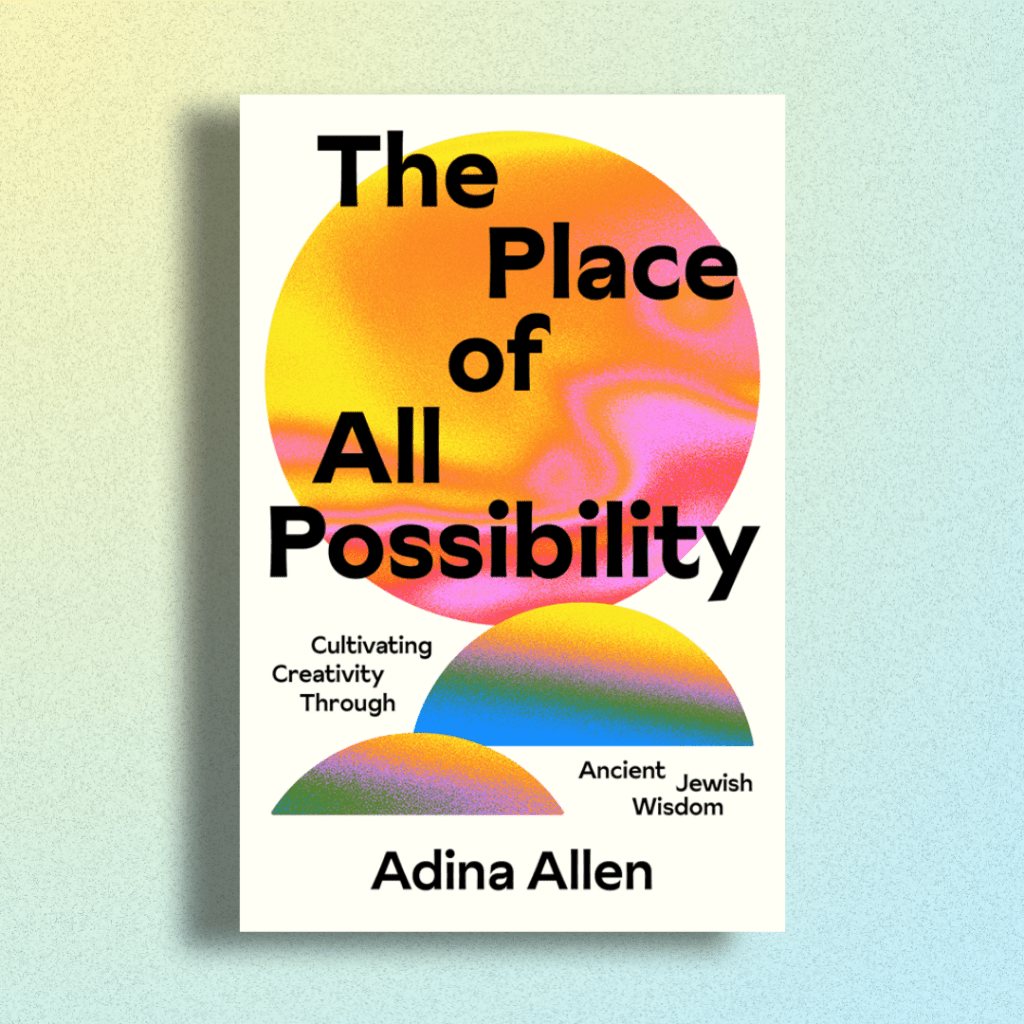
This article is excerpted from The Place of All Possibility: Cultivating Creativity Through Ancient Jewish Wisdom, (Ayin Press, 2024)
The Place of All Possibility is a paradigm-shifting work that reframes the whole of Torah as a contemporary guidebook for creativity. Drawing from the deep well of Jewish sacred texts, and the radical interpretive strategies of ancient rabbis, The Place of All Possibility provides teachings and tools for those who seek to employ creativity as a force of transformation. The Place of All Possibility is for all people—from any tradition or none—who want to seed a world of imagination, abundance, and joy.
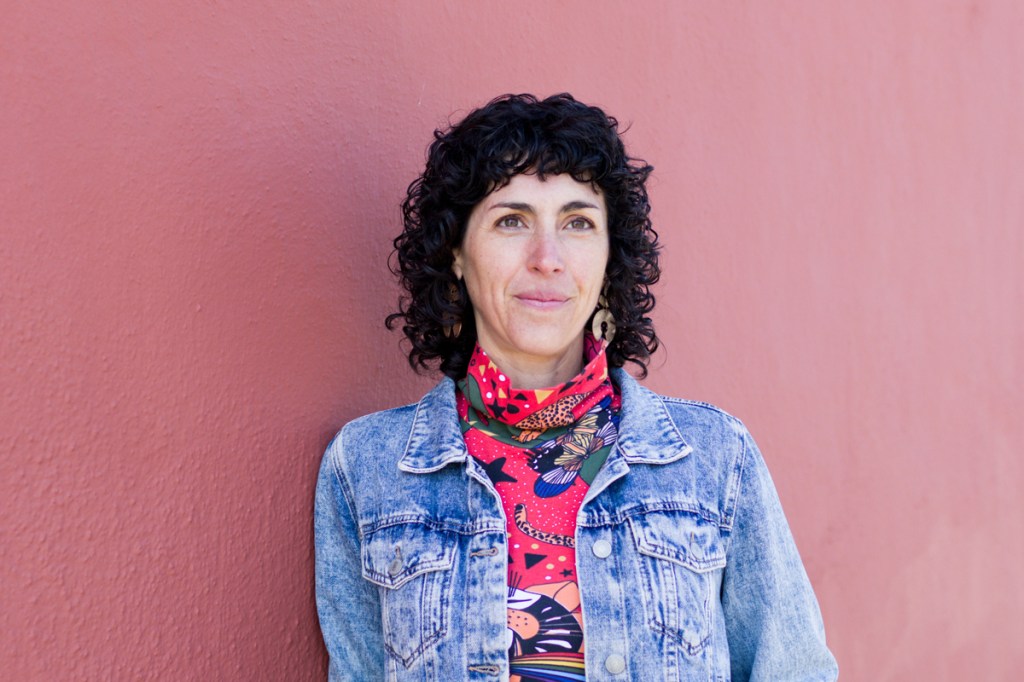
BIO: Rabbi Adina Allen is a spiritual leader, author, and educator. She is cofounder and creative director of Jewish Studio Project (JSP), an organization that is seeding a future in which every person is connected to their creativity as a force for healing, liberation and social transformation. Adina is the author of The Place of All Possibility: Cultivating Creative through Ancient Jewish Wisdom (Ayin Press, 2024), from which this excerpt is taken.
Discover more from Feminism and Religion
Subscribe to get the latest posts sent to your email.
 Feminism and Religion
Wow, what a wonderful essay – I am always thrilled when I see movement back and forth between the little and big picture with an eye on the whole “collective compost heap” which is composed of every religion on earth and every human interpretation. All these stories return us to our beginnings and offer us an opportunity to move into new futures…Yesterday I was in the woods ‘reading’ the land and water for what might be going on beneath the surface of this wild fragment of what once was unbroken forest..I am fascinated by relationships – and by paying attention to the appearance of certain fungi/ mushrooms that appear I can infer certain relationship probabilities between what I can see and what I can’t because I have learned something about underground mycelial networks that connect every living thing to every other just beneath the surface of the soil. These fungal networks have been in existence since plant life began on land and are the original source of life on this planet. I think religions are like mushrooms – they may pop up and disappear but the original threads remain along with endless possibilities for new life. Whenever I feel despair over our current socio -political and climate chaos I can return to these natural fragments to remind me that unless our planet is blown up life will continue… the original story will live on…
LikeLike
Wow Sara, thank you for these warm words and for this gorgeous and evocative reflection on the piece. “All these stories return us to our beginnings and offer us an opportunity to move into new futures” – Yes! I couldn’t agree more. Appreciate your words and the mycelial imagery.
LikeLiked by 1 person
This is excellent! Thank you for posting, Adina! I think this sentence is key to understanding ourselves within (or even outside) our faith traditions: “Regardless of whether we identify as atheist, spiritual, or religious (or somewhere in between), these stories [Adam and Eve, Moses parting the sea after the exodus, etc.] have undoubtedly seeped into us on some level, often without us even being conscious of it.” All of us come into the world contextualized within stories. To understand that reality, it’s incumbent on each of us to critically examine those stories that shape us not just individually, but communal. All too often, we are expected to “just believe” one particular understanding of whatever text (or teaching) our community holds sacred. Peeling back the layers of interpretation (IMO) is essential in order to live justly.
LikeLike
Thank you Esther for this astute reading and for drawing out that line. Yes! I do think its incumbent upon us to add to the compost heap of collective meaning — and deeply believe each one of us have something (many things!) that only we can add, and that the story shifts and opens for all of us whenever any of us do this work. May it be so!
LikeLiked by 1 person