

I had nearly resolved to leave the matter in silence;
yet although silence explains much by the emphasis of leaving all unexplained, because it is a negative thing, one must name the silence,
so that what it signifies may be understood.
Failing that, silence will say nothing,
for that is its proper function, to say nothing.[i]
La Respuesta/The Answer (al Soldado, or The Soldier)
Sor (Sr.) Juana Inés de la Cruz
(November 12, 1651 – April 18, 1695)

Today, I honor the legacy of mid-17th century Mexican Catholic nun, scholar, and poet Sor Juana Inés de la Cruz. She was born in the central valley of Mexico in the Viceroyalty of New Spain, now in modern-day Mexico. She was the daughter of Doña Isabel Ramírez de Santillana and Don Pedro Manuel de Asbaje. They had three daughters: María, Juana, and Josefa. Doña Isabel also had three other children – Antonia, Inés, and Diego – with Diego Ruiz Lozano. Sor Juana Inés was raised with her siblings on their family’s hacienda of Nepantla which was managed by their strong-willed mother Doña Isabel.
In Sor Juana Inés de la Cruz’s highly advanced New Spain society she played an important role as a leading intellectual of her time. She was recognized in New Spain for her famous private library and literary genius. Her writings drew on the wisdom of the Church Fathers, the Hebrew and Christian Testaments, church teachings, Greco-Roman myths, Nahuatl beliefs and customs, and disciplines such as Baroque poetry, music, math, science, chemistry, astronomy, rhetoric, music, architecture, philosophy, theology, art, and more. In Spain, Sor Juana Inés has also been recognized as the last great author of the Hispanic Baroque period. In the twenty-first century, I believe Sor Juana Inés de la Cruz should share the status of Doctor of the Catholic Church along with her European Sisters, Teresa of Ávila, Thérèse of Lisieux, and Hildegard de Bingen.
In this blog, I will focus on how American secular sorjuanista scholars have been ‘silent’ in presenting Mexican Catholic scholarship on Sor Juana Inés de la Cruz in sorjuanista studies. As a result, the research of American sorjuanista scholars is both outdated, and historically inaccurate. I define the silence in American sorjuanista studies as the lack of recognition of the research of esteemed Catholic Mexican sorjuanista scholars such as Alejandro Soriano Vallès.[ii]
In my own graduate level education, I was never introduced to Catholic scholarship on Sor Juana Inés de la Cruz, as if the literature did not exist. The primary sources I relied on were deeply influenced by Mexican Laureate Octavio Paz’s book, Sor Juana or, the Traps of Faith (1988) and Dorothy Schons 1926 text, “Some Obscure Points in the Life of Sor Juana Inés de la Cruz”.[iii] Both texts show that Sor Juana Inés had a contentious relationship with clerical leaders in the Catholic Church. They argue this without citing primary sources. Alejandro Soriano Vallès’ scholarship disproves this claim. Sadly, the methodology I was taught was to interpret Sor Juana’s biography and text through a feminist presentism lens. My book Sor Juana Inés de la Cruz: Feminist Reconstruction of Biography and Text (2014), and my Ted-Ed on Sor Juana Inés de la Cruz, “History’s Worst Nun” are both flawed. Now, that I am aware of Mexican Catholic scholarship on Sor Juana Inés I have come to understand Dorothy Schon’s advice of not to use the ‘present’ to interpret Sor Juana Inés de la Cruz’s past.[iv]
Sor Juana Inés de la Cruz’s historical past is Catholic. Mexican scholar, Hugo Hiriart states, “Sor Juana should be read by those who are interested in the Catholic religion.”[v] Contrary to how Catholicism is portrayed in Sor Juana Inés’ time as patriarchal, clerical, and oppressive the convent was a safe space for women to read, write, and be educated. Therefore, to understand Sor Juana Inés in her historical period it is imperative to be versed and engaged in Catholic scholarship on Sor Juana Inés de la Cruz.[vi] The choice for secular sorjuanista scholars in the United States to ignore or dismiss Catholic sorjuanista scholarship has resulted in controversial points in Sor Juana Inés de la Cruz’s biography.
Controversial Points in Sor Juana Inés de la Cruz’s Biography
1648 versus 1651 Date of Birth
Sor Juana Inés de la Cruz was born on November 12th, 1651, and not 1648.[vii] The year may seem insignificant, but it is important because it enables scholars to create a more historically accurate picture of Sor Juana Inés as a lady-in-waiting in New Spain’s Viceroyal Court. During this time, Sor Juana Inés wrote courtly poetry. If Sor Juana was born in 1648, she would have entered the court at age 16. This year would give her romantic poetry biographical interpretations. If she was born in 1651, Sor Juana Inés would have entered the court at age 13. The 1651 date would make her romantic poetry part of the popular courtly genre. It also gives Sor Juana Inés de la Cruz an earlier religious conviction, inadvertently refuting a possible romantic relationship she had while in court. American and secular Mexican scholars prefer the 1648 date, thus allowing them to attribute Sor Juana Inés’ romantic poems to an affair between Sor Juana and an unknown gentleman.

La Leyenda Negra: The Black Legend
In Mexico, in the field of Sorjuanista scholarship the phrase La Leyenda Negra, or “The Black Legend” is used. It is used to identify inaccurate interpretations of Sor Juana Inés de la Cruz. Alejandro Soriano Vallès’ book Sor Juana Inés de la Cruz: Maiden of the Word, draws attention to myths elaborated by sorjuanista scholars in the U.S. who have been influenced by Octavio Paz’s and Dorothy Schons’ interpretations of Sor Juana Inés de la Cruz.[viii] Among these myths are:
MYTH I
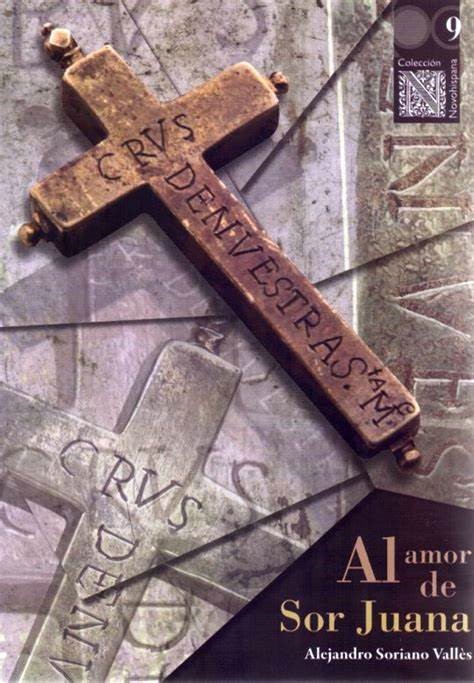
Sor Juana Inés de la Cruz’s Library: The Archbishop Aquiar y Seixas DID NOT STRIP Sor Juana Inés de la Cruz of her books.
Alejandro Soriano Vallès disputes the claim that Sor Juana did NOT willingly give up her library by citing the Will of Sor Juana’s “old friend” Fr. José de Lombeyda. In Lombeyda’s will, he states:
I declare that Mother Juana Inés de la Cruz, a religious who was from the convent of the glorious doctor San Jerónimo, now deceased, gave me different books to sell, and the said nun having died by virtue of the mandate of the Most Illustrious Archbishop of this diocese, I continued in the said sale and I have been delivering her proceeds to His Most Illustrious Lordship and those that have remained to be are in my power, I order and command that [they be] deliver[ed to] the said Lord Archbishop.[ix]
MYTH 2
Sor Juana Inés de la Cruz’s text, La Respuesta (The Answer)
In 1691, Sor Juana Inés de la Cruz wrote, La Respuesta, or The Answer. Contrary to scholarship on Sor Juana Inés in the United States which argue that La Respuesta was a response to the Bishop of Puebla, Manuel Fernández de Santa Cruz. In actuality, Sor Juana Inés de la Cruz wrote La Respuesta on the orders of the bishop of Puebla to defend herself from the accusations of an unknown individual from Peru, known as El Soldado, or The Soldier.Soriano Vallès’ various books on Sor Juana Inés de la Cruz have confirmed this drawing on primary sources. Contrary to Octavio Paz, who, in his book Sor Juana, or The Traps of Faith, argues that Sor Juana Inés was a pawn between clerics, this was not the case.[x] This has resulted in anti-Catholic and “false narrative[s]” of Sor Juana. In an interview this past year, esteemed Sorjuanista scholar Sara Poot-Herrera in the U.S., confirms this calling it a “legend.”[xi] Still, American sorjuanista scholars’ privilege this “legend” to support their argument that clerical leaders in the Catholic Church oppressed Sor Juana Inés de la Cruz. Sor Juana Inés was not a victim of clerical leaders or of the Catholic Church in her lifetime. Rather, Sor Juana has been a victim of contemporary personal biases and interpretations.
The field of Sorjuanista studies in the United States is premised on “misinformation,” and thus is flawed. On the contrary, Sor Juana Inés de la Cruz was not a victim of clericalism within the Roman Catholic Church which she served for twenty-five-plus years as a nun. Instead, Sor Juana Inés has become a victim in the humanities which have created “fictional” Sor Juana Inés’ based on personal biases and misinterpretations. Alejandro Soriano Vallès comments:
It is curious how feminist hermeneutics and gender studies have taken pleasure in this for decades and without proof, offending the Catholic Church and, in the case of the nun’s life, most of the clerics who surrounded her by calling them misogynists and a thousand other niceties, without anyone having made the slightest reproach to their followers. It seems that insulting the faith of millions is “politically correct,” but responding to such insults is a very serious offense, for which feminists and gender studies specialists can legitimately tear their clothes.[xii]
In the process, American sorjuanistia scholars have capitalized financially on Sor Juana Inés de la Cruz’s life through operas, movies, Netflix series, and more. None of this money benefits the female Hieronymite order of which Sor Juana was a member. The question I pose is “what this means for the present and future of Sorjuanista studies in the United States. The challenge for myself is to remedy “misinformation” in the field reclaimimg undermining Sor Juana Inés de la Cruz’s positive participation in the Catholic Church.
I want to conclude with the title of a book by Emil Volek, “La mujer que quiso ser amada por Dios” (2016). In English, “The woman who wanted to be loved by God.”[xiii] When Sor Juana Inés entered the Convent of San Jerónimo (or Santa Paula) she wrote this statement on her paperwork.
Sor Juana Inés de la Cruz did not desire to be a feminist, a Chicana lesbian, or ecofeminist. Rather, her desire was to live a life faithful to the Catholic tradition in order that she might emulate the qualities of a saint. In response to Sor Juana Inés’ desire for this, my colleague Juan A. Tavárez and I are organizing essays for a two-volume Hispanic peer review journal for Perspectivas.[xiv] We have invited esteemed Catholic and ecumenical scholars in the field of sorjuanista studies who desire to reflect on Sor Juana Inés de la Cruz’s vocation to serve God, and the Catholic Church. The end goal is for her to be named both a saint, and Doctor in the Roman Catholic Church.
Let the conversation begin!
Author Bio

Theresa A. Yugar is a Peruvian American scholar in religion whose scholarly focus is on women, ecology, and climate change on a global level. Yugar is the Chief Editor for the book, Valuing Lives, Healing Earth: Religion, Gender, and Life on Earth and author of Sor Juana Inés de la Cruz: Feminist Reconstruction of Biography and Text. Her research interests include creating counter narratives in course curriculum, reclaiming the native indigenous cosmology within a Buen Vivir ecological framework, and considering the life and texts of mid-17th century Novohispaña Catholic nun, Sor (Sr.) Juana Inés de la Cruz.
Select Bibliography
Alicia Gaspar de Alba, “Decolonial Feminists Unite! Dorothy Schons and Sor Juana Inés de la Cruz,” October 30, 2020.
———-, Sor Juana’s Second Dream: A Novel (Albuquerque: The University of New Mexico Press, 1999).
Stephanie Merrim, ed., Feminist Perspectivas on Sor Juana Inés de la Cruz (Detroit: Wayne State University Press, 1991).
Octavio Paz, Sor Juana or The Traps of Faith (Cambridge: The Belknap Press of Harvard University Press, 1988).
Dorothy Schons. “Some Obscure Points in the Life of Sor Juana Inés De La Cruz.” Modern Philology, vol. 24, no. 2, 1926, pp. 141–62. JSTOR, http://www.jstor.org/stable/433807. Accessed 6 Nov. 2024.
Alejandro Soriano Vallès
It is available for download at this site
(9) Sor Juana Inés de la Cruz. Maiden of the Word | Alejandro Soriano Vallès – Academia.edu
It is available for download at this site
Emil Volek, La mujer que quiso ser amada por Dios: Sor Juana Inés en la Cruz de la crítica (Spain: Verbum, 2016).
Theresa A. Yugar, Sor Juana Inés de la Cruz: Feminist Reconstruction of Biography and Text (Eugene, Oregon: Wipf & Stock, 2014).
[i] Electa Arenal and Amanda Powell, Sor Juana Inés de la Cruz: La Respuesta (The Answer) (New York, New York: The Feminist Press, 2009), 41, 43.
[ii] Alejandro Soriano Vallès, Sor Juana Inés de la Cruz: Maiden of the Word (Toluca: Jus FOEM, 2020).
[iii] Alicia Gaspar de Alba, Decolonial Feminists Unite! Dorothy Schons and Sor Juana Inés de la Cruz – PORTAL
[iv] Dorothy Schons, “Some Obscure Points in the Life of Sor Juana Inés de la Cruz,” in Stephanie Merrim, ed., Feminist Perspectives on Sor Juana Inés de la Cruz (Detroit: Wayne University Press, 1991), 40. Schons states, “Most of Juana’s biographers have examined this point in her life with the eyes of the present instead of with the eyes of the past. To understand Juana’s motives, one must go back to the period in which she lived and study the social conditions of her time.” Even though Dorothy Schons recognized the challenges of presentism, she still engaged in it by arguing that Sor Juana Inés de la Cruz was a feminist.
[v] “A sor Juana la debe leer la gente que se interesa en la religión católica.”
https://www.milenio.com/cultura/hugo-hiriart-octavio-paz-equivoco-sor-juana-anticlericalismo
[vi] https://www.milenio.com/cultura/hugo-hiriart-octavio-paz-equivoco-sor-juana-anticlericalismo
[vii] Alejandro Soriano Vallés,
[viii] Juan Tavárez Hay que rescatar a Sor Juana de los zurdos. Únete a la batalla cultural. For this video https://www.facebook.com/watch/?extid=CL-UNK-UNK-UNK-IOS_GK0T-GK1C&mibextid=hBBs4f&v=360342160396429
[ix] “Jose de Lombeyda, seller of Sor Juana’s books,” Alejandro Soriano Vallés
Clause 20 of the Will José de Lombeyda. General Archive of the Nation. “Bienes nacionales” (014), vol. 877, exp. 44, f. 3 v.
[x] Octavio Paz, Sor Juana, or The Traps of Faith (Cambridge: Belknap Press, 1988), 403.
[xi] Sara Poot-Herrera, interview.
[xii] Alejandro Soriano Vallès, “Sor Juana or better yet alone..”
[xiii] Emil Volek, La mujer que quiso ser amada por Dios: Sor Juana Inés en la cruz de la crítica (Madrid: Espana: Editorial Verbum, 2006).
[xiv] Perspectivas – Journal for the Hispanic Theological Initiative
Discover more from Feminism and Religion
Subscribe to get the latest posts sent to your email.


I do agree that Sor Juana has been seriously misunderstood and mis-interpreted for centuries, but I am no scholar. I am a simple writer who has devoted five years to researching all that I could find on Sor Juana, with hours upon hours of listening for her voice, and sometimes hearing it. And I can tell you this: Sor Juana was no saint, nor did she wish to be.
In SOR JUANA, MY BELOVED, I explore the life that we do not know, the feelings we do not know, the passion we do not know. Like you, I disagree with much that Paz has written, but I have come to very different conclusions. I didn’t write for scholars, but for those readers who were open to bringing Sor Juana closer to their own hearts, those who know the joy of love, the desolation of defeat.
There is another recent publication that approaches Sor Juana much as I do, UNMADE HEARTS: MY SOR JUANA, by July Westhale. We both see her as a very real person, as a woman who still speaks to us over the winds of time. Perhaps it is the soul of literature that speaks differently than the hand of scholarship.
Please don’t try to make Sor Juana perfect. She wasn’t. She was no saint. She was very real, and is still very much loved by those of us who look for her.
LikeLike
Dearest MaryAnn,
Like Sor Juana, I wanted time to reflect on your question, so my response was coherent. I also wanted to look at the content in your new book on Sor Juana. For this, congratulations!
I am interested in the way(s) that you think Sor Juana “has been seriously misunderstood and mis-interpreted for centuries.”
For myself, I want Sor Juana to be a source of inspiration to all individuals, including myself. The question is how to do this while not creating “fictional” Sor Juana’s in the process.
To comment, from your perspective, to be “real” and to be a “saint” seem to be an oxymoron. Thus, an impossibility. In the Catholic imaginary, it is not an oxymoron to be both “real” and a “saint.” In the Catholic Church, saints are by-far perfect individuals. On the contrary, saints are the most “real” individuals because although they are flawed persons, they still seek the ‘way of perfection’ through their daily activities, selfless acts of charities, and/or martyrdom.
Sor Juana in her daily convent duties and selfless acts of charity towards her sisters was seeking ‘the way of perfection,’ and the salvation of her soul. Additionally, Sor Juana desired to be a Catholic saint. And, in her own words Sor Juana said, “Que Dios me haga Santa.” In, English, “May God make me a saint.” As sorjuanistas, we should respect Sor Juana’s plea of wanting to be a Catholic saint.
Ultimately, it is the Roman Catholic Church that has the authority to grant Sor Juana Inés de la Cruz’s prayer of becoming a saint. And no other institution or individuals share that authority over Sor Juana. Thus, no one has the right to claim authority over a Catholic nun. It is only and solely Rome that can claim if Sor Juana is a saint or not.
LikeLike
Dear Theresa,
I do so admire the commitment of your scholarship to one who is so deserving. I am envious, too, for I discovered Sor Juana much later in life, and I will never have the time to learn all that I would like to learn.
There is a great deal in your article and your comment that I completely agree with, and I do stand corrected on the issue of sainthood. It is the Catholic Church, not I, who control such decisions.
There are many points I would like to discuss further, but let me focus on just one: “For myself, I want Sor Juana to be a source of inspiration to all individuals, including myself. The question is how to do this while not creating “fictional” Sor Juana’s in the process.”
You see, Theresa, we are all fictions, fragments of imagination. As our honored Bard stated, “We are such stuff as dreams are made of, and our little lives are rounded with a sleep.”
Put in contemporary terms, it is something like this: You and I go to a play, and sit side by side. Upon leaving that theater, we each write our impression of the play. Each writing will be slanted by our own feelings, our own past experiences. The better the play, the more different our writings will be, for a good story entices many emotions, many trains of thought.
If Sor Juana were a play, she would be one of the greatest ever produced. Her life encompassed multitudes of experiences, hundreds of people from all walks of life, with a depth of emotion that few of us will ever know. I could easily have written a book of 1,000 or 2,000 pages, for Sor Juana’s life was that intense. But I wanted to write something that would encourage others to find their OWN Sor Juana.
And, yes, I spoke from the only perspective that I know: that of a woman who has loved another woman. My heart indeed told me that the story I wrote was one of the “true” fictional stories of her life. Others will write from other perspectives, and those stories will be “real” fictions too.
I do hope others study her, and write about her, for Sor Juana is indeed a person worthy of our time and effort.
With genuine respect,
MaryAnn
LikeLiked by 1 person
What an insightful blog! I appreciate the way you honor Sor Juana Inés de la Cruz’s true devotion to the Catholic faith, unlike her modern labels. It’s moving to see her desire to live faithfully with saint qualities being recognized. I am inspired by the end goal of elevating her as a saint and a Doctor of the Church.
LikeLike
Hi Kate, I am So glad that you enjoyed my blog. In 2022, Sor Juana Inés de la Cruz was recognized in the Episcopal Church with a Feast Day. https://thefeastdays.com/0418
She has a prayer too:
Almighty God, Source of all knowledge, we give you thanks for the witness of your servant Juana Inés de la Cruz in her fierce passion for learning and creativity. Teach us to be faithful stewards of our minds and hearts, so that, following her example, we might forever proclaim the riches of your unending love in Jesus Christ our Lord. Through Jesus Christ who, with you and the Holy Spirit, lives and reigns, one God, for ever and ever. Amen
It is time for Sor Juana Inés de la Cruz to receive canonical recognition as well in the Catholic Church.
LikeLike
I really enjoyed this read and appreciate that you make a point to correct misinformation on Sor Juana Inés de la Cruz’s behalf because it shows how much you care about informing people about her life and her amazing contributions. I do believe that at the end of the day, there are mysteries and nuances that we’ll never know exactly or be able to report accurately because we simply weren’t in the room with her as things unfolded but it is still so important to attempt to share people’s stories as best we can! :)
LikeLike
Hi Anna, I appreciate your comment. I am happy to know that you enjoyed reading my blog as well. It is very true about the “mysterious” elements missed because we were not “in the room with her.” I am definitely agree with you about sharing “people’s stories as best we can.” 🙂
LikeLike
Hi Anna, I appreciate your comment. I am happy to know that you enjoyed reading my blog as well. It is very true about the “mysterious” elements missed because we were not “in the room with her.” I am definitely agree with you about sharing “people’s stories as best we can.” 🙂
LikeLike
Hi Anna, I appreciate your comment. I am happy to know that you enjoyed reading my blog as well. It is very true about the “mysterious” elements missed because we were not “in the room with her.” I am definitely agree with you about sharing “people’s stories as best we can.” 🙂
LikeLike
In “The Future of Sorjuanista Studies in the Americas: Challenges and Possibilities,” your argument for reevaluating Sor Juana Inés de la Cruz’s life and scholarship is compelling. Your critique of American secular sorjuanista studies—especially their tendency to present Sor Juana as a feminist or even an anti-Catholic icon—sheds light on the biases that have historically influenced her biography. It was particularly eye-opening to learn how the prevailing interpretations by Octavio Paz and Dorothy Schons have shaped U.S. perspectives on Sor Juana, often overlooking the depth of her Catholic faith.
You highlight that this secular framing has omitted vital insights from esteemed Mexican Catholic scholars, such as Alejandro Soriano Vallès, who emphasize Sor Juana’s devotion to her faith and her life’s religious context. Your call to integrate these Catholic perspectives into American sorjuanista studies offers a valuable corrective, aiming to balance secular interpretations with a more culturally and religiously informed view of Sor Juana. I was especially struck by your suggestion that Sor Juana’s convent life might have offered her intellectual freedom and safety rather than oppression—a concept that encourages a more nuanced understanding of her experiences within the Church.
Your vision for a “reclamation” of Sor Juana’s Catholic identity and her potential canonization is inspiring. The approach you propose not only fosters a deeper appreciation of Sor Juana’s life but also calls for inclusivity and accuracy in the portrayal of historical figures. Thank you for this enlightening perspective on the future of Sorjuanista studies.
LikeLike
Hi Abraham, this is such thoughtful refection of my blog on Sor Juana Inés de la Cruz. Thank you for taking the time to engage my assertions, and arguments too.
I am extremely grateful to Mexican Sorjuanista scholars, including Alejandro Soriano Vallès, for their historically-based scholarship on Sor Juana Inés.
As a Catholic feminist theologian, I am elated that Sor Juana Inés de la Cruz’s legacy is NOT as a “victim,” but as a “leading intellectual of her time.”
LikeLike
Hi Abraham, this is such thoughtful refection of my blog on Sor Juana Inés de la Cruz. Thank you for taking the time to engage my assertions, and arguments too.
I am extremely grateful to Mexican Sorjuanista scholars, including Alejandro Soriano Vallès, for their historically-based scholarship on Sor Juana Inés.
As a Catholic feminist theologian, I am elated that Sor Juana Inés de la Cruz’s legacy is NOT as a “victim,” but as a “leading intellectual of her time.”
LikeLike
Hi Abraham, this is such thoughtful refection of my blog on Sor Juana Inés de la Cruz. Thank you for taking the time to engage my assertions, and arguments too.
I am extremely grateful to Mexican Sorjuanista scholars, including Alejandro Soriano Vallès, for their historically-based scholarship on Sor Juana Inés.
As a Catholic feminist theologian, I am elated that Sor Juana Inés de la Cruz’s legacy is NOT as a “victim,” but as a “leading intellectual of her time.”
LikeLike
Dear Theresa,
Thank you for this truly insightful blog, clearing up common misconceptions and shining a new light on modern criticism towards Sor Juana. I was just wondering from which of Alejandro Soriano Vallès’ papers/books you found this quote: “It is curious how feminist hermeneutics and gender studies have taken pleasure in this for decades and without proof, offending the Catholic Church and, in the case of the nun’s life, most of the clerics who surrounded her by calling them misogynists and a thousand other niceties, without anyone having made the slightest reproach to their followers. It seems that insulting the faith of millions is “politically correct,” but responding to such insults is a very serious offense, for which feminists and gender studies specialists can legitimately tear their clothes.’”
Thank you.
LikeLike