

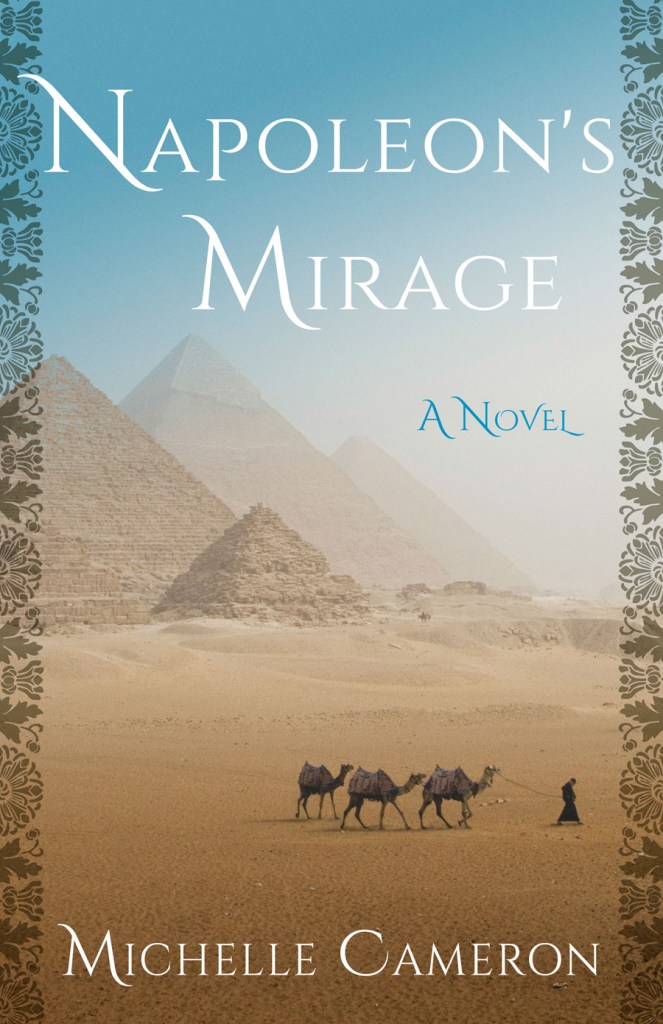
“I never knew that,” is a comment I often hear from my readers. “Why don’t I know that?”
Finding what I call my “sweet spot” in historical fiction – writing stories of Jewish history that are relatively unknown to my Jewish and non-Jewish readers alike – was a total fluke.
I had completed my first published book – a verse novel about William Shakespeare and the Globe Theatre, called In the Shadow of the Globe – and was considering my next project. I thought perhaps I could write about the woman I was named for – my great-aunt Masha, who, with her red hair and fiery personality, seemed like a promising subject to base a novel around. My mother had told me stories of how her family had become wealthy with huge forests in an estate on the Russia-Poland border. Mom spoke wistfully about her, recounting the second-hand tale of the diamonds that used to flash in Masha’s hair and how my grandmother had adored her.
But Mom had passed on and I had only one source to call upon – a genealogy that a distant cousin of mine had compiled of the various branches of my extensive maternal family.
And as I opened the genealogy, I stopped short at the first passage.
My mother had always said that we could trace our family tree back to the 1200s. I had dismissed her statement as nonsense. Who could do that? But according to this family genealogy, she’d been absolutely correct. Our ancestor was the esteemed Maharam – Rabbi Meir of Rothenberg.
Later I would realize that the reason we could claim him was because his descendants had all been sons up until that same great-aunt. In the Middle Ages, women didn’t enter the historical record unless they were queens or saints.
Intrigued, I started researching Meir. The story I found was compelling and very little known. It became my first historical novel, The Fruit of Her Hands: the story of Shira of Ashkenaz. And by writing about Meir’s life, I found that “sweet spot” – writing about Jewish historical epochs the few people – including few Jews – knew anything about.
In this case, what I discovered was the rise of antisemitism in medieval Europe. Meir was famous of witnessing the burning of some forty cartloads of volumes of Talmud; there were blood libels and burning of synagogues – with the Jews locked inside. It did not make for easy writing – though I softened the narrative by creating a family story with many points of joy, narrated by Meir’s fictionalized wife.
A passage I was inspired to write in The Fruit of Her Hands led me to my next novel – Babylon: a novel of Jewish Captivity. While both Jewish and non-Jewish readers may have been taught about the Babylonian captivity in Sunday School, it still remained somewhat murky history for most. As one of my Amazon reviewers claimed: “As a Christian who has read the biblical account of Jewish captivity in Babylon, I can say that I never quite understood it from a biblical perspective as well as I did after reading Babylon.” A high compliment indeed.
But Babylon, like The Fruit of Her Hands, contained some highly difficult scenes, particularly with the burning of the First Temple and the hideous march across the desert to exile. Jewish history, I was realizing, is full of pain and sadness. So, when I moved on to my next novel, I wanted to write a happy Jewish story. Those are not easy to find.
I was sitting outside one summer day, reading Michael Goldfarb’s Emancipation: How Liberating Europe’s Jews from the Ghetto Led to Revolution and Renaissance, that I stumbled upon his description of how a 27-year old General Napoleon Bonaparte discovered the Jews were locked behind ghetto gates from sundown to sunup each day. And right there, I knew I’d discovered my happy story. Short-lived as it was, Napoleon demolishing Italy’s ghetto gates and liberating the Jews for their restrictive confines was truly a marvelous moment in Jewish history. The Jews of Italy recognized this, giving Napoleon a Hebrew nickname – Chelek Tov, or “a good part,” derived from his French name, Bona-parte.
And since I had never heard this story before, it didn’t surprise me when my readers hadn’t, either.
Which brings us to my most recently published novel, Napoleon’s Mirage. Reading further into Napoleon’s history, I was brought up short by his military campaign to Egypt. It shouldn’t have surprised me – I had visited the place in Acre where his cannon still stood. But why had he fought there in the first place?
And what did this part of history have to do with the Jews?
As I discovered during my research, Napoleon wanted to thwart the British by attacking their trade routes to and from India. The young general even had designs on India itself. And – again a surprise to me – he pandered to the indigenous Egyptians by pretending that he and his men had Muslim affinities.
They didn’t, and the Muslims certainly didn’t believe it.
Then, in terms of Jewish history few people know about, Napoleon allegedly offered the Jews of Israel a homeland in Jerusalem in return for support against the Mameluke warrior, al-Jazzar, who had been sent by the Turkish sultan to defeat him. Which, because Napoleon underestimated him, he actually did.
There’s a reason I call Napoleon’s so-called Proclamation to the Jews “alleged.” During a Zoom Q&A about Beyond the Ghetto Gates at the Napoleonic Historical Society Conference, I happened to mention what my next book would be about. Two historians in the group immediately took opposing, passionate sides of the argument: did Napoleon actually send that proclamation? There wasn’t enough evidence, one said. Yes there is, the other argued.
As a writer of historical fiction – with the emphasis on fiction – I decided to write my novel as if Napoleon did send it. But that argument was illuminating and helped me devise fictional reasons why there are, in fact, so few surviving documents. And again, I’m certain many of my readers will say “I had no idea” that Napoleon may once have committed to a Jewish homeland. Who knows what might have happened had he triumphed against al-Jazzar?
What I love about this “sweet spot” of mine is that I learn as much doing the research for these novels as my readers do reading them. There is so much unknown history out there! It’s a privilege to bring it forth and make it accessible through my novels.
You can purchase Napoleon’s Mirage here.
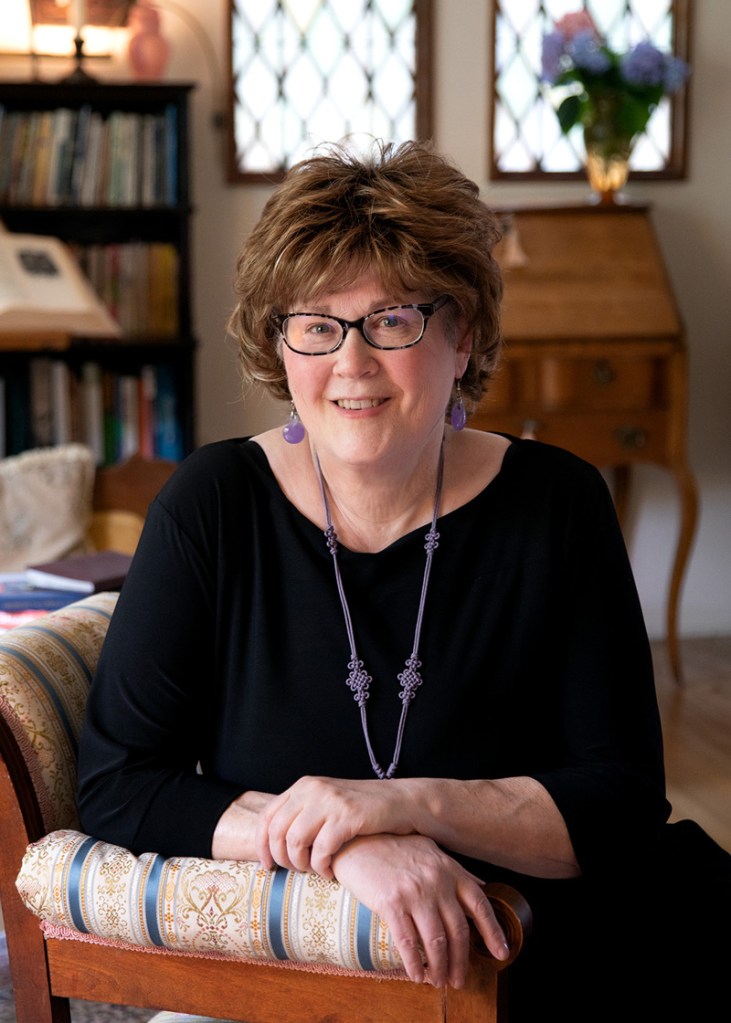
BIO: Michelle Cameron is the author of Jewish historical fiction, with her most recent being Napoleon’s Mirage, the sequel to Beyond the Ghetto Gates. Previous work includes Babylon: A Novel of Jewish Captivity, a finalist in religious fiction in the 2024 Next Generation Indie Book Awards, the award-winning Beyond the Ghetto Gates and The Fruit of Her Hands: the story of Shira of Ashkenaz. Michelle is a director of The Writers Circle, a NJ-based creative writing program serving children, teens, and adults. She lives in Chatham, NJ, with her husband and has two grown sons of whom she is inordinately proud.
Discover more from Feminism and Religion
Subscribe to get the latest posts sent to your email.


I must read The Fruit of Her Hands!
You will no doubt, be familiar with Ani Tuzman’s ‘The Tremble of Love’ about the Baal Shem Tov? That completely illuminated the meaning and practices of Chassidism for me. Fictional accounts such as that and your own books breathe such life into long gone people and their beliefs that still speak to us today – bravo!
LikeLike