

It was a class that changed the course of a personal history. Mine. The year was 2001. I had arrived in the United States a couple of years earlier to study journalism. In my last term – after four semesters of trying hard to navigate the American education system, what with its confusing terminology of credit hours, electives, majors, minors, I decided to venture out of my comfort zone (this was my Breaking Bad moment) – and took a 3-credit grad course, Religion in China, as an elective (that word again; and oh, when I first arrived, I thought 3 credit hours meant dedication to a grand total of three hours of coursework over the entire semester; you get to choose when).
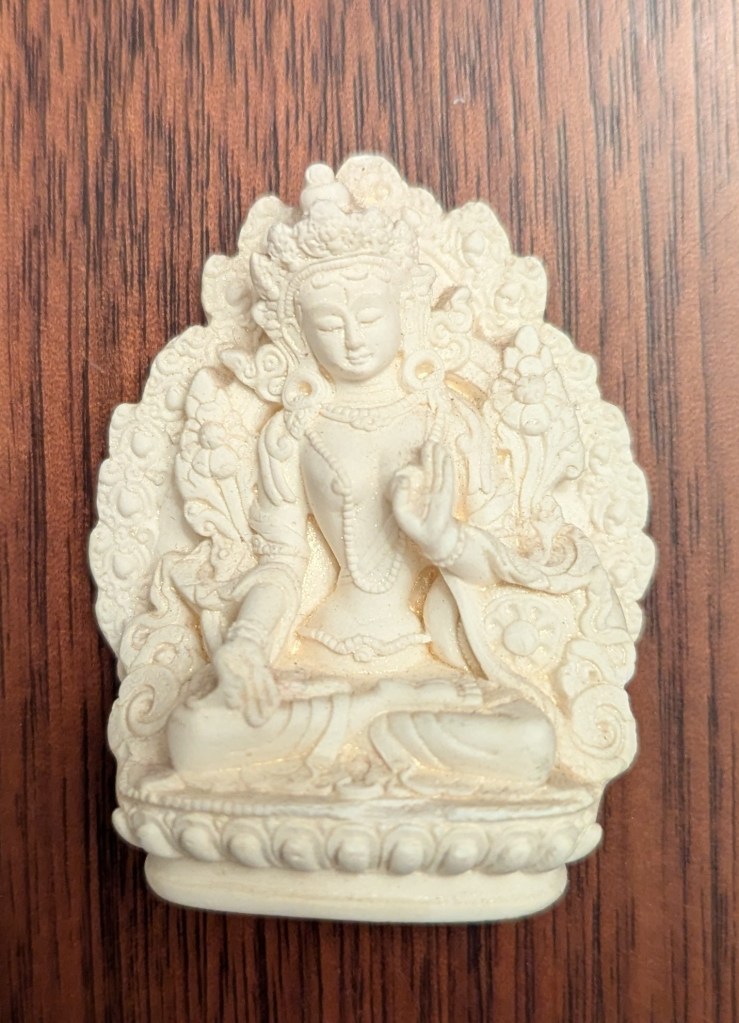
It was in this class I was first introduced to Guanyin, the Chinese goddess of Infinite Compassion and Mercy. Guanyin, a bodhisattva[i] who rushes to the aid of her devotees upon hearing their cries, herself has quite an interesting history. She arrived in China from India as Avalokiteshvara or “the lord who gazed down at the world” as a male. Little wonder then that this gender fluidity makes her a popular deity among members of the LGBTQ community. Somewhere along the journey, Avalokiteshvara transforms into Tara. Apparently, so moved was Avalokiteshwara by the suffering of those trapped in samsara[ii] that he wept copiously, his tears creating a lotus from which sprang the goddess Tara.
Although evidence suggests Guanyin arrived in China as male as early as the first century CE, by the eleventh she had transformed into a beautiful young woman.
The Encyclopedia Brittanica states:
It is possible that Avalokiteshvara, as Guanyin, acquired characteristics of indigenous Chinese Daoist female divinities, particularly the Queen Mother of the West (Xiwangmu). A popular legend of the princess Miao Shan, an avatar of the bodhisattva who exemplified filial piety[iii] by saving her father through self-sacrifice, contributed to the popular portrayal of Avalokiteshvara as a woman. The fact that the Lotus Sutra relates that Avalokiteshvara has the ability of assuming whatever form is required to relieve suffering and also has the power to grant children may have played a role in the bodhisattva’s feminization.
Both the Virgin Mary and Guanyin share concepts of child-bearing, motherhood and maternal instinct. They, however, have a different historicity and did not have a direct influence on one another, although it is not difficult to see why, among scholarly circles, they often invoke each other.
Throughout the semester, I found myself drawn towards this intriguing figure, one who exuded understanding and compassion that I ended up writing my final paper on Guanyin. It wasn’t merely an academic exercise. It had been a turbulent two years, years that were spent on trying to extricate my lost soul from layers of dominant voices who continued to overrule my life even though there lay an ocean and continent between myself and perpetrators of this toxicity. I was nearing the end of my authorized time, so to speak, in the United States. I had generously been permitted to come to America in the hopes that I would be reformed and as good as new to restart life in India; hopefully I had “improved” enough and was now stripped of my negativity to begin anew as a wholesome wife and, in due time, mother.
As the end of the semester – and my impending departure for India – loomed, my stomach would frequently retrace its contents to my throat, my heart would send reminders of its existence though wild palpitations, and my brain would vividly replay stress and anxiety though nightmares, if it was even lucky to get into REM mode, that is.
It was during this period that I experienced a particularly intense night. I dreamed a family member came at me with a sharp knife, with intentions of plunging me to death with it. The moment the knife made contact with my body, however, Guanyin appeared out of nowhere and caused the blade to melt. All that was left with the aggressor was a blunt handle and look of disbelief. I still remember that November night, and the day after, when I talked to my professor about the dream. His exact words – “Perhaps this has some sort of significance.”
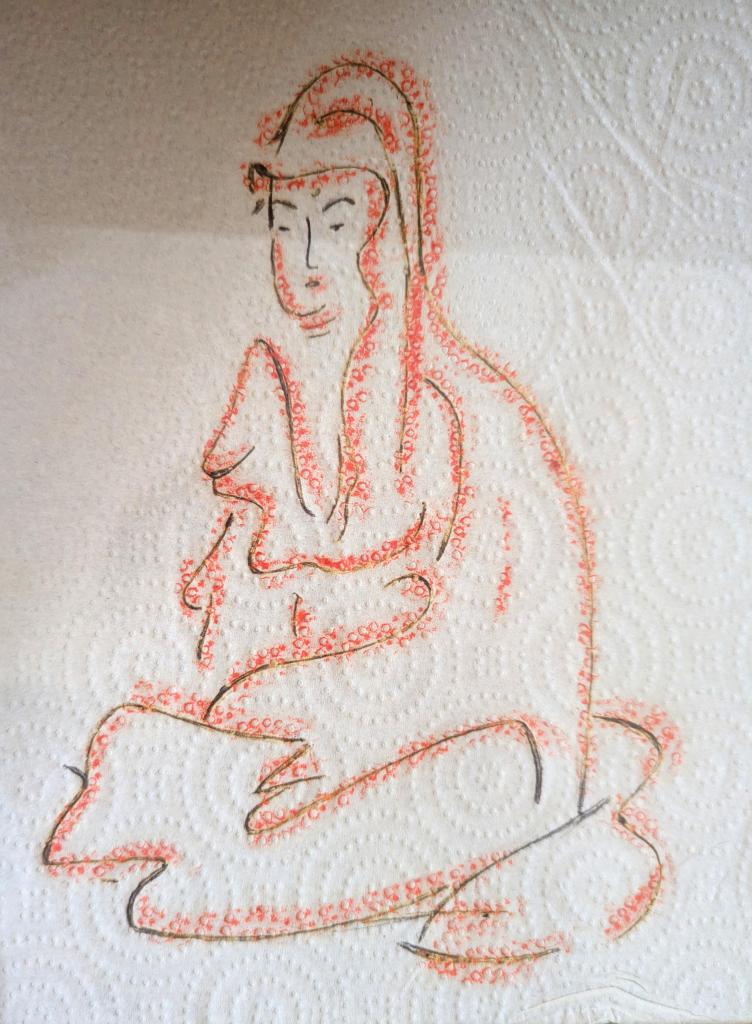
A couple of months later my time was up, in more ways than one. I was on my way back to India, my heart greeted by more-intense-than-ever palpitation at Bombay airport. For the next few months, I staggered my way through severe criticism, self and external, a total lack of support from family – except my mother, an emotionally abused woman herself – and contemplated suicide many times over. Ultimately, however, I made my way back to the United States, along with a scholarship to earn a Master’s degree in Religious Studies, and a newfound strength. I was lonely and scared, yes, but I’d like to think Guanyin had been by my side all these months and had ultimately given me the strength to walk away from a site of unending abuse.
[i] In Mahayana Buddhism, a boddhisattva is an enlightened being who puts off nirvana to remain in samsara or the human world in order to soothe the pain of others.
[ii] Samsara, according to Hindu and Buddhist theology is the repeated cycle of life and death that mortals are trapped in, causing them to experience pain and suffering over and over again.
[iii] Filial piety or the Parent-Child relationship – specified as Father-Son relationship – signifies respect/reverence for one’s parents and is the most important of the five Confucian relationships. The others include Friend-Friend, Ruler-Subject, Husband-Wife, Elder Brother-Younger Brother.
Discover more from Feminism and Religion
Subscribe to get the latest posts sent to your email.

 Feminism and Religion
I have a special fondness for Tara who literally came to me at a time I desperately needed feel compassion for another and myself (i missed the self piece but got the other now I have both…). so I was fascinated by this essay that addresses Tara’s possible origins… I have NO DOUBT that this goddess came and helped you escape a life you were not supposed to live. Your dream makes that much abundantly clear…. not an easy road to travel outside of family but some of us are called to do just that…many blessings.
LikeLiked by 1 person
Thank you, Sara. She will always hold a special place in my heart. And I am learning more about Tara myself. I can see why she holds a special place in your heart. Peace and blessings to you too.
LikeLike
I am celebrating the knowing you live that Guanyin was with you. Is with you, Vibha. To risk, to break away, to choose freedom from abuse, aware of the melting knife, the re-form- ing: brava! In good company, you are to be sure always. Your potent, precious piece of writing is a brilliant and starkly-raw-rich reminder that SHE is near. SHE is HERe. Thank you so very much.
Sawbonna,
Margot/Raven Speaks.
LikeLike
I am celebrating the knowing you live that Guanyin was with you. Is with you, Vibha. To risk, to break away, to choose freedom from abuse, aware of the melting knife, the re-form- ing: brava! In good company, you are to be sure always. Your potent, precious piece of writing is a brilliant and starkly-raw-rich reminder that SHE is near. SHE is HERe. Thank you so very much.
Sawbonna,
Margot/Raven Speaks.
LikeLike