

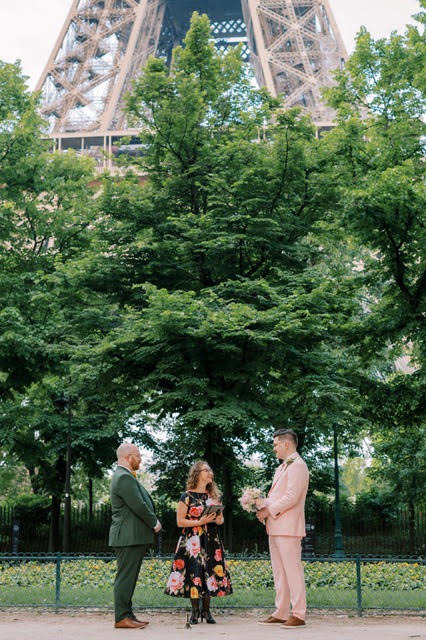
https://paigegribbphotography.com/
Springtime in Paris brings the magnificence of cherry blossoms, the scent of sweet crêpes, and an influx of tourists eager to capture their own moment of passion on the cobblestone streets of the world’s most romantic city. I may be biased because Paris is my home, but there’s no denying its magic. With its art, history, cuisine, fashion, and architecture, the city offers extraordinary experiences. It’s no wonder so many couples choose to marry in the City of Light.
Years ago, when I entered the wedding industry, I did so reluctantly, only after leaving the one profession I had ever known – ministry. What I didn’t expect was that I would become a bridge for couples navigating the ever-widening gap between love and institutional religion. The so-called “rules” of tradition are often mislabeled as matters of faith but are more accurately named as remnants of the heteropatriarchy. They place enormous pressure on engaged couples. It’s no surprise that many of the eloping couples I meet in Paris have chosen their path simply because it is less stressful than trying to appease tradition, religion, family, or friends (or all of the above).
Instead, they come to Paris to claim a sacred moment on their own terms, free from expectations and constraints. The result? Weddings as diverse and vibrant as the couples themselves. And I have witnessed the full spectrum of this kaleidoscope of human relationships and love.
For many, what couples choose to wear on their wedding day is an act of defiance, a declaration that love is not bound by outdated norms but instead flourishes in authenticity. I have seen dresses in every color: black, red, pink, and rainbow. Suits in an even wider array of hues. Capes dramatic enough to take your breath away. From uncovered shoulders to daring slits and bare jambes, I have witnessed couples walk down the aisle in complete freedom – fully present and fully themselves, loving without constraint, embodying love in its purest form.
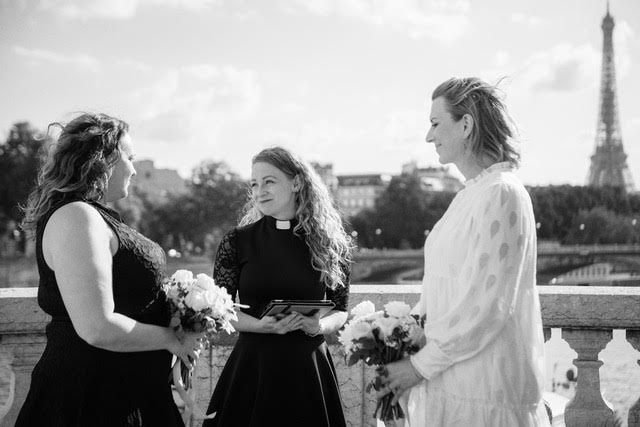
Each year, as wedding season arrives, I’m reminded that many people still feel so restricted by tradition or external pressures that they choose to forgo a conventional ceremony in favor of something less traditional, and often more adventurous. As a religious professional welcoming couples to my city, my role is to create space for people to craft a meaningful, sacred experience, without pushing them into heteropatriarchal norms. When we provide couples the freedom to define love and commitment on their own terms, shedding the weight of prescribed roles and expectations, we offer them a more authentic foundation for their wedding and their marriage. Though it may feel like a departure from convention, it is, perhaps, an act of loving liberation.
But then, when I am tempted to think that this role is unimportant or outdated, I remember the pressures I felt during my own wedding planning:
I was twenty-three and immersed in a chimerical dream. It was a fairytale of cotton-candy-colored roses and pastel Jordan almonds placed delicately inside of tulle and tied with ribbon. There were to be trumpets and cathedral peals for my grand entrance. The oak doors would open, and I would emerge wrapped in brilliant white satin.
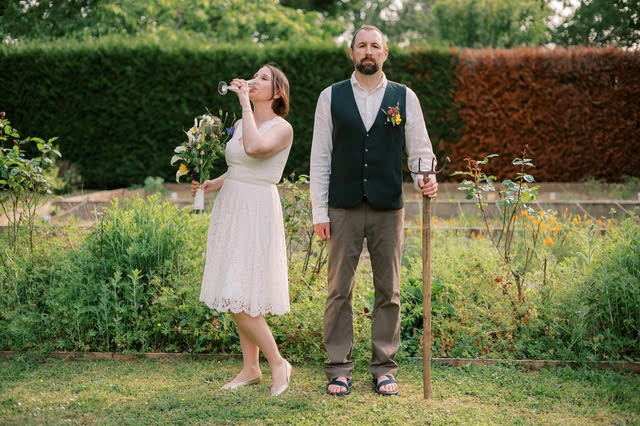
There would be no magenta, no neon pink, not even bubblegum. There would be no slightly rose-hued chiffon or champagne-tinged tulle. For this day, there was only to be white – radiant white as the resplendent centerpiece of purity. Resigned to this pristine and proper white, I glowed. Pink was erased from my vocabulary.
Pink grief reverberated. A colorful dream trampled by the expectations of tradition; a heart bereaved on the day it was meant to be most joyous.
It was enough pressure to make me question my worth, both as a woman and wife. Was I worthy of white? Surely. I had submitted to ancient alabaster custom.
Through the lens of my own experience, I’ve come to understand that many people are still weighed down by the same pressures I once faced. I am equally reminded of how deeply entrenched traditions can shape our understanding of love and commitment. This tension between tradition and personal freedom is exactly what I now witness in my role as pastor and officiant.
Does love not encompass the full depth and breadth of every human’s kaleidoscopic ambitions?
Love does.
Even then, I was certain that love is more vibrant than milky-colored pearls. Yet, do we not cast them before swine?
My heart was a pearl more valuable than tradition. My joy holds greater value than cultural legacies. My faith transcends ritual. Yet, even on a day of sacred celebration, I have to resist.
Love does that too.
Veiled
Cathedral peals.
I will emerge
wrapped in brilliant white satin.
Champagne-tinged-tulle-dreams trampled.
Pink grief.
Submissive not subversive,
Pure but passive,
My rose-hued spirit
Sacrificed on the altar of chastity:
Resplendent centerpiece of tradition.
From my satin pocket
I pull a gilded cylinder:
Dewy magenta rebellion –
Pressed upon rosy lips,
Quiet but disquieted.
Today I will wear pink.
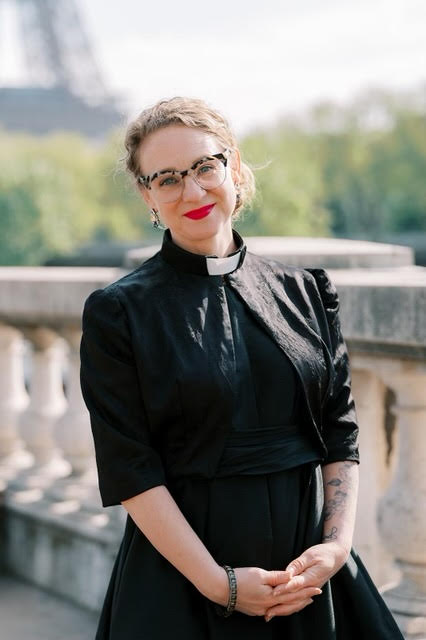
BIO: Rev. Michelle Wahila is an ordained PCUSA pastor, founder of Ruffled by Grace, and sought-after officiant and retreat leader. She creates heartfelt celebrations and soulful experiences that blend tradition with imagination. Now living in a 19th-century farmhouse in rural France with her family and a menagerie of pets, she enjoys gardening, making jam, and savoring a good cup of coffee.
Michelle’s new book, Ruffled by Grace: Rebellious Blessings for a Fierce Faith will be published by Tehom Center Publishing, July 15, 20025.
Discover more from Feminism and Religion
Subscribe to get the latest posts sent to your email.
 Feminism and Religion
Great post, Michelle! This one sentence says so much: “The so-called “rules” of tradition are often mislabeled as matters of faith but are more accurately named as remnants of the heteropatriarchy.” We continuously need to question all our behaviors and ways of being in the world. So much of what we do continues to support heteropatriarchal paradigms.
LikeLike
Esther, thank you. And you are so right. Some things are so deeply ingrained, we may barely notice. Our questioning helps to propel us forward in greater freedom.
LikeLike