

Hope is the thing with feathers . . .
Emily Dickinson
I awoke this morning to bird song, and for a moment I was lifted beyond the despair that has caught me in its grip — despair for the country, for the earth, for loved ones whose lives are increasingly tossed into the chaos, for the future The disappearance of persons into labyrinths of prisons in this country, Guantanamo, and the tortuous CECOT prison complex in El Salvador has broken what was left of my spirit. Then this morning I heard a report that the State Department has changed what it considers to be human rights abuses in order to align with recent Executive Orders, deleting critiques of such practices as retaining political prisoners without due process of law, restrictions on free and fair elections, violence against LGBTQ persons, threats against people with disabilities, restrictions on political participation, coercive medical or psychological practices, and extensive gender-based violence. Ostensibly these changes are to lift restrictions on sanctions toward other countries, but I fear they portend clearing the way for such abuses in the US as well.
My heart is heavy in ways I have not previously known, so I am grateful for that brief moment of delight in the early morning. Later in the day, I found myself wondering whether those who suffered and died in concentration camps, whose despair certainly was beyond comparison with my own, found any solace in the sight and sound of birds who flew freely over the walls of the camps in ways they could not. The daughter of survivors of Auschwitz, Toby Saltzman, recalled that her mother, who often suffered bouts of despair over the Holocaust, found her spirits lifted by the songs of birds. When Toby later visited Auschwitz, she was greeted by flocks of birds. Upon her return, she reflected, “I left Auschwitz feeling a surge of triumph that my parents survived, and gratitude to the birds that gave my mother spiritual sustenance and hope.” We are sorely in need of such sustenance in these times.
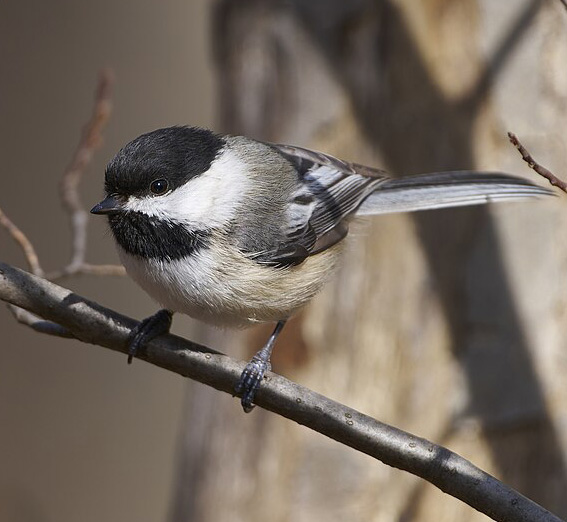
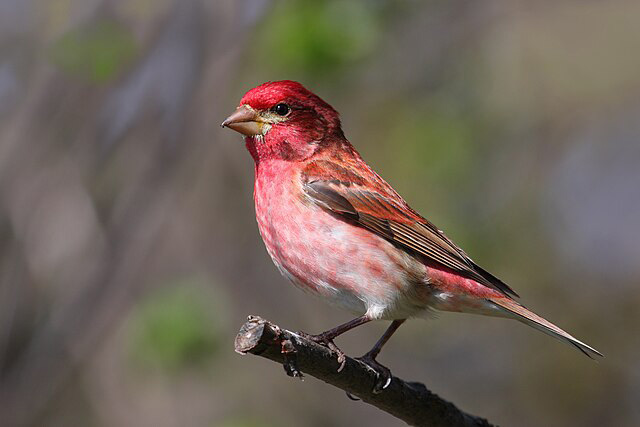
My sister found such sustenance in birds all of her life. Her back yard was a veritable feeding station, with feeders of every shape and size, suet feeders, and a heated bird bath. A first grade teacher, she passed on her love of birds to her young students, teaching them all about the lives, habits, and songs of a different bird each month. She found her greatest peace and solace sitting looking out the window at the colorful array of birds at her feeders – cardinals, blue jays, goldfinches, rose-breasted grosbeaks, purple finches, redpolls, and of course any number of chickadees, juncos, and sparrows. Even when she entered memory care in the last months of her life, her sons made certain she had a bird feeder placed outside her window. On my last day with her, we spent a few moments on that sunny morning in the outside courtyard where she lifted her usually downcast head and brightened with the sight of birds at the feeder. For this last gift of the birds to her, I am most grateful.
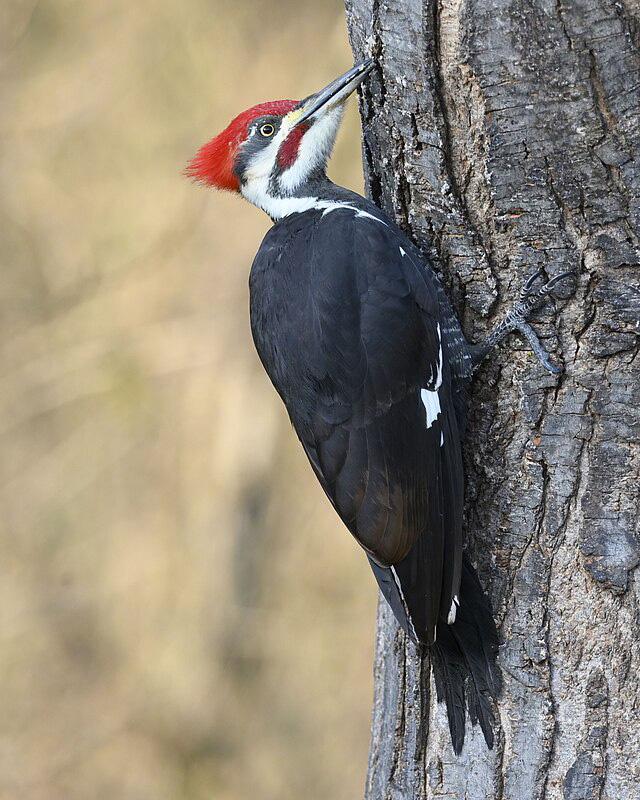
My two-year-old grandson has inherited his great aunt’s enchantment with birds. He was only 20 months when he first heard the song of a chickadee and quickly repeated it with such delight — “chick-a-dee-dee-dee.” As the birds have slowly migrated north, he’s learned the names of the pine siskins, redpolls, nuthatches, goldfinches, and juncos now at the feeder. And he’s always recognized the cawing of crows. Then one day this winter he looked out the window and said, “bird – scary.” I couldn’t make sense of this sudden fear of birds in which he has so delighted, until I followed his gaze up into a far tree and saw the large pileated woodpecker. With its size and long, sharp beak hammering away at the tree trunk, I can see why he was scared. It is remarkably similar to prehistoric pterodactyls! But in flight, with their enormous wingspan, they are such impressive birds and never cease to inspire awe in me.
I will need to take down the bird feeder soon now that the bears are awake and about. I’ve let it stay out a bit longer than usual this year since my grandson loves the birds so, and watching their flitting about the feeder can always give me a moment’s respite from the cares of the world. I’m eager to introduce my grandson to more of the birds in the woods and waters as they return this spring and summer – the song sparrows and red-winged blackbirds, the robins, peewees, and blue jays, the seagulls, sandpipers, mallards, and loons. Such marvels we have ahead of us.
I am grateful for these antidotes to despair. As Wendell Berry is so often quoted as saying, “When despair for the world grows in me, and I wake in the night in fear of what my life and my children’s lives may be, . . . I come into the peace of wild things, who do not tax their lives with forethought of grief.” Philosopher Kathleen Dean Moore adds, “Let me live like a bird in this way too: Not forever, but just for a while, let me perch on my front step and attend to the world around me, rather than the vision ahead.”[i]
Attend to the world around me. It is afternoon now and the birds are still singing in the woods outside my window. It is as if they want to remind me of all that is still good and glorious in the world. Attend to that.
Many years ago, I gave my sister a plaque fashioned by a local artist friend with words of Terry Tempest Williams that so spoke to who my sister was – words of wisdom and solace for these times. So I pass them along, with gratitude for the gifts of the spirit so freely and generously shared by these feathered ones:
“I pray to the birds. I pray to the birds because I believe they will carry the messages of my heart upward. I pray to them because I believe in their existence, the way their songs begin and end each day – the invocations and benedictions of Earth. I pray to the birds because they remind me of what I love rather than what I fear.”[ii]
[i] Moore, 123.
[ii] Williams, 149.
Sources
Butterflies, Birds, and the Poetry of Freedom | Reform Judaism
Moore, Kathleen Dean. Earth’s Wild Music: Celebrating and Defending the Songs of the Natural World. Berkely: Counterpoint, 2021.
The State Department is changing its mind about human rights : NPR
Williams, Terry Tempest. Refuge: An Unnatural History of Family and Place. New York: Vintage, 1992.
Discover more from Feminism and Religion
Subscribe to get the latest posts sent to your email.


Thank you, Beth. This is exactly what I needed today.
LikeLike
I’m glad it was helpful to you today. I’ve been finding great solace in the birds lately.
LikeLike
Thank you, Beth, for the inspiration. The political world here in the US feels so heavy and yet it is spring and new life is arising in beautiful ways. How do we reconcile? I guess in moment by moment. It is good to live in the present moment.
I love your story about your grandson. Give him extra hugs from me.
LikeLiked by 1 person
How to reconcile the two — the heaviness and the hope springing eternal. I find wisdom in Terry Tempest Williams’ quote — to focus our attention on what we love rather than on what we fear — even in the political world.
LikeLiked by 1 person
Yes Beth thank you for that lesson. In Hawaiian spirituality we have a saying “energy flows where attention goes.” We energize what we focus on. So for that focusing on love rather than fear is crucial. Its a lesson I need to keep repeating to myself.
LikeLiked by 1 person
I’ve actually heard that saying many times over the years. I didn’t know it came from Hawaiian spirituality. Thank you for that. It’s a good reminder to me, too.
LikeLike
Beth, I loved this piece. I love how you wove your love for our planet, justice, your sister, your grandson, and birds all in one integrated piece. It was gorgeous. In Light, Terry (she; her)
LikeLiked by 1 person
I too loved this piece…. when despair grows in me… I turn to the birds for sustenance believing as Terry does that they carry our prayers…. I have had to take in my bird feeder because the red squirrels are stealing all the seed… Heartbreaking for me because they lift me up for a moment into the moment so now I turn to the Greening to sustain me – day by day – at dusk the Winter Wren sings from across the brook but oh I miss my birds around the house.
LikeLike
I share your sorrow over needing to take the bird feeder down. I, too, miss the near presence of the birds at the feeder. But the bears are a real threat. I find I’ve been paying more attention to the bird song in the woods, and yesterday the first blossoms of bloodroot emerged.
LikeLiked by 1 person
I too have bloodroot and this morning I heard the phoebes – squirrels wreck their nests so maybe letting go the feeder was not in vain – many warblers are about – this morning the black and white warbler
LikeLiked by 1 person
Dear Beth, What a powerful and vitally rich dance with words – wings of flight and hope. And HERe, the quotation you choose from Wendell Berry speaks and then speaks some more, “When despair for the world grows in me, and I wake in the night in fear of what my life and my children’s lives may be, . . . I come into the peace of wild things, who do not tax their lives with forethought of grief.” Gratitude to you.
Sawbonna,
Margot/Raven Speaks.
LikeLiked by 1 person