

“As I sat there, my heart overflowed with joy at the sight of the bright circle…for I know not where to look for so much character, culture, and so much love of truth and beauty, in any other circle of women and girls” – unidentified woman from Margaret Fuller’s “Conversations” (1)
In the early 19th century, the five women of Fuller’s book — Margaret Fuller, Elizabeth Palmer Peabody, Mary Moody Emerson, Sophia Peabody Hawthorne, and Lydia Jackson Emerson — built many of the foundations of both American feminism and the philosophical movement known as transcendentalism, among many other American “firsts.” Yet, they are almost unknown to most people today.
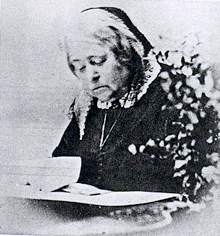
Fuller’s book focuses on their accomplishments, but also their relationships with one another and the community of women in which they flourished. By sharing ideas and inspiration, they changed the course of American thought towards recognizing the sacredness of each person, finding spiritual meaning in nature, reforms of all kinds, and questioning women’s conventional roles. Not only can they be considered foremothers of much what happens here at FAR, but they have much to teach us about how to be effective in the world.
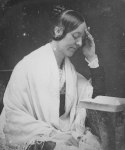
– National Portrait Gallery, CC0, https://commons.wikimedia.org/w/index.php?curid=146286545
The five women detailed in the “Bright Circle” lived in a time when almost all women were denied more than domestic education past childhood, women had no official political voice and few property rights, and socially-acceptable life choices were strictly constrained. Yet, they were self-educated beyond even many university-educated men, often chose not to marry and were financially independent, and racked up accomplishments that echo into our own time with astounding frequency, all while being burdened with the unpaid family caregiving that was expected of women at the time (and now).
What did these women accomplish? Here is a summary:
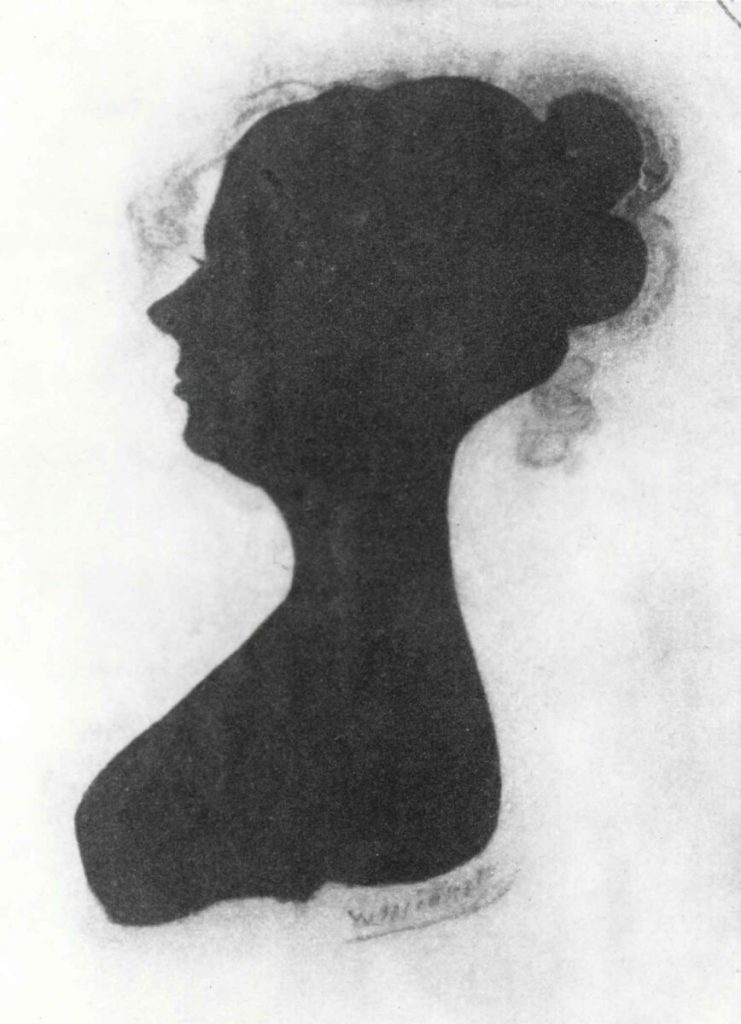
The earliest among them was Mary Moody Emerson, born in 1775. By age 25, she was writing in her journals, which were widely read throughout her long life, about “a strikingly original creed that mixed pious feeling, an appreciation of nature’s sublime beauty, and her own stubborn refusal to discount the power of individual imagination… She had become…America’s first romantic.” (21) Her ideas would deeply influence the new transcendental movement that elevated the individual with the idea that everyone could experience the divine through their everyday experiences, especially in nature. A number of passages in the foundational book Nature written by Ralph Waldo Emerson, her nephew, came almost word for word from Mary’s journals.
Elizabeth Palmer Peabody further brought together both women and men in an ongoing salon in her bookshop, one of the first owned by an American woman. Here, they consolidated their ideas into the emerging philosophy which she was the first to name “transcendentalism.” Her bookshop was “at the very center of tremendous cultural ferment. It was a place where belles lettres, freethinking religion, and social reform collided and mixed, combining to create something wholly new” (3-4).
Peabody also introduced the concept of kindergarten to America and was on the leading edge of educational reforms that are standard today.
She was the first American to translate Buddhist texts into English and, when she was 22, wrote a series of essays casting the Hebrew Scriptures, especially the story of Eve, in a positive, feminist light. Her scholarship would be right at home in FAR.
Margaret Fuller offered nearly a hundred “Conversations” for women in Peabody’s bookshop, the “bright circle” in the opening quote, in which they discussed history, literature, philosophy, and, especially, women’s rights, abolition, and other social justice issues. The women came from as far away as New York and included abolitionists, feminists, “artists, writers, and poets,” and those who primarily cared for their homes and families (4). “They wanted to create an extraordinary life for themselves, but they also believed that the individual came into radiant being best through community and interaction with others” (4) and “opened a space for women who wanted to embark on the arduous process of thinking for themselves” (7).
Informed by these Conversations, Margaret Fuller wrote the first book of American feminism, “Woman in the Nineteenth Century” in 1845, espousing equal education and opportunity for women.
After the Conversations, Fuller became a journalist exposing the misery of the lives of low-income and marginalized women and was also the first American foreign correspondent.

“Sophia Peabody Hawthorne was among the first women in the United States to earn a living from her painting” (8). Sophia’s Cuba Journal, her letters home from a sojourn in Cuba that were widely distributed, “expressed a poetic nature-worship that prefigured the more famous rhapsodies of male transcendentalists” (8) like Emerson and Thoreau.
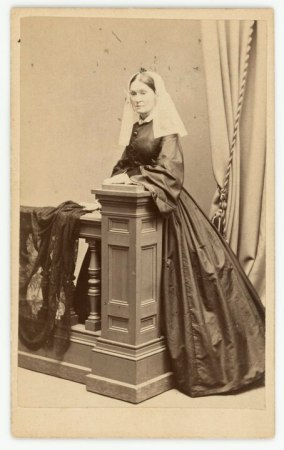
Lydia Jackson Emerson was a remarkably innovative thinker and critic of transcendentalism and a tireless advocate for social reforms. She pushed her somewhat reluctant husband, Ralph Waldo Emerson, to use his immense influence by taking a stand on the abolition of slavery.
What can we, in the 21st century, learn from these women?
First and foremost, they show how essential community, camaraderie, and communication is to the fermentation of truly original thinking. While each of these women had her own point of view, their interactions in person or by letter or journals sparked ideas, refined concepts, inspired and enlightened, and provided essential advice and emotional support to each other. Truly, time spent in women’s community-building is an important means to achieving goals worthy of our time, skills, and talent.
The women also “walked their talk,” in a time when intellectuals often believed that writing and lecturing was enough. Transcripts of the conversations show how they immediately challenged each other to examine the assumptions of society about women and expand women’s roles and rights.Their work had real world impacts, like Margaret Fuller’s influential book, improvements in education for both girls and boys, new career and academic paths for women, forwarding the cause of the abolition of slavery; and daring to question religious, social, and political doctrines of their day.
.
Our generation has done the immensely important work of re-examining sacred texts and myths to see how they might have originally cast women in positive lights. To me it is enlightening, inspiring, and comforting to know that other women have been doing this for at least two hundred years.
Finally, these women remind us of both how far we have come and how far we have to go. Together they were able to think and act in new ways that influence us still. They truly did not wait for the world to change, but manifested reforms by simply doing what they believed was right, whether by refusing to marry and living independently, including finding ways to financial independence that were not previously open to women, discussing topics in community that were previously out of bounds for women, preparing the next generation for a new society through educational reforms, or putting into words a vision of an unlimited future for women. They challenge us to do the same, to imagine a better world and work to make it happen right now, today, by both freedom and expansiveness of thought and action. Just as they would fit right into FAR, I think we can find ourselves as part of their “bright circle” and be inspired to offer our century the vision and energy to achievement they did theirs.
Source: Randall Fuller. Bright Circle: Five Remarkable Women in the Age of Transcendentalism. Oxford, UK: Oxford University Press, 2024.
Discover more from Feminism and Religion
Subscribe to get the latest posts sent to your email.

 Feminism and Religion
Thank you Carolyn – I thoroughly enjoyed reading about the women being only vaguely familiar with them – (had no idea about Emerson) It interests me that the female soul spirit and body when grounded ends up believing that community is the only viable way for women to thrive…. thankfully like FAR we have pockets of these women still. What bothers me the most is how little else has changed. We are still marginalized, still considered – what? kindly as women who live outside the norms. Our ideas and beliefs don’t seem to have effected the dominant culture – and this at a time when we are ‘out of time’. After a lifetime of advocating I have stopped asking what will it take. As I look out my window at the Greening I am struck as always by Nature’s ability to live in community above and below the soil….others could -re -learn so much…if the desire was there.
LikeLiked by 1 person
Thank you for your comment, Sara. Your mention of the community of Nature makes me wonder if the women of the Bright Circle, especially Mary Moody Emerson and Sophia Peabody Hawthorne who wrote about their deep relationship and feeling of connection to Nature early on, noticed how community is Nature’s primary way of being and then related it to how women can successfully relate to one another in community.
LikeLike
Thank you for this succinct introduction to these women, some I knew/know better than others. I read a long biography of Margaret Fuller, and Sophia Peabody is an ancestor in-law. I love to think of them in bright (in every sense) circle with each other.
LikeLiked by 1 person
You’re so welcome! Yes, I had heard of all these women, but was so surprised to hear how accomplished they were. I kept reading the book and saying to myself “Wait… what????” That’s exciting that Sophia Peabody is an ancestor-in-law! A few years ago I was visiting the Old Manse, where Sophia and Nathaniel honeymooned for some years, and there is still a window where she scratched in the glass “Man’s accidents are God’s intentions” while she was mourning a miscarriage. It made her very real, even almost 200 years later.
LikeLike
Wow! So many of us are in a lineage of other women who had mourned miscarriage. I’ve had two miscarriages. It can be a very lonely loss. I did not know about Sophia’s. Thanks for sharing the story.
LikeLiked by 1 person
You’re very welcome. Yes, I’m also in a lineage of loss from miscarriage as my mother had a miscarriage before giving birth to my sister and me. Even though she didn’t speak of it often, my sister and I both knew how deeply she mourned our older brother whom she miscarried and we sometimes still talk about it with each other. I think miscarriage is a loss we all need to talk about more. Thank you for sharing your experience in your comment.
LikeLike
I liked reading Margret Fuller’s Woman in the Nineteenth Century. And on the same thought-line, I read books authored with the feminist touch about woman in the 21st century. Thanks for introducing me to other remarkable women.
LikeLiked by 1 person
You’re so welcome! We can learn so much from the courageous and bold women of the past – I’m so glad you find these five women to be inspirational!
LikeLike