

Choosing How We Show Up with The Inner Compass of Mind, Eye and Heart
What does it mean, to set an intention? In this piece, I explore the Taoist concept of Yi, the integration of mind, eye and heart as a practice of coming into alignment with life.
This essay invites a nuanced relationship with intention, away from the modern hype around manifestation, and instead rooted in choice, care and conscious participation in life.

Klara Kulikova, Unsplash
A common concern around the word ‘intention’, especially in spiritual or self-help contexts, is its suggestion that thinking the right thoughts or holding the right mindset, will miraculously give you what you want.*) When it doesn’t, the implied message is that you somehow fell short: you weren’t positive enough, not aligned, or evolved enough for it to work. In short, the burden of failing is placed on you, without recognising the complexity of life. Rest assured, that’s not the kind of intention I’m writing about here.
Origins of Intention and Manifestation
The word intention comes from the Latin intentio, meaning stretching out, straining or exertion. It derives from intendere, combining in (towards) and tendere (to stretch or extend). Originally, it carried a sense of reaching or aiming toward something. Intentio also described the mind’s direction toward an object or idea. It linked thought with direction, purpose with focus. This original meaning still echoes in how we speak of “setting an intention” not as a fixed plan, but as a conscious reaching toward a particular quality, path or possibility.
Manifestation comes from the Latin manifestatio, to make something clear or visible. Manifestus means obvious or evident. The root manus (hand) suggests something concrete, or made palpable. To manifest was making something perceptible. It was not about creating reality, but about revealing what was hidden. Only more recently, especially in spiritual and metaphysical contexts, has manifestation started to imply desires or thoughts brought into form.
A Taoist Understanding of Intention
Taoist philosophy relates to those original meanings. Intention is not about imposing our will on reality. Instead, it is seen as a subtle force that shapes how we move within the world.
In Qi Gong, we work with the Chinese concept Yi, which can be translated as intention, clarity or mental focus. Yi refers to the part of the mind that directs awareness. The Chinese character for Yi(意) brings together three elements: mind, eye and heart. Intention becomes a dynamic integration of thought, vision and feeling.
If I feel exhausted before practice, my intention might be to ‘top up my energy’, or ‘to nourish my restfulness’. These are two different intentions that help me choose different movements, or embody the same movement differently, because my vision and feeling guide me along a slightly different path.
If I feel I have too much energy, my intention might be to calm down before bed, or to channel this energy into something specific, like clarity for a book I’m working on. How I apply my mind to this excess energy leads to a different outcome. That’s also why Qi Gong practice is never the same in two different moments. Let’s unpack this further.
Where the Mind Goes, Energy Follows
The first aspect of Yi is the mind, or perhaps more widely, our consciousness. This refers to where we place our attention. Often, our attention is reactive. It jumps from one stimulus to the next without our conscious involvement. A noise, a memory or a worry can hijack it.
With awareness, we can begin to notice where our attention rests, what pulls it, and whether that serves us. In Qi Gong, we learn to place our attention deliberately, often through breath, movement and imagination. Focusing on the soles of the feet, for example, helps us feel grounded. When we are in pain, and we shift attention to breathing, we remember that we are more than the pain. Pain can begin to soften and the nervous system can settle. And yes, I have experience this works in cases of severe pain. Whether it’s wishful thinking or intention, I don’t know, but it is a conscious act that changes my experience.**)
There is a Taoist phrase that says: where the mind (or attention) goes, energy flows. This does not mean we can control reality with our thoughts. It means that where we place our awareness has consequences. Having repetitive thoughts drains our energy. I recently learned that the brain makes up only 2% of our body weight, but uses 20% of our energy.***) When we attend to the body, to beauty or to care, when we dare to slow down, we tend to feel more resourced. In that sense, attention becomes a form of nourishment.
The Inner Eye and the Role of Imagination
The second element of Yi is the eye. This refers not only to what we see physically, but to the inner vision we carry. Many people say they have no imagination. But you can still picture in your mind what you had for breakfast, or where you went on holiday. You can do this while reading this text so you do have the capacity to image-ing = imagination!
The images we hold in our mind affect our breath, nervous system, mood and posture. They can support healing and creativity by strengthening our capacity for self-regulation. This doesn’t change the external world, but it changes how we respond to it and how we move through it.
In Qi Gong we use visualisation, for example imagining landscapes that evoke a sense of belonging, moving like a specific animal, or sending golden light through the body. These images awaken qualities like stillness, clarity, playfulness, strength or spaciousness. This way, we train our heart-brain, like any muscle, to zoom in on a supportive vision.
The Heart of Intention
The final component of Yi is the heart. Without heart, intention becomes a mechanical attempt to fix ourselves or to control outcomes, the critique I opened with. But with heart, intention is shaped by what we care about. It carries warmth and sincerity, and becomes a living practice.
Some of the most change-ful intentions I’ve set have had nothing to do with outcomes. They are more about qualities of being. For example:
In transition, I stay rooted and connected to my centre.
I remember to tend to my energy when the world feels overwhelming.
I move effortlessly, like water.
Just like the Moon, I don’t always have to be full.
Of course, I don’t always manage to stay true to these intentions. But like setting a course on a ship, they offer direction, and help me return to what matters when I drift.
So I continue to practise intention. Not because it guarantees results, but because it brings me into relationship with something that matters. I’m trying to co-create with life, rather than fight against the tides. Intention reminds me I am not powerless, even when outcomes remain uncertain. It is not about getting what I want. It is about choosing how I want to show up. It is a way of participating in the dance of life, present to what unfolds with each step.
I’d love to hear some of your intentions that made a difference!
references
- *) This concern was raised by Sara as a comment on my previous post Time Travel with Your Moving Body as Antenna, and it was the reason I wanted to write more about it. So, thank you Sara.
- **) Adding this sentence after finishing the article, I wondered: is all intention wishful thinking? I don’t think so. To me it feels there is subtle but poignant difference of perceived power. In wishful thinking I’m at the receiving end of my wish, whereas with intention I’m actually moving towards it, purposefully.
***) Yep. I’m reading Dan Brown’s latest book, The Secret of Secrets…
Invitation
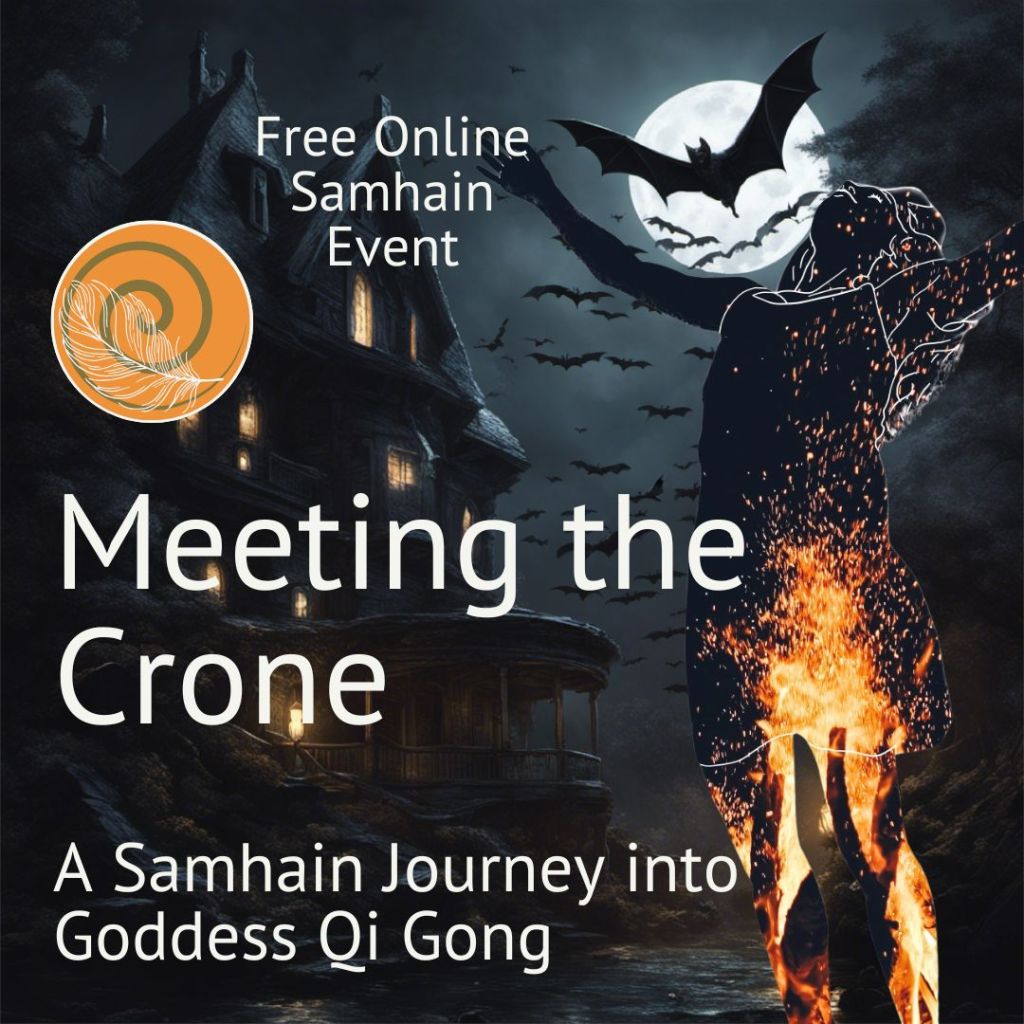
Goddess Qi Gong: Move the Archetypal Feminine Within
🧙🏽 Free Samhain Masterclass
📅 31 October 2025
💻 Online Event
♻️ Replay if you can’t make it
✍🏽 Sign up here
Bio

Eline Kieft is a dancer, anthropologist and changemaker exploring embodied ways of knowing. With a PhD in dance anthropology and training in shamanic practice and Movement Medicine, she bridges academic insight with spiritual practice.
Her book Dancing in the Muddy Temple blends theory and practice in service of land, body, and spirit. Now leading Wild Soul Centre for Embodied Consciousness, she offers coaching and courses to support deep transformation and inner strength through movement and the body. Try out her Qi Gong Membership for free! You can also find her on LinkedIn, YouTube, Instagram and Substack.
Discover more from Feminism and Religion
Subscribe to get the latest posts sent to your email.

 Feminism and Religion
Thank you for this, Eline. The following is golden: “[Intention] is not about getting what I want. It is about choosing how I want to show up. It is a way of participating in the dance of life, present to what unfolds with each step.” Had an “Eastern Religion” professor back in undergraduate days that introduced me to the concept of just being alive in the “dance of life.” Have thought of that ever since. I have no control over what happens outside me. Viktor Frankl, when speaking/writing about his time in concentration camps (Germany) where he had no knowledge or control of what might happen from moment to moment said he COULD control his own response to any situation. That was his “dance of life.”
LikeLike
Hi Esther, thanks so much for your heartfelt comment. YES, exactly, our response-ability, or the ability to respond to situations is one thing that is in our own sphere of influence. Simple, but not always easy!!! Glad you resonated with the essay!
LikeLike
great point: “So I continue to practise intention. Not because it guarantees results, but because it brings me into relationship with something that matters. I’m trying to co-create with life, rather than fight against the tides”. I celebrate ritual 8 times a year – set intentions without expecting outcomes – if I am on the wrong track as i was at the equinox – something intervenes – this time a dream – ‘start again’
LikeLiked by 1 person
Hey Sara! That’s interesting – you have a strong inner compass then… thanks for reading the piece and hope your Equinox ritual turned out exactly right for you!
LikeLiked by 1 person