

Part 1 was posted yesterday.
MARRIAGE
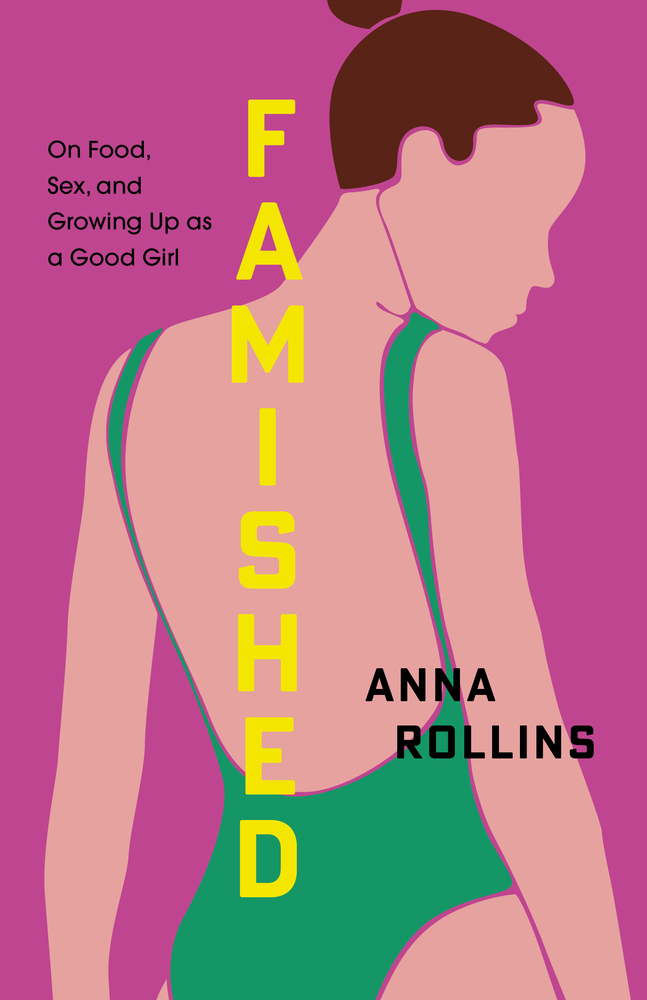
“He looked at me without judgment. With him, I didn’t feel the need to perform.” Both her future husband (first year medical resident) and she (now studying applied linguistics) disliked fundamentalism’s legalism, but they were still committed to Christianity. Both were “devoted to [sexual] abstinence.” Sex did not even happen on their wedding night, but when it did, it hurt. For years, the pain continued. Vaginismus. “I didn’t know there was a name for it. I didn’t know that…it was twice as common for those who had grown up in religiously conservative households.” It took years to get through the pain. “It’s not until we can believe that our bodies are inherently good and worthy of pleasure and joy that we can begin to heal.”
A new pastor arrived at Rollins’ church armed with Christian nationalist ideas and fervor. It didn’t set right with her. She was moving toward progressive positions beginning with “my body, my choice.” She adds, “If there’s anything someone who’s struggled with an eating disorder understands, it’s the concept of bodily autonomy.” She began to research the Reformers beginning with Martin Luther who said this about women: “If women become tired, even die, it does not matter. Let them die in childbirth. That’s what they are there for.” Rollins’ husband pushes back, though, quoting Scripture—“there is no male or female…we are all unified in Christ.” Why then, Rollins wonders, does sexism run rampant in the church?
MOTHERHOOD
Eventually, Rollins conceives. Her father-in-law is scandalized when he realizes she is planning to return to work after the baby’s birth. She wants “…an identity outside of dutiful motherhood” and “teaching writing and literature, I was able to talk about my true interests.” She was torn. Her husband thought quitting her job was for the best. Her department chair, though, offered her an alternative—teaching online. She gladly accepted.
Her husband struggles with a severe mood disorder. He said, “I feel like something split apart, and I will never be the same.” Soon afterwards, Rollins conceives again. She recalls after her first child, she received praise for getting back into shape quickly. She’d never gotten such applause for “shrinking herself. It was delicious and disgusting.” Her husband spirals downward, wanting to give up “everything for the sake of the cross.” He’s institutionalized soon after the second baby’s birth. Before his discharge, seventeen days after the baby’s birth, his therapist scheduled a family session. “You look fantastic,” the therapist gushed when she saw Rollins. Rollins thinks to herself, “Why do people keep praising me for this? Why doesn’t anyone see me and call me on this shit?”
Increasingly frustrated with her life, Rollins announced to her husband, “I don’t want to be here anymore….On this planet….In this body.” Her husband counsels her to get medical attention, telling her, “Your body’s an idol. Your body’s going to change, eventually. You’ll get older. You’ll gain weight. Who cares! Our bodies are temporary.” Rollins sees a therapist for her eating disorder, confident that her problems with food stemmed from her strict, religious upbringing. She’s surprised to learn that her eating disorder was not caused by just one thing.
When Covid shut down the world in Spring 2020, Rollins journaled, but recoiled from writing about the obvious—her eating disorder. But then, “I decided to write about my body, food, and exercise….” She joined online groups such as HAES (Health at Every Size). One day she posed a question there that she had wrestled with for years: “How many of you grew up in purity culture? If so, what overlap do you see between purity culture and diet culture?” Christian testimonies and literature, she found, had shifted their message from “I once was lost but now am found” to “I once was fat but now am thin.”
Rollins’ therapist asks her what she wants from life. She cannot answer. At home, in the privacy of her shower, she thinks to herself, “I want to write a book someday.” It took her years, though, to gather the courage and audacity to challenge the church’s authority instructing women to be silent in that space. “Without the power to speak up and challenge religious authority, I communicate my rejection of this world by trying to disappear my body. I dissented with a quiet, ‘I’m not hungry.’”
Rollins eventually understands that “My body is mine.” It sounded selfish, but really, what ignoring that truth did is keep “…me from showing up in the world as the unique person God’s created me to be.” But, how can you trust yourself to do the right thing? We are totally depraved! What good can come from that? Additionally, “Everyone blames moms for their children’s problems.” The church joins that chorus.
In spite of her negative experiences in church, she decides to stay within its embrace. “I believed in God. I also believed I was a sinner—that my body was simultaneously good and affected by sin. And the only thing that gave me the courage to admit my sin was that, deep down, I also believed in forgiveness.”
I felt some surprise here—not that she stayed within her church community, but that she seems to still cling to the doctrine of “total depravity.” We anorexics struggle with our messy embodied-ness. How, I wonder, can she thrive in an environment that finds bodies and especially women’s bodies “dead in sin?” And just who gets to define sin? Rollins confesses to “…moments when I want to reject it [Christianity] entirely. I can become consumed by all the ways men have used this religion to hurt me and those I love.” But, she continues, “There is no perfect place, and there are no perfect people.”
She’s not wrong.
However, this much I do know. I did not find any relief from my own eating disorder until I stopped allowing the church to superimpose its doctrine of sin and total depravity over the physical and psychological help I was receiving from the “secular” world. The biggest challenge I’ve had (and I believe it’s true for so many of us with eating disorders) is to love myself right here and now in my messy flesh and bloody humanity. Most of us have a long way to go.
I highly recommend Rollins’ book. The broad strokes of her story mirror mine. The author is brutally honest as she shares her lived experience growing up in fundamentalism’s purity culture and the larger culture’s obsession with dieting. It’s a breath of fresh, mountain, West Virginia air.
Rollins, Anna, FAMISHED—ON FOOD, SEX, AND GROWING UP AS A GOOD GIRL, Grand Rapids, Michigan, William B. Eerdmans Publishing Company, December 9, 2025 (forthcoming), 240 pgs. It can be pre-ordered at Bookshop.org
Discover more from Feminism and Religion
Subscribe to get the latest posts sent to your email.

 Feminism and Religion
Sounds like a brave book! And thank you, Esther, for including your own experience and insights!
LikeLike
Thanks, Elizabeth. Far too often, in my opinion, “things” are kept hidden, spoken about only in hushed whispers (if that), and not allowed in “polite” (whatever that is) conversation. Am really happy Anna Rollins wrote this book. Hope she has a follow-up story in 10 or 15 years so we can see how she is doing.
LikeLike