

Imagine living in a co-creative universe where all beings, including the Divinity and humans, are ever co-evolving reality in a way that nurtures life. What kind of a world would that be? Feminist theologian and FAR contributor Carol Christ brilliantly describes how these ideas, part of an approach called process philosophy, deeply resonate with Goddess thealogy in her 2003 book She Who Changes: Re-Imaging the Divine in the World.
She writes “process philosophy states that all life in is process, changing and developing, growing and dying, and that even the divine power participates in changing life. Humans and other beings are not things (substances or essences) situated in empty space, as has often been thought by philosophers and scientists, but are active processes ever in relation and transition…” (3). In fact, “the whole universe is alive and changing, continually co-creating new possibilities of life” (45). Further, “Process philosophy asserts that feeling, sympathy, relationship, creativity, freedom, and enjoyment are the fundamental threads that unite all beings in the universe, including particles of atoms and the divinity” (3).
I had read Carol’s book many times in the past 20 years but never really thought about its implications beyond clarifying my own theology, so imagine my surprise when a month or so ago I ran into very similar ideas in a 2023 book by Thomas Hertog titled On the Origin of Time: Stephen Hawking’s Final Theory. In this book, Hertog, Hawking’s scientific collaborator on his final theory of the origin and nature of the universe, proposes Hawking’s revolutionary final theory of a “quantum universe,” a universal quantum wave of possibility that continues to be created when possibilities become physical reality through interactions with humans and all other beings.
He writes, “a quantum universe constantly puts itself together, piece by piece, out of a haze of possibilities, somewhat like a forest emerging out of the fog on a damp gray morning” (197) In fact, “when we trace the universe back to its earliest moments… the physical laws themselves change and evolve in a sort of meta-evolution” (xix). And, because humans are among the beings that cause reality to emerge from possibility by “observing,” or interacting, “we — in our observorship — are quite literally involved in the making of cosmic history” (197). This may be why the universe evolved in a way that is perplexingly perfectly suited for human life, from the tiniest detail of the behavior of atoms and molecules to the structure of the cosmos itself. The cosmos “engineers its own biobiofriendliness” (255).
But wait. There’s more. Imagine my further surprise when last week I was reading Gregory Cajete’s Native Science: Natural Laws of Independence (2000) and came upon the statement that “the Native American paradigm is comprised of and includes ideas of constant motion and flux, existence consisting of energy waves, interrelationships, all things being animate, space/place, renewal, and all things being imbued with spirit…Everything in creation consists of a unique combination of energy waves” (x). Further, writing about Native creation and other stories, “These stories embody the understanding that humans, along with all other entities, continually create the world. People are co-creators and their role as co-creators is no more important than that of all other co-creators” (38). While process philosophy as described by Christ and the quantum mechanics that underlie Hawking’s theory are both about a century old, the traditional cosmology of Indigenous societies has clearly had similar ideas of universal reality for many millennia longer.
How different are these perspectives from the widespread understanding of our world as static, created billions of years ago and never-changing, ruled by a either a transcendent divine being or immutable physical laws not to be transgressed by humans whose individual comings and goings are of little importance to the well being of the universe as a whole.
But what does this convergence of century-old philosophical and western science with Indigenous beliefs about the nature of the universe mean? Perhaps it is a coincidence that all this seems to be emerging into more common consciousness at this particular moment in world history.
But I began to wonder, what if I had been brought up with this concept of the universe and divinity from birth? How would my thinking have changed? What might I have created? Who might I have become in a world comprised of possibility without ever hearing “this is how it has always been done,” and “things will never change,” and “that outcome is inevitable?” Perhaps even without a fear of death due to the perspective of being part of an eternal cycle of birth, life, death, and rebirth, ever transformed even when my individual time on this planet ends in its present form?
What would the world be like if there was a common understanding that our specie’s primary mission in life is to align ourselves with the universe in a way that supports life on the planet? If we could rest assured that if we work on anything that promotes the health and well being of the web of life, we are headed in the right direction? That what each of us does at every moment is important? That if we are all essential in ensuring that constant changes are positive, then one of our vital tasks is to ensure that everyone has the opportunity to use their special gifts?
I don’t know the answers to these questions. I think we will all have to respond to them for ourselves, if we choose, and that process itself will become part of this ever-changing nature of the universe.
For those of us who grew up in western culture with the static vision of the universe/divinity, it appears that our world is very different in good and exciting ways from what we may have been brought up to believe. Doesn’t it make you want to get up every morning, look out your window, and say “what changes shall we work with the universe/Divinity in order to make everything better today?”
Sources:
Cajete, Gregory. Native Science: Natural Laws of Independence. 2000.Santa Fe, New Mexico: Clear Light Books, 2000.
Christ, Carol P. She Who Changes: Re-Imaging the Divine in Our World. New York, NY: Palgrave MacMillan, 2003.
Hertog, Thomas. On the Origin of Time: Stephen Hawking’s Final Theory. New York NY: Bantam, 2023.
Photo credits:
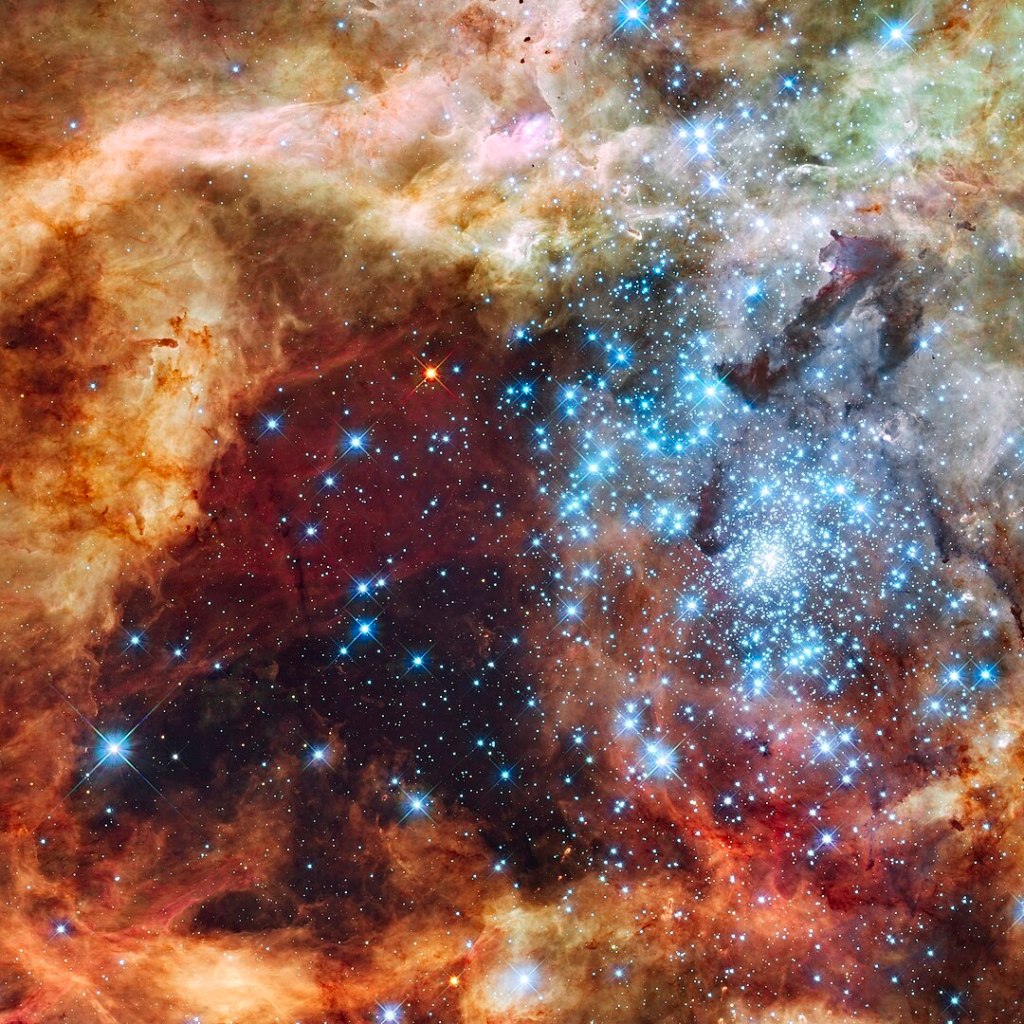
Grand Star Forming Region, stars only a few million years old. “The nebula is close enough to Earth that Hubble can resolve individual stars, giving astronomers important information about the birth and evolution of stars in the universe.”. By NASA, ESA, F. Paresce (INAF-IASF, Bologna, Italy), R. O’Connell (University of Virginia, Charlottesville), and the Wide Field Camera 3 Science Oversight Committee – http://hubblesite.org/newscenter/archive/releases/2009/32/image/c/ (direct link), Public Domain, https://commons.wikimedia.org/w/index.php?curid=8822941
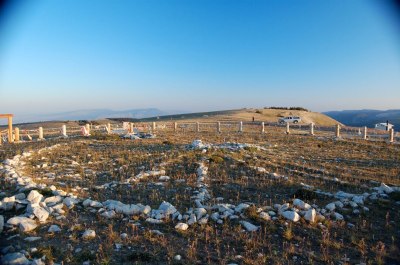
Big Horn Medicine Wheel on Medicine Mountain, Wyoming*. By Imerriot – Own work, CC BY-SA 4.0, https://commons.wikimedia.org/w/index.php?curid=52401365
*According to Cajete, “In archaic Plains Indian traditions, the medicine wheel was a structure that brought inner and outer realities of nature together” (73).
Discover more from Feminism and Religion
Subscribe to get the latest posts sent to your email.

 Feminism and Religion
Nice to have you back…It’s hard for me as an earth person/naturalist/ecologist/ethologist to feel attached to a basically UNKNOWN universe – we have tons of theories – and westerners love theories and many treat them as truth with a capital T – I bristle immediately when I hear any “final theory of whatever” -I learned about interconnection and interspecies communication directly from Nature as a child – not from a book… Patriarchy forced me to split me in two – what Nature taught me couldn’t be real – people just thought I was just projecting or crazy. Many still do. BUT NOT EVERYONE – Tomorrow I have a final interview with NPR on interspecies communication for a four part NPR program that might get a few people to think? Developing a relationship with some aspect of Nature is key to learning – as all indigenous peoples throughout the world have known for millennia… for them and for spirit/body is NATURE – there is no split or separation – it’s all one – we are all related beginning with microbes – we don’t need divinity – but if we live in a split world we may need religions to help us make sense out of our perceptions and experiences because life is hard – and nothing is fair – I certainly did – Life Just Is. In my opinion we FIRST have to focus on the earth…. we know almost nothing about what’s under the sea or underground on our own planet or how to take care of ki…our ignorance is as profound as our hubris. The universe can wait – first we must rise up as an untied people to reverse the trajectory we are on…. Forgive me, I see this emphasis on universe this or that as a way NOT to deal with what we are doing to destroy ourselves… I like speculating on what’s out there when I look at winter stars – but I do not see truth – but MYSTERY.
LikeLiked by 1 person
Hi Sara, Thanks for your response and thanks for your welcome back! I’m just taking some time away from posting as much to focus on pulling the ideas and themes that I have written about here on FAR and elsewhere for the past 10 to 15 years into a couple of books. I completely agree that we need to prioritize learning about the Earth, especially in this time of such great destruction. To me, and perhaps I didn’t express this well, whatever we learn about the universe tells us about the Earth because the Earth is part of the universe. And, to me, the lessons of the Universe and Earth as ever-changing in a way that humans and all beings are part of can inspire us to do whatever we can to make sure that the inevitable changes that happen nurture and help rebalance the Earth rather than destroy it. I hope you will give us the link to your NPR interviews when they are available!
LikeLiked by 1 person
I enjoyed your article. Imagine what life will look like everyone realizes we are life, consciousness. I know religion served to separate us, when it had the opportunity of supporting our re-membering, God is who we are, one is all there is, we are not separate from one another, anything and This knowing changes everything! Change never comes from the top, does it, change comes from the bottom up. We are becoming who we really are.
LikeLiked by 1 person
Thank you for these thoughts! I love your last line – “We are becoming who we really are.” So often I hear people say that we just need to remember who we are to imagine who we could be, in a positive way.
LikeLike
What a heartening vision, Caroline. Thank you. And thank your Sara for distinguishing truth, which people mistake for fact, and mystery. I was asked yesterday what is one of my core values. The first thing that came to my mind is “an openness to surprise.” Your post evokes that openness.
LikeLiked by 1 person
Thank you, Elizabeth! Yes, “an openness to surprise” is one of the most important characteristics we humans can have at this moment in history, I think. Yours comes through in all your writings and in your life and is always an inspiration to me!
LikeLike
Changing for the better became somewhat of a mantra for me decades ago, and because it is not always an easy task, I thank you for this post of expanded perspective. Especially your comment, “While process philosophy as described by Christ and the quantum mechanics that underlie Hawking’s theory are both about a century old, the traditional cosmology of Indigenous societies has clearly had similar ideas of universal reality for many millennia longer.”
LikeLiked by 1 person
Thank you, Cheryl! Yes, it is amazing how humanity has held such wisdom for so many millennia, yet we keep coming back to the same themes, over and over, and thinking we are discovering something new. But I do see wisdom of various cultures converging which I hope will help our changes be positive ones.
LikeLike