

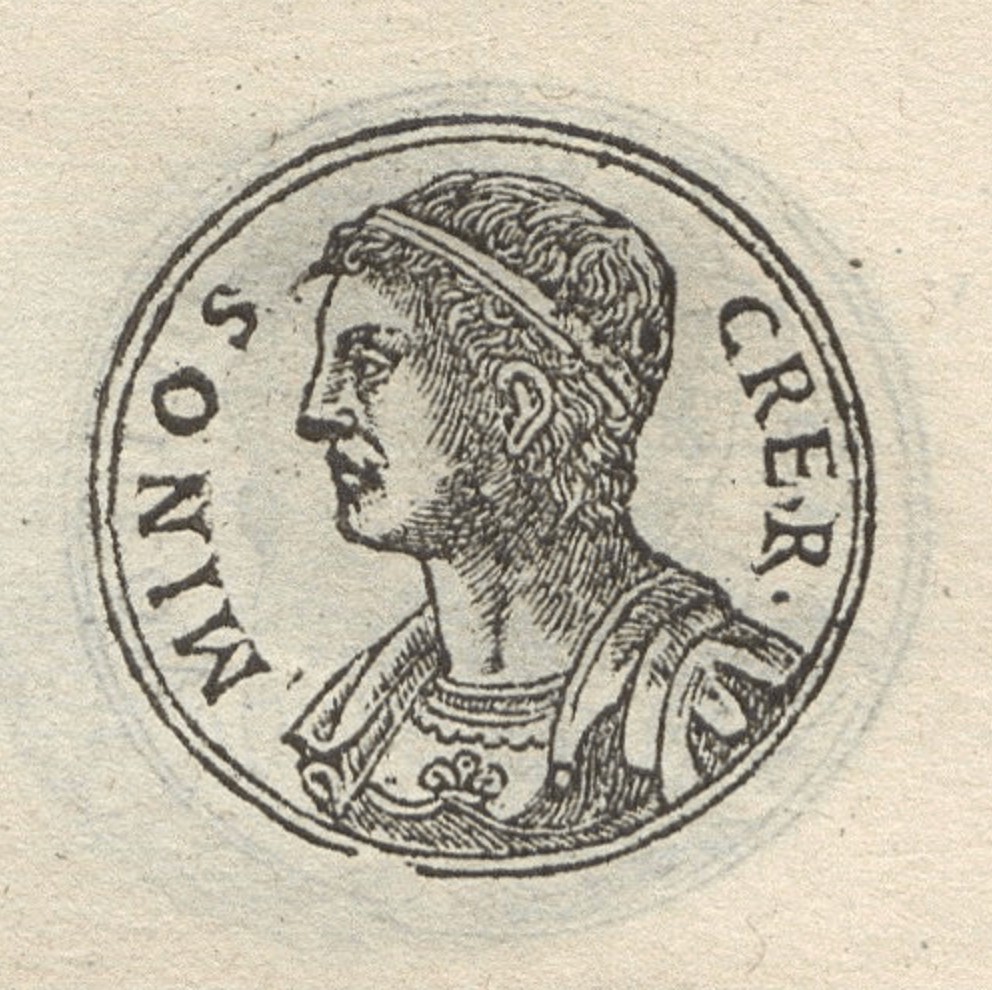
As the Ancient Greek myth is told, Ariadne’s father, Minos, is a powerful brute. The offspring of rape by the God Zeus of the Phoenician Princess, Europa, Minos’ violent origins reflect his development as a man, ruler, and father. He conquers and plunders while harboring secrets and wreaking havoc on his family. In the mythic world he is the definition of a victorious king. In today’s world, we call Minos a narcissist.
Half divine and half mortal, Minos moves between sacred and profane spaces to his advantage. He gains his throne as King of Crete with the support of the Sea God, Poseidon. When given a giant white bull as a congratulatory gift, Minos chooses not to sacrifice the bull as he promises Poseidon, but to keep it for himself. It is this choice that reveals Minos’ shadow narcissism. To Minos, the bull is his greatness, not a symbol of it. In a rage, Poseidon punishes Minos for his choice by cursing his wife, Pasiphaë, to become enraptured with the magic bull. While Minos is away from Crete conquering other lands and other women (he fathered several children outside his marriage), Pasiphaë under possession of Poseidon’s spell, convinces the inventor, Daedalus, to build a contraption to lure the bull into her. Ariadne’s half-brother, the Minotaur, is born out of this union.
My name is Arianne, and my father comes from a long line of men, like Minos, who experience the world only as it fulfills their grandiose self-perception. The MacBean clan of Scotland held vital lands in the Highlands and at least one MacBean was present on the Mayflower – securing the patrilineal line in America as enduring and dominating. My father, born of this privilege, is a narcissist. He resists change even when it causes him problems. He blame others for his pain and is sensitive to any perceived slight. Like Ariadne, it has been easier for me to go along with my father’s vision of the world to avoid his iciness and rage. Like Ariadne, my father’s narcissism was fed by the sacrificed selves of the women close to him. And like Ariadne, it took a leap into the void to learn that my father’s definition of me is not who I am.
As a girl, Ariadne knew, and didn’t know, that she lived in a palace of secrets. She knew, and didn’t know, the salacious way her half-brother came to be and how his existence cast a shadow on her family’s integrity. When Theseus, the prince of Athens, arrives pretending to be one of the seven youths to be sacrificed to the Minotaur, Ariadne falls in love him and the chance to free herself from the burden of her father’s choices. Ariadne aids Theseus in his killing of her half-brother by providing him a red ball of thread to master the maze where the Minotaur resides. They leave Crete in the night, landing on the island of Naxos. But Theseus sails away in the early morning and she awakens alone, screaming and gesticulating from the craggy cliffs. “My hands, waved high in the air, made signs, that, if you could not hear, you might at least perceive me” (Ovid. Ep. Sapph. 10). [Author’s emphasis]
As a girl, I knew and didn’t know, that something changed when I grew from a child who idolized my father to a young woman who existed as a separate person. Oh, how he adored me as a child, and I him! The games we made up, the routines we performed, the special language we developed. He, like Minos, was half God and half mortal, magnetic, handsome, well-traveled and articulate. I cannot count how many times I heard, How lucky you are to have a father like him – so charming and learned!
As I grew, his gaze changed. He could not comprehend my autonomy, and he tried other ways to mold me, to make me his/him. I knew, and didn’t know, there was something odd about the way he laughed proudly when people thought I was his girlfriend. I knew, and didn’t know, that I fed him my own successes as nourishment for himself. As a choreographer, I made dances for him, about him, even featuring him. But as the years went on, I started to hear not how lucky I was to have a father like him but rather, What an angel you are to put up with a father like him!
After having daughters of my own, I reread the ancient Greek myths which my father regaled me with as childhood bedtime stories and began to walk my own labyrinthian path of psyche. I learned about the great Minoan civilization, ruled not by a King, but by the Great Goddess. I visited Ariadne’s palace of Naxos in Crete and listened to the wind. I began to re-tell the story Ariadne and myself in those breezes.
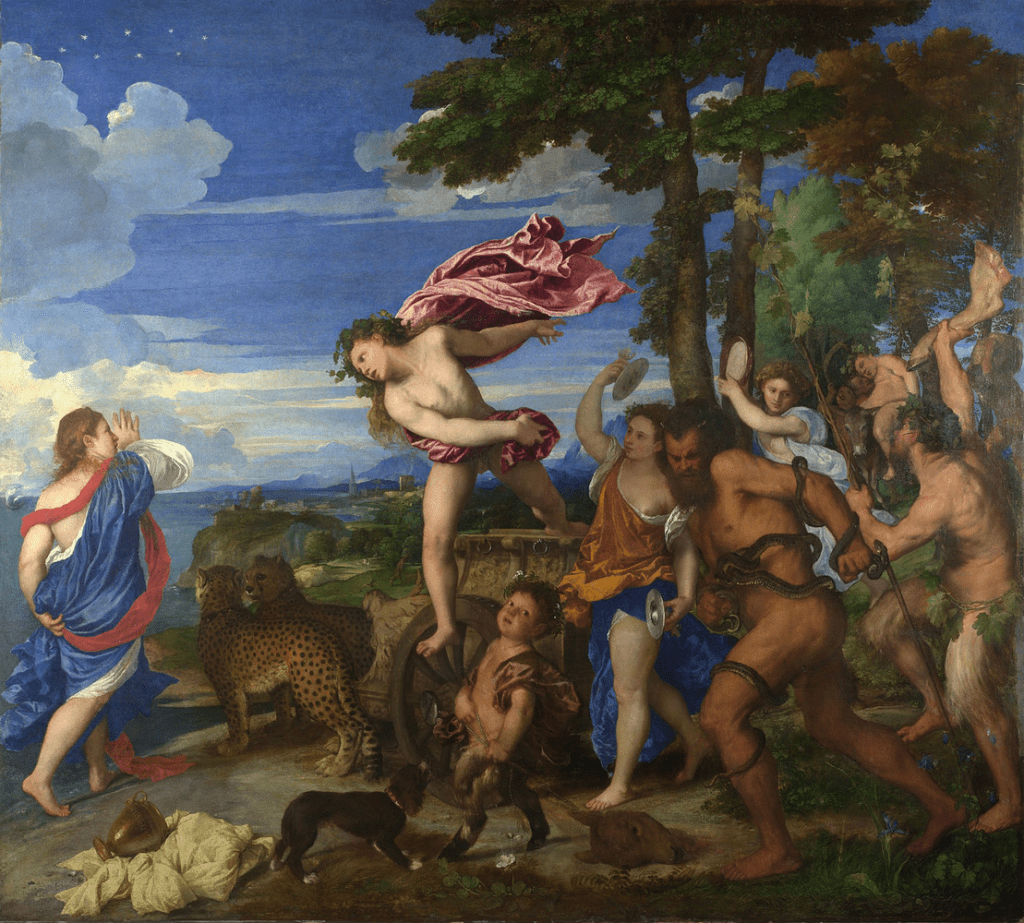
Could Ariadne have held the red thread not for love of Theseus, but for love of herself? Did I really “love and like” my father (growing up, our nightly mantra to each other was “I love you and I like you”) or did I have to love him but not really like him? Is my performed daughterly duty from afar, not a sad disappointment on my part, but a necessary condition of being able to interact at all? Was Ariadne’s abandonment by Theseus on Knossos, not a loss, but a gain? It was her full-bodied song of lamentation that lured the God Dionysus to her and made her his Queen, their love the only between God and mortal that maintained fidelity. Dionysus threw Ariadne’s jeweled crown into the night sky so all would witness her divinity for eternity. “She was the darling of the Gods, and she has her emblem in the sky: all night a ring of stars called Ariadne’s Crown [constellation Corona] rolls on its way among the heavenly constellations.” (Apollonius, 3rd B.C.)
Ariadne and I, daughters of narcissist fathers, survive by placing a great wide sea between ourselves and them. At first it feels like a leap into the void. But eventually, we find that only on the protected island of self can we embody body and voice, and be witnessed by, and bonded to, the divine. There is one way I differ from my ancient sister. Ariadne waved her arms so that, “you might at least perceive me.” I wave my arms to perceive myself.
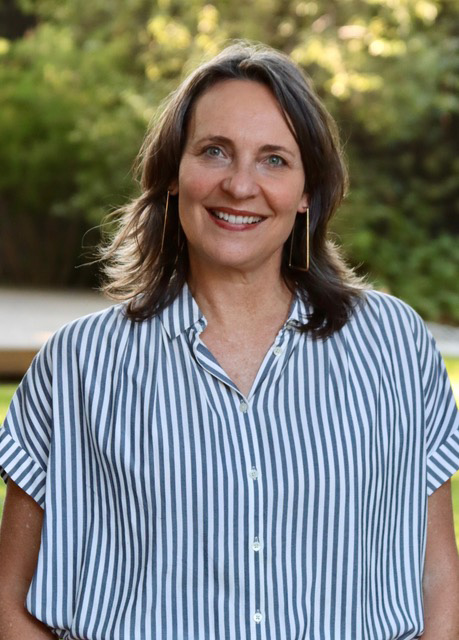
Bio: Arianne MacBean a licensed marriage and family therapist in California with a certificate in somatic psychotherapies and practices at Synergy Somatic Psychotherapy She holds a BA in Dance from UCLA, a Double MFA in Dance and Critical Writing from CalArts, and an MA in Counseling Psychology from Pacifica Graduate Institute. Her first book, Tough Shit – the angry woman’s guide to embodying change was published in Nov. 2025 by Tehom Center Publishing, which celebrates feminist, queer and BIPOC authors. Her essays have been published by Mutha Magazine, Nasty Women Writers Project, and the academic journal Dance Chronicle. You can find more of her writing on Substack @writebig
Discover more from Feminism and Religion
Subscribe to get the latest posts sent to your email.
 Feminism and Religion
This is where we see the importance of learning about mythology – These stories embody patterns that we can recognize in ourselves – I love the skillful story telling – the way you weave your story through myth – and here once again we see that every light carries a shadow – seen or unseen.
LikeLiked by 2 people
Yes, Sara! The myths provide archetypes to which we are called toward and which we resist. I am grateful for the myth of Ariadne for giving me something to lean into and push away – a sacred dance!
LikeLiked by 1 person
It is important not to resist if possible because these patterns are stronger than we are – and it’s important too to recognize that each has two sides – one light one dark
LikeLike
True – the resistance is the place to lean into, right?
LikeLiked by 1 person
yes, and this is hard to do – it’s natural to resist – I think of our current ecocide/political insanity – all of it wants me to run the other way – challenging to say the least
LikeLike