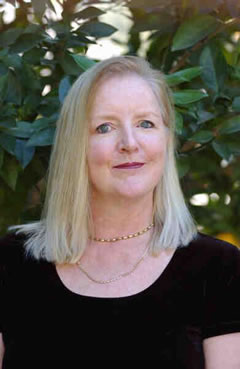
Let Us Give Thanks for Feminism and Religion Dot Com by Carol P. Christ

carol-christFeminism and Religion was founded in the late spring of 2011. Throughout the summer Gina Messina-Dysert hounded me about submitting a blog while I ignored her emails because I didn’t think I wanted to take on a new project.  Gina was persistent nonetheless. Finally I decided that it would be easier to take an excerpt from a book review I had recently written than to explain why I didn’t want to write something for the blog, and so “Exciting New Research on Matriarchal Societies” became my first contribution.

I must have enjoyed writing the blog or reading the responses to it, because my FAR archives show that I was soon contributing a blog every other week and not long after that, every week.  Continue reading “Let Us Give Thanks for Feminism and Religion Dot Com by Carol P. Christ”

Does Masculinity Have to Be the Opposite of Femininity? by Carol P. Christ

“Furthermore, like Obama, [de Blasio] projects a masculinity that is empathic and introspective — anathema to the patriarchal attitudes that dominate hierarchal institutions like the police.”

I wish the analysis that accompanies this quote had been mine, but maybe I should be glad that it comes from aninsightful young man who goes by the name liamcdg. He who argues that the real beef the New York police have with Bill de Blasio is his challenge to their definition of masculinity as dominance, or shall we say white male dominance.

As noted by liamcdg, in the NYPD version of reality, parents should teach children to comply “to comply with New York City police officers even if they think it’s unjust.” In terms of competing definitions of masculinity, the NYPD version is that men in power should be respected simply in virtue of their position, even if they are acting or appearing to act unjustly. In other words we should respect the powerful because they are powerful.

To be empathetic is to be able to put yourself in another person’s place, and in its literal meaning, to feel the feelings of another. In the recent public conversations about race and the police, both Obama and de Blasio have invited white Americans to put themselves in the place of a black man stopped by the police for little or no reason and to ask themselves how they would feel in that situation.

In so doing, liamcdg asserts, Obama and de Blasio were not simply trying to explain the feelings of those on the other side of the racial divide, they were also redefining masculinity. We all know that according to traditional stereotypes, the realm of feeling is the realm of women. And of course we also know that real men don’t cry. Yet what is happening to black men is enough to make anyone who feels their feelings want to cry.

The conflicts between de Blasio and the police and Obama and a large segment of the older white male voting public may have as much to do with the challenge to white male privilege as it has to do with any particular event or issue. White male privilege involves a complex interconnection of race and sex. It is about the power that comes or is expected to come to one simply by virtue of being born into a white male body.

In recent weeks I have been asking myself why the police are so upset. After all there is room for improvement in any profession. Over the past few years I have also struggled to understand why some people object so strongly to the idea that women have a right to control their own bodies, to choose birth control or abortion. I am coming to the conclusion that the vehemence of the protest is rooted in the perception that the patriarchal edifice is crumbling.

Forty years ago, inspired by the feminist movement, men began to speak about redefining masculinity. This was easier said than done. It is so easy to accuse men who criticize male power as domination of being “sissies,” “girls,” or “gay.” Even men who might of wanted to discuss the subject were all too often afraid of being labeled.

I say the fact that the NYPD is turning its back on de Blasio is one measure of how far we have come. I suggest that the NYPD recognizes that a different definition of masculinity and male power is being born right before their eyes. And it is this that they cannot bear to see.

We have been taught that feeling and feeling the feelings of others belongs in the feminine realm. What if it doesn’t? What if in the end male power and female power are much the same? And what if they both begin with empathy?

Perhaps we really have “come a long way baby.”

According to Heide Goettner-Abendroth, whose work I am fond of quoting in FAR, matriarchal societies defined the power of males and the power of females similarly.

What if Freud got it wrong? What if males do not have to differentiate themselves from their mothers by becoming “not like” women and girls? What if masculinity and feminity are not polar opposites? What if all any of us have to do is to learn to embody the qualities of those who nurture us?

We are beginning to glimpse a different world. Any thoughts on how to bring the NYPD and other older white males into a new world along with us?

What is the Nature of the Hope that Can Trump Despair in the New Year? by Carol P. Christ

carol-christ“All hope abandon, ye who enter here.” These words posted on the gates of hell in Dante’s Inferno have an eerie resonance in our time. 

Marie Cartier recently posted a blog on children and hunger with facts so devastating I could not finish reading it. Earlier in the month Jassy Watson wrote about her deep feelings of grief on hearing Luisah Teish’s “Prayer for Disappearing Species.” Grief, despair, and sadness about the injustices in our world can be overwhelming.

A friend of mine has recently fallen into a deep depression. When I try to talk her out of it, she repeats that they are threatening to cut down the last remaining old growth forest in her home state of Oregon and that she can no longer eat fish because radioactivity released in the Fukishima nuclear plant disaster is reaching the seacoast of Oregon.

When I tell my friend she should not dwell only on these things and that she must remember that the world is still a beautiful place, she responds, “I do not want to give up my feelings. I know I must find a way to acknowledge my sadness and make a place for joy, but I don’t know how to do it.”

I have been in the grip of deep grief about the planet myself, not once but many times. But this happens less frequently than it used to.  When I think about the differences between how I once felt and how I feel now, I think the difference is that I have come to terms with and accepted the likelihood that “the world as we know it” is “going to hell in a handbasket”—as I put it.

I believe that the most likely conclusion of the choices human beings are making on planet earth today is massive environmental destruction leading to great suffering and probable extinction for human and many other species on planet earth. This is what I believe, but I also remind myself that I cannot know for sure. The earth and its species including human beings may have resources of resistance and survival, transformation and adaptation,that I do not know about and cannot imagine.

When I began to accept that the world I know and love (where spring follows winter, where birds sing, and where there is hope that injustice can be rectified) may not exist in the very near future, I had an astonishing insight. The death of the world I know and love will not mean the death of our planet or the end of the evolution of the universe.

Thinking about the disappearance of species and the death of human beings from starvation often feels too much to bear. None of this should be happening. Still, it can be strangely comforting to remind myself that the world I love is not the only possible world. There have been other worlds on this very planet—the time when the first cells were formed, the time of the dinosaurs, and many others. Evolution will continue on planet earth for several billion more years, and when our sun burns out, other suns will most likely still be shining in the universe.

This insight was followed by another. The reason for hope is not the conviction that we will be able to save the world we love. The reason for hope—and the reason to keep trying to save our world—is the deep knowing that it is right to try. Even if we cannot save the world we love for all time, we can savor the gift of life, and we can continue to try to create a world in which the gift of life is shared widely today and tomorrow.

I have written many times that we must learn to love a life that ends in death. I was speaking about accepting that each one of us will surely die. I do not fear death. Overcoming this fear has opened me to a greater and more clear-sighted love for life.

Can we learn to love life while accepting that the world we love may be dying? Can we continue to work to improve the conditions of life for individuals and species knowing that the world as we love it may not survive? Do we have any other choice?

For me the hope that can trump despair in our time begins in gratitude for a life that has been given to us, a life that has come down to us through the generations, and through billions of years of the evolutionary process on our planet.

Let us bless the Source of Life.

Let us bless the Source of Life, and the cycles of birth, death, and regeneration.

Let us turn back from despair.

Let us embrace the gift of life and share it with as many others as possible in the new year.

Carol P. Christ  learned to be grateful for the gift of life in Crete on the Goddess Pilgrimage to Crete she leads through Ariadne Institute.  It is not too early to sign up for the spring or fall pilgrimages for 2014.  Carol can be heard on a WATER Teleconference.  Carol’s books include She Who Changes and Rebirth of the Goddess and the widely-used anthologies Womanspirit Rising and Weaving the Visions. She wishes you great joy in the new year.

Of Birds, Angels, and Tidings of Great Joy by Carol P. Christ

carol p. christ 2002 colorA link to a video of a European Hooded Crow sliding down a snow-covered rooftop on a mayonnaise-lid sled appeared on my Facebook timeline a few days ago. For me this crow expresses the “spirit of the season” as aptly as anything I can think of.  She brings a smile to my face on a grey and cold morning.  She makes me want to climb up on the rooftop and slide down with her.  She reminds me that we humans are not alone–we share the world with a vast multitude of other intelligent creatures.  She tells me that there is nothing more sacred than the joy of life.

crow

The ancient Cretans believed that the capacity to enjoy life was not limited to human beings–they believed that animals  enjoy life as much as we do, and they expressed this sensibility in their art.  They also celebrated birds because their  arrival in spring announces the beginning of the growing season. This early pot in the shape of a bird or duck opening its mouth to–as we kids used to say–“drink the rain” cannot help but evoke a smile. Continue reading “Of Birds, Angels, and Tidings of Great Joy by Carol P. Christ”

Ancestor Connection Revisited: Anna M. Christ of Little Germany, Brooklyn by Carol P. Christ

carol-christThese days I can’t get my 2x great-grandmother Anna Maria Christ off my mind.  She may be the independent female ancestor I have been looking for all these years.

My father’s father was transferred from New York to San Francisco during the depression. When I moved to New York City, I felt powerfully connected to its diverse immigrant culture, but I never thought of trying to figure out where and when my ancestors lived there.

Recently I found my Scottish and Irish 2x great-grandparents, James Inglis, the seaman, and Annie Corliss, mother of 9, living in the tenements on Cherry Street near the port of New York.  These were my father’s ancestors on his mother’s side.  I felt inspired by a photograph of Annie to take her Irish spirit of triumph over adversity into my soul.

Because it has become fashionable to be interested in things Irish, I began my ancestor research there.  In fact, I am more German (3/8) than I am Irish (3/16).  As I have delved into my German ancestry, I realized that being German became a cause for shame in both the First and Second World Wars.  German language newspapers were banned, Germans were interned, people hated Germans, and many Germans changed their names.

As a child I learned to create mock battles against “krauts,” Continue reading “Ancestor Connection Revisited: Anna M. Christ of Little Germany, Brooklyn by Carol P. Christ”

ETHICS OF INDIVIDUAL RIGHTS AND CARE SENSITIVE ETHICS IN THE CONTEXT OF THE GAY MARRIAGE DEBATE by Carol P. Christ

carol-christIs care the beginning of ethics? Has traditional western ethical thinking been wrong to insist that in order to reason ethically, we must divorce reason from emotion, passion, and feeling?

In Ecofeminist Philosophy, Karen Warren criticizes traditional ethical thinking–advocating a “care-sensitive” approach to ethics.  Traditional ethics, as Warren says, are based on the notion of the individual rights of rational moral subjects. Like so much else in western philosophy traditional ethics are rooted in the classical dualisms that separate mind from body, reason from emotion and passion, and male from female.  In addition to being based in dualism, western philosophy focuses on the rational individual, imagining “him” to be separable from relationships with others.  Western ethics concerns itself with the “rights” of “rational” “individuals” as they come into relationship or conflict with the “rights” of other “rational” “indiviudals.”

Those who would think ethically are advised to “rise above” the “emotions” and “passions” or “feelings” of the body, in order to reason dispassionately about the rights and responsibilities of rational individuals.  According to this theory, emotions and passions “get in the way” of rational thinking.  Continue reading “ETHICS OF INDIVIDUAL RIGHTS AND CARE SENSITIVE ETHICS IN THE CONTEXT OF THE GAY MARRIAGE DEBATE by Carol P. Christ”

SACRED RHYTHMS OF THE OLIVE HARVEST by Carol P. Christ

carol-christOlives are being harvested in the fields outside my town these days.  We have been having the first rains of the season.  The roads are wet and muddy, and the trees are partially shrouded in mist.  The fields are spread with black plastic nets, and people are hard at work, the men hitting the trees to make the olives fall, and the women picking up the olives from the nets.  The harvest will continue throughout the winter.

The olive press is busy. Cars and trucks come and go, unloading heavy bags filled with olives.  These days the bags are white, made of sturdy woven plastic. In Crete this fall several of us bought canvas olive bags, hand-woven by women.  These, along with baskets hand-woven by men, were still in use only a few decades ago.

olive harvest in Lesbos early 20th century by Theofilos Hajimichael

A friend who died a few years ago told me that “in the old days” there were no nets. The women and the children had to pick the olives up from the ground, often cutting their hands on thorns and stones.  The nets are a Goddess-send.  Between harvests, the nets are simply folded up and placed in the crotch of the tree. Here no one steals them.

In the fields where I walk some of the trees have enormous trunks. Some of them have two trunks, growing like sisters.  Many of them are 300, some perhaps 500, years old.  A man emerges from a field that has some particularly old trees.  I ask him how old they are. “Older than I am,” he replies. “They were here before I was born.  They will be here after I die.” Continue reading “SACRED RHYTHMS OF THE OLIVE HARVEST by Carol P. Christ”

IS IT ESSENTIALIST TO SPEAK OF EARTH AS OUR MOTHER? by Carol P. Christ

carol-christThe charge of “essentialism” has become equivalent to the “kiss of death” in recent feminist discussions. In this context it is taboo to speak of Mother Earth.  Yet, I would argue there are good reasons for speaking of Mother Earth that do not add up to essentialism. What if the values associated with motherhood are viewed as the highest values? What if the image of Mother Earth encourages all of us to recognize the gift of life and to share the gifts we have been given with others?

For those not familiar with the “essentialism” debate in feminist theory, it might be useful to define “essentialism.”  In philosophy, essentialism is the idea that every “thing” has an “essence” which defines it.  In its pure form, essentialism is a by-product of Platonic “idealism” which states, for example, that the “idea” of table is prior to every actual table and that every actual table is an embodiment of the idea of table.

Aristotle disagreed with the Platonic view “way back then,” arguing that the idea of what a table is can be inferred from actual tables, and so on for every “thing.”  There is no need for an idea to exist prior to the existence of anything. Rather ideas help us to name and categorize existing things.  In the 20th century “existentialism” again challenged “essentialism,” asserting that “existence precedes essence.”  Existentialism argued that free individuals are defined by what they do, not by what they “are” prior to or apart from their actions.

When Whitehead said that all western philosophy can be understood as a footnote to Plato, he was referring in part to disagreements among philosophers about the relationship of ideas to things and existence to essence.

In the context of feminist theory, the charge of “essentialism” is used to criticize theories which speak of woman as opposed to man or feminine as opposed to masculine. Continue reading “IS IT ESSENTIALIST TO SPEAK OF EARTH AS OUR MOTHER? by Carol P. Christ”

GIVING BACK TO THE MOTHER by Carol P. Christ

carol-christOne of the inspirations for the Goddess Pilgrimage to Crete was the spiritual power and energy I felt at the monastery of Paliani with its Sacred Myrtle Tree.  The Panagia, She Who Is All Holy, is said to live in the tree, and the nuns who tend the tree follow customs far older than Christianity.  When I first visited Paliani, I asked Her to heal my broken heart and help me find my true love.

panagia palianiOver the years, I have offered many other prayers:  for my books and tours, for health, for citizenship that would enable me to stay in Greece.   I tell other pilgrims that the Panagia of Paliani has performed many miracles and repeat the story of the doctors who desperately wanted to have a child, who had tried everything, and who had a son a year to the day after making a prayer at Paliani. I point to the many “tamas,” including gifts of precious jewelry, crutches and body braces that have been given in honor of the power of the Panagia of Paliani.

In the fall of 2012 one of our members prayed that a heavy flow of menstrual blood that often lasted for more than half of every month be stopped so that she would have the strength to participate fully in the pilgrimage. She had been bleeding for 5 weeks when she came on the tour, and her bleeding stopped the moment she touched the tree.  Continue reading “GIVING BACK TO THE MOTHER by Carol P. Christ”

“THE DIVINE MYSTERY”? by Carol P. Christ

carol-christ“The mystery of God in feminist theological discourse” is the subtitle of Elizabeth Johnson’s widely read She Who Is. The notion that God is “a mystery” is rarely questioned in feminist theologies. But maybe it should be.

Although it is true that the finite cannot encompass the infinite, and that all knowledge is rooted in particular standpoints, I do not agree that the first and last thing to be said about the divine power is that it is “a mystery.” Indeed as I will argue here, speaking about God as “a mystery” obscures more than it “reveals.”

christina's loveThe notion that Goddess or God is “a mystery” is rooted in notions of “a God out there” that most spiritual feminists reject. Goddess or God “in” the world is, I suggest, not unknown, but known, not hidden, but revealed–in the beauty of the world and in ordinary acts of love and generosity.

The notion that God is “a mystery” is a well-worn trope in Roman Catholic theology. Protestants make similar claims when they speak of  the hiddenness of God Continue reading ““THE DIVINE MYSTERY”? by Carol P. Christ”