GODDESS AND SACRED COW: A RE-EXAMINATION OF THE MYTHOLOGY OF THE SACRED BULL by Carol P. Christ

carol-christStatue_of_Egyptian_Goddess_Hathor_from_Luxur_Museum_EgyptMost archaeologists and visitors to museums assume that when they see a horned bovine, they are faced with the image of the male God or the image of the bull sacrifice.  In the minds of many, these two are one, as we have been taught that the male God who was the consort or son-lover of the Goddess was sacrificed. Yet horned Goddesses are not infrequent in the history of religions and Hindus still revere the sacred cow.  

Cattle have played an important role in human life from the beginning of agriculture.  Cows provide milk which is also turned into butter, cheese, and yogurt.  Most of the young males and some of the females are killed for meat or leather, while a few males are kept to impregnate the females.  Though the “raging bull” is the lens through which most of us think about mature male bovines, I have been told by a friend who raised cattle that in fact bulls are for the most part gentle and even sweet–though of course they are also potentially dangerous.

Before the industrial revolution, there was also a third category of bovines, the castrated males, known as oxen, who were used as “beasts of burden”–to pull plows, litters, and after the invention of the wheel, wheeled vehicles. Many people assume that only bulls have horns. This is not the case.  Recently a friend who was raised on a dairy farm described to me the pain experienced by young female cows when their horns are burned out. So let us think again about the images of the horned bovines found in museums.  Given that cows and oxen were long-term companions of early “man” and early “woman,” why should we assume that all horned bovines are bulls?  Continue reading “GODDESS AND SACRED COW: A RE-EXAMINATION OF THE MYTHOLOGY OF THE SACRED BULL by Carol P. Christ”

THE LABRYS: A RIVER OF BIRDS IN MIGRATION by Carol P. Christ

carol-christ“There’s a river of birds in migration, a nation of women with wings.” Goddess chant, Libanalabrys seal ring

On the Goddess Pilgrimage to Crete, I explain that many of the names given to “Minoan” (c. 3000-1450 BCE) Cretan artifacts and architecture are products of patriarchal and Eurocentric imaginations, and as such, are misleading.  For example the name “Minoan” was given to the culture of Bronze Age Crete in honor of “King Minos,” who was said to have ruled in Crete a few generations before the Trojan War–several hundred years after the end of the culture to which his name was attached.  In fact, despite his eagerness to find evidence that King Minos ruled at Knossos, the excavator Sir Arthur Evans finally had to concede that the best he could do was to produce a fresco of a “Prince of the Lilies” which he identifed as the image of the male ruler of the culture he called “Minoan.”  Evans’ Prince had white skin, a fact that Evans conveniently overlooked–because according to his own interpretation of “Minoan” iconography, white skin would mark the figure as female.  Mark Cameron, who reviewed Evans’ reconstruction of the fresco, suggested that the Prince is more likely to be a young woman who is perhaps leading a bull to take part in the bull-leaping games.  He also stated that the “crown” belonged to another fresco altogether.

Evans’ failure to find evidence of a King or for that matter a Queen at the complex of buildings he called “The Palace of Knossos” calls into question his idea that these structures were palaces.  Nanno Marinatos argued that the “palace” was instead a ritual center for the surrounding village, as well as a community gathering place, a place for storing grain, wine, and oil in a sacred way, and a place where ritual objects were fashioned of clay, bronze, stone, and gold.  Following her lead, I renamed the “Palaces” “Sacred Centers.” In this blog I will experiment with renaming the “Minoan” culture “Ariadnian,” after the pre-Greek name Ariadne, which may be one of the names of the Goddess of Bronze Age Crete.

One of the most pervasive–and many would say–most enigmatic symbols of the Ariadnian culture is the labrys.  Continue reading “THE LABRYS: A RIVER OF BIRDS IN MIGRATION by Carol P. Christ”

THE TWO AND THE ONE: CAN WE EMBRACE AND CELEBRATE SINGLENESS AS MUCH AS MARRIAGE? by Carol P. Christ

carol p. christ 2002 colorLike many other readers of this blog, I have followed the progress of the Prop 8 and DOMA cases to the Supreme Court and waited with bated breath during the month of June to see how the cases would be decided. 

On June 26th I rejoiced in decisions that brought the United States several steps closer to affirming the full equality of all human beings.  I am happy that lesbian and gay couples can now get married in California, the state of my birth, the state where I still vote.  As one commentator remarked, “This story has a happy ending—it leads to marriage.”  I am also pleased that lesbian and gay couples will not be excluded from “marriage benefits” offered to heterosexual couples, simply on the basis of their sexual preference.

Still, the gay marriage victories raise other questions.  Much of the rhetoric surrounding the push for marriage equality assumed that “marriage” is or should be “the norm” for all people.  Those arguing for the right of gay people to marry often seemed to be saying: “We are just like everyone else.”

This assumption leaves out a whole lot of people—among them large numbers of single women.  Continue reading “THE TWO AND THE ONE: CAN WE EMBRACE AND CELEBRATE SINGLENESS AS MUCH AS MARRIAGE? by Carol P. Christ”

Two Ultimates: The Ground of Being and Goddess by Carol P. Christ

carol p. christ 2002 colorThe concept of two ultimates, the ground of being and Goddess, can be helpful in understanding differences of emphasis within and among religions.  Some religions or strands within religions focus on relationship with or worship of a personal God, while other religions or strands within religions focus on identifying with or merging with the impersonal ground of being or the whole of which we are part.  These two ultimates are found in feminist spiritualities and theologies.

In “Being Itself and the Existence of God”* process theologian John Cobb identifies two ultimates.  The ground of being as the metaphysical principles that structure all of life is unchanging; as the whole of which individuals are part, the ground of being is impersonal.  God, on the other hand, is an active presence in the world, is personal, and cares about individuals in the world.  If God is understood to be in some sense an individual in relation to other individuals, then God cannot be identified with the whole, because the whole is made up of God and other individuals.  Yet God is not simply one individual among other individuals.  Only God has perfect knowledge of the world and every individual within it and only God cares for the world in light of perfect knowledge of it.

I find Cobb’s notion of two ultimates helpful in understanding some of the differences in feminist views of Goddess and God.  Some spiritual feminists, especially Goddess feminists, view the sacred as the whole of which we are a part, structured by the seasons and cycles of birth, death, and regeneration.  Starhawk’s tree of life meditation in which the individual identifying with the tree draws energy from its ground imagines Goddess as the ground of being and life.  Z Budapest’s song “We all come from the Goddess, and to Her we shall return” connects us to the cycles of birth and death.

The view of Goddess as a personal presence who loves, understands, and inspires us to love is based on the notion of God as a person with whom individuals are in relation.  Jennifer Berizan invokes a Goddess who cares in her song “She Who Hears the Cries of the World,” addressed to the Goddess in the form of Chinese Goddess Kwan Yin.  Prayer to Goddess and a sense that She is always with us are based on the idea of a relational, personal God.  According to Cobb religions do not have to choose between the two ultimates. If both are real, then religions can and should recognize both.  Continue reading “Two Ultimates: The Ground of Being and Goddess by Carol P. Christ”

What Is Patriotism? by Carol P. Christ

carol p. christ 2002 colorJuly 4, American Independence Day, has come and gone. Perhaps now is as good a time as any to reflect on patriotism. What is it? What does it mean from a feminist perspective?  What is the relationship between patriotism and militarism?  Can one be a patriot and oppose war?  Can one be a patriot and deny that “America is the greatest country in the world,” the foundation of  the doctrine of American exceptionalism?

In a recent blog, Caroline Kline called attention to the use of patriarchal God language in the patriotic hymns her child was asked to sing in the 1st grade.  She wondered if this God language could be changed to female positive or gender neutral.  Her post prompted me to ask if changing pronouns would be enough and to revisit the question of patriotism and nationalism.

While I had opposed the Vietnam War in the 1960s and 70s, I was surprised to read Jonathan Schell’s questioning of national sovereignty and the nation-state itself in his 1982 book on the nuclear question, The Fate of the EarthSchell wrote, “the nuclear powers put a higher value on national sovereignty than they do on human survival, and … while they would naturally prefer to have both, they are ultimately prepared to bring an end to [hu]mankind in their attempt to protect their own countries.” (210)  Schell concluded that the adherence to the idea of a nation state may in fact be antithetical to human survival. He stated, “Just as we have chosen to live in the system of sovereign states, we can choose to live in some other system.” (219) Continue reading “What Is Patriotism? by Carol P. Christ”

June 25th or “June Unteenth”: A Sad Day For All Americans

carol p. christ 2002 colorKelly Brown Douglas wrote recently on Feminism and Religion about the celebrations in black communities on Juneteeth when the emancipation of slaves became a reality in the formerly Confederate states.  Sadly, on June 25th 2013 the Supreme Court announced its decision striking down section 4 of the Voting Rights act of 1965, the most important Civil Rights legislation of the 20th century.  The Supreme Court gave a “green light” to states with previous and on-going records of introducing laws with the effect of preventing minority voters from voting to “proceed straight ahead.”  I name this day June Unteenth and call on all Americans to mourn it in sackcloth and ashes.

For every American concerned with Civil Rights this indeed is a sad day. It means states and municipalities—particularly those in the former Confederacy—will in the days following the decision be introducing new legislation which will have the effect of disenfranchising black voters.  Those of us who consider the right to vote fundamental in a democracy must rise up, with time, with money, and if necessary with our bodies in peaceful protest.

This is not only a sad day for black Americans. It is a sad day for white Americans as well.  June Unteenth is the day 4 white Americans joined by 1 black American (who was hand-picked by white Americans) announced their decision to deny voting rights to large numbers of black Americans.  This decision may not affect the right to vote of large numbers of white Americans.

So why should we be mourning June Unteenth?  One good reason is that this is a day to be ashamed of our membership in the “white race.”   Continue reading “June 25th or “June Unteenth”: A Sad Day For All Americans”

Staying In or Leaving the Religious Community of Your Birth: The Dialogue Continues by Carol P. Christ

carol p. christ 2002 colorThis blog is part of an on-going discussion between me and my friend Jewish feminist theologian Judith Plaskow about the differences in our choices to stay in and leave traditional religious communities, which is part of our forthcoming book Goddess and God since Feminism: Body, Nature, and Power.

When you (Judith) discuss the reasons I left Christianity while you stayed Jewish, I think you hit upon a crucial difference between us when you say that I am more “idealistic” than you are.  I agree that this does not mean that I am more ethical than you are.  When you say that I require more “purity of thought” or perhaps more accurately more “purity of ritual symbolism” than you, I think you have hit the nail on the head.  I simply cannot participate in a religious symbol system that I feel has done and continues to do great harm in the world.

I reiterate that for me this “problem” is not limited to the ways in which the maleness of God justifies male domination—including violence against and rape of women.  Equally important to me are the ways that religious symbolisms justify the violence of warfare and conquest.    I simply will not and cannot participate in religious rituals that justify domination and violence in the name of “God.”  If that makes me a “purist” or an “idealist,” I am willing to accept those terms.  Continue reading “Staying In or Leaving the Religious Community of Your Birth: The Dialogue Continues by Carol P. Christ”

RAPE CULTURE IN THE MILITARY AND “TURNING BOYS INTO MEN” by Carol P. Christ

carol p. christ 2002 colorRape is not something that “just happens” in the military. It is an inevitable product of military training. Unless and until we understand this and change the way soldiers are trained, we will never be able to stop rape in the US military or any other military system.

The right to rape women of the enemy has been considered one of the “prerogatives” of warriors since the beginning of warfare.  Propaganda-Poster-MasculinityCould “military training” which “turns boys into men” by calling them “girls” or “women” or “gay” in order to break down their self-esteem and remold their “character” as soldiers be one of the reasons rape is such a pervasive problem in the military? Are “boys” being taught that the only way to “prove” their “manhood” is to replace “identification” with women—their mothers, sisters, girlfriends, wives—with a new “identity” as a “dominant male” who “dominates” women and weaker men?  I fear that if we fail to address the “core issue” of “military training,” we will never get to the root of the rape culture that pervades the military.

Unfortunately the model of training boys to be men by humiliating them with taunts that they are “girls” or “gay” is not limited to the military but is also a regular part of sports training.  In both the military and sports, terms like “sissy,” “wuss,” “pussy,” “faggot”–and worse–are regularly used by male authority figures in order to “spur” boys “on” to feats of “physical achievement” that require “punishing” their own bodies and the bodies of others.  The use of these epithets in the context of humiliation makes it clear that “a man” is not “a woman” or “a gay”:  “a man” is someone who has eradicated all of his “feminine” qualities while learning to dominate and humiliate women and effeminate men.

Is it any surprise that rape of women and effeminate or gay men is pervasive in the military and in sports culture? Continue reading “RAPE CULTURE IN THE MILITARY AND “TURNING BOYS INTO MEN” by Carol P. Christ”

The Morning After Pill and Obama’s Daughters by Carol P. Christ

carol p. christ 2002 colorBy now it should be clear to feminists that when Barack Obama thinks about women, he does not view us as independent individuals, but rather as he said in his 2nd term inauguration address–to my consternation—as “our” mothers, wives, and daughters.  Obama does not address us–he addresses the men he expects to make decisions for us.  I almost wrote a blog on this egregious error in perception and judgment on the part of the President in January, but in order not to be seen as nit-picking, I held my tongue.  The recent decision of the White House to continue to restrict the availability of the Plan B , brings this question to the fore again.

Plan B is a brand name for the “morning after pill.”  If taken within 3 days of unprotected intercourse, it will prevent conception.  There is now a much cheaper generic version as well.

After reviewing the effects and side effects of Plan B, the Federal Drug Administration found it safe and reliable and advised the US Department of Health and Human Services that it should be made available without prescription or age restrictions.  In late 2011, the Obama administration and Kathleen Sibelius made the unprecedented decision to overturn the recommendations of the FDA and to allow Plan B to be purchased without prescription only by women age 17 or older.  Just over a month ago, US District Court Justice Edward Korman of New York ruled that the Plan B and the generic alternatives should be made available without restriction.  Before the ruling could take effect, the Obama administration lowered the age restriction to 15, while announcing that it would appeal Justice Korman’s decision to make the morning after pill as available as aspirin.

“Current and former White House aides said Obama’s approach to the issue has been heavily influenced by his experience as the father of two school-age daughters.”   Continue reading “The Morning After Pill and Obama’s Daughters by Carol P. Christ”

Rituals Of Spring and Greek Easter by Carol P. Christ

carol p. christ 2002 colorThough I am not a Christian any more, I don’t want to sit home alone on Easter Day.  Besides being a Christian ritual, Greek Easter is a time to eat lamb with family and friends, and to celebrate the coming of spring by feasting out-of-doors in flowering fields or in a garden filled with flowers, bees, butterflies, and birds.  Such rituals have been celebrated from time immemorial.

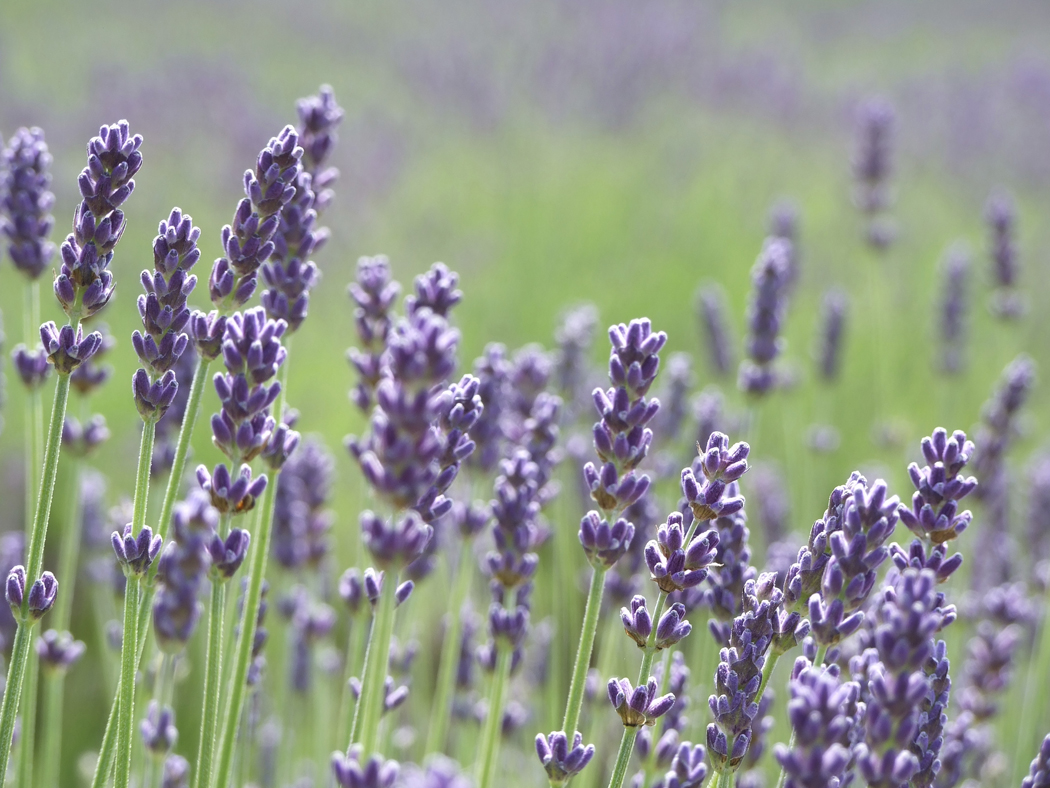
lavenderGreek Easter came late this year, only yesterday, May 5.  I prepared for an Easter party in my garden for weeks.  My garden is planted with herbs and aromatics—lavender, thyme, oregano, rosemary, curry plant, rue, sage, cistus, rose-scented geranium, sweet william, cat mint and several other kinds of mint, bee balm, and roses and fruit trees, including lemon, bitter orange, pomegranate, olive, quince, and cherry.  Everything blossoms in spring, attracting bees and butterflies.

purple sageI began weeding and pruning about 6 weeks ago.  This year I had to remove many overgrown lavender plants.  For the last 3 weeks in addition to ongoing weeding and pruning, I have been replanting lavender which I have promised myself to prune “way back” in the fall, along with purple sage, blue daisies, and thyme.  Though there is bare ground in some parts of the garden, in other parts mature plants and trees are in full flower. Continue reading “Rituals Of Spring and Greek Easter by Carol P. Christ”