Exploring the F-word in religion at the intersection of scholarship, activism, and community.
Author: Carol P. Christ
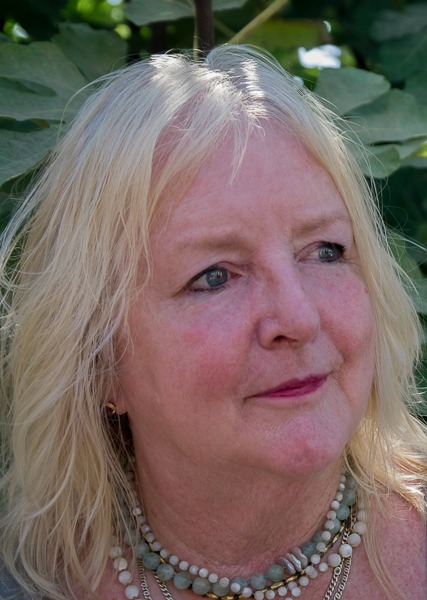
Carol P. Christ is a leading feminist historian of religion and theologian who leads the Goddess Pilgrimage to Crete, a life transforming tour for women. www.goddessariadne.org
Moderator’s Note: We here at FAR have been so fortunate to work along side Carol Christ for many years. She died from cancer in July, 2021. Her work continues through her non-profit foundation, the Ariadne Institute for the Study of Myth and Ritual and the Goddess Pilgrimage to Crete. To honor her legacy, as well as allow as many people as possible to read her thought-provoking and important blogs, we are pleased to offer this new column to highlight her work. We will be picking out special blogs for reposting.This blog was originally posted February 18, 2013. You can read it long with its original commentshere. It was the first in an important 3 part series. We will be posting the next 2 parts in subsequent weeks (or you can read it earlier by going to the original post).
Recently feminist scholar Vicki Noble commented that this is the best definition of patriarchy she has read–but she hadn’t read it earlier. I am reposting it now in the hopes that all of you will share it with your social media so that it will be more widely known.
Patriarchy is often defined as a system of male dominance. This definition does not illuminate, but rather obscures, the complex set of factors that function together in the patriarchal system. We need more complex definition if we are to understand and challenge the the patriarchal system in all of its aspects.
Patriarchy is a system of male dominance, rooted in the ethos of war which legitimates violence, sanctified by religious symbols, in which men dominate women through the control of female sexuality, with the intent of passing property to male heirs, and in which men who are heroes of war are told to kill men, and are permitted to rape women, to seize land and treasures, to exploit resources, and to own or otherwise dominate conquered people.*
Moderator’s Note: We here at FAR have been so fortunate to work along side Carol Christ for many years. She died from cancer in July, 2021. Her work continues through her non-profit foundation, the Ariadne Institute for the Study of Myth and Ritual and the Goddess Pilgrimage to Crete. To honor her legacy, as well as allow as many people as possible to read her thought-provoking and important blogs, we are pleased to offer this new column to highlight her work. We will be picking out special blogs for reposting. This blog was originally posted July 9, 2012. You can read it long with its original commentshere.
My relationship to God changed when I accused “Him” of everything I thought “He” had done or let be done to women—from allowing us to be beaten and raped and sold into slavery, to not sending us female prophets and saviors, to allowing “Himself” to be portrayed as a “man of war.”
In the silence that followed my outpouring of anger, I heard a still small voice within me say: In God is a woman like yourself. She too has been silenced and had her history stolen from her. Until that moment God had been an “Other” to me. “He” sometimes appeared as a dominating and judgmental Other, and at other times as a loving and supportive Other, but “He” was always an “Other.” I as a woman in my female mind-body definitely was not in “His” image.
Moderator’s Note: We here at FAR have been so fortunate to work along side Carol Christ for many years. She died from cancer in July, 2021. To honor her legacy, as well as allow as many people as possible to read her thought-provoking and important blogs, we are pleased to offer this new column to highlight her work. We will be picking out special blogs for reposting. This blog was originally posted March 26, 2012. You can read it long with its original commentshere. Carol mentions a book she was writing with Judith Plaskow at the time with the working title: God After Feminism. The book was published in 2016 under the title of Goddess and God in the World: Conversations in Embedded Theology. You can find it here.
Many women’s dreams have not been realized. How do we come to terms with this thealogically?
Although I am as neurotic as the next person, I am also really wonderful—intelligent, emotionally available, beautiful (if I do say so myself), sweet, caring, and bold. I love to dance, swim, and think about the meaning of life. I passionately wanted to find someone with whom to share my life. I did everything I could to make that happen—including years of therapy and even giving up my job and moving half way around the world when I felt I had exhausted the possibilities at home.
For much of my adult life I have asked myself: What is wrong with me? Why can’t I find what everybody else has? Even though I knew that there were a lot of other really great women in my generation in my position and even though I knew that many of my friends were with men I wouldn’t chose to be with, I still asked: What is wrong with me?
Moderator’s Note: We here at FAR have been so fortunate to work along side Carol Christ for many years. She died in July this year from cancer. To honor her legacy as well as allow as many people as possible to read her thought-provoking and important blogs we are pleased to offer this new column to highlight her work. We will be picking out special blogs for reposting. This blog was originally posted December 23, 2013. You can read it long with its original comments here
A link to a video of a Crow Uses Plastic Lid to Sled Down Roof Over and Over Again on a mayonnaise-lid sled appeared on my Facebook timeline a few days ago. {moderator’s note: I believe this is the same video that Carol originally posted. The link has been updated since 2013 } For me this crow expresses the “spirit of the season” as aptly as anything I can think of. She brings a smile to my face on a grey and cold morning. She makes me want to climb up on the rooftop and slide down with her. She reminds me that we humans are not alone–we share the world with a vast multitude of other intelligent creatures. She tells me that there is nothing more sacred than the joy of life.
Moderator’s Note: We here at FAR have been so fortunate to work along side Carol Christ for many years. She died in July this year from cancer. To honor her legacy as well as allow as many people as possible to read her thought-provoking and important blogs we are pleased to offer this new column to highlight her work. We will be picking out special blogs for reposting. This blog was originally posted September 3, 2012. It is surprisingly current.You can read it along with its original comments here
Where patriarchalism trumps love, when push comes, shove often follows.The underside of love patriarchalism is hatred of the independence of women.
We are told that it is the duty of a loving father and husband to protect his wife and children. In exchange, good wives support their husbands and good children obey their fathers. The bottom line of patriarchy is control. The fight over abortion is a fight about men’s right to control women.
I have spent much of the past few weeks wondering why so many Republican men hate women. Why do they want to deny the right to an abortion to a 12 year-old girl raped by her father, to a 21 year-old college student gang raped at a fraternity party, to a 33 year-old woman who submitted to a violent boyfriend she did not know had poked a hole in his condom, or a to a 41 year-old woman who offered a cup of coffee to the man who came to her house to fix the electricity, but who said “no” when he assaulted her.
Moderator’s Note: We at FAR have been so fortunate to work along side Carol Christ for many years. She died in July this year from cancer. To honor her legacy as well as allow as many people as possible to read her thought-provoking and important blogs we are pleased to offer this new column to highlight her work. We will be picking out special blogs for reposting. This blog was originally posted November 25, 2019. You can find the original post here to see the original comments along with her responses.
Matilda Joslyn Gage
[T]he most grievous wrong ever inflicted on woman has been in the Christian teaching that she was not created equal to man, and the consequent denial of her rightful place in Church and State. –Matilda Joslyn Gage, Woman, Church, and State, 1893, page 1
I do not approve of their [referring to Gage and Stanton] system of fighting the religious dogmas of people I am trying to convert to my doctrine of equal rights to women. –Susan B. Anthony to Olympia Brown, following the disputed merger of the radical National Women’s Suffrage Association with the conservative American Women’s Suffrage Association in 1889
Moderator’s Note: We at FAR have been so fortunate to work along side Carol P. Christ for many years. She died from cancer in July 2021. To honor her legacy as well as allow as many people as possible to read her thought-provoking and important blogs we are pleased to offer this new column to highlight her work. We will be picking out special blogs for reposting. This blog was originally posted September 7, 2020. You can find the original post here to see the comments along with her responses.
This post was chosen to be first because it is so achingly beautiful as it speaks about joy, and healing. It truly shows Carol’s heart.
When I moved from Lesbos to Crete, I decided to take some 30 large and medium-sized handmade terra cotta pots acquired over the years along with me. As I had been living part-time in Crete for several years, most of the plants had died, but I managed to salvage freesia bulbs, chives, and cuttings from nutmeg-scented geraniums.
My friend Mavroudis helped me empty the soil into feed bags provided by a neighbor who keeps sheep. I decided to move the dirt too, as I didn’t fancy carrying numerous bags up to my apartment. The movers were not too happy about this, and by the time they were deposited higgledy-piggledy on my balconies in Crete, several of the pots were broken and the bags were leaking.
Yesterday was Greek Easter and as Greece was still on lockdown, friends brought a lovely meal of roast chicken and vegetables, scalloped potatoes, green salad, and pineapple upside down cake, which we ate together on my balcony. Still I could not help remembering Easters past.This blog was originally published in 2013.
Though I am not a Christian any more, I don’t want to sit home alone on Easter Day. Besides being a Christian ritual, Greek Easter is a time to eat lamb with family and friends, and to celebrate the coming of spring by feasting out-of-doors in flowering fields or in a garden filled with flowers, bees, butterflies, and birds. Such rituals have been celebrated from time immemorial.
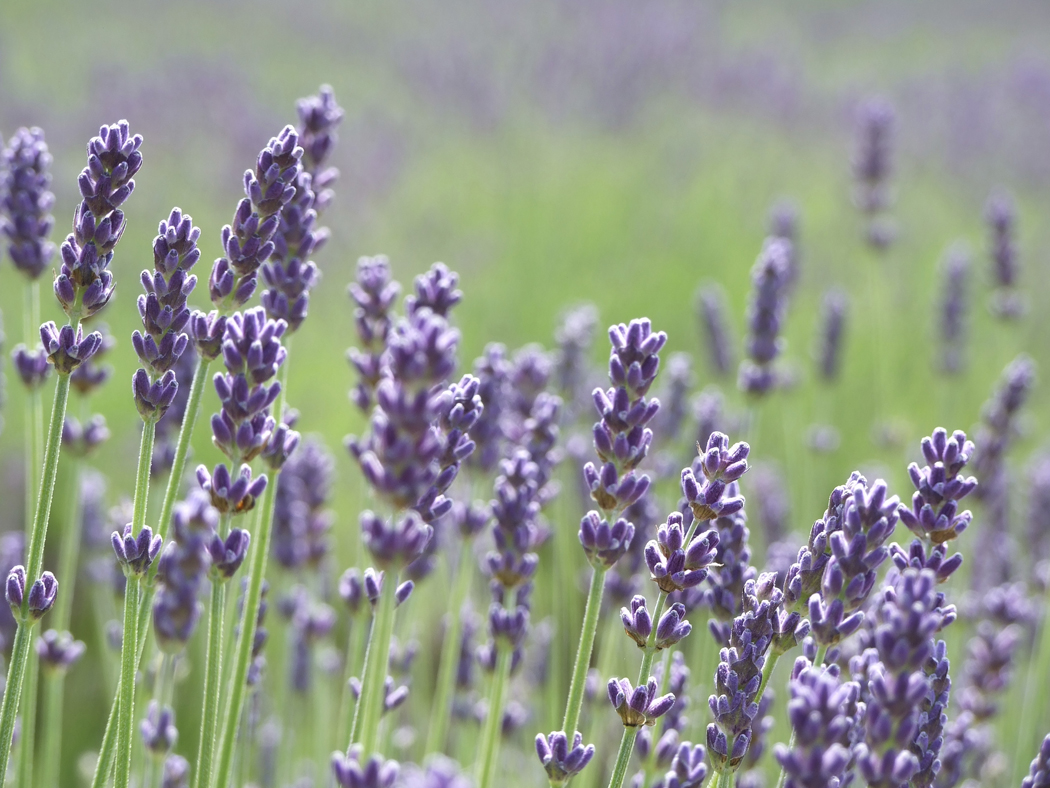
Greek Easter came late this year, only yesterday, May 5. I prepared for an Easter party in my garden for weeks. My garden is planted with herbs and aromatics—lavender, thyme, oregano, rosemary, curry plant, rue, sage, cistus, rose-scented geranium, sweet william, cat mint and several other kinds of mint, bee balm, and roses and fruit trees, including lemon, bitter orange, pomegranate, olive, quince, and cherry. Everything blossoms in spring, attracting bees and butterflies.
I began weeding and pruning about 6 weeks ago. This year I had to remove many overgrown lavender plants. For the last 3 weeks in addition to ongoing weeding and pruning, I have been replanting lavender which I have promised myself to prune “way back” in the fall, along with purple sage, blue daisies, and thyme. Though there is bare ground in some parts of the garden, in other parts mature plants and trees are in full flower.
I have my breakfast in the early morning on a terrace from which I can see the garden and the sea. I love to” just sit” in the garden at this time of year. My thoughts cease as I enjoy the flowers, new ones every few days, and watch birds, butterflies, bees, and my two tortoises. Then my eyes come to rest on a task that needs doing, and I work for an hour or more as the sun comes into the garden.
There is a flowing fountain in the center of my garden that attracts birds. This year as in other years, there is a nest of great tits in a hole in an old locust tree. This tree is an import from America favored by the Ottomans, planted decades ago by someone whose name I do not know. One morning in early spring a migrating hoopoe landed above my head in the other locust tree. A hoopoe is a magnificent rust-colored bird with a black and white wings, a crown that can be opened or closed like a fan, and a long down-curved bill. Its arrival–a garden first– felt like a blessing. This spring I have seen blue tits, sparrows, collared doves, chaffinches, goldfinches, and for the first time a pair of black-eared wheatears drinking and cavorting in the fountain.
With the old lavender bushes gone, I have been able to see the tortoises with whom I share the garden more clearly. They wake up about ten as the sun begins to shine on the stone paths in the garden. They warm themselves for a while, and then start searching for food. Last year they “weeded” the garden for me—though they didn’t care for the bermuda and other invasive grasses. This year I feed them greens and vegetables. When the first rose petals fell to the ground, I remembered that, like us, they have a “sweet tooth”—besides flower petals, they like tomatoes and other fruit. They don’t actually have teeth, but rather hard gums, which are quite effective for munching and sometimes gobbling down food. After eating, they wander around the garden and usually have sex at least once (they are both boys), before they crawl under the bushes to wait out the hottest part of the day. They wake up again in the late afternoon.
I find it amazing to be sharing my garden with two reptiles whose ancestors perfected their evolution 200 million years ago when Pangaea was a single continent. I marvel at the agility they have despite their heavy shells. They push themselves up low steps and slide back down. They can get from one side of the garden to the other quite quickly when they want to.
All of my garden preparation culminates at Easter when I make a party for my friends. I order the lamb early in the week and make a pilgrimage with one or two others to a mountain village to pick it up. Along the way we stop to admire migrating birds in the wetlands of Kalloni and the wildflowers in the fields and on the hillsides. In the village we also buy braided sweet Easter bread called tsoureki, cooked with a red Easter egg in its center, and tiny Greek sweets called baklava and kataiifi, made of thin pastry, nuts, and honey. We lunch at a favorite taverna in the village, before returning home.
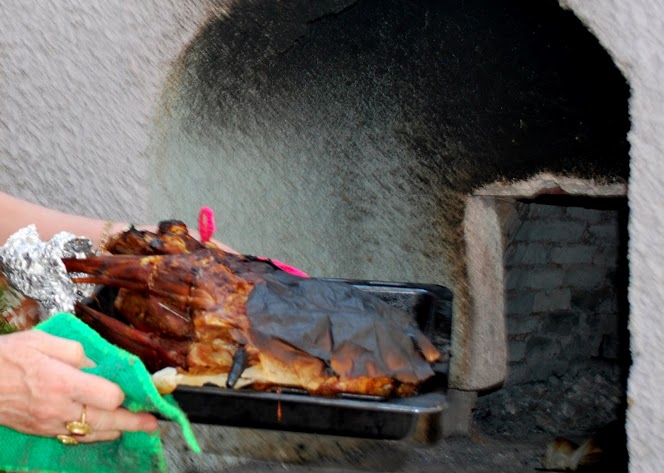
My house, which is over a hundred years old, originally had its kitchen in the garden: the old brick oven and an open fireplace remain. I use the oven only on Easter to roast a lamb that cooks all night long and into the morning. I save tree prunings, rosemary and lavender clippings, and collect driftwood for the fire. It must burn fast and hot. I wait until midnight to light it.
In the evening, I prepare the rice as the Greeks once did in Smyrna with orange and lemon juice, black currants, golden raisins, pine nuts, mint, parsley, and onions. I use it to stuff the lamb. I make tzatziki with yogurt, cucumber, and garlic, garnishing it with mint from the garden. The next day friends will bring potato salad (as my Grandma made it) and a green salad to which I will add mint, dill, and bee balm from the garden.
At midnight the church bells peal announcing “Christos anesti,” “Christ is risen.” The village rings with the sounds of firecrackers and the sky is lit by fireworks. This is the moment I choose to light my fire. I revel in the feeling of danger within and without. The fire burns wildly for at least an hour “until the bricks turn white.” Then I push the flaming wood to the sides of the oven, watch the embers burn down until they are small glowing coals, insert the lamb, shut the oven door, and go inside. I am always too excited to fall asleep immediately.
When I wake, I check to be sure the lamb is cooked, but don’t open the oven door again until my guests arrive. I take my time setting up folding tables next to the marble table with stone seats in the secluded area that used to be a kitchen. I think of the generations of women and girls who used the oven where the lamb awaits, as I bring the taverna chairs and cushions out storage. I spread out tablecloths from Crete and set out ceramic dishes from Skyros–painted with birds, flowers, mermaids, sailing ships, and people in traditional dress–pink wine glasses, pink and blue cloth napkins. Like the garden, my table is a feast of color.
Before the guests arrive, I sit in the garden and wait. A song of thanksgiving reverberates in my mind:
This is my Mother’s world,
And to my listening ears,
All Nature sings,
And ‘round me rings,
The m-u-s-i-c of the spheres.
Easter lamb stuffing Smyrna style
2 cups white long grain rice
2 T black currants
2 T golden raisins
2 T pine nuts
2 T olive oil
1/4 cup chopped fresh mint
1/2 cup chopped parsley
2 onions chopped
juice of one orange (and/or lemon)
salt and pepper to taste
(you can also add the liver, cooked and chopped)
Cook the onions in the olive oil, add the rice and orange juice, cook lightly, add the other ingredients stir.
Spoon into the cavity of a cleaned lamb carcass with the legs but without the head.
Can also be used for chicken. If not used as stuffing, add enough water to cook rice. Amounts of ingredients can be varied.
*Smyrna is the Greek name for Izmir, a city where Greeks lived for many centuries, until 1922, the year of the “great catastrophe” when many of them fled to Lesbos, Chios, and Samos, while others ended up in Athens.
Like many of you, I was anxious and angry during most of the Trump administration years. I watched MSNBC avidly, hoping against hope that a) he could be stopped or b) he would be impeached. Now that he is gone, it would be nice to be able to take a “breather” (I wasn’t breathing regularly during the Trump years), a break from thinking about US politics all the time, but sadly, the political situation in the United States continues to require attention.
President Biden has pleasantly surprised me with his progressive domestic agenda and his decision to remove troops from the heretofore endless war in Afghanistan. Nonetheless, he has proposed an increase in the military budget. Dwight David Eisenhower, who warned of the increasing power of “the military-industrial complex” as he left office, must be turning over in his grave.
Most worrying of all is the fact that so many Americans voted for Donald Trump, believe that the election was stolen from him, and support white supremacy, while the Republican party refuses to deviate from the Trumpian worldview.
As if it could not be any worse, police killings of innocent black men by white officers and mass killings by young white men with easy access to automatic weapons are proliferating. Moreover, Republican-inspired voting restriction legislation is once again threatening the foundations of our democracy. Continue reading “Feeling Weary about US Politics by Carol P. Christ”
In Greece the liturgies of lent and especially of the week before Easter are known as the “divine drama,” in Greek theodrama. This may refer to the “drama” of the capture, crucifixion, and resurrection of Jesus and to the suffering of God the Father and Mary.
However, it is important to recall that the drama in ancient Greece referred to both the tragedies and comedies, most specifically, those that were performed in the theater of Dionysios in Athens. While we have been taught that the Greek tragedies celebrated “downfall of the hero” due to his “tragic flaw,” it is important to remember that Dionysios was the original protagonist of the Greek tragedy: it was his death and rebirth that was first celebrated.
Some have argued that the Greek tragedies should never be “read” alone, for they were always “performed” in tandem with the comedies, which were followed by the bawdy phallic humor of the satyr plays. The tragedies end in death and irreparable loss. But if the comedies and satyr plays are considered an integral part of the cycle, death is followed by the resurgence of life.








 Feminism and Religion