#MeToo and the Idolatry Trap by Tallessyn Zawn Grenfell-Lee

Really – everywhere we look – there are dead white guys. National holiday? Most likely in honor of a dead white guy. Statue on a green? Founder of a major Christian denomination? Dead white guy. Classic literature, painting, play, music ‘everyone’ is supposed to know about? Yup, probably by a dead white guy.

It’s a little exhausting.

It’s easy to develop a pretty negative attitude about all these dead white guys. I mean, some of them were pretty questionable if not downright oppressive people. Enough, already! Am I right?

Yes! Yes. Well… sort of. The thing is, some of them really did say and do wonderful, important things. I suppose we should not dismiss an entire portion of our history just on race and gender alone. And, truth is, I have a confession to make. I kind of really love the insights of some of these folks. I guess it’s easy to complain about all these dead white guys… until you fall in love with one of them.

Continue reading “#MeToo and the Idolatry Trap by Tallessyn Zawn Grenfell-Lee”

Saving Joan of Arc by Natalie Weaver

I’m finished with my first semester as a studio arts major at Kent State University.  I am not sure whether I’ll be registering for a second one.  There were pros and cons about the experience, and I am not sure if one set outweighed the other. Regardless, I am on sabbatical this spring, have two books to complete, and figured I would do well not to be trekking back and forth in an hours worth of snow and ice over the next few months from my home to the school.  So, I am taking a semester off, and I have become one of those retention risks. I am grateful for the opportunity to reflect on the experience with only minimal consequence to my bank account and my (laughing) future in the arts.

It wasn’t a bad experience; it wasn’t a good one either, really.  I learned some things in drawing, but I am very much on the fence about my experience in sculpture.  For starters, I imagined playing with clay and making pinch pots while some Swayzesque spirit from beyond rubbed my shoulders.  Instead, I was more Jessica Beal with a welding mask, except, instead of wearing a swanky black leotard and off-the-shoulder-slouch-dance tunic, I was wearing ugly jeans and steal-toed shoes under the green welding suit that had half-dollar size holes in it.  The protective gear only partially worked; I was scared of the tools after a classmate almost lost a finger; and the top of my hair went up in smoke when a spark shot under my ill-fitting Vader hat on week two.  I put it out quickly, fortunately.

Continue reading “Saving Joan of Arc by Natalie Weaver”

Gas-lighting on Al Franken(stein)’s Street by Elisabeth Schilling

I will add my #metoo, but don’t feel like going into details. I will just say that in light of my past experience and Al Franken’s statement of apology, I’m realizing why some of us don’t tell at an even deeper level.

This is Al Franken’s statement:

“I’ve met tens of thousands of people and taken thousands of photographs, often in crowded and chaotic situations. I’m a warm person; I hug people. I’ve learned from recent stories that in some of those encounters, I crossed a line for some women — and I know that any number is too many. Some women have found my greetings or embraces for a hug or photo inappropriate, and I respect their feelings about that. I’ve thought a lot in recent days about how that could happen, and recognize that I need to be much more careful and sensitive in these situations. I feel terribly that I’ve made some women feel badly and for that I am so sorry, and I want to make sure that never happens again.”

Summary: It’s super hard to be a guy in this society.

Continue reading “Gas-lighting on Al Franken(stein)’s Street by Elisabeth Schilling”

My Mother’s Appearance in a Healing Dream by Carol P. Christ

My mother spent a good deal of her life defending my father to me and my brother. “Your father didn’t mean it,” she would say. “Your father loves you—he just doesn’t know how to show it.” “Your father never cried when his mother died—that is why he is so angry now.”

Shortly after my mother died, my brother said to me: “I finally realized that the only way I could get along with Dad was if he decided on that particular day that he was going to get along with me.” My brother’s words hit me like a ton of bricks. At the age of forty-six, I was still trying to get along with my father. I had years of therapy to help me understand our relationship. My brother saw the truth without the benefit of therapy.

About six months after my mother’s death, I had the most amazing dream. Though I have alluded to it in my writing, I promised myself not to speak of it directly it while my father was still alive.

I had accompanied friends to the Greek Saturday night Easter service in their village. At the stroke of midnight we lit candles saying “Christ is risen, he truly is,” before embracing and kissing each other on the cheeks. I was sleeping in a guest room in my friends’ house. The dream occurred shortly before dawn. Though I rarely remember my dreams, I awoke with a clear memory of this one.

In it my mother spoke to me in Greek. She told me that now that she was no longer living, she had a clearer perspective on the way our father treated me and my brother. She explained that she had loved my father so much that she had not wanted to see that he had been cruel to us and to recognize the ways he had harmed us. She said she was very sorry that she had not protected us. Her final words before the dream ended were: “Don’t ever love anyone so much that you become blind.”

To this day I do not know why my mother spoke to me in Greek–perhaps it was a way of distancing herself from my father and indicating that she was on my side now. It seemed deeply appropriate that she appeared to me at the time when the Greeks were celebrating the resurrection of “life from the grave.” My mother’s words were a healing balm: healing the breach that her siding with my father a crucial junctures in our relationship had created in my relationship with her, and healing an even deeper would in my psyche.

About that time I was reading Alice Miller’s discussion of the poisonous pedagogy of control. Miller says that the most important words abused children need to hear are: What happened to you was wrong. This should not happen to you or to any child. In the dream my mother spoke the words she had been unable to speak while she was alive. She told me that she finally understood that there was no excuse for the way my father treated me and my brother.

I came to realize that the words my mother spoke when she was living, words intended to absolve my father and assuage my pain, had confused me about the nature of love. From my mother, I learned to imagine that people–especially men–who treated me badly loved me deep down but could not show it. No wonder I always ended up feeling hurt and abandoned.

My mother’s ability to acknowledge the truth about my father when she came to me in my dream was a revelation. The blinders that had clouded all my relationships fell away. I could now begin to see all of my relationships more clearly and to recognize which relationships were healing me and which were harming me. Before the dream I literally did not have a clue, because my mother had taught me love is a magical feeling that has no relationship to actual behavior. After the dream I learned that love manifests in both word and deed. My life has been different from that day to this.

Though I never doubted the healing power of this dream, I had some difficulty in squaring it with my belief that death is the end of individual life. If my mother was not living heaven or somewhere else, then how could she speak to me after she had died? In the ensuing years I have come to understand that the ancestors live in us. The words my mother spoke to me when she was alive became part of my cellular memory. The mother-daughter relationship is so profound that there are times when the mother-daughter boundary is blurred. As I recognize how deeply this is true, it no longer seems important to know if “my mother” appeared to me in my dream or if “my mother as she lives in my me” appeared in my dream. Her appearance transformed my relationship with her and my relationship with my self. And that is what matters.

In memory of Janet Claire Bergman Christ, August 11, 1919-December 7, 1991.

“Living with ‘a man who expects his will to be law, especially in relation to his wives and daughters’ is unbearable for all the women involved.” Paula Mariedaughter

* * *
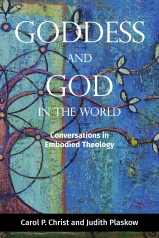
a-serpentine-path-amazon-coverGoddess and God in the World final cover designCarol’s new book written with Judith Plaskow, is  Goddess and God in the World: Conversations in Embodied Theology.

FAR Press recently released A Serpentine Path: Mysteries of the Goddess.

Join Carol  on the life-transforming and mind-blowing Goddess Pilgrimage to Crete. Sign up now for 2018! It could change your life!

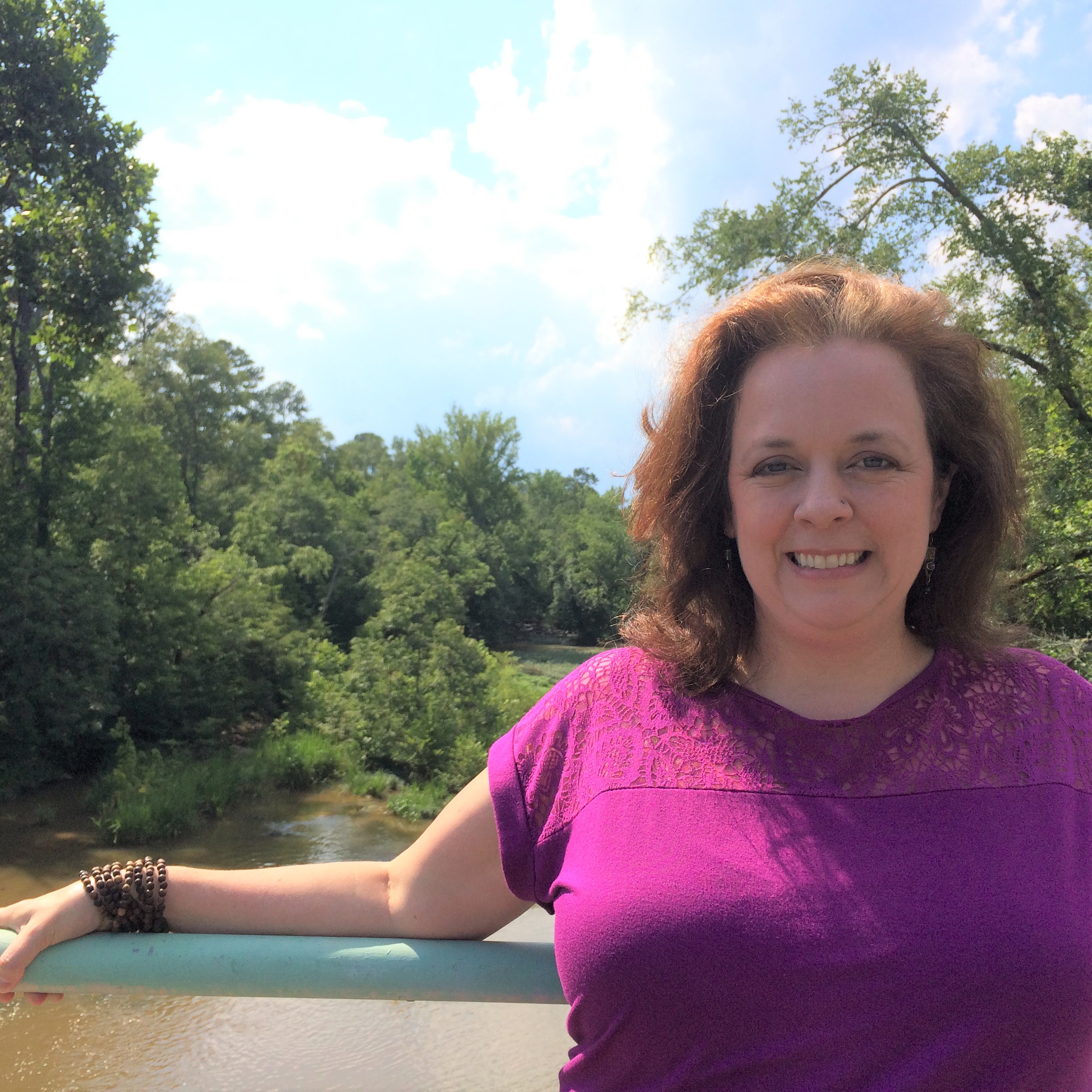
Carol’s photo by Michael Honegger



Politicians Make Dangerous Theologians by Katey Zeh

ben-white-181034

Accounts and allegations of sexual harassment, assault, and abuse perpetrated by mostly straight white men in power have flooded the U.S. news cycle for months. Each new revelation confirms that sexual violence is an epidemic fueled by systems of unchecked power and authority, including patriarchy, white supremacy, and Christian supremacy.

After The Washington Post published the story of Leigh Corfman who recounted the sexual abuse she suffered as a teenager at the hands of Roy Moore, Alabama State Auditor Jim Zeigler came to his defense and argued that this would have no political impact since Moore “never had sexual intercourse with any of these girls.” Continue reading “Politicians Make Dangerous Theologians by Katey Zeh”

#MeToo by Michele Stopera Freyhauf

metoo image 1Once again it is time for another blog post, and once again I find it difficult to write.  The news embroils you in a landslide of negativity and you feel like all common sense and rationality has dissipated – I even made the comment that I am glad I am not young because I fear the state of the world in the future.
With that said, the one thing discussed and needs to be discussed is the #MeToo movement.  First, yes, I have several stories, and yes, I stayed silent for over 25 years.  Did I attempt to resolve the issues with the remedies available? Yes.  Did I suffer backlash? Yes. To the detriment of losing my job?  Yes. Did I consult an attorney? Yes.  What was I told – move on or risk being blacklisted from your field – as a new career professional in her twenties, there was no choice?  Yes.  Did it happen again?  Did I out of fear, just try to stay away from the person but never reported it?  Yes. Continue reading “#MeToo by Michele Stopera Freyhauf”

Please Keep It in Your Pants by Carol P. Christ

Trigger warning: this post describes sexual abuse

Last week while responding to a comment on my blog, I suddenly remembered a series of incidents in which men I did not know exposed themselves to me in public places. The first time occurred at a park around dusk during an outing with a group of girls. I was about 11, I may have wandered away from the group, or I may have been with others. What I remember is seeing a man with his pants down sitting on a park bench, possibly the first time I ever saw an adult man’s penis. I told or we told, but the man was not reported by the adults. Fast forward to the beautiful gardens of the Palace Schoenbrunn in Vienna where I was confronted by a penis while lost in thought when I was 19. I ran, but said nothing. In my 20s at the early showing of movies in New York City men would sit next to me and jerk off into paper bags. Continue reading “Please Keep It in Your Pants by Carol P. Christ”

Forgiveness and Faith by Chris Ash

Christy CroftSome of the most brutal weapons ever used against me were crafted and wielded by my own hands, forged in grief and self-loathing out of the words of others. In my better moments, I recognize that while another’s frustration with me frequently may be justified, any cruel words towards me never are, and are more a reflection of their speakers’ relationship with themselves than of any facts about me.

The parent who criticized me for being a “crybaby” saw in me a freedom of emotion that challenged the stoic denial of their own pain. The friend who criticized my optimism as “naïveté” and ignorance resented their own lack of hope about their future. The loved one who lashed out against my precious family deeply wished to experience that profound sense of belonging and acceptance that they’d not yet allowed themselves to feel.

In my heavier moments, when I’m questioning my choices and feeling the weight of responsibility that comes with adulthood, parenthood, and awareness, those words slither back into my brain, taking hold of my memory and trying to convince me of my own inadequacy and brokenness. Hopeful Me looks at my traits – my sensitivity, optimism, and devotion to loved ones – as strengths to be honed into tools I can use for my good and that of the world. Overwhelmed Me looks as these same traits as evidence of my damage – artifacts left behind by childhood trauma and occasional adulthood bouts of depression and anxiety. Continue reading “Forgiveness and Faith by Chris Ash”

Why Not Me? by Marcia Mount Shoop

My “me too” went out for all to see way before Facebook existed, way before there were hash tags and internet pages for unveiling our secrets to the world. In all the years that have passed since I first spoke publicly and published about my experiences with sexual violence, there has been a steady stream of people (mostly, but not all, women) who have come to me with their #metoo.

Survivors tend to hold lots of secrets—they become heavier with time and the more the secrets stay secret, the more power they have to distort and rupture and isolate. I held mine for many years and I planned on never telling anyone. But, those memories began to disrupt my life more and more—and finally they had to come out. That was the only way I could ever be free, that is the only way I could truly be alive.

Continue reading “Why Not Me? by Marcia Mount Shoop”

“There She Goes Again”: Speaking about Art and Sexual Violence by Carol P. Christ

I was at a dinner party for twelve lovingly prepared by two ex-pat friends, when the subject of Woody Allen’s most recent film came up. I don’t remember which one of them it was, because, as I said at the time, “I vowed never to see a Woody Allen film again as my response to the way he treats women in his films and in his personal life.” I was immediately challenged by–it seemed to me at the time–everyone else at the table.

“But this is not just about keeping an artist’s personal life separate from his work,” I responded, “Don’t you remember the film where Woody Allen was over 40 and having an affair with Mariel Hemingway when she was a teenager? Or the one about the doctor who had his wife murdered got away with it?” At this point a white male academic film critic interrupted to point out that I (who by the way also had a Ph.D.) simply did not understand what makes a film or a filmmaker great. And that was the end of the conversation. Continue reading ““There She Goes Again”: Speaking about Art and Sexual Violence by Carol P. Christ”