It seems like there is a perpetual debate over acquiring land for progress and growth versus the protection of land that has ties to religion, customs, and cultures. The history of America is littered with stories and events that deal with acquisition of land. The sake of growth, expansion, and progress takes precedence in the history of America. Our country’s geography is a road map of acquired land and the pushing aside sacrality.
Category: Activism
Friendships That Save Lives: For Rita M. Gross 1943-2015, by Carol P. Christ
When Rita Gross visited me in Lesbos two summers ago, we spent many long hours discussing our lives and work. Rita and I met at the Conference of Women Theologians at Alverno College in June, 1971 when we were young women. We did not know it then, but our lives would continue to be intertwined through our common interests, first in the Women and Religion section of the American Academy of Religion, and then through our work on Goddesses and feminist theology.
When we met, Rita was a convert to Judaism working on her dissertation on Australian Aboriginal women’s religious lives, and I was a Christian about to begin a dissertation on Elie Wiesel’s stories that would lead me to express my own anger at God. Continue reading “Friendships That Save Lives: For Rita M. Gross 1943-2015, by Carol P. Christ”
Microaggressions and the Grimké Sisters: Between Painting and Writing by Angela Yarber
As an artist and author, my time is often divided between painting and writing, with my interests in religion, gender/sexuality, and justice being the connection between the two. Painting teaches me something unique about writing, at the same time that writing brings clarity to my painting. For me, the two go hand-in-hand. Such is most certainly the case with my painting of the revolutionary Grimké sisters and in the writing of my most recent book, Microaggressions in Ministry: Confronting the Violence of Everyday Church, co-authored with Cody Sanders. Now that the painting, one of my newest Holy Women Icons with a folk feminist twist, has toured parts the East Coast and Microaggressions in Ministry is officially available for purchase, I’ve had an opportunity to reflect on these seemingly disparate projects and mediums, only to realize how mutually informing they truly are.
The Grimké Sisters: Sarah (1792-1873) and Angelina (1805-1879)
Though these revolutionary sisters have always been famous in feminist-preaching-justice-antiracism-vegetarian circles, their name recognition bolstered with the stirring novel by Sue Monk Kidd, The Invention of Wings. The Grimké sisters were Southern American Quakers, writers, public speakers, and the first American women advocates for both abolition and women’s rights. Born to a wealthy plantation owner with hundreds of slaves, who held that women were strictly subordinate to men, these daring daughters experienced the evils of slavery first-hand. In fact, at age five, Sarah witnessed a slave being whipped and tried to escape South Carolina on a steam ship to a “place where there was no slavery.” In violation of the law, she taught several slaves to read during her adolescence.
Thirteen years her junior, Angelina was more of a daughter than sister to Sarah, as Sarah begged her parents to make her Angelina’s godmother. Together, the sisters left the South, became Quakers, committed themselves to pacifism and vegetarianism, and dedicated their lives to abolitionism. They gave countless public lectures—at first in “parlor meetings” for only women, but expanding to include men—decrying the evils of slavery. Not only did they preach abolition based on their interpretations of scripture, but they also held that black and white people are equal and should be treated as such. This latter belief was considered completely radical, even in abolitionist circles. In giving public lectures, they were attacked for their anti-slavery stance. In fact, they were forced to leave the Quaker church because of their views. But their radical abolitionism was not the only reason for critique; they were also condemned for stepping into the male sphere of public speaking. In the midst of such critique, the sisters were forced to grapple with their views of gender, inadvertently becoming feminists and women’s rights activists, as well. After much thought, prayer, and study, Sarah and Angelina also determined that women’s equality was rooted in scripture.
Truth in Storytelling by Elise M. Edwards
“[Shakesp
eare] was an alright writer. I did not always understand him, but some things he said were beautiful and he made some things so clear the way he explained people. But one thing he was wrong about. That ‘To be or not to be?’ is not the first question. ‘What is the truth?’ – that is the question! Then ‘To be or not to be?’ is the second question.”
-from “Feeling for Life “ in Some Soul to Keep by J. California Cooper
This past weekend, I taught a lesson for an adult church group about Christian imagination in the short stories of J. California Cooper. The quote above comes from one of her stories. I was invited to teach a lesson as part of a series on exploring God through literature. It was a delight to participate for several reasons.
Continue reading “Truth in Storytelling by Elise M. Edwards”
‘Imagine’ by Jassy Watson
At my first international retreat on Lesvos, Greece, women gathered with me from around the globe in the village of Molyvos to connect with their authentic creative spirit and bring their Mediterranean Muse to life on canvas. With permission from our wonderful Greek hosts, we built a Cretan style labyrinth in their olive grove, which we walked and danced daily as a metaphor for our journey within accessing our authentic creative voice. We painted, laughed, danced, swam, feasted, cooked, explored, sang, and dreamed. It was such a truly wonderful time.
I wanted to bring this program to Greece in part because of Carol Christ, who has called Lesvos home for over twenty years. In 2012, I participated in her ‘Goddess Pilgrimage to Crete’. To date, it’s one of the most transformational, life-affirming experiences of my life. I harvested so much creative inspiration and motivation from Greek village life, connecting to Goddess in this ancient landscape. I knew it was the perfect setting to gather women for an inspired creative retreat of my own. Carol took the time to come speak with our group, telling us about how she came to call Lesvos home. She spoke beautifully on Sappho, reading us some of her poetry. It was an honour to have her join us.
The simple, resourceful, sustainable way of traditional Greek village life and the generous nature of the Greek people is a humbling experience. On Lesvos, many people in the villages grow much of their own food, eating seasonally. In fact, food grows wild everywhere; wild thyme, oregano, dill, fennel, walnuts, figs, greens and much more. There are few large chain supermarkets. Trucks laden with fresh produce and fish make their way around the villages announcing their wares through a loudspeaker and the crowd gathers to shop.
There are over eleven million olive trees on Lesvos. Even the smallest plots of land often have them. Some villages own their own olive oil co-op. Cheese is usually homemade. Many people keep sheep and goats and the process has remained virtually unchanged since ancient times. Beehives are commonplace for honey and pollination, as too are grapes. Homemade wine is routine in many a household. Usually more than one job is held to make ends meet, many often supplementing their income through small-scale agriculture. One might be a café owner, a sheep farmer, olive grower and a fisherperson. Many traditional trades such as stone masonry and shoemaking are also still well and truly alive.
Life is not necessarily easy, but it is so much more sustainable, resourceful, and rich in tradition; offering a deeper connection to the land, food sources, community and family than we have in the modern Western world. We live in a disposable society based on convenience. It never ceases to amaze me to think that only a few decades ago, most households in Australia had a veggie plot, chickens, a rainwater tank and access to small family-owned corner shops for other necessities. Now that’s a rarity. It’s imperative for the sustainability of the planet to return to a grass-roots, village-based way of life. Greek village life inspires me and reminds me to hold tightly to these values.
“Cocks Not Glocks:” Protesting and the Phallus by Sara Frykenberg
In the past month, Feminism and Religion has posted important pieces regarding the serious debate in the United States over gun control in the wake of mass shootings at our schools, including “Its Okay to Kill Each Other,” by Kate Brunner, and “It’s Mom’s Fault,” by Esther Nelson. Both of these authors give powerful insights into this discussion, pointing to the humanity (or inhumanity) involved, and challenging assumptions/ attitudes underlining this debate and corresponding inaction.
Preparing for motherhood these past nine months, a state of being that both authors also discuss when considering the larger issue of gun control, I have found myself hoping for hope—looking for something positive: progressive action in this sea of violence and inaction. I wanted to share one of my discoveries in light of this national (and international) discussion of gun control, something that gave me hope, a protest that made me smile even when given such great cause to despair.
#CocksNotGlocks is a demonstration organized by former University of Texas (UT) student Jessica Jin, to protest concealed carry legislation that would allow students to carry guns on campus, specifically, “into classrooms, dormitories and other buildings at public and private universities.” Continue reading ““Cocks Not Glocks:” Protesting and the Phallus by Sara Frykenberg”
CROSSING THE SEA OF DEATH by Carol P. Christ
I am washing wet clothes cast off by refugees who crossed the Sea of Death, the new name for the channel only 4 nautical miles wide that separates Turkey and Lesbos. A tiny pink long-sleeved shirt with a boat neck, for a girl, size 3 months. The channel was relatively safe in the spring and summer, even though people were pushed into black rubber dinghies wearing illegal life jackets that would not float. A pair of leggings with feet, grey with pink, orange, brown, white, and blue polka-dots, to be worn over diapers. North winds have made the journey treacherous.
I am not on the front lines, pulling wet children alive and dead from the sea. I think my heart would break. Tiny black stretch pants with nylon sequined bows at the knees, size 2 years. My friends were in the harbor when an overcrowded fishing boat collapsed, throwing 300 people into the sea. Two pairs of children’s underpants, one navy blue, the other turquoise. They pulled babies from the waves and tried to revive them. Small stone-washed blue jeans decorated with rhinestones, for a little girl. They were wet and cold. Their clothing was removed. They were wrapped in blankets. Red knitted leggings with black hearts and white reindeer. Some survived after spitting out the sea’s water. Blue leggings with feet, blue with white and beige stripes, for a boy. The newly donated ambulances do not carry oxygen. Continue reading “CROSSING THE SEA OF DEATH by Carol P. Christ”
MORE WAR=MORE REFUGEES: OBAMA IN AFGHANISTAN by Carol P. Christ
President Barack Obama recently decided NOT to withdraw all troops from Afghanistan before his term of office ends in 2016, as he had earlier promised to do. California Congresswoman Barbara Lee—the only member of Congress to vote against the Afghanistan war 14 years ago in 2001—issued a statement against this open checkbook for an endless war, and introduced measures to stop it from continuing.
In contrast, Democratic front-runners Hillary Clinton (not surprisingly) and Bernie Sanders (to my surprise and disappointment) supported the President. The press has treated the announcement of on-going war as a non-issue. A voice crying in the wilderness, John Nichols of the Nation magazine stated that Barbara Lee has the “clearest vision” on the Afghan War, noting that on this and other national defense issues, “Lee keeps being proved right.” Continue reading “MORE WAR=MORE REFUGEES: OBAMA IN AFGHANISTAN by Carol P. Christ”
Invisible Giants: On Women, Mosques, and Radical Activism by Juliane Hammer
At times, being ignored, erased, and made invisible, is more hurtful than open debate and disagreement. Such silencing and marginalization render the energy, activism, and work of so many people mute and, ultimately, they do not serve the communities and society we are attempting to change. In what follows I insist on uplifting and naming some of the radical Muslim activists and advocates for gender justice I saw ignored in a recent Muslim community event.
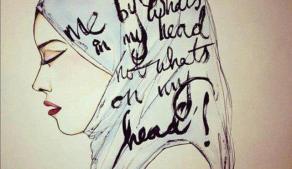
On Labor Day weekend, the Islamic Society of North America (ISNA) met for its annual convention in Chicago. On Friday evening, in a well-attended panel, ISNA unveiled (pun intended) its latest statement and campaign on “the inclusion of women in masjids” (places of worship) and issued a call and invitation to sign the statement and implement its central demands in mosques and community centers across the United States and Canada. Panelists at the launch included Hind Makki, the creator of Side Entrance, a tumblr collecting pictures of the various (good, bad and in between) accommodations for women in mosques, and member of the ISNA task force on the issue; Dr. Ingrid Mattson, professor of Islamic studies and former president of ISNA; Imam Mohamed Magid, also a former president of ISNA; Dr. Sarah Syeed, chair of the ISNA task force and Dr. Ihsan Bagy, another member of the task force. Continue reading “Invisible Giants: On Women, Mosques, and Radical Activism by Juliane Hammer”
Let My People Go! Modern Day Oppression and Exile by Michele Stopera Freyhauf
Where is the humanity? Why are my sisters and brothers continuously subjected to persecution? Who will help and stop this madness?
I am a member of the human race. Collectively I identify with those who need help and are oppressed. I do not identify with the oppressors, for they are like Pharaoh whose heart was hardened. In identifying with this group, I will provide a label of humanity; for the oppressors do not show care or love but evil and sin towards my people – they cannot be part of this group. As my people flee the boarders from the oppressors, the world has opened their gates to let them in. The world has not turned their back on them. However the oppressors continue to mar their homeland, destroy their culture, and attempt to erase their history, their identity, their footprint on this earth. They are not oppressors but are in fact committing cultural genocide. They are committing genocide against humanity, against anyone who does not follow their ideology, their way of life.
Why should we care? Should we care? For this I say yes. My people need protection and help, but like the Israelites in the story of the Exodus, they yearn for their homeland – a place they were forcibly exiled from. They yearn for food and clean water. They yearn for safety and protection. While you may think that my people were not forcibly exiled – they were. They fled for their own lives – for their own people, and the community’s hearts became hardened to their pleas for help.
The Syrian crisis is one that we have allowed to repeat over and over again. According to World Vision, nearly 12 million Syrians have been forced from their homes – half of which are children. At least 7.6 million have been displaced within Syria and more than 4 million have fled the country. Children affected by this crisis are at risk of becoming ill, malnourished, abused, or exploited. Save the Children produced a video that shows what happens to a girl after three years of conflict:
Continue reading “Let My People Go! Modern Day Oppression and Exile by Michele Stopera Freyhauf”