It was 2004 during the first semester in one of my classes for the master’s program when my TA presented a lecture on feminist critiques of atonement and introduced me to the writings of Mary Daly. It was my first introduction to feminism as theory and theology, and my first introduction to Mary Daly the writer.
Mary Daly was the first woman to preach at the Harvard Memorial Chapel in its three-hundred and thirty-six year history, back in 1974. On that occasion and in cahoots with some of her graduate students of the time, Mary Daly took the opportunity to invite people to give physical expression to their exodus from sexist religion by walking out of the church with her that day. Thinking that she would be leading the way out the door, she was surprised to find that people were very much ahead of her. She walked out of that church, out of sexist religion, as one among many who were ready to take their “own place in the sun.” This exodus, the act of leaving behind the silence and alienation from one’s own voice and from one’s own be-ing that is perpetuated by the prevailing patriarchal structures of church, is a choice I commit to make every day as I stay on the boundary of Christianity and church. Continue reading “From Mary Daly to the Emerging Church – An Unlikely Dissertation Trajectory by Xochitl Alvizo”
On Monday, the picture was on my Facebook feed again: The picture of a girl lying face down in the grass under a police officer pressing his knee in her back. It was from the video of an African-American teenager being pinned to the ground by Eric Casebolt, the police officer in McKinney, Texas who was responding to calls about a pool party. When I saw the picture this time, it was in a screenshot with these words below it:
“Funny how a 14 year old bikini-clad black girl being publicly assaulted by an adult male does not accrue mainstream feminist outrage.” – Yohanna
The screenshot was taken of a post to Yohanna’s Twitter account (@maarnayeri). I don’t know her, but she troubled me.
If you haven’t seen the images we’re talking about, you can view the video here with a description of what is concurring or below from YouTube. I was reluctant to watch the video. It seems voyeuristic to view this young woman’s suffering and screaming. And, if I am honest with myself, it also seems useless. Viewing this from my computer screen, I’m in no position to help her. I hear her cries and it make me cry too. But I can’t push him off of her. When other teens tried to come to her defense, Casebolt pulled a gun on them and chased them. I don’t even have the power to get him fired from his position of authority immediately. No, we must have the investigations and inquiries and due process that seems so indiscriminately afforded to the privileged. Casebolt was put on administrative leave on Friday, and on Tuesday June 9, he resigned.
So how should I respond?
I had a conversation with one of my closest friends a couple days ago that provoked me to reflect on what to do when I’m conflicted about how to respond. Her background is in acting and theatre, and now she is a pastor and artistic director of a Christian church and arts initiative who believes in supporting arts, imagination and creativity. In our conversation about discerning the next steps in our lives, she was reminded of a book by Samuel Wells that proposes “theatrical improvisation as a model for Christian ethics.” That reminded me of books I’ve read that talk about musical improvisation or call-and-response as model for living, and some pieces I’ve written about that. Inspired by ethicists and theologians including Emilie M. Townes and H. Richard Niebuhr, I believe that to answer the question of how I should respond, I must first answer ‘What’s going on?” An improvised response or a fitting response is the response to what is already occurring. We must look at the situation critically to respond appropriately.
What’s going on in this video and the controversy surrounding it? I am certainly not an impartial or all-knowing observer, but here’s what I see:
A white man forcibly throws an unarmed, African-American teenager to the ground yelling “On your face!” We can see that she is unarmed because she is wearing a bikini.
The man is a police officer. He is upset that his authority is being challenged. Other officers are present and seem to be asking questions, but the violent one seems out of control and frantic, running around and yelling. He escalates the situation when he throws the girl to the sidewalk, which causes an outcry in the crowd.
As the video went viral, there were many protests and online statements against this violent event, but also statements of support for the officer. And sadly, I agree with Yohanna’s assessment. I may have missed it (and I hope I did), but I didn’t see a broad, mainstream feminist response against this violence.
I’m a feminist. I’m a black feminist. I’m a Christian feminist. I may not be a mainstream feminist (depending on your definition), but I’ll express my outrage anyway. It is sickening to watch his treatment of this teenage girl. This man’s mistreatment of a young black girl’s body is chilling. It is wrong and he should be held accountable for it.
I don’t think outrage is enough. But outrage does express that our moral sensibilities have been awakened and that we recognize that something profoundly wrong has occurred. In the face of comments that say she deserved this treatment, we as feminists must insist on the officer’s wrongdoing. “She had it coming.” “She incited him.” As feminists, we know that these kinds of statements are used in cases of rape and intimate partner violence to explain away violent actions and to shift the guilt from perpetrator to victim. The backlash against feminists and others who oppose these explanations argues that we ignore the victim’s responsibility or agency.
Bloggers and social media users know all too well the horrific statements that often appear in the comments section of online posts, videos, and articles. One comment I saw about the McKinney video says that the girl was “sassing back” at the police and that “if she wants to talk like adult then she’s going to be treated like an adult.” This kind of justification makes my blood boil! Sassing back is speaking up and saying something to an authority figure when you are expected to be silent. While the term sassing back doesn’t exclusively apply to women and girls, it is nonetheless a phrase with gendered connotations. How many boys are called “sassy”? Is it that no one had the right to say anything to this officer running around yelling at black teen boys to sit on the ground, or is it that this black female should have kept quiet? Regardless, throwing an unarmed person to the sidewalk for supposedly saying something disrespectful is not justifiable behavior to adults or children.
I wish I knew more about what’s going on and how to respond to the violence I see in the world. I know these perennial questions subvert easy answers. I only have a partial response. I am responding with outrage and questioning and take this to my feminist community and into my spiritual practice. “What’s going on?” and “How should I respond?” are questions I ask God. I pray for justice. I pray for God’s presence in the outrage and in the investigations, and in the lives of those children who were violated.
Elise M. Edwards, PhD is a Lecturer in Christian Ethics at Baylor University and a graduate of Claremont Graduate University. She is also a registered architect in the State of Florida. Her interdisciplinary work examines issues of civic engagement and how beliefs and commitments are expressed publicly. As a black feminist, she primarily focuses on cultural expressions by, for, and about women and marginalized communities. Follow her on twitter, google+ or academia.edu.
In a repetitive culture of abuse and silence, is it really shocking to find out that an individual who preached such hate and discontent for others actually perpetuated other forms of heinous abuse against others?
In 2013, I wrote an article about the then latest reality TV scandal featuring A&E’s Duck Dynasty’s Phil Robertson and his rampant foot-in-mouth disease that caused him to express, in the pages of GQ, his true distaste for the LGBT community and specifically for the sexual proclivities of gay men.
Now, two years later in another reality TV show, TLC’s ’19 Kids and Counting’, it isn’t star Josh Duggar’s anti-LGBT statements getting him into trouble but rather his sexual assault and molestation of 5 girls, including two of his sisters. However, while the Internet explodes with attacks against Josh Duggar and his Quiverfull background, it is vital to remember that the silence that he and his family inflicted upon his victims since 2006 has not only been ongoing since then but is also being reemphasized today with each keystroke focusing on the assailant rather than the victims. Continue reading “The Religiosity of Silence by John Erickson”
Most days I am not certain that anyone really cares about what happens to girls. As a mother of a soon-9-year-old daughter, this burns me.
Because I also have a 12-year-old son, I often end up watching movies I wouldn’t chose on my own. Last Friday, we went to see The Avengers sequel, and I left feeling angry. There were two sheroes shadowed by testosterone; both were highly sexualized. After all the hype over Joss Whedon and his “strong female characters” I began to wonder if the Sheroe we really need is Goddess.
Saturday night we had a lively discussion after dinner with my son’s best friend. I shared my observations on the movie and asked for feedback. They told me the only girl heroes they could think of had “huge boobs.” I asked them why they thought there was not equal amounts of sheroes in movies like this and whether they could think of any movies that were comparable in budget to the Superman, Batman, and Spiderman movies that continue to come out year after year. Continue reading “Does God have Cleavage? The Avengers and Why the Sheroe We Need is Goddess by Trista Hendren”
At this writing, Ireland successfully passed the same-sex marriage referendum which reads, “Marriage may be contracted in accordance with law by two persons without distinction as to their sex.” It has been 22 years since homosexual acts were decriminalized in Ireland. Even more astounding is the rapid two-year process from inception to constitutional law for same-sex marriage in Ireland. This coming from a country where 84% identify as Roman Catholic but less than one-third attend weekly Mass.
While the US Catholic Bishops are vocal about their opposition to same-sex marriage, the Irish magisterium’s strategy, in this case, was less pronounced. Which is not to say there was no movement by the Irish hierarchy to oppose same-sex marriage. In a pastoral letter to be read at Sunday Mass, Bishop Denis Brennan urged a no-vote on the same-sex referendum saying it would forever change how the institution of marriage is understood. A number of those in attendance walked out during the reading in protest of the official church teaching. Archbishop Diarmuid Martin took a more pragmatic stance on the outcome. With the success of the referendum, Martin stated the church is in need of a “reality check” in response to what he identifies as a “social revolution” at least in Catholic Ireland. Argues Martin: Continue reading “Ireland’s Same-Sex Referendum & The Necessity for Reconstructing Sexual Ethics in the Catholic Church by Cynthia Garrity-Bond”
Recently, Valentina Khan touched many of us when she wrote a blog entitled The Powers of Evil are Well at Work and I’ve Lost My Spirit. Valentina spoke of the weariness and despair many of us feel when we think about the problems the world is facing today. She said that “right now it just seems like my voice of peace is lost to the voice of fanatics who get more media attention than I ever will.”
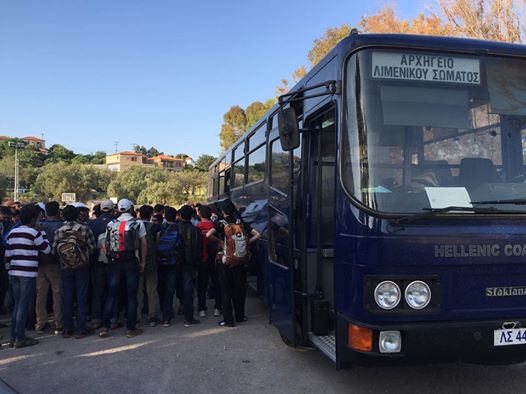
Last week I met a young man who has recently begun to try to save a large wetland pool on the island of Lesbos. He told me he feels frustrated that “no one else” is doing anything to save the important and fragile ecosystem of our island. I explained to him that there are many of us who have been working to save the wetlands of Lesbos for fifteen years, but with few or no results.
In January 2015, I presented at the LGBT Faith Leaders of African Descent‘s third annual forum in Harlem, NYC. As an ally, I was honored to be invited. The theme of the forum was “Ain’t No Hurt Like Church Hurt.” I spoke about becoming an ally as wekk as about sexuality in Islam and among Muslims. However, what I learned while listening to other speakers and audience members will stay with me for life.
I have Christian family members who are gay and have dealt with church hurt because of it. Yet, it is not something I ever witnessed up close or spoke in depth about with them. Being Muslim, heterosexual and cisgender at the conference made me feel like an outsider yet everyone treated me as an insider. I felt as if I were witnessing pain I had no business seeing yet I felt obliged to witness and testify to it. So many people stood up to talk about their church hurt. There were so many tears of great pain and rejection shed during the conference. Everyone there was a great example of resilience. Throughout the day, I just kept thinking how blessed I was to be in the company of such wonderful, embattled, yet humble and loving people. Continue reading “LGBT Faith Leaders of African Descent by Jameelah X. Medina”
Last week I was touring the capital of my country, Chile, for conferences and workshops on Islam, Gender and Human Rights. One of the issues I address there was the tyranny of stereotypes Muslim women carry with us and the difficulties we women in general face in order to embrace our spirituality, and to accept ourselves and each other just as we are. It was a nice weekend and a great joy to meet people and make new friends. I learned a lot from colleagues and attendees. One of the happiest moments in my life is talking about Islam outside of religious spaces with non-Muslims – especially with women.
After the event on Queer Spiritualities, I was approached by a young woman who told me:
I attended one of your lectures on women in Islam last year. I came from my town (two hours away) just to listen to you today and thank you. Last year, I left your conference with a lot of motivation for finding my spiritual path, my head free of prejudices and my heart full of joy. I did what you said: To read by myself and reflect in my heart. Today I came to tell you that two weeks ago I CONVERTED TO ISLAM. I AM NOW A MUSLIM. Thank you for introducing Islam in such a beautiful way, thank you for your words that gave me confidence, thank you for your passion and honesty. Thank you. Blessed you always be.
Something similar happened the next day, at the end of the workshop on ¨Muslim Women and Stereotypes.¨ Several of the female attendees approached me to ask: ¨Where can I learn more? Can you recommend books on Islam?¨ And, ¨Is there a Mosque I can visit? – I see you so happy, so free, your smile comes from the heart, I want this joy for me too.¨ ¨I am in my spiritual search, that’s why I came…¨ Continue reading “Islam Is Out There, Among Women by Vanessa Rivera de la Fuente”
It has been over a year now that I haven’t been actively a part of my interfaith community. I find that especially odd since I graduated last May from the Claremont School of Theology with a Masters in Religious Leadership. I had hopes that I would be empowered by new education to go out and do more for my community, be invited to be a guest speaker at local houses of worship, or sit on panels; all the things I used to do more frequently and now have all stopped.
I am mostly to blame. Although my personal life has definitely changed with the birth of my son, two new businesses for my husband and me, and the ongoing pressure I put on myself to study for the bar exam any free moment I get (I really don’t have any leisure time to study, but thinking about it takes a lot of energy!), and now expecting my second child, I stopped attending my monthly meetings– whether it be with the Interfaith Youth Council of Orange County, the Muslim-Jewish forum of Los Angeles, or my own beloved organization “I Am Jerusalem.”
Carol Adams in her article “Ecofeminism and the Eating of Animals,” argues that ecofeminists should be vegetarians, since ecofeminism is, among other things, action-based and “one’s actions reveal one’s beliefs,” (129). According to ecofeminism, the patriarchal domination of animals and nature is linked to the oppression of women. For her and many ecofeminists, the survival of our planet rests on two foundations: first, fixing the conditions of women and other oppressed groups and, second, envisioning differently our relationship to the natural world. In other words, a better arrangement of human relationships requires better human relationships with the environment. Vegetarianism and veganism are two ways in which ecofeminists opt out of the patriarchal system of domination and exploitation and help create a better world.
But, does one really? Does adopting a vegetarian or vegan lifestyle really have such an impact on the world? Yes and no. Yes, because it has been shown that raising animals to eat uses exorbitant amounts of fuel, water and land, not to mention, the larger environmental impact of farm run-off in the forms of disease-carrying manure, valuable topsoil and harmful pesticides. Yes, because animals are often inhumanely treated, housed in horrible conditions, genetically and/or hormonally-modified and cruelly killed. Continue reading “Do You Eat Animals? Ecofeminism and Our Food System by Ivy Helman”


 It was 2004 during the first semester in one of my classes for the master’s program when my TA presented a lecture on feminist critiques of atonement and introduced me to the writings of Mary Daly. It was my first introduction to feminism as theory and theology, and my first introduction to Mary Daly the writer.
 In 2013, I wrote an
  Most days I am not certain that anyone really cares about what happens to girls. As a mother of a soon-9-year-old daughter, this burns me.
 At this writing, Ireland successfully passed the same-sex marriage referendum which reads, “Marriage may be contracted in accordance with law by two persons without distinction as to their sex.” It has been 22 years since homosexual acts were decriminalized in Ireland. Even more astounding is the rapid two-year process from inception to constitutional law for same-sex marriage in Ireland. This coming from a country where 84% identify as Roman Catholic but less than one-third attend weekly Mass.

 It has been over a year now that I haven’t been actively a part of my interfaith community. I find that especially odd since I graduated last May from the Claremont School of Theology with a Masters in Religious Leadership. I had hopes that I would be empowered by new education to go out and do more for my community, be invited to be a guest speaker at local houses of worship, or sit on panels; all the things I used to do more frequently and now have all stopped.
 Feminism and Religion