From the Archives: I Believe Anita! by Marie Cartier

This was originally posted on April 7, 2014

During the past week I attended a Los Angeles premiere of a new documentary Anita: Speaking Truth to Power (Dir: Freida Lee Mock USA, 2013). The screening was sold out and I had great seats saved for me– sitting with a friend who works at Samuel Goldwyn, the distributor of this fine film.

In 1991, Anita Hill provided testimony she hoped would serve to dissemble the nomination of Clarence Thomas as a Supreme Court justice. Although the vote would end up being close (52-48) Hill’s testimony did not serve to dissuade the decision — Clarence Thomas’ nomination was confirmed and he was appointed to a life term on the Supreme Court four days after Hill’s testimony concluded. Here is an outline of the debate.

anita-580x857

I remember watching the hearings in 1991 at a friend’s house in Sacramento, CA where I was couch-surfing with another friend while we were in Sacramento from Los Angeles to protest for gay rights—to speak our truth to power. I remember being amazed that she was doing this—and that it was being televised. We were glued to the set before we went off to the protest we were attending.

Continue reading “From the Archives: I Believe Anita! by Marie Cartier”

From the Archives: Abortion–the topic that won’t go away–or even morph

This was originally posted on March 12, 2014. It was Esther’s first FAR post.

Recently, I got involved in a conversation about abortion.  It happened on Facebook when a relative posted that her heart hurts when she considers her “sweet baby girl” and how the law (Roe v. Wade, 1973) in the United States gave her the choice as to “whether [or not] I would have her killed.”  She’s sincere.  Many of her friends “liked” her post and, with few exceptions, commented in agreement.  I was one of the exceptions.

March celebrates Women’s History Month–a month to remember the accomplishments of our foremothers, noting their work helping to secure for us (their progeny) certain rights, most notably the right to vote (Elizabeth Cady Stanton, 1815-1902) and reproductive rights (Margaret Sanger, 1879-1966).  Support for abortion nowadays almost always falls under the rubric of “women’s reproductive rights.”  So when we hear, “It’s my body and I’ll decide what I’ll do with my own body,” the speaker is giving voice to what many consider to be a fundamental right–the right to be autonomous and exercise free agency over one’s own person.

Continue reading “From the Archives: Abortion–the topic that won’t go away–or even morph”

From the Archives: Mindful of the Bond We Share in these Trying Times by Vibha Shetiya

This was originally posted on February 14, 2017

I’m sitting in my parents’ balcony in Pune, India, on a quiet morning. Well, this being a bustling Indian city of six million, it can’t really be quiet. As I sit with cup of tea in hand, I try and meditate – I’ve been practicing mindful meditation of late, and so, rather than block out the noises, I embrace the various sounds that make up this Monday morning.

I count the variety – sparrows gently chirping away while a noisy crow tries to outdo them in a contest he easily wins, a street hawker starting his day (and ours) on a rather cacophonous note, the sweeper from the neighbouring complex pouring his heart and soul into cleaning the grounds that will need re-sweeping in an hour or two, the put-putting rickshaw carrying squawking kids to the school down the alley, chirping chipmonks that temporarily develop wings as they fly from branch to branch in a cheerful chase, the honking car warning of its over-the-limit speed (reaffirming the fact there are two things we Indians especially love: honking for no reason, and breaking traffic rules), my mother’s footsteps as she peers out to see what I’m doing by myself…nine in all.

Continue reading “From the Archives: Mindful of the Bond We Share in these Trying Times by Vibha Shetiya”

From the Archives: Resistance and the Religious Left by Gina Messina

This was originally posted on June 21, 2017, you can read the original comments here.

For the last forty years, the Christian Right has influenced the conversation in American politics. Where is the Religious Left and how are they impacting our nation’s moral agenda? It is an important question, and now, more than ever, we need a progressive religious viewpoint in the conversation.

We are living in an era where the morality of our society is at stake and the soul of our nation is being bought by billionaires who have an insatiable appetite for money, power, and control. With an alt-right movement growing and nationalism becoming the Trump Administration theme, we are in danger of losing our humanity.

It is time for a serious response to the Christian Right. Why must we associate Christianity with bigoted policies? This ongoing movement has dominated our nation’s political agenda and led to the idea that you are either religious and conservative or liberal and atheist. Don’t get me wrong, every person’s belief system is their own and should not be judged.  However, studies well demonstrate that many Americans are walking away from religion all together because of the Christian Right’s political influence. It is time that Christianity be recognized as more than a conservative movement seeking to highjack policies and victimize the disenfranchised.

The true message of Jesus is founded on love, inclusion, liberation, and social justice. No Christian Right position resembles this. In fact, they are in direct conflict. Rather than focusing on condemning those who are deemed “the other,” why not focus on caring for the poor, welcoming the stranger, and healing the sick?

Likewise, conservative Christian stances have been historically anti-feminist and anti-woman. Those clinging to such beliefs would rather elect a president that has openly discussed grabbing women by the “pussy” than risk giving up privilege.

As the Women’s March has challenged Trump and his policies on gender, an anti-feminist backlash has strengthened with Evangelical women arguing that feminists have created their own oppression by whining rather than taking responsibilities for themselves.

The Christian Right would be surprised to find out that Jesus’ politics and teachings mirror the values of feminism – calling for an end to all oppression and creating a society that is just and fair for every person regardless of gender, race, ethnicity, age, religion, etc. Jesus welcomed women to his community and women played a critical role in his ministry.  Jesus not only had women disciplines; but also selected women as prominent recipients of his revelation. Most notably, Jesus chose women as the first witnesses of his resurrection. And while the apostles did not believe Mary Magdalene’s testimony, nevertheless, she persisted.

It is time not only for a resistance but a religious resistance where those who try to abide by the message of Jesus stand up to the Christian Right.  I acknowledge that no one is a perfect Christian; we all fail. But what is important is that we recognize the message of the Gospels and keep trying. Thus, we must reject the oppressive regime of the Trump Administration and the bigoted claims of the Christian Right. We must reclaim the Christian faith in its true form and live out its message the way it was intended.

We are living in a difficult time, but let us claim this moment to energize and unify the Religious Left. In the name of the Lord, let us challenge those who manipulate the Christian message as means to claim power and privilege while oppressing everyone else. It is time to make humanity great again.

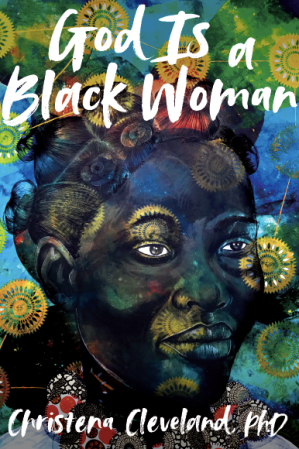
GOD IS A BLACK WOMAN by Christena Cleveland, PhD – Book Review by Carolyn Lee Boyd

God Is a Black Woman by Christena Cleveland PhD

FAR recently published an excerpt and lively discussion of Christena Cleveland, PhD’s new book God Is a Black Woman. We thought the FAR community might enjoy learning more about this memoir of her moving journey from the terror and control of “whitemalegod” to the unconditional love and healing of the Sacred Black Feminine. Her recounting of her 400-mile walking pilgrimage to see eighteen French Black Madonnas is especially fascinating and poignant.

Christena is a social psychologist, former professor at Duke University’s Divinity School, public theologian, researcher, author, and speaker. She is “the founder and director of the Center for Justice + Renewal as well as its sister organization, Sacred Folk, which creates resources to stimulate people’s spiritual imaginations and support their journeys toward liberation.” She blends all these areas of expertise to offer theological, sociological, psychological, and historical insights into her stories of her spiritual quest. The book offered me many “aha!” moments about my own beliefs and assumptions regarding spirituality, feminism, and the ubiquitous effects of racism.

Continue reading “GOD IS A BLACK WOMAN by Christena Cleveland, PhD – Book Review by Carolyn Lee Boyd”

From the Archives: Rape is Not a Political Platform – Rape is a Violent Crime! By Michele Stopera Freyhauf

Moderator’s note: This marvelous FAR site has been running for 10 years and has had more than 3,600 posts in that time. There are so many treasures that have been posted in this decade. They tend to get lost in the archives. We are beginning this column so that we can revisit some of these gems. Today’s blogpost was originally posted August 23, 2012. You can visit it here to see the original comments.

Just when you think you have heard it all, here we go again – another politician with “open mouth-insert foot” syndrome.  Discussing his zero-tolerance policy for abortion, Missouri Representative Todd Akin made the following statement last Sunday about pregnancies that result from rape:

“from what I understand from doctors, that’s really rare.  If it’s a legitimate rape, the female body has ways to try to shut that whole thing down.  But let’s assume that maybe that didn’t work or something.  I think there should be some punishment, but the punishment ought to be on the rapist and not attacking the child.”

Continue reading “From the Archives: Rape is Not a Political Platform – Rape is a Violent Crime! By Michele Stopera Freyhauf”

On Ukraine, War and Goddess’s Protection by Judith Shaw

We have all been horrified by the Russian invasion of Ukraine as we witness the brutal bombardment of not only military sites but also of civilians, neighborhoods, hospitals, churches, historical sites and nuclear power plants. It has been called the first TicToc war as these images fill up our computers and cellphones, leaving peace lovers challenged to maintain their belief in peaceful resolutions to conflict

Continue reading “On Ukraine, War and Goddess’s Protection by Judith Shaw”

From the Archives: The Feminist Toolbox by Marie Cartier

This blog was originally posted on April 4, 2012. There were a significant number of comments which you can read here.

Photo of Marie Cartier by Lenn Keller

This spring I am teaching “Feminist Ethics” at California State University Northridge. For the students’ midterm and final we are doing an innovative project that we want to share with the “Feminism and Religion” blogging community. My students have been asked to find a problem in the public world, or their private world, that they wish to interact with and provide a solution for. The solution can solve the problem or a piece of the problem. They must deconstruct the problem and then construct the solution for the midterm. For their final they actually must *do* the solution.

In creating their solution, they must address and use the tools in what I call “the Feminist Ethical Toolbox.” These tools are ones we have been extracting from the class readings (so far we have read the anthologies Feminist Theological Ethics, and Feminist Ethics and Social Policy, and Carol Gilligan’s philosophical treatise on the patriarchy, In The Deepening Darkness, and the students have been using the toolbox and its accumulated (and accumulating) tools throughout the class, in their own lives, and interacting with the toolbox in the reading response journals in terms of looking at wider world issues.

Continue reading “From the Archives: The Feminist Toolbox by Marie Cartier”

From the Archives: Genderqueering by John Erickson

Moderator’s note: Today’s blogpost was originally posted March 24, 2015. You can visit the original post here to see the comments.

This post is a response to a recent blog entry titled “Who is Gender Queer?” on this site from Carol Christ. It was posted yesterday. I want to thank my friend, advocate, and upcoming scholar Martha Ovadia for reasons only she knows!  Stay brave, speak up, be heard!

Leelah Alcorn, Ash Haffner, Aniya Knee Parker, Yaz’min Shancez

It is terrifying to know that something is wrong but not be able to speak truth to power.

Continue reading “From the Archives: Genderqueering by John Erickson”

From the Archives: Lessons from Candide by Barbara Ardinger

Moderator’s note: This marvelous FAR site has been running for 10 years and has had more than 3,600 posts in that time. There are so many treasures that have been posted in this decade that they tend to get lost in the archives. We have created this column so that we can all revisit some of these gems. Today’s blogpost was originally posted August 5, 2018. You can visit the original post here to see the comments.

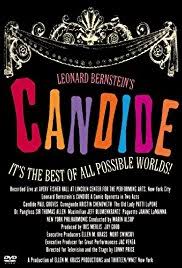
Candide, ou l’Optimisme (in English, Candide, or Optimism) is a satirical, picaresque novel published in 1759 by François-Marie Arouet, better known as Voltaire, who was possibly the smartest author of the Age of Enlightenment…but he annoyed so many courtiers and public officials that he was forever traveling around Europe to get away from their threats of arrest and bodily harm. A picaresque novel is an adventure novel with a clever, tricky hero who somehow survives and makes us like him. Voltaire wrote his novel primarily to criticize the optimism of the German writer Gottfried Wilhelm Leibniz, who said that because God is always benevolent, everything that happens is always for the best. This presumably includes the bloody Seven Years War (Protestant vs. Catholic, fought mostly in Germany and France) and the Lisbon earthquake of 1755, which occurs both in Lisbon and in the novel. Even though Voltaire was accused of blasphemy and heresy, among his other sins and crimes, Candide was enormously popular throughout Europe, a popularity that continues to this day.

Continue reading “From the Archives: Lessons from Candide by Barbara Ardinger”