I’m sitting in my parents’ balcony in Pune, India, on a quiet morning. Well, this being a bustling Indian city of six million, it can’t really be quiet. As I sit with cup of tea in hand, I try and meditate – I’ve been practicing mindful meditation of late, and so, rather than block out the noises, I embrace the various sounds that make up this Monday morning.
I count the variety – sparrows gently chirping away while a noisy crow tries to outdo them in a contest he easily wins, a street hawker starting his day (and ours) on a rather cacophonous note, the sweeper from the neighbouring complex pouring his heart and soul into cleaning the grounds that will need re-sweeping in an hour or two, the put-putting rickshaw carrying squawking kids to the school down the alley, chirping chipmonks that temporarily develop wings as they fly from branch to branch in a cheerful chase, the honking car warning of its over-the-limit speed (reaffirming the fact there are two things we Indians especially love: honking for no reason, and breaking traffic rules), my mother’s footsteps as she peers out to see what I’m doing by myself…nine in all.
This was originally posted on June 21, 2017, you can read the original comments here.
For the last forty years, the Christian Right has influenced the conversation in American politics. Where is the Religious Left and how are they impacting our nation’s moral agenda? It is an important question, and now, more than ever, we need a progressive religious viewpoint in the conversation.
We are living in an era where the morality of our society is at stake and the soul of our nation is being bought by billionaires who have an insatiable appetite for money, power, and control. With an alt-right movement growing and nationalism becoming the Trump Administration theme, we are in danger of losing our humanity.
It is time for a serious response to the Christian Right. Why must we associate Christianity with bigoted policies? This ongoing movement has dominated our nation’s political agenda and led to the idea that you are either religious and conservative or liberal and atheist. Don’t get me wrong, every person’s belief system is their own and should not be judged. However, studies well demonstrate that many Americans are walking away from religion all together because of the Christian Right’s political influence. It is time that Christianity be recognized as more than a conservative movement seeking to highjack policies and victimize the disenfranchised.
The true message of Jesus is founded on love, inclusion, liberation, and social justice. No Christian Right position resembles this. In fact, they are in direct conflict. Rather than focusing on condemning those who are deemed “the other,” why not focus on caring for the poor, welcoming the stranger, and healing the sick?
Likewise, conservative Christian stances have been historically anti-feminist and anti-woman. Those clinging to such beliefs would rather elect a president that has openly discussed grabbing women by the “pussy” than risk giving up privilege.
As the Women’s March has challenged Trump and his policies on gender, an anti-feminist backlash has strengthened with Evangelical women arguing that feminists have created their own oppression by whining rather than taking responsibilities for themselves.
The Christian Right would be surprised to find out that Jesus’ politics and teachings mirror the values of feminism – calling for an end to all oppression and creating a society that is just and fair for every person regardless of gender, race, ethnicity, age, religion, etc. Jesus welcomed women to his community and women played a critical role in his ministry. Jesus not only had women disciplines; but also selected women as prominent recipients of his revelation. Most notably, Jesus chose women as the first witnesses of his resurrection. And while the apostles did not believe Mary Magdalene’s testimony, nevertheless, she persisted.
It is time not only for a resistance but a religious resistance where those who try to abide by the message of Jesus stand up to the Christian Right. I acknowledge that no one is a perfect Christian; we all fail. But what is important is that we recognize the message of the Gospels and keep trying. Thus, we must reject the oppressive regime of the Trump Administration and the bigoted claims of the Christian Right. We must reclaim the Christian faith in its true form and live out its message the way it was intended.
We are living in a difficult time, but let us claim this moment to energize and unify the Religious Left. In the name of the Lord, let us challenge those who manipulate the Christian message as means to claim power and privilege while oppressing everyone else. It is time to make humanity great again.

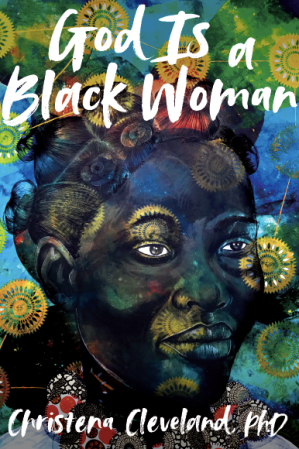
FAR recently published an excerpt and lively discussion of Christena Cleveland, PhD’s new book God Is a Black Woman. We thought the FAR community might enjoy learning more about this memoir of her moving journey from the terror and control of “whitemalegod” to the unconditional love and healing of the Sacred Black Feminine. Her recounting of her 400-mile walking pilgrimage to see eighteen French Black Madonnas is especially fascinating and poignant.
Christena is a social psychologist, former professor at Duke University’s Divinity School, public theologian, researcher, author, and speaker. She is “the founder and director of the Center for Justice + Renewal as well as its sister organization, Sacred Folk, which creates resources to stimulate people’s spiritual imaginations and support their journeys toward liberation.” She blends all these areas of expertise to offer theological, sociological, psychological, and historical insights into her stories of her spiritual quest. The book offered me many “aha!” moments about my own beliefs and assumptions regarding spirituality, feminism, and the ubiquitous effects of racism.
Moderator’s note: This marvelous FAR site has been running for 10 years and has had more than 3,600 posts in that time. There are so many treasures that have been posted in this decade. They tend to get lost in the archives. We are beginning this column so that we can revisit some of these gems. Today’s blogpost was originally posted August 23, 2012. You can visit it here to see the original comments.
Just when you think you have heard it all, here we go again – another politician with “open mouth-insert foot” syndrome. Discussing his zero-tolerance policy for abortion, Missouri Representative Todd Akin made the following statement last Sunday about pregnancies that result from rape:
“from what I understand from doctors, that’s really rare. If it’s a legitimate rape, the female body has ways to try to shut that whole thing down. But let’s assume that maybe that didn’t work or something. I think there should be some punishment, but the punishment ought to be on the rapist and not attacking the child.”
We have all been horrified by the Russian invasion of Ukraine as we witness the brutal bombardment of not only military sites but also of civilians, neighborhoods, hospitals, churches, historical sites and nuclear power plants. It has been called the first TicToc war as these images fill up our computers and cellphones, leaving peace lovers challenged to maintain their belief in peaceful resolutions to conflict
This blog was originally posted on April 4, 2012. There were a significant number of comments which you can read here.
Photo of Marie Cartier by Lenn Keller
This spring I am teaching “Feminist Ethics” at California State University Northridge. For the students’ midterm and final we are doing an innovative project that we want to share with the “Feminism and Religion” blogging community. My students have been asked to find a problem in the public world, or their private world, that they wish to interact with and provide a solution for. The solution can solve the problem or a piece of the problem. They must deconstruct the problem and then construct the solution for the midterm. For their final they actually must *do* the solution.
In creating their solution, they must address and use the tools in what I call “the Feminist Ethical Toolbox.” These tools are ones we have been extracting from the class readings (so far we have read the anthologies Feminist Theological Ethics, and Feminist Ethics and Social Policy, and Carol Gilligan’s philosophical treatise on the patriarchy, In The Deepening Darkness, and the students have been using the toolbox and its accumulated (and accumulating) tools throughout the class, in their own lives, and interacting with the toolbox in the reading response journals in terms of looking at wider world issues.
Moderator’s note: Today’s blogpost was originally posted March 24, 2015. You can visit the original post here to see the comments.
This post is a response to a recent blog entry titled “Who is Gender Queer?” on this site from Carol Christ. It was posted yesterday. I want to thank my friend, advocate, and upcoming scholar Martha Ovadia for reasons only she knows! Stay brave, speak up, be heard!
Moderator’s note: This marvelous FAR site has been running for 10 years and has had more than 3,600 posts in that time. There are so many treasures that have been posted in this decade that they tend to get lost in the archives. We have created this column so that we can all revisit some of these gems. Today’s blogpost was originally posted August 5, 2018. You can visit the original post here to see the comments.
Candide, ou l’Optimisme (in English, Candide, or Optimism) is a satirical, picaresque novel published in 1759 by François-Marie Arouet, better known as Voltaire, who was possibly the smartest author of the Age of Enlightenment…but he annoyed so many courtiers and public officials that he was forever traveling around Europe to get away from their threats of arrest and bodily harm. A picaresque novel is an adventure novel with a clever, tricky hero who somehow survives and makes us like him. Voltaire wrote his novel primarily to criticize the optimism of the German writer Gottfried Wilhelm Leibniz, who said that because God is always benevolent, everything that happens is always for the best. This presumably includes the bloody Seven Years War (Protestant vs. Catholic, fought mostly in Germany and France) and the Lisbon earthquake of 1755, which occurs both in Lisbon and in the novel. Even though Voltaire was accused of blasphemy and heresy, among his other sins and crimes, Candide was enormously popular throughout Europe, a popularity that continues to this day.
Moderator’s note: This marvelous FAR site has been running for 10 years and has had more than 3,600 posts in that time. There are so many treasures that have been posted in this decade that they tend to get lost in the archives. We have created this column so that we can all revisit some of these gems. Today’s blogpost was originally posted July 1, 2018. You can visit the original post here to see the comments.
I bet almost no one knows this secret: the United States is being watched over by two goddesses! One of them stands on top of the Capitol dome in Washington, D.C. The other stands on an island in New York harbor.
The goddess standing above our congressional building is named Libertas, or Freedom. She’s a Roman civic goddess whose sisters are Concordia and Pax. Although the Romans hardly ever experienced freedom, civic harmony, or peace, they always kept their eyes on the possibilities. Libertas was sometimes merged with Jupiter, sometimes with Feronia, who was originally an Etruscan or Sabine goddess of agriculture or fire. In Rome, Feronia became the goddess of freed slaves. Libertas is shown on Roman coins as a matron in flowing dress and wearing either a wreath of laurel leaves or a tall pilleus, which is called a “liberty cap” and looks like a witch hat without the brim. And there’s also a bird—is it a raven?? She holds either a liberty pole (vindicta) or a spear, and in some paintings of her (she was a popular subject in the 19th century) there is a cat at her feet.
Because the late 18th century is sometimes referred to as the Augustan Age (for classicism in architecture, literature, and art and named after the first Roman emperor, Caesar Augustus), the Roman Libertas became Lady Liberty during the American Revolution. To celebrate the repeal of the Stamp Act in 1766, Paul Revere created an obelisk with an image of Lady Liberty on it, and a short time later, Tom Paine addressed her in his poem, “The Liberty Tree.” An enormous bronze statue of Lady Liberty was commissioned in 1855 for the top of the Capitol building, and she was hoisted up there in 1863, where she stands, hardly visible, to this day.
Here’s my idea. This FAR community has lots of power. We—and at least two thirds of the U.S. population—are very unhappy with the antics of the Lyin’ King and his court…excuse me, the executive and legislative branches of our national government. So let’s visualize Libertas coming to life. Watch her stomp her heavy bronze feet so hard she breaks a hole in the top of the dome. Watch her fly down into the main lobby of the Capitol. Now she turns in one direction and stalks into the Senate. “Gentlemen and Ladies,” she begins, “you were sent here to do a job. You’re not doing your jobs. Work together! Learn to compromise. Stop talking so much. Get to work!” And then she marches into the House. “Why are you here?” she asks. “And why are you here only three or four days a week, and why aren’t you working for the benefit of all the citizens of the United States?” I suspect that Libertas, who is 19 feet 6 inches tall and weighs approximately 15,000 pounds, could indeed put a scare into Congress, not to mention all the lobbyists. Remember, she also carries that spear. And she no doubt knows how to use it.
Our second national goddess? “Liberty Enlightening the World,” whom we call the Statue of Liberty, was a gift from France to the U.S. circa 1886 on the occasion of our centennial. Designed by Frederic-Auguste Bartoldi and Alexandre Eiffel (who also built a famous tower in Paris), Lady Liberty holds a tabula ansata (a tablet evoking the law) in one arm and with her other hand raises a torch, a common symbol of truth and purification through illumination. She wears a crown of solar rays similar to the crown worn by the Colossus of Rhodes, one of the seven wonders of the ancient world.
For almost a century and a half, Liberty has welcomed immigrants to our Atlantic shore. Those immigrants were the grandparents and great grandparents of nearly all of us. Now let’s visualize Liberty taking action. Goddesses can perform magic; let’s visualize Liberty multiplying herself into 10,000 Liberties, and then let them travel to Texas, New Mexico, Arizona, and California and—you guessed it—let them stand facing south. Let these 10,000 goddesses with torches of purification replace the Xenophobe-in-Chief’s wall/fence/border army. Let’s ask Liberty to welcome people into the U.S. Because she’s smart (and the flames of that torch can reveal a lot) and there are indeed drug smugglers traveling in addition to men, women, and children who are coming for sanctuary or safety or work, let her use her torch to reveal the small proportion of criminals trying to sneak in. And let her welcome and protect everyone else and keep families together. (Maybe she could send all the ICE agents off hunting coyotes, who are no doubt smarter and more humane than they are.)
Here is the full text of “The New Colossus” the poem by Emma Lazarus that Lady Liberty proclaims to the world. Maybe our senators and representatives should read it—for the first time, I bet. They should pay attention to what it says and obey the words and principles of this goddess.
Not like the brazen giant of Greek fame, With conquering limbs astride from land to land; Here at our sea-washed, sunset gates shall stand A mighty woman with a torch, whose flame Is the imprisoned lightning, and her name Mother of Exiles. From her beacon-hand Glows world-wide welcome; her mild eyes command The air-bridged harbor that twin cities frame. “Keep, ancient lands, your storied pomp!” cries she With silent lips. “Give me your tired, your poor, Your huddled masses yearning to breathe free, The wretched refuse of your teeming shore. Send these, the homeless, tempest-tost to me, I lift my lamp beside the golden door!”
Let us visualize both of these American goddesses doing their work and protecting the hard-won rights of everyone who lives in the United States.
BIO:BIO:Barbara Ardinger, Ph.D. (barbaraardinger.com), is the author of Secret Lives, a novel about crones and other magical folks, Pagan Every Day, a unique daybook of daily meditations, and other books. She really enjoys writing her monthly blogs for FAR. Her work has also been published in devotionals to Isis, Athena, and Brigid. Barbara’s day job is freelance editing for people who have good ideas but don’t want to embarrass themselves in print. To date, she has edited more than 400 books, both fiction and nonfiction, on a wide range of topics. She lives in Long Beach, California, with her rescued calico cat, Schroedinger.
Soon it will be Wives’ Feast Day, a holiday celebrated in Ireland and northern England on February 2, the same day as Imbolc, Candlemas, and St. Bridget’s Feast Day. On this holiday, women (in Old English, “wife” meant simply woman) would gather together and enjoy making and sharing delicious foods with each other, honoring themselves and their work providing nourishment and other aspects of making a “home.”
When you think about it, this delightful tradition is quite remarkable. Feast days are generally associated with saints, so, in a way, this feast day recognizes the sacredness of all women and also their daily labor. This echoes to me Old European cultures that connected women’s baking and weaving to divinity by placing workshops in goddess temples and associating goddesses with these tasks. Today, women work in many jobs not directly associated with food production, but still labor to make our communities and planet better “homes” in many other ways.