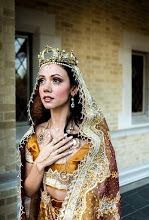
Continue reading “Queen Esther from The Goddess Project: Made in Her Image by Colette Numajiri”

Continue reading “Queen Esther from The Goddess Project: Made in Her Image by Colette Numajiri”
I am privileged to live near a wood where I can walk with my family, my dog, or alone – when I have the courage. I fear the woods, see; not because of physical danger from humans or wild animals, at least, not really. I fear the woods because time in the wilderness forces me to think and feel things I normally can distract myself from.
It took me years to figure out why I resist going to the woods alone. I’m not really alone, of course – there are other people and their dogs on the trails, not to mention all the wild animals and plants whose homes I am visiting. But without a walking companion, sometimes, something rushes in, something that crushes me, so that I can’t breathe. Is it Nature’s Wall of Grief, as nature connection mentor Jon Young posits – the stark reality of the ecological crisis and my own disconnect with my earthly roots? Is it the summation of all my past grief and trauma, or a fear inherited from my ancestors? Is it whatever feelings of fear, inadequacy, or pain that I usually process in smaller, more manageable quantities? All of the above? No, no… it’s much safer to wait until someone wants to go with me. Continue reading “To Love the Earth and Fear the Forest: My Paradox as an Ecofeminist by Tallessyn Zawn Grenfell-Lee”
In my genealogy research, I traced my father’s grandmother, Catherine, to her roots on the Iloff farm in Cherry Ridge, Honesdale, Pennsylvania, about two hours north of New York City. Catherine’s parents were Henry Iloff, who emigrated in 1841 from St. Nicholas, Saarland, and Catherina Lattauer who emigrated in 1845 or 1846 from Ober-Floerscheim, Hesse-Darmstadt. They were married February 2, 1846 at St. Matthew’s Church in “Little Germany” on the Lower East Side of Manhattan.
In 1850, Henry and Catherina purchased land in Cherry Ridge, Honesdale, where they built the farm that remained in the family for a hundred years. In 1851 Catherina’s sister Agnes Lattauer Schweizer emigrated with her family from Ober-Floerscheim to Cherry Ridge. The Schweizer farm also remained in the family for a hundred years.
I had been told about the family Henry Iloff had with two wives who were somehow related: nine children with his first wife and nine with his second over a forty year period–fourteen of whom were living at the time of his death in 1889. I was shocked to learn that when his first wife died in 1869, Henry married his wife’s sister’s daughter Johanna Schweizer–who was half his age and his children’s cousin. I suspect that the marriage was considered scandalous in a conservative farming community, and that it did not sit well with the children of the first marriage, four of whom left the local area. Nonetheless, Henry Iloff was elected to the prestigious position of Wayne County Commissioner a decade later. Continue reading “Children of German Immigrant Farmers in Cherry Ridge: American Stories by Carol P. Christ”

Continue reading “Opening Our Hearts Through Armenian Dance by Laura Shannon”

When I was in my late teens, I discovered midrash: the Jewish exegetical process by which commentators weave creative and additive interpretations into the sacred text. Midrash comes from the word “to ask,” “to seek,” or “to divine.” For example, the tale in which a well follows the prophetess Miriam through the wilderness is an ancient midrash. The story in which God stops the angels from singing as the Egyptians drown in the Sea of Reeds is a midrash. Each of these stories derives from a particular close reading of text, whether a Torah text or a verse elsewhere in the Bible. Each of them allows a new generation to add its own perspectives to the tradition.
Contemporary feminists, and many other contemporary artists, writers, and exegetes, have used a modern form of midrash to add liberatory perspectives to Jewish tradition and to biblical lore. From Miriam to Vashti, female biblical characters shine in the creative interpretations of feminist midrashists. Judith Plaskow’s “The Coming of Lilith” made a huge impact on the reading of the story of Eve and the legend of Lilith. Anita Diamant’s The Red Tent changed the conversation on Dinah forever. Alicia Ostriker, Norma Rosen, Veronica Golos, and many others have joined in this creative play which highlights marginalized voices within the text. Wilda Gafney has made contributions to a Christian and womanist form of midrash. Voices like Andrew Ramer and Joy Ladin have invited us to see queer and trans themes in the text. And of course many others, from poet Yehuda Amichai to bibliodramatist Peter Pitzele, have added to this rich tapestry.

My paternal side of the family comes from an extensive line of farmers. They were notable for growing eggplants, but they held all sorts of agricultural knowledge. My maternal side of the family has a hushed history of female kobiraj/ natural medicine practitioners. General folk knowledge was passed through mothers and mothers-in-law.
Much of this “folk knowledge” would peek into my life as I was growing up in New Jersey–especially through our garden. It didn’t matter where we lived, we would always grow something somewhere even if it was just germinating seeds for other people. My parents would go to great measures to bring back seeds of vegetables they could not find in the US–specifically gourds and beans– from Bangladesh whenever they visited.
Continue reading “Human Elements in Plants: Wisdom and Botanical Lore by Nazia Islam”

I’m finished with my first semester as a studio arts major at Kent State University. I am not sure whether I’ll be registering for a second one. There were pros and cons about the experience, and I am not sure if one set outweighed the other. Regardless, I am on sabbatical this spring, have two books to complete, and figured I would do well not to be trekking back and forth in an hours worth of snow and ice over the next few months from my home to the school. So, I am taking a semester off, and I have become one of those retention risks. I am grateful for the opportunity to reflect on the experience with only minimal consequence to my bank account and my (laughing) future in the arts.
It wasn’t a bad experience; it wasn’t a good one either, really. I learned some things in drawing, but I am very much on the fence about my experience in sculpture. For starters, I imagined playing with clay and making pinch pots while some Swayzesque spirit from beyond rubbed my shoulders. Instead, I was more Jessica Beal with a welding mask, except, instead of wearing a swanky black leotard and off-the-shoulder-slouch-dance tunic, I was wearing ugly jeans and steal-toed shoes under the green welding suit that had half-dollar size holes in it. The protective gear only partially worked; I was scared of the tools after a classmate almost lost a finger; and the top of my hair went up in smoke when a spark shot under my ill-fitting Vader hat on week two. I put it out quickly, fortunately.
When I began to research our family tree, my father told me that his grandfather George Christ emigrated from Germany because he was a socialist. I eventually learned that it was not George Christ but his parents, Thomas Christ and Anna Maria Hemmerlein, who emigrated from Bavaria. Thomas died in 1863 when George was an infant and George died in 1895 when my grandfather was an infant, which explains how their stories got confused.
Thomas and Anna Maria emigrated less than a month after negotiations for a new constitution following the uprisings of socialists and democrats the 1848 revolution ended in failure. Thomas and Anna Maria boarded the ship to America under different surnames and listing different villages of residence. This suggests that they had fallen victim to concords signed by the church and state that prevented poor men from marrying. Besides not being permitted to marry her beloved Thomas, Anna Maria was herself an illegitimate child, one of three born to sisters in the family of the poor teacher George Hemmerlein after he died.
It is easy to imagine Thomas and Anna Maria supporting the revolution of 1848 in hopes that they would be allowed to marry and be given land to farm. Nor is it difficult to understand that they were deeply disappointed and perhaps afraid of being persecuted for their beliefs when they decided to leave Bavaria in 1849. Anna Maria, who lived until 1907, would have been the one who told these stories to her son and grandsons. Continue reading “My Guardian Angel Is a Socialist by Carol P. Christ”
![]()
The holiday season is a particularly difficult time for grief. Whether it is grieving someone who died earlier in the year as you celebrate your first holiday season without them, or the lasting memories of loved ones who are no longer present at family gatherings, this time of year makes grief bubble to the surface. Since this is my first holiday season without my little brother, who died in March, I’ve planned ahead with coping strategies that I’d like to share with other feminists struggling to grieve through the holidays.
Upon the death of a loved one, most people in the West are offered commodified grief, costly funerals, and stifled feelings pre-packaged as dignified tradition. When deathcare became a commercial enterprise at the turn of the twentieth century, there was what mortician and author Caitlin Doughty calls a seismic shift in who was responsible for the dead. “Caring for the corpse went from visceral, primeval work performed by women to a ‘profession,’ an ‘art,’ and even a ‘science,’ performed by well-paid men. The corpse, with all its physical and emotional messiness, was taken from women. It was made neat and clean, and placed in its casket on a pedestal, always just out of our grasp (Caitlin Doughty, From Here to Eternity: Traveling the World to Find the Good Death, 136).”

In October I had the opportunity to travel to the Louvre Museum on a free day I had from a conference I was attending in Leuven, Belgium. I went predisposed to consider images of the Madonna as I had been thinking about her representations in art for some time. In my own painting, I have been developing a version of the Annunciation that depicts Mary as a teenage girl reading a pregnancy test. Her fear and consternation, coupled by the shock of the event of learning of her pregnancy strikes me as a more accessible telling of the true vulnerability and risk of the unwed child Mary than classic depictions of Mary as a reclining queenly figure quietly receiving the angel’s message. I likewise had been working on a wood burnt figure of a Black Madonna as a study in both icon making and also understanding the tradition of Black Madonnas found throughout Eastern Europe.
I am deeply aware that representing this figure is a culturally laden task because the Madonna speaks both to some of the deepest spiritual needs and inclinations of many faithful Christians world over, just as she is almost shorthand for division among Christian communities. Her presentation is tremendously political as it is received by fans and critics simultaneously as at once championing women (and the divine within women) and also condemning real women whose maternity and bodies can never be as morally or physically pristine as Mary’s. Mary’s skin, clothing, age, gesturing, posture, gaze, and more speak volumes about the social location of her patrons and creators as well as the manner in which the viewer is being invited to receive her.