
Soil Stars and Sexuality: Regeneration as an Embodied Spiritual Practice by Toya L Walker

The garden gives me a place to ask what it means to belong to a living world. In Boston, where my growing space occupies roughly 1,000 square feet, that question takes practical form. There is soil to tend, water to carry, a season to understand, and a body doing the work. My grandparents cultivated land in Jamaica. Returning there helped me recognize how deeply that relationship mattered to my life. Growing in the city became a way to carry it forward under different conditions.
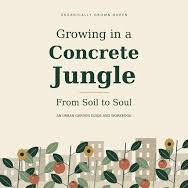
In my book, Growing in a Concrete Jungle: From Soil to Soul, I approach gardening through food, cultural memory, everyday wellbeing, and seed stewardship. Here, I extend those concerns into a spiritual question: What changes when regeneration includes our bodies, our relationships, and our capacity to receive care? I understand regeneration as an embodied spiritual practice when tending life teaches us to attend to the conditions that sustain it. Soil, stars, and sexuality offer different ways to examine that attention.

Soil and the foundations of care

This reflection begins with one garden and one family history. Its spiritual meaning emerges through interpretation and practice. I do not assume that every grower shares my beliefs. The garden offers experiences through which I can ask about the sacred while respecting other understandings of life.

Continue reading “Soil Stars and Sexuality: Regeneration as an Embodied Spiritual Practice by Toya L Walker”

Legacy of Carol P. Christ: We Could Have Been Canadians and Other Thoughts about My New England Colonial Heritage

This was originally posted on Sept 1, 2014

carol mitzi sarah

My 2x great-grandparents Nathaniel Searing and Louisa Caroline Martin were pioneers who cleared the land and built a log cabin in Lyons, Michigan in 1840. They were descended from English Puritan Colonial settlers in New England. At least two of my ancestors are recognized by the Sons and Daughters of the American Revolutions. Other members of my family who were Quakers proudly refused to take part in the Revolutionary War.

My great-grandfather James Augustus married a woman of German descent, his daughter Lena Marie married a Swede, and my mother married a man who was German, Irish, and Scottish. As the descendants of Nathaniel Searing and Louisa Caroline Martin moved around the United States and married into the families of newer immigrants, the succeeding generations also lost touch with their history. Our family’s connections to the New England Colonists were not even mentioned at Thanksgiving!

Continue reading “Legacy of Carol P. Christ: We Could Have Been Canadians and Other Thoughts about My New England Colonial Heritage”

Children of German Immigrant Farmers in Cherry Ridge: American Stories by Carol P. Christ

In my genealogy research, I traced my father’s grandmother, Catherine, to her roots on the Iloff farm in Cherry Ridge, Honesdale, Pennsylvania, about two hours north of New York City. Catherine’s parents were Henry Iloff, who emigrated in 1841 from St. Nicholas, Saarland, and Catherina Lattauer who emigrated in 1845 or 1846 from Ober-Floerscheim, Hesse-Darmstadt. They were married February 2, 1846 at St. Matthew’s Church in “Little Germany” on the Lower East Side of Manhattan.
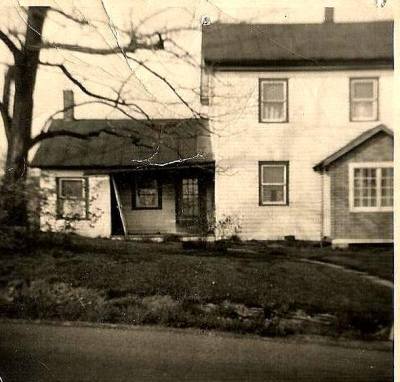
Iloff farmhouse

In 1850, Henry and Catherina purchased land in Cherry Ridge, Honesdale, where they built the farm that remained in the family for a hundred years. In 1851 Catherina’s sister Agnes Lattauer Schweizer emigrated with her family from Ober-Floerscheim to Cherry Ridge. The Schweizer farm also remained in the family for a hundred years.

I had been told about the family Henry Iloff had with two wives who were somehow related: nine children with his first wife and nine with his second over a forty year period–fourteen of whom were living at the time of his death in 1889. I was shocked to learn that when his first wife died in 1869, Henry married his wife’s sister’s daughter Johanna Schweizer–who was half his age and his children’s cousin. I suspect that the marriage was considered scandalous in a conservative farming community, and that it did not sit well with the children of the first marriage, four of whom left the local area. Nonetheless, Henry Iloff was elected to the prestigious position of Wayne County Commissioner a decade later. Continue reading “Children of German Immigrant Farmers in Cherry Ridge: American Stories by Carol P. Christ”

Memory Beneath the Coptic Roof by Nazia Islam

Memory Beneath the Coptic Roof

The past two years,
I’ve been trying to channel
the spirits my of ancestors.

Connecting them
to hymns of history and litanies of theory.
Searching for rootedness.

But I didn’t find a sense of rootedness
until they reminded me that
roots are more than remembering. Continue reading “Memory Beneath the Coptic Roof by Nazia Islam”

We Could Have Been Canadians and Other Thoughts about My New England Colonial Heritage by Carol P. Christ

carol mitzi sarahMy 2x great-grandparents Nathaniel Searing and Louisa Caroline Martin were pioneers who cleared the land and built a log cabin in Lyons, Michigan in 1840. They were descended from English Puritan Colonial settlers in New England. At least two of my ancestors are recognized by the Sons and Daughters of the American Revolutions. Other members of my family who were Quakers proudly refused to take part in the Revolutionary War.

My great-grandfather James Augustus married a woman of German descent, his daughter Lena Marie married a Swede, and my mother married a man who was German, Irish, and Scottish. As the descendants of Nathaniel Searing and Louisa Caroline Martin moved around the United States and married into the families of newer immigrants, the succeeding generations also lost touch with their history. Our family’s connections to the New England Colonists were not even mentioned at Thanksgiving! Continue reading “We Could Have Been Canadians and Other Thoughts about My New England Colonial Heritage by Carol P. Christ”