

 I turn inward and become reflective at this time of year. It’s the Advent season in the Christian liturgical year, which encourages practices of piety focused on preparation, examination, and hopeful longing. It’s the end of a semester and a calendar year, which provokes review of the months before. In the northern hemisphere, it’s a time of darker days and longer nights, which suggest a retreat indoors, in silence or in stillness.
During this time of year, I’m typically exhausted, and so I seem to enact annual rituals with a recurring sense of ambivalence. I really love the celebration of Christmas, but preparing for it takes a lot of energy. So I do some decorating, but not as much as I planned. I attend some parties and celebrations, but end up missing or cancelling others. I start a new devotional book, only to set it aside within a week or so. I want this time of year to be both reflective and celebratory. I want it to be spiritual and religious. I want to be sociable with friends and family and also find time to rest and recover in solitude. At some point, those goals seem too contradictory to be realizable and then I start practical negotiations: How much decorating will I do? What kind of time will I set aside for solitude and self-care? Will I have enough energy to be joyful and present with my family and friends?
“Some, but not enough” is the answer I seem to come to every year.
Some decorating, but not enough. Some time for solitude and self-care, but not enough. Some energy for social occasions, but not enough. This year, I want to let go of that voice that says it’s not enough. That voice that says I am not enough.
To help myself let go of the guilt and self-deprecation, while retaining the reflective focus of the season that may be life-affirming, I reviewed my previous years’ December writings on this blog. What might I discern from this pattern of yearly reflection?
In 2012, I wrote about why women might be tempted to cancel Christmas. I was in my final year of the Ph.D. program when I wrote that, and was prompted to do so when I heard that friends and colleagues were planning to skip Christmas preparations or scale them back dramatically. That year, I sought to maintain “religious and social rituals associated with Christmas” so that I could be “spiritually grounded, emotionally provoked, mentally rested, and physically fed.” I don’t have a vivid memory of that year’s holidays, but as I read it again, I wonder if I was carrying a sense of religious obligation rather than release. Did I feel free or beholden to social custom? I’ve learned that I will only be able to let that “not enough” voice go when I let go of the expectation that Advent and Christmas should look a certain way or I should be present to it in a certain way. I’m more willing this year to let peace and joy ebb and flow in celebrations and moments of sadness and mourning that accompany the season, too.
In 2014 and 2016, my Advent reflections were more focused on justice and peace at the societal level than in the household. They were mournful. In December 2014, I was trying to stave off despair after Michael Brown’s killer was not indicted by a grand jury. The police officer would not stand trial for killing the black teen. That year, I was mourning Michael Brown and Trayvon Martin and the loss of my own naivete as I became more conscientized about racial violence. I had a similar wake-up call last year when Hillary Rodham Clinton lost the US presidential election and I working through the anger and dread I felt at 45’s approaching presidency. This year, the struggle continues as we anticipate changes to the tax code and DACA. But at least Roy Moore lost. We do continue to work for progress and systemic change, and sometimes, it works.
Feminists have long asserted that the personal is political and that the political is personal. I’m acknowledging this holiday season that my perpetual weariness during Advent and Christmas is legitimate, as it emerges from personal and political struggle. I am frustrated with the injustices and hardships I encounter at home, work, and the broader community. I would not be weary if I was not awakened to the suffering. This year, I accept that the exhaustion is part of the cost of my work and my calling. The weariness will ebb and flow, as will joy and peace. Being able to teach and write is a blessing that allows me to help others become more aware of injustice and more involved in addressing it. This year, I’m acknowledging that I’ve done what I can do. I’m resisting the impulse to assess whether it was enough. In previous years, I’ve been trying to hold on to hope; this year I’m resting in God’s grace.
As Christmas approaches, I’m embracing the Christian teaching that the divine meets humanity where we are. The beauty of the Incarnation is that the eternal meets the temporal and that God unites with human to bring light to a suffering world. That’s a gift for me this year, a comfort to be able to shift the focus from my own action and being to divine action and being.
I can see the sacred work and presence in this online community and other communities of faith. Holiday blessings to you all.
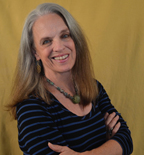
Elise M. Edwards, PhD is a Lecturer in Christian Ethics at Baylor University and a graduate of Claremont Graduate University. She is also a registered architect in the State of Florida. Her interdisciplinary work examines issues of civic engagement and how beliefs and commitments are expressed publicly. As a black feminist, she primarily focuses on cultural expressions by, for, and about women and marginalized communities. Follow her on twitter, google+ or academia.edu.


 Winter Solstice in the Northern Hemisphere is the day of the least daylight and the longest night. Long before Christmas our Northern European ancestors celebrated the Winter Solstice, the moment that heralds the return of the sun and with it the promise of new life in spring. Without the comforts offered by modern technology, this time of year must have raised fears in the hearts of our ancestors; fear that the sun would not return to its summer glory, fear that there would not be enough food for the winter, fears that surface most easily in the dark. A celebration of light would have been most welcome and needed.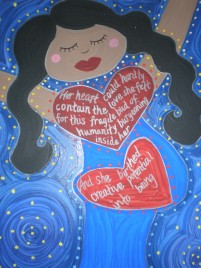
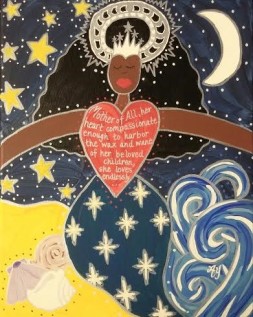
 As the winter months approach, at least one “Christmas” gathering will be on my schedule. As this holiday has been co-opted by consumerism as evidenced by my memory of the throngs of sales and shoppers in large shopping centers to get “the perfect gift,” I wonder how to give the perfect gift to Mother Earth simultaneously. At the December meeting of my local chapter of the Sierra Club, one of the members passed out a list of gift ideas for a “low-impact” season. Some of the items on the list include or have inspired the following:
 In the medieval European philosophy,
 Pope Julian I in 350 C.E. set December 25th as the official day of observance for Christmas. It wasn’t until 1834 that it became a public holiday in the United Kingdom and it was declared a national holiday in the United States in 1865.
  Feminism and Religion