Grief and Healing by Carol P. Christ

My father died on July 6, 2017, 98 years, 4 months, 12 days. The last time I saw him was in the spring of 2004. During that visit, he gave me “the silent treatment” (refused to look at me or speak to me) when I stepped over an invisible line. That was not the first time, but it would be the last. When I gave lectures in California in 2008 and 2010, I agonized and yet made the decision not to visit him. I did not want to give him the chance to hurt me again.

My father and I kept in touch at Christmas and birthdays. In recent years we found our mutual interest in the family genealogy to be safe ground on which we could make contact. I was pleased to be able to tell him that I found the place of origin of our branch of the Christ family in Unterpreppach, Lower Bavaria when I visited Germany in the spring of 2016 with my cousin Bill. My father was with me in spirit when I visited the Christ family graves at Most Holy Trinity Roman Catholic Cemetery in Williamsburg, Brooklyn in the winter of 2016.

When my father had his first heart attack a few years ago, I agonized again and made the decision not to visit. I did not want to give him the chance to hurt me again. This time the decision was final. Continue reading “Grief and Healing by Carol P. Christ”

Gratitudo et Fortitudo by Natalie Weaver

One of the bigger problems with being the only Classics major at a Jesuit university is that all my friends were fairly old men before I had even reached drinking age. Now, they are pretty much gone back to the cradle of the grave, save one, who is on his way to a remote retirement home. As a young woman, my coterie wasn’t a terrible problem for me because some deep part of my psyche had been convinced, since I was about nine years old, that I myself was an old man. I sort of felt at home reading about the Second Punic War and identifying with the sexual ramblings of the naughty old Latin poets, noting between me and my teacher-purveyors of such materials only the occasional, modest differences in skin elasticity and dental sheen.

I never felt like a girl, although, to be sure, one’s ability to assess such a thing is limited to one’s observations and conceptions about what, for example, a girl is or does or thinks. I found myself “ungirlike” in comparison with my conceptions of “girl-ness,” perhaps most notably in the operations of my mind. I felt “old” and “serious.” I remember contemplating with enormous focus the abstractions of total being and absolute nothingness from my nursery room. My big wheel was solid black, and my Dad got me into fishing and hooking live bait. I had read Nietzsche’s Beyond Good and Evil by eighth grade; my favorite book was Camus’ The Plague until it was replaced by Hesse’s more romantic investigations in Narcissus and Goldmund; and I spent my days writing philosophical poems and trying to teach myself to paint in the style of Chinese ink and wash painting. I couldn’t stand Sweet Valley High novels, and even my doll play was odd. I had a gay Ken doll, whom I named David, and his best friend was a shaven-headed Western Barbie, whose backstory was a woeful tale of drugs and topless dancing.   Continue reading “Gratitudo et Fortitudo by Natalie Weaver”

Beginning with Death on the Goddess Pilgrimage to Crete by Carol P. Christ

Our first ritual on the Goddess Pilgrimage to Crete is a death ritual in which we honor the memory of those who have gone before us. Like so many things on the pilgrimage, the death ritual evolved. I did not consciously plan to begin with death. Rather, the death ritual inserted itself at the beginning of the tour. Now I understand that the timing is right.
As we begin our pilgrimage, seeking new insight about the meaning of our lives, about the meaning of life and death, we pause to remember those who have gone before us.

Before the ritual begins, I discuss the communal burials in round tombs of the ancient Cretans, sharing my belief that the purpose of their rituals was not to secure immortality or eternal life for the individual, but rather to affirm and ensure the regeneration of life in the community and in nature. I add that though I have no desire for personal life after death, I care deeply about the continued flourishing of life for human and other than human beings.

I like to keep rituals simple. First, we create an altar. Two stones mark the place. We decorate them with flowers and fruits from our Mother Earth and small images of the Goddess. Continue reading “Beginning with Death on the Goddess Pilgrimage to Crete by Carol P. Christ”

The Death Penalty and Human Dignity: Where Do We Stand? by Stephanie N. Arel

stephanie-arel

On Wednesday, March 22, I had the pleasure to speak at a conference on law, economics, and religion hosted jointly by Georgetown University Law Center and the Pardes Institute of Jewish Studies. Entitled “The Moral Economy,” the conference provided rich learning from an accomplished cast of rabbis, attorneys, and judges, including Pardes faculty members and alumni.

I presented with Dr. Jenny Labendz of the Solomon Schechter Day School and Dr. Deborah Barer of Towson University in a panel entitled, “Death penalty, human dignity and ethics: Retribution and an eye for an eye?” We engaged in a fascinating discussion that covered Rabbinic and Talmudic Law alongside the Gospel of Matthew, the Beatitudes, and Catholic Social Thought. I felt privileged and honored to learn from them in an interreligious exchange.

The topic of our session though proved pressing. Amidst news reports that Arkansas is “turning its death penalty into an assembly line” – the state currently prepares to execute eight men in over 10 days in April – we queried together, “What is at stake for the prisoner and those implicated or involved in the death penalty process both on moral and economic grounds?” Continue reading “The Death Penalty and Human Dignity: Where Do We Stand? by Stephanie N. Arel”

This Time by Joyce Zonana

jz-headshot

And the new sun rose bringing the new year.

Alfred, Lord Tennyson, “The Passing of Arthur,” Idylls of the King

It’s arbitrary, of course, this designation of January 1st as New Year’s Day on the Gregorian Calendar, but it’s also unavoidable.  Everywhere around us, people are gathering, celebrating, making resolutions, ringing out the old, ringing in the new.

The Jewish calendar’s Rosh Hashanah, near the Autumnal Equinox, always feels like the real New Year to me, with its time-honored rituals of renewal and return.  The ancient Persian New Year, observed at the Vernal Equinox and recalled in in the Jewish and Christian celebrations of Purim and Mardi Gras, also moves me.  And, like so many of my brother and sister pagans, I experience the Winter Solstice as a truly numinous moment, a time to release the past and welcome the future as the sun dies and is reborn.

This year, it’s especially meaningful to find Chanukah so close to the solstice, filling the week between Christmas and New Year’s.  I’ve been lighting my candles each night with particular pleasure.  Yet I’m happy, too, to join the rituals associated with the secular, popular New Year.  In my view, there can never be too many moments of renewal and return.

Continue reading “This Time by Joyce Zonana”

Ancestor Connection in Williamsburg, Brooklyn by Carol P. Christ

carol-p-christ-photo-michael-bakasIn early December 2016 I visited central Williamsburg in Brooklyn, New York, where my 2x great-grandparents Thomas and Anna Maria Christ and their son George and his family, including my father’s father Irving John, lived for over fifty years. I had compiled a list of all the known addresses of the family in Williamsburg from census and death records. The family lived in a several block square area surrounding Most Holy Trinity Roman Catholic Church on Montrose Street for all that time.
Most of the buildings at the addresses where the family lived had been torn down and replaced with housing projects in the mid-twentieth century. Some of the remaining ones are being torn down today, as this area of Williamsburg is being gentrified. Still, enough of the old buildings remain to give a sense of what the neighborhood was like in the 1800s. Continue reading “Ancestor Connection in Williamsburg, Brooklyn by Carol P. Christ”

Priestess as Shamanic Path – Part 2 by Molly Remer

This is a continuation of Molly’s piece from Wednesday, 10 August 2016. You can read Part 1 here.

After explaining that the homebirth of her second son was her, “first initiation into the Goddess…even though at that time I didn’t consciously know of Her,” Monica Sjoo writing in an anthology of priestess essays called Voices of the 567bGoddess, explains:

The Birthing Woman is the original shaman. She brings the ancestral spirit being into this realm while risking her life doing so. No wonder that the most ancient temples were the sacred birth places and that the priestesses of the Mother were also midwives, healers, astrologers and guides to the souls of the dying. Women bridge the borderline realms between life and death and in the past have therefore always been the oracles, sibyls, mediums and wise women…

…the power of original creation thinking is connected to the power of mothering. Motherhood is ritually powerful and of great spiritual and occult competence because bearing, like bleeding, is a transformative magical act. It is the power of ritual magic, the power of thought or mind, that gives rise to biological organisms as well as to social organizations, cultures and transformations of all kinds… (page unknown).

I have been a childbirth educator since 2006 and I have given birth five times. Each birth brought me the gift of a profound sense of my own inherent worth and value. It was the shamanic journey through the death-birth of my tiny third child, however, that ushered in a new sense of my own spirituality and that involved a profound almost near-death experience for me. After passing through this intense, initiatory crisis, the direction and focus of my life and work changed and deepened. Shortly after the death-birth of my third son, I wrote: Continue reading “Priestess as Shamanic Path – Part 2 by Molly Remer”

Priestess as Shamanic Path – Part 1 by Molly Remer

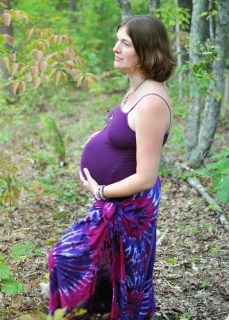
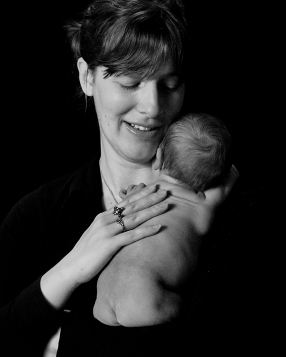
It is late autumn, 2009. I am 30 years old and pregnant with my third baby. He dies during the early Mollyblessingway 045part of my second trimester and I give birth to him in my bathroom, on my own with only my husband as witness. The blood comes, welling up over my fingers and spilling from my body in clots the size of grapefruits. I feel myself losing consciousness and am unable to distinguish whether I am fainting or dying. As my mom drives me to the emergency room, I lie on the back seat, humming: “Woman am I. spirit am I. I am the infinite within my soul. I have no beginning and I have no end. All this I am,” so that my husband and mother will know I am still alive.
I do not die.

This crisis in my life and the complicated and dark walk through grief is a spiritual catalyst for me. A turning point in my understanding of myself, my purpose, my identity, and my spirituality.

It is my 31st birthday. May 3rd. My baby’s due date. I go to the labyrinth in my front yard alone and walk through my labor with him, remembering, releasing, letting go of the stored up body memory of his pregnancy. I am not pregnant with him anymore. I have given birth. This pregnancy is over. I walk the labyrinth singing and when I emerge, I make a formal pledge, a dedication of service and commitment to the Goddess. I do not yet identify myself verbally as a priestess, but this is where the vow of my heart begins.

I do not know at the time, but less than two weeks later, I discover I am in fact pregnant with my daughter, my precious treasure of a rainbow baby girl who is born into my own hands on my living room floor the next winter. As I greet her, I cry, “you’re alive! You’re alive! There’s nothing wrong with me!” and feel a wild, sweet relief and painful joy like I have never experienced before.

Continue reading “Priestess as Shamanic Path – Part 1 by Molly Remer”

Remember by John Erickson

Remember the loss, because we’re going to need it for the tomorrows to come and for those that need our protection the most: the next generation. Remember, we are Orlando; now, tomorrow, and always.

WEHO CA (June 7, 2015)©2015 Rebecca Dru Photography All Rights Reserved http://www.rebeccadru.com

I want to tell you a short story about the small town of Ripon, WI. On May 19, the local newspaper, The Ripon Commonwealth, which has served as the town’s paper since 1864, published a story regarding the political right’s uproar concerning President Barack Obama’s executive order that all public schools must allow transgender individuals to use the bathroom which matches that of their gender identity. Angry and upset, the paper’s education reporter wrote an article expressing his clear disdain for the President and also expressing a clear lack of empathy, understanding and sheer bigotry towards the transgender community.

Growing up in Ripon, I always read the paper when it came out on Wednesday evenings. Those of you who grew up in a small town can attest to the luxury of seeing friends, family members, and even the smallest ongoings in one’s town in print for the entire town to see and talk about. However, one thing I never saw in the paper was the clear hate I read in Mr. Becker’s article (the author of said piece). Enraged, I immediately asked myself: what can I do? Having connections back in Wisconsin, I immediately turned to friends who owned businesses, a friend who is the Director of a vocal and important group in the town, and community organizations and friends to begin to write letters. Continue reading “Remember by John Erickson”

Caroline Schelling on Birth & Death by Stuart Dean

Caroline Schelling

Of the many letters Caroline wrote to her lifelong friend Luise, one of the most intense  (the 57th Letter) dates from seven years after the 4th Letter discussed in my last post.  By then both were married; only a few months earlier Caroline had given birth to her first child (Auguste); though Luise already had children, Caroline knew that one of them was terminally ill.  In the first paragraph Caroline describes how difficult Auguste’s birth was for her; in the second she consoles Luise over the impending death of her child.  She thus subtly parallels birth with death and hence the labor for one with mourning over the other.

Fifteen years later, only a few months after the death of Auguste–the last of her four children to die–Caroline’s generally positive disposition evidenced in the 4th Letter and her experience in grappling with birth and death evidenced in the 57th Letter were being put to the test.  Though she was holding up well, Friedrich Schelling (Friedrich), the man who was to be her third husband, seems to have been suicidal from feeling guilty (rightly or wrongly) for having failed to do enough to cure whatever illness killed Auguste.  Caroline wrote frequently and urgently to him, offering advice and comfort.  In one of those letters (274d) she characterizes the challenge of overcoming grief as a formula to be solved: “(death/pain) x (love/bliss) = (life/peace).”  She terms this one of her ‘primal axioms’ (the “Ursatz”), although she seems playfully to concede to Friedrich that he or perhaps someone else shares responsibility for it. Continue reading “Caroline Schelling on Birth & Death by Stuart Dean”