Seeing Death and Resurrection by Linn Marie Tonstad

Linn Marie TonstadYesterday, I visited the Capuchin catacombs in Palermo, Sicily. In a grotto about a mile or so from the center of the modern city are found the preserved remains of about 2,000 people who paid the monks to preserve their bodies after death, dress them in their finest clothing, and put them on display. Each of them is placed in its own niche along the wall, held up by iron bands, and has a tag around its neck with its name and date of death. The bodies are not displayed in random order: they are sorted (to some extent) by sex, profession, and familial status. In one large recess, a number of children’s skeletons are on display, many of them in heartbreakingly tiny coffins. In another corridor, friar after friar hangs in his robes, some with cords around their necks signifying their adherence to a Franciscan order. Almost indistinguishable from the cords are the braids still hanging from the heads of some of the women’s bodies. Some families are arranged together; in another corridor doctors and lawyers are segregated and in yet another female virgins are gathered together. The oldest body I saw dated from 1599 – high on a wall hangs the body of a monk whose name was almost illegible but who hailed from the Umbrian hill town of Gubbio.

Some of the skeletons presented death’s heads; others had skin dried to a leathery tightness over remaining bony protuberances. Some of their outfits are well preserved; others have disintegrated under the relentless assault of the years. The practice became illegal around 1880, but until then, people chose – or perhaps their relatives chose for them – to be preserved in this seemingly macabre manner. Continue reading “Seeing Death and Resurrection by Linn Marie Tonstad”
An Epic Woman: A Feminist Eulogy by Molly

editMollyNov 083There were some things about my grandmother that I didn’t find out until after she died. For example, in 1974, she co-organized a “Women’s Exchange”  in Fresno, California with the theme: Stop the World…We Want to Get On. How much I would have liked to talk to her about that! While I didn’t know about the fair, I do know that she was successful with her vision of getting on this brightly spinning world. My grandma was a woman who was hiking in the Channel Islands one month before receiving a diagnosis of aggressive pancreatic cancer. She was incredible.
After reading Grace Yia-Hei Kao’s recent post about giving a eulogy at her grandmother’s funeral, my thoughts turned to my grandmother’s memorial services this past spring. What, if any, are the components of a feminist eulogy? Grace wonders. In reading this, I reflected on the components of the services I prepared and participated in for my grandmother and I believe they fit the bill. In a pleasingly feminist move in itself, I was asked by my extended family to serve as the priestess at my grandmother’s “committal” service (in which her ashes were interred in the above-ground burial chamber that received my grandfather’s body in 1989).

It was deeply important to me to have multiple voices represented during the small, family-only, service and I enlisted all the grandchildren present, as well as her step-grandchildren, in an adapted responsive reading based on Walt Whitman’s “Song of the Open Road”. I chose it precisely because it spoke to the irrepressible, adventuresome spirit of my grandmother. It was a lot of pressure to be responsible for the family ceremony for the interment of her ashes. I wanted it to be perfect. I wanted it to be what she deserved. I wanted it to “speak” to every person there. I wanted it to be worthy of her. I hope it was enoughContinue reading “An Epic Woman: A Feminist Eulogy by Molly”

A Feminist Eulogy? By Grace Yia-Hei Kao

My grandmother, my last living grandparent, recently died. She was 84 years old. Because I’ve just come back from Taiwan where I participated in all of her funerary rites and delivered a eulogy therein, I’ve been thinking a lot about memorializing the dead.  Is there such a thing as a “feminist”  or feminist Christian way to remember the dead? What, if any, are the components of a feminist eulogy?

Continue reading “A Feminist Eulogy? By Grace Yia-Hei Kao”

Feeding the Dead by Deanne Quarrie

Deanne QuarrieMost people really love this time of year and I share much of that.  Living in South Central Texas we actually only have two seasons, with a perhaps two to three weeks in between what we laughingly call spring and fall.  Because the winters are not harsh here, the step into spring feels different from those whose winters are frozen for months on end.  We do experience some relief when our temperatures finally drop a bit in October. Even then those drops are only teasers.  When we do finally get a briskness in the air in the wee, early morning hours of dawn but when the sun rises overhead, any memory of that coolness is forgotten.  This morning at 5:30 am, when I woke, it was 54 degrees. I stepped outside to smell and feel the air, so clean and cool.  And yet, now it is 85 degrees and rising, it once more feels like summer. We don’t have the sudden frosts that turn our trees to vibrant reds, yellows and browns.  Yes, the leaves eventually turn and fall to the ground, but we have no heavy freeze and so our colors are pale compared to those in the North and colder climates.

Many Texans think the emotional feel for our two seasons is backwards, believing that summer, with its blazing sun, is the time to withdraw.  Then in winter, when the weather is mostly mild, that’s the time to come out to play.  This is a reversal of pagan thinking about the seasons in North America. Continue reading “Feeding the Dead by Deanne Quarrie”

Birth Song, Life Song, Death Song by Molly

editMollyNov 083“A woman can spin a primal umbilical rope within her womb through which she passes life-energy to the future.” –Melissa Raphael

“In some indigenous cultures of the Americas there is the practice of finding one’s death song while alive. This song becomes the ally of the person throughout their lives, so that they become very acquainted with what the song means in their lifetime. Death then, is a companion of life, and is never forgotten. In the hour of death, these people would, if they were able to, sing their death song–exiting this world with song on their lips and no doubt feeling the power their ally-song had gathered by being with them in their life. I can see that a death song would provide a connection between the person and the cycles of life, guiding the dying person into the next world and helping to allay fear…” –Leslene della-Madre, Midwifing Death

I was introduced to blessingways, or mother blessing ceremonies, as a girl when my mother’s group of friends hosted them for each other during their pregnancies. I loved attending the ceremonies for my mom during her pregnancies with my younger brother and sister and witnessing the web of love, support, and commitment woven around her. They touched me deeply with their sacred, magical, and mysterious flavor. When I was twelve, the same group of friends had a coming of age blessingway ritual for the daughters of the group, ranging in age from 10-16. It was a mystical, beautiful experience. We wore wreaths of flowers in our hair and were blessed with wisdom and tokens from the wise women of our tribe. At 34 years old now, I still have my folder of prayers, quotes, and messages from that day. For years it smelled faintly of rose petals.

Continue reading “Birth Song, Life Song, Death Song by Molly”

No More Of This in Academe! by Grace Yia-Hei Kao

Last week, social media was ablaze over a September 18 Pittsburg Post-Gazette column entitled “Death of An Adjunct” by Daniel Kovalik that had the following teaser: “Margaret Mary Vojtko, an adjunct professor of French for 25 years, died underpaid and underappreciated at age 83.”  Inside Higher Ed reports that the column went viral as “adjuncts across the country reported seeing something tragically familiar in her story.”  The Chronicle of Higher Education likewise covered the story with this tagline: “An Adjunct’s Death Becomes a Rallying Cry for Many In Academe.”

This tragedy involves all sorts of issues with which readers of this blog are concerned: power, structural injustice, job insecurity, underemployment, unions, healthcare, and Catholic values (the last of these since Margaret worked at a Catholic institution), to name a few.

Continue reading “No More Of This in Academe! by Grace Yia-Hei Kao”

Genetic Testing: The Ethical Implications of Expanded Newborn Testing – Who Benefits? (Part One) by Michele Stopera Freyhauf

Freyhauf, Feminism, Religion, Durham, Old Testament, Blogger, Bible, Gender, Violence, Ursuline, John CarrollWith Angelina Jolie’s electing to have a double mastectomy because she carried the BRCa Gene, and her mother and aunt died at a very early age of the disease, the issue of genetic testing is in the forefront again.  This is a three-part essay explores genetic testing when it comes to newborn testing (part one and part two) and concludes with exploring personal choices, availability, and psychological ramifications of genetic testing.

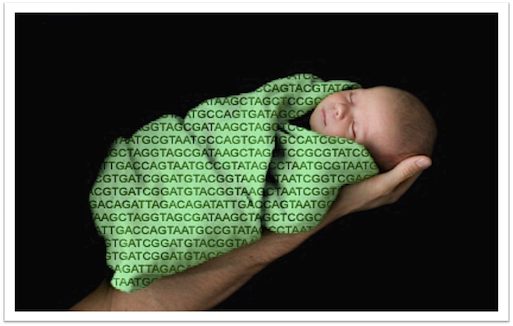
BabySeq
Picture originally found at http://www.ngsleaders.org/blogs.aspx

After nine months of worrying and diligent pre-natal care, the day to meet your unborn child is here.  Labor is long and for hours you lie in the birthing suite riding out contraction after contraction.  The moment finally arrives and you discover you have a son; ten fingers, ten toes and seemingly healthylungs by the cry that you hear.  He is then quickly taken over to the nurse’s station and a drop of blood from his heel is placed into a machine that in seconds will decode his entire genome. Soon your son’s future will be written in stone; he has a life expectancy of 30.2 years and has a 99% chance of dying from heart failure.  In that instance, your son has been labeled as an in-valid and he is now doomed to exist within a lower class of society, one that will prohibit him from pursuing his dreams. Society has discriminated against your new baby boy based solely upon his DNA.  A new form of eugenics is born.

This was the opening scene of the 1997 science-fiction movie called “Gattaca.” Besides pushing the bounds of human imagination, science fiction can serve as a warning about a future caused by the abuses of humankind.  The opening birth scene in this movie is quickly becoming a potential reality.  Now, a person’s entire genome can be decoded and in an instant, a person knows whether he or she will be susceptible to Parkinson’s disease, Alzheimer’s disease, Cancer, or other life threatening conditions.  Proponents of genetic sequencing believe that this is the holy grail of medical care and tout phrases like “personalized medical care” and “significantly reduced costs of healthcare.”  There is a rapid movement towards this goal through the proposed expansion of newborn screening for eighty-four conditions, most of which are not understood or have no known treatment. Continue reading “Genetic Testing: The Ethical Implications of Expanded Newborn Testing – Who Benefits? (Part One) by Michele Stopera Freyhauf”

Appreciating the Sacrament of the Present Moment by Michele Stopera Freyhauf

In order to be at peace, it is necessary to find a sense of history – that you are both part of what has come before and part of what is yet to come. Being thus surrounded, you are not alone; and the sense of urgency that pervades the present is put in perspective. Do not frivolously use the time that is yours to spend.  Cherish it, that each day may bring new growth, insight, and awareness.  Use this growth not selfishly, but rather in service of what may be, in the future tide of time. Never allow a day to pass that did not add to what was understood before. Let each day be a stone in the path of growth. Do not rest until what was intended has been done. But remember – go as slowly as is necessary in order to sustain a steady pace; do not expend energy in waste. Finally, do not allow the illusory urgencies of the immediate to distract you from your vision of the eternal.

                                                     (Elisabeth Kubler-Ross, The Final Stage of Growth, 167)

Freyhauf, Feminism, Religion, Durham, Old Testament, Blogger, Bible, Gender, Violence, Ursuline, John CarrollLast month we lost a good friend unexpectedly.  His death, just days after his 49th birthday caused me to confront my own mortality. His death also makes me think about that void in life that we leave as well as the legacies we leave behind. How will I be remembered?  Did I make a difference while on earth? Have I served and given back enough?   Continue reading “Appreciating the Sacrament of the Present Moment by Michele Stopera Freyhauf”

Why are We Troubled by a Homeless Jesus? by Michele Stopera Freyhauf

Michele Stopera Freyhauf Durham John Carroll Religion TheologyThere are standard depictions of Jesus that show a Caucasian male with blue eyes (some pictures have the occasional brown eyes), shoulder length brown hair, and usually wearing a tunic with sandals. Jesus’ demeanor is usually victorious, prayerful, inviting, and even reflects humility. Our culture creates an unrealistic depiction of Jesus so that in the United States (at least), we see a savior as a white male representative of the power structures that permeate every facet of life.

There are some variations of this image. The most common is this same image with dark skin. A depiction that makes Jesus more tangible to people of color. If we can accept this variation of Jesus, then why would we be upset when images become more culturally tangible, send a message that encapsulates Jesus’ ministry, or make us stop and think – challenging us to take our rose colored glasses off. When an artist creates an image of Jesus that is different than the standard described above, controversy occurs at varying levels. The artwork is removed or de-commissioned, protests occur, and in extreme cases, the artist will even receive death threats. Here is a small sampling of images:

Jesus-in-Jeans-by-Peter-Royle
Jesus in Jeans (Peter Royle) picture courtesy of Wikipedia http://en.wikipedia.org/wiki/File:Jesus-in-Jeans-by-Peter-Royle.

chocolatejesus
Sweet Jesus (Cosimo Cavallar) picture from Cavallaro’s website (http://www.cosimocavallaro.com/html/chocolate_page.html
Edwina Sandys: http://www.naplesnews.com/news/2008/mar/06/my-life-so-far-edwina-sandys-69-artist/
T Edwina Sandys: http://www.naplesnews.com/news/2008/mar/06/my-life-so-far-edwina-sandys-69-artist/
Crucified Woman at Emmanuel College

Continue reading “Why are We Troubled by a Homeless Jesus? by Michele Stopera Freyhauf”

Grief Beyond Belief and Rebecca Hensler by Kile Jones

Kile Jones, atheistIn my last post, “A Pro-Science, Skeptical Woman Speaks” I interviewed a woman with whom I share many views in common.  One of my goals here at Feminism and Religion is to introduce different secular, atheistic, liberal feminists who share many of the same ethical views as regular contributors and readers, but not the same “religious” or “spiritual” ideas.  In this post I examine an online support network for unbelievers, Grief Beyond Belief, and ask a few questions to its founder, Rebecca Hensler.

I met Rebecca in February in San Francisco while on a visit I made to meet with the Unitarian Universalist Association in regards to my ordination.  My girlfriend and I met Rebecca in North Beach, San Francisco for dinner and drinks.  I experienced her as a compassionate, friendly, and genuine person.  Her experiences and insights inspired me to think more about the role of grief and pain among unbelievers.  I mean, atheists cry, agnostics experience loss, skeptics lose family members, and we do it all without a “God” or “spirit” to help us.  And if we were to meet C.S. Lewis, we would make

sure to exclaim, “No…pain is not some megaphone for God to rouse a deaf world.”

R Hensler

Why did you start Grief Beyond Belief?

The original idea was born of my own grief.  After my son died, I found a group in which to share comfort and compassion with other grieving parents: The Compassionate Friends, a mainstream parental grief support organization with a strong online presence.  It was so close to exactly what I needed, but I frequently felt alienated by the religious and spiritual content — not just the offers of comfort that depended on beliefs I do not hold, but the assumption that everyone there held some sort of belief in life after death. And the assumption, so common in mainstream grief support, that even if I am not the same religion as you are, I have a religion, and I believe in some sort of afterlife was equally alienating and hurtful. Continue reading “Grief Beyond Belief and Rebecca Hensler by Kile Jones”