Triple Goddesses in the Celtic World by Judith Shaw

Judith Shaw photoMany neopagans and modern Goddess worshipers mistakenly equate the triadic nature of some Celtic Goddesses with the Triple Goddess concept first popularized by Robert Graves in his book, The White Goddess. Graves stated that Goddesses were frequently found in triplets as Maiden, Mother and Crone. But there is nothing found in the ancient stories of Celtic Goddesses to indicate that they were known as Maiden, Mother and Crone. 

Continue reading “Triple Goddesses in the Celtic World by Judith Shaw”

A Serpentine Path: The Dance Is About To Begin by Carol P. Christ

carol-p-christ-photo-michael-bakasEntering the archaeological site of Kato Zakros, which includes a Sacred Center and part of a town on a small hill above it, I felt too tired to continue with the others. As we passed a stone bench to the north and west of the open court, I lay down and closed my eyes. I don’t know if I actually slept, but when I opened my eyes, I was in a trance.

I could see the air vibrating, and as I looked up the hill, I could almost see women walking up and down the stepped paths. My eyes were fixed on the path where women I could not quite see with my eyes went about their daily tasks. After a while Cathleen joined me. “I don’t want to talk,” I said, “but if you sit quietly beside me, you will see women walking in the village. She sat down and said nothing, but smiled broadly and nodded when I asked her if she could see what I saw.

After a while, I moved and sat facing the Central Court. I could still see the vibrations of the air, and as I looked across the court, I felt a sense of anticipation. “The dance is about to begin,” I told Cathleen when she joined me a few minutes later. She nodded. It was an hour before sunset, and the ancient stones were bathed in the last light of day. Jana and Patricia were talking in the central shrine room, while the others leaned over the ancient cistern watching turtles and turtle babies dive into the water and emerge again. “The dance is about to begin,” I said again.

kato-zakros-central-court

Cathleen exclaimed, “I see the path of the dance rising up in the court. It looks like the Processional Paths we saw at Knossos, Phaistos, and Malia. Do you see it?” Though I did not “see” it, I was moved to the court, where I could “feel” it. I raised my arms, bent at the elbows, and slowly wove my way back and forth across the court, following a snakelike path I could feel with my feet. As I neared the center of the court, I almost lost my footing. Turning to face Cathleen, I gazed at her solemnly, sending energy through my palms. Cathleen raised her arms in greeting. I turned again, continuing to trace the snakelike path, back and forth, across the court. When I reached the south end of the court, I turned again to greet Cathleen and Robin who was sitting next to her. “The path you followed was exactly the path I saw,” Cathleen cried out with astonishment. “You were meant to stop at the center.” “It was an ancient path,” I said solemnly. 

Jana and Patricia, who must have been watching, entered from the northwest entrance to the court. Jana was leading, arms upraised, tracing another path, walking with the same slow rhythm in which I had been led. I turned and slowly walked towards Jana until I could sense the energy flowing between our palms, then we softly touched our upraised hands. Carol, Patricia, Cathleen, and Robin formed a circle around us, and stood, arms upraised one in each of the four directions. Sensing that we were meant to share the blessing with the others, Jana and I turned, walking slowly towards the women standing in the north and south, feeling the energy, then touching their palms. Back to the center, we turned to the east and the west, completing the ceremony. As we turned to face each other again, I whispered to Jana, “We were called to this dance. It was an initiation.”

. . .

[A few days later] thinking of the snakelike path I had traced on the ancient stones, my eyes fixed on the gold snake bracelet on my right arm. I reviewed the many meanings the symbol of the snake held in ancient cultures. Goddess temples were used for storing grain, the harvest returned to She who presided over it. Snakes were guardians of the temples, eating the mice and rats that came to take the grain. The coiled snake and the snake biting its tail are symbols of wholeness. Snakes shedding their skins are images of rebirth and regeneration. Snakes hibernate under the earth and are reborn. But there was more: the rhythm of the snake in movement. I picked up a pen and wrote: “a serpentine path.”

These words described our initiation in the dance at Zakros: the serpentine path is the path of life, a snakelike, meandering path, winding in and out, up and down, with no beginning and no end, into the darkness, into the light. There is no goal, only the journey.

A cycle was coming to completion in my life. Through hard work and amazing grace, I found my way back to the Goddess, to myself. The mystery that was revealed to me as my mother died was unfolding in my life. Love had never abandoned me and never would. The Goddess would be with me at every turn in the path, and in that knowledge. I could give up control and open myself to life.

***

a-serpentine-path-amazon-coverThis is an excerpt from A Serpentine Path, Carol P. Christ’s newly released, moving memoir of transformation. Order it now in paperback or on Kindle. Carol’s other new book written with Judith Plaskow is Goddess and God in the World: Conversations in Embodied Theology. Carol also wrote the first Goddess feminist theology, Rebirth of the Goddess.

Join Carol on a Goddess Pilgrimage to Crete in 2017. Save $200.

Read two more the chapters in the book: Mysteries and Dionysian Rites.

Thanks to Judith Shaw for the cover art “Downward Serpent.”

If the paperback is unavailable on Amazon, you can order it from Barnes and Noble.


The Book of Earth & Other Mysteries: a book review by Elizabeth Cunningham

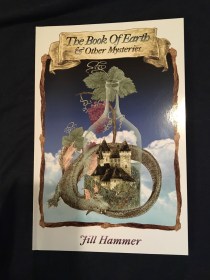
book-of-earth-photojpgWhen a poem shows me something in a strange and wonderful light and at the same time awakens some bone-deep knowing of my own, I feel more alive, I feel less alone. My soul is stirred and satisfied. The Book of Earth & Other Mysteries by Rabbi Jill Hammer, author, teacher, midrashist, mystic, poet, essayist, and priestess, is a whole collection of such poems.

Collection is not a vivid enough word. The structure of this book is more like a fairy palace, a sandcastle blazoned with shells, a dragon’s lair, a bold work of art in itself.  The book begins with a five part prose piece called “Intentions,” the first four invoking an element and the last one holding open the door for us to enter the world of the poems.  Here are a couple of sentences excerpted from each. Continue reading “The Book of Earth & Other Mysteries: a book review by Elizabeth Cunningham”

As It Might Have Been: Ancestor Stories in the Dreamtime by Carol P. Christ

carol-p-christ-photo-michael-bakasIn the middle of the night in waking sleep, I asked my great-great grandmother Annie Corliss to tell me the story of how she met and married James Inglis. This story came through me in a place I have come to call the Dreamtime. The Aboriginal term feels right. As I understand it, this is not a place where the dead speak to the living but rather a space where boundaries blur as the ancestors speak in us.

Annie Corliss’s Story: As It Might Have Been

My mother decided to come to America after my father died. My brother Hudson was 7 and my brother Hugh was a baby. I was 13. Mother had a little money, and she said we would have a better life in America. We left Ireland on a boat that took us to Liverpool. There we boarded the big ship Continent that took us to America. The trip took about 6 weeks. While we were at sea, first Hudson, and then Hugh died. Their bodies were wrapped in the blankets that had covered them in the filthy cabins on the ship. The priest said a few words of blessing, and they were dumped into the cold angry sea. Every day, another body was thrown overboard, sometimes two. So much grief, so many tears in the night. After Hudson died, Mother wouldn’t let go of Hugh, so afraid was she of losing him. After he died, she would not stop crying. I kept telling her she still had me. She didn’t care anymore. “America is cursed,” she kept repeating. (1) Continue reading “As It Might Have Been: Ancestor Stories in the Dreamtime by Carol P. Christ”

Exe(o)rcising the Spirit by Natalie Weaver

Natalie editedWhy bother? It’s a legitimate question.  My oldest son, almost 12, announced that he is depressed.  He’s got good reasons for it, so I don’t try to talk him out of it.  My youngest, almost 8, told me yesterday that life was simpler when he was in my belly.  Now, he says school is torture.  They won’t just teach something and move on.  They have to do “activities,” he says, he’s onto the racket that is known as busy work.

I spoke with an aunt, a cancer survivor, whose progress is steadily monitored.  Life, it seems, has become about watching and waiting rather than living.  There’s not so much to look forward to, she says wistfully, once you get to a certain age.  My friend called in distress.  Not one area of life – not work, not kids, not household, not romance – was untouched by significant stress. She said that she could understand how people are okay with their kids moving out.  There is a time, she observed baldly, when it will be alright to die.  She said, I’m tired.

What do we do with fatigue that becomes soul deep?  In my own case, I used to move it around from one place to another, focusing on what I could do as a remedy for the things I could not change.  What I have come to realize, though, is that we run out of storage space eventually.  There’s no place to hide from this – this question – of meaning or meaninglessness.  When I try to assess and work out what’s on my mind, that is, when I feel the fatigue of meaning, I realize that I am dealing with something spiritual in nature.

It’s plain as day, of course, when you give it a second’s thought.  But, at first blush, it is not always immediately self-evident that the angry person mouthing “bitch” at me in the crowded parking lot or my frustration at my kids not responding to my third request, were and are, at the root, theological problems.  Such things were and are, the things that push the self toward the precipice of spiritual demise.

Why bother, I wonder, when the handsome and seemingly happy couple in line in front of me to see Santa with their little boy turns to me hostilely and threatens me should my own eager child accidentally bump into them again.  As I stand on, dazed, still looking at them with something of a smiling admiration on my face, trying to understand what I have just heard, I am yelled down for the look on my face.  What is this world, I wonder, while my own joy begins to shift into an anger that I am now tasked with suppressing and rationalizing?

The more I recognize myself in this place, especially as a woman, the more I understand that traditional theology, and specifically traditional Christian doctrine of God, has more or less failed to help me here.  It has failed to provide me, specifically as a woman, an adequate way of dealing with the inevitable fatigue of a life lived long enough.  What do I mean by this?  I find that I have internalized a distorted sense of value and more importantly a distorted sense of self in relationship to others.

In particular, the idea of servanthood, even service as leadership, can be an infectious and distorting delusion whereby one inclines oneself simply to be taken advantage of by others.  This happens in family life, work, and even in volunteerism (especially at the Church).  Likewise, the insistence on joy, hope, resurrection, loving the neighbor, the new day yet to come – these can become woefully burdensome, even to the very young, because such spiritual dispositions stifle the capacity to experience–honestly and without self-critique–anger, fear, boredom, and disappointment.

As a woman, I find myself to be particularly susceptible to spiritual instruction about service, docility, duty, and self-gift, in ways that I increasingly come to understand are not genuinely relationally intelligent or spiritually wholesome: they are gendered norms for desirable social being.  Of course, I know all this stuff as theory.  I have for two decades.  But, now, now I know it for myself, in my skin, and that is a heavy transition in the soul.

I’m not sure I agree that religion the opiate of the masses, but I do agree that one of the foremost reasons people create religion as a framework for interpreting life is that they are confronted with the profound task of meaning-making out of what often seems to be the unfathomable reach of meaninglessness.  Theology is a response to that, as is worship.  The older or perhaps wiser or perhaps more reckless I get, the more I understand that is incumbent on each of us to be able to think theologically in ways that are authentic and true to our own experiences and insights.

It is perhaps for these reasons that I have been expanding my own capacity for prayer and ritual by participating in alternative spaces of worship, like the sweat lodge, as well as creating my own, as I have been over the past several on New Year’s Eves, with the invention of a symbolic meal, a structured memorial for the deceased, readings, and a fire ritual at midnight.  I feel at times like a syncretistic pagan wannabe, but I set those self-critiques aside in the knowledge that I am exe(o)rcising the spirit.

That phrase, “exe(o)rcising the spirit,” feels laden, and I have yet to unpack its full import, but I know it means both ridding myself of what does not work and claiming the authority to honor what does in ways that are sacramental and meaningful to me and to those in my community of intimates.

Perhaps the best way that I alternatively theologize is through creative writing, through the beckonings of theopoesis, where I find I can speak without the impositions of structure in the quasi-grammarless realm of experiential knowing.  It is here that I have discovered freedom to disagree and complain as well as to integrate and praise in a voice that talks to God in earnest, as though God were listening.  In preparation, for a solstice sweat, this is what I had to say.

These sides are not

sharp antagonisms

that bring to points

their points of view

but a pond’s surface

under moonlight,

swirling like mercury,

beneath which minnows,

fluid, do

their works of

harmonious disruption.


So, let my prayer be not

please,

for, I fear

I have been

an ungrateful guest.

Sojourning pilgrim,

refugee,

all this life, all will be,

a lesson in how to say

thank you.

Natalie Kertes Weaver, Ph.D.is Chair and Professor of Religious Studies at Ursuline College in Pepper Pike, Ohio. Natalie’s academic books includeMarriage and Family: A Christian Theological Foundation (Anselm, 2009); Christian Thought and Practice: A Primer (Anselm, 2012); and The Theology of Suffering and Death: An Introduction for Caregivers (Routledge, 2013)Natalie’s most recent book is Made in the Image of God: Intersex and the Revisioning of Theological Anthropology (Wipf & Stock, 2014).  Natalie has also authored two art books: Interior Design: Rooms of a Half-Life and Baby’s First Latin.  Natalie’s areas of interest and expertise include: feminist theology; theology of suffering; theology of the family; religion and violence; and (inter)sex and theology.  Natalie is a married mother of two sons, Valentine and Nathan.  For pleasure, Natalie studies classical Hebrew, poetry, piano, and voice.

Ancestor Connection in Williamsburg, Brooklyn by Carol P. Christ

carol-p-christ-photo-michael-bakasIn early December 2016 I visited central Williamsburg in Brooklyn, New York, where my 2x great-grandparents Thomas and Anna Maria Christ and their son George and his family, including my father’s father Irving John, lived for over fifty years. I had compiled a list of all the known addresses of the family in Williamsburg from census and death records. The family lived in a several block square area surrounding Most Holy Trinity Roman Catholic Church on Montrose Street for all that time.
Most of the buildings at the addresses where the family lived had been torn down and replaced with housing projects in the mid-twentieth century. Some of the remaining ones are being torn down today, as this area of Williamsburg is being gentrified. Still, enough of the old buildings remain to give a sense of what the neighborhood was like in the 1800s. Continue reading “Ancestor Connection in Williamsburg, Brooklyn by Carol P. Christ”

The Reindeer Goddess by Judith Shaw

Judith Shaw photoWinter Solstice in the Northern Hemisphere is the day of the least daylight and the longest night. Long before Christmas our Northern European ancestors celebrated the Winter Solstice, the moment that heralds the return of the sun and with it the promise of new life in spring. Without the comforts offered by modern technology, this time of year must have raised fears in the hearts of our ancestors; fear that the sun would not return to its summer glory, fear that there would not be enough food for the winter, fears that surface most easily in the dark. A celebration of light would have been most welcome and needed.

Continue reading “The Reindeer Goddess by Judith Shaw”

Earth’s Mystery School by Molly Remer

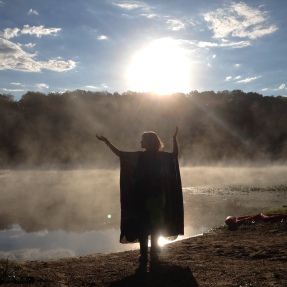
“Earth is a mystery school complete with initiations and discoveries that you only experience by september-2015-123living with your feelings, touching the earth, and embracing the fullness of your humanity.”
–Queen Guenivere

(awakewoman)

On Samhain morning, I wake early and mist is rising out of the forest and dancing through the field and out of the trees. I have a moment of sheer awe to see it…the veil was literally thin.

Over the weekend, I visit the nearby river to connect in personal ceremony in appreciation before the park closes for the year and also symbolically to those at Standing Rock. This river eventually meets the Missouri River. I run my hands through the water. I anoint my brow, neck, and hands. I whisper my prayers into the ripples. I sing: “I am water. I am water…I am flowing like the water, like the water I am flowing, like the water.”october-2016-065

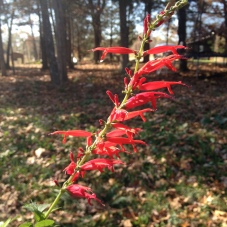
I am hurrying outside to get some work done. I feel tight and hurried with the length of my to-do list and my superhuman plans for the day. The bright red flame of a bloom on my pineapple sage plant catches my eye and then…the perfection of a bright yellow butterfly alighting on one slender stamen. My breath catches and I stop in wonder. I smell the flower and it smells of pineapple, just as the leaves do. I can hardly believe this treasure and the tightness melts into nothing. The rest of the day is full of joy.

I am once again healed by flowers.

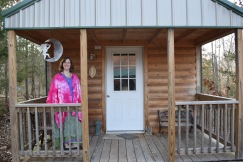
About twenty feet outside my house, there is a small building with a little porch and a peaked roof. Inside, there is red carpet and a purple wall, goddess tapestries draped from floor to ceiling, and goddess sculptures in abundance. march-2016-002In this building I write, work, create, and hold small rituals with a circle of friends. I call it my Tiny Temple and it is the proverbial, “room of one’s own” described by Virginia Woolf in 1929. Having a dedicated work and ceremony space in the midst of a home-based life, which includes a home business shared with my husband, and four homeschooled children, has changed my life profoundly. In the tiny temple, I feel most wholly myself: connected, powerful, free, authentic, and completely alive.
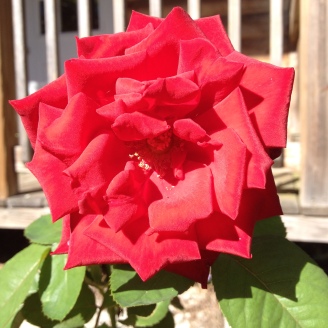
One morning, as I walk to the temple, this beautiful rose makes me drop to my knees with delight. Yes. This right here. This is a beautiful moment. As I kneel beside the rose, the Body Prayer song* wells out of me until I have tears in my eyes.

september-2016-077  “We may need to be cured by flowers. 
We may need to strip naked and let the petals fall on our shoulders, down our bellies, against our thighs. We may need to lie naked in fields of wildflowers. We may need to walk naked through beauty. We may need to walk naked through color. We may need to walk naked through scent. We may need to walk naked through sex and death. We may need to feel beauty on our skin. We may need to walk the pollen path, among the flowers that are everywhere. 

We can still smell our grandmother’s garden. Our grandmother is still alive.”

–Sharman Apt Russell, in Sisters of the Earth

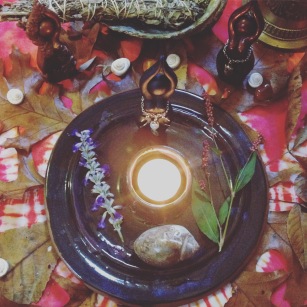
I create personal ritual almost every day in my tiny temple, sometimes simple, sometimes elaborate, sometimes tearful, sometimes joyful, sometimes hurried, sometimes leisurely, sometimes distracted, sometimes astonished at the wonder of it all. The week of my rose worship experience, I smudge the temple with sage I grew in the flowerboxes by my front porch. I ring my bell 13 times. I sing “I Am Fire.” I lay out cards and tiny goddesses and create a mandala out of fallen leaves. I leave an offering of flowers from the herbs and let rose petals drop from my fingers. Ritual captivates all the senses…in this sacred space, I invoke my own senses of smell, touch, sight, sound, and wonder and the result is magic.

“Through ceremony we learn how to give back. When we sing, we give energy through our voice; when we drum, we allow the earth’s heartbeat to join with our own; when we dance, we bring the energy of earth and sky together in our bodies and give it out; when we pray, we give energy through our hearts; when we look upon our relations, we give blessings through our eyes. When we put all these activities together, we have a ceremony, one of the most powerful forms of gift-giving we humans possess.”

–Sun Bear and Wabun Wind

May we each be healed by flowers, time to ourselves to sit on the earth and sing, and the simple, every day beauties and miracles that surround us each day.

october-2016-003

Notes:

august-2016-199

Molly has been “gathering the women” to circle, sing, celebrate, and share since 2008. She plans and facilitates women’s circles, seasonal retreats and rituals, mother-daughter circles, family ceremonies, and red tent circles in rural Missouri and teaches online courses in Red Tent facilitation and Practical Priestessing. She is a priestess who holds MSW, M.Div, and D.Min degrees and finished her dissertation about contemporary priestessing in the U.S. Molly and her husband Mark co-create Story Goddesses, original goddess sculptures, ceremony kits, and jewelry at Brigid’s Grove. Molly is the author of Womanrunes, Earthprayer, and The Red Tent Resource Kit and she writes about thealogy, nature, practical priestessing, and the goddess at Brigid’s Grove

Down on the Farm by Carol P. Christ

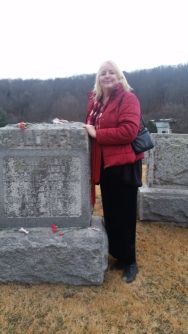
iloff-grave-with-carolIn the past week I visited Cherry Ridge, Honesdale, Wayne, Pennsylvania in the Pokonos, where I was welcomed by my third cousin Marcia Perry Gager whose family never left the place where our ancestors settled.  Marcia and I have been corresponding about our family’s history since Ancesty.com connected us about three years ago. During that time, together with another cousin, Debra Ball, we have managed to decipher the complicated history of Henry Iloff, his two wives, and their eighteen children.
My visit to Honesdale began at John’s Evangelical (formerly German) Lutheran Church.  Following a last-minute discovery that the baptism, marriage, and funeral  records of the church were not in the Wayne County Historical Musem archives as I had been led to believe, I made a call to the “emergency number” of Pastor Richard Mowery the day before our scheduled visit, not knowing how he would respond to this “not-really-emergency” invasion of his personal space. Continue reading “Down on the Farm by Carol P. Christ”

The Bird Goddess by Judith Shaw

Judith Shaw photoBirds soaring high above the earth reaching for the heavens have long inspired humans as links to the divine realm. Birds fulfill various functions in world cultures and religions – from playing a central role in creation, to birth, to healing, to death; from messenger to trickster to oracle. Some birds are associated with shape shifting and transformation.

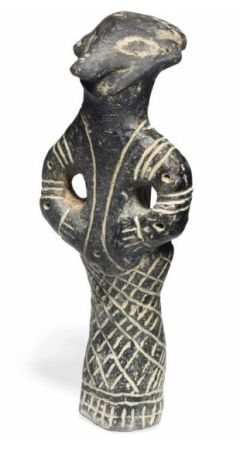
In the very ancient days, when humans had first learned how to sow, how to reap, and how to herd, the Bird Goddess was worshiped. Marija Gimbutas’  groundbreaking archeological work uncovered a culture in which the Bird Goddess and the Snake Goddess, sometimes depicted individually but often together, were supreme. She is the Gimbutas Bird GoddessDivine embodied in the feminine. Continue reading “The Bird Goddess by Judith Shaw”