Seeds of Life by Sara Wright

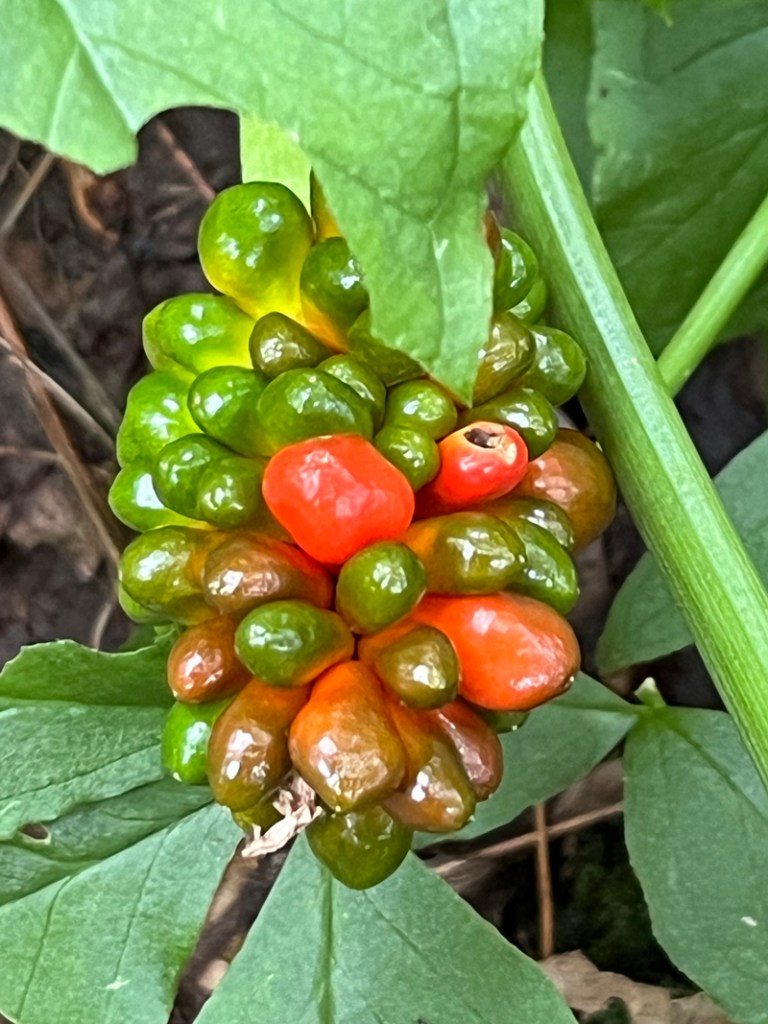
Seeds from Jack in the Pulpit

 I have been involved with plants since I was a toddler. My first word was ‘fower’ for bright yellow buttercups, a nickname I was given by my grandfather that stuck.

I guess it’s no surprise that I started out with gardening as a three-year-old under my grandmother’s tutelage. Her large vegetable plot fed us for most of the year. I seeded my first yellow summer squash into rich moist earth and watched with wonder as the seed emerged with two emerald ears.

In college when students were decorating their rooms with drapes and bedspreads, I bought a pepper plant to brighten my cement surroundings and soon had a windowsill full of plants.

As a young adult I grew many house plants and often talked to them, noting that we seemed to have an uncanny personal relationship, a childhood reality that I had been educated out of. I also gardened with herbs outside my back door, because I loved to cook and needed tasty condiments. Soon I moved on to planting a full – fledged vegetable plot. I canned what I could like my grandmother still longing for the bountiful flower gardens of my dreams. I come from a lineage of female flower gardeners and farmers that stretched back three generations (that I know of) but as a young single mother who worked and one who was frozen from loss, I didn’t make the time.

Continue reading “Seeds of Life by Sara Wright”

Legacy of Carol P. Christ: A New Glossary for Crete: The Power of Naming and the Study of History

This was originally posted on Sept. 2, 2013

The words we use affect our thinking. In the case of ancient Crete the repetition of the terms “Palace,” “Palace of Knossos,” “King Minos,” “Minoan,” “Priest-King,” and “Prince of the Lilies” shape the way we understand history–even when we ourselves know these terms are incorrect. We must engage in “new naming.”

Ariadne. May have been a name of the Goddess of pre-patriarchal Crete. The ending “ne” signifies that Ariadne is not of Greek or Indo-European origin and thus predates the later Greek myths.

Ariadnian. The name I have given to the Old European pre-patriarchal culture of Crete, from arrival of the Neolithic settlers from Anatolia c.7000 BCE to the Mycenaean invasion c.1450 BCE. Arthur Evans named the Bronze Age (c.3000-1450 BCE) culture of Crete “Minoan” after King Minos of Greek mythology, son of Zeus and Europa, husband of Pasiphae, father of Ariadne, whose gift of the secret of the labyrinth to Theseus led to the downfall of her culture. Evans assumed that Minoan Crete was ruled by a King.

This image I call “Ariadne Dancing” could become the new “icon” of Ariadnian Crete.

minoan woman dancing
Continue reading “Legacy of Carol P. Christ: A New Glossary for Crete: The Power of Naming and the Study of History”

Whose Land Am I Living On? by Sara Wright

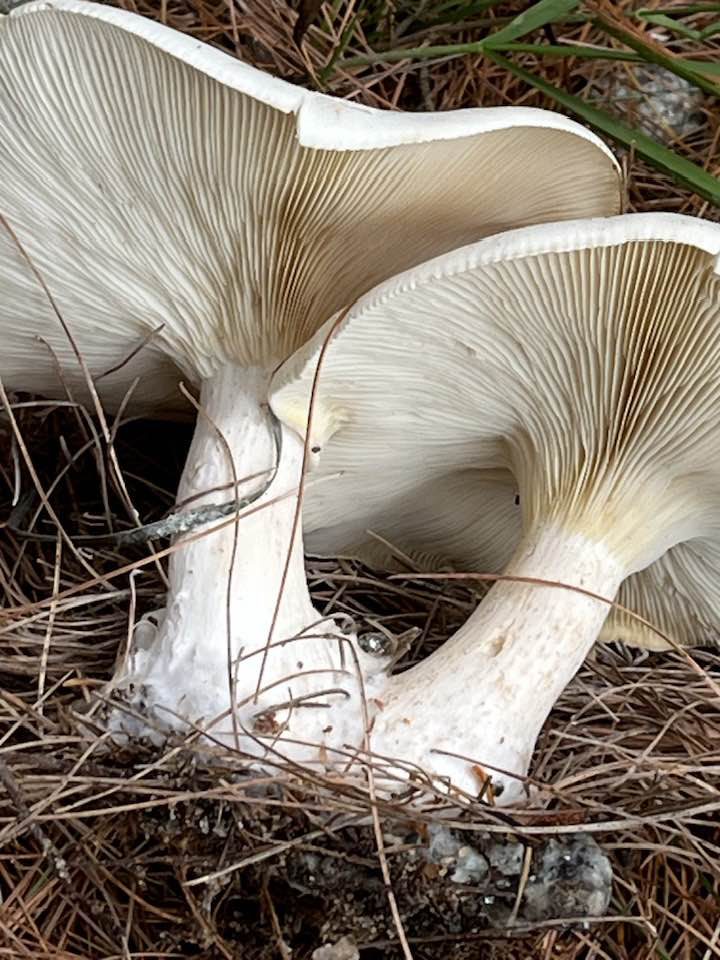
I went into the dark woods today to look for mushrooms. Mycelial threads made visible. Golden chanterelles, lactarias, russulas, waxy caps, corals, spindly fingers burst out of rich moist earth. Not a ghost pipe in sight.

 The fungi know who they are and who they are attached to. I feel like a stranger in this land where everyone is related. I feel those connections but cannot name them. This network so mysterious as to be incomprehensible, a living being that stretches across the earth. What branch of fungi evolved here?

Continue reading “Whose Land Am I Living On? by Sara Wright”

Legacy of Carol P. Christ: GODDESS WITH US: IS A RELATIONAL GOD POWERFUL ENOUGH?

This was originally posted on Sept 2, 2013

Last week I wrote about Protestant Neo-Orthodoxy’s deification of male power as power over.  This week I want to ask why the relational Goddess or God* of process philosophy has not been more widely embraced, both generally and in feminist theologies.

Could it be that a relational God just isn’t powerful enough? Are some of us still hoping that an omnipotent God can and will intervene in history to set things right?  Do we believe an omnipotent God can save us from death?

Process philosophy provides an attractive alternative to the concept of divine power modeled on male power as domination.  According to leading process philosopher Charles Hartshorne, the power to coerce, power as power over and domination, is not the kind of power God has.

The concept of divine power as omnipotent (having all the power) leads to what Hartshorne called “the zero fallacy.”  If God has all the power and can dominate in all situations, then the power of individuals* other than God is reduced to zero.  In effect, this means that individuals other than God do not really exist, but at most are puppets whose strings are pulled by the divine power.

Continue reading “Legacy of Carol P. Christ: GODDESS WITH US: IS A RELATIONAL GOD POWERFUL ENOUGH?”

What is Rematriation? by Sara Wright

“Rematriation centers Indigenous Women’s leadership for the restoration and regeneration of land and water. By revitalizing Indigenous knowledge, honoring traditions and renewing annual cycles of life, rematriation directly addresses harms caused by patriarchal extraction and violence.”
Bioneers

 Bioneers, is a FREE online publication that has been around since 1990. in addition to its weekly programs this organization is now introducing the ‘Leading from the Feminine’ newsletter whose intent is to bridge divides and to celebrate connection invoking the feminine as leaders. This newsletter exists to bridge divides and celebrate connections within the rich tapestry of visionary women and men who are evoking/ invoking the feminine to lead with courage, vulnerability, intuition and empathy. 

Continue reading “What is Rematriation? by Sara Wright”

Ancestor Wisdom by Sara Wright

Photo by Gay Bradshaw

“The wisdom of our ancestors is clear about this: If we do not take the journey inward to discover who we are, the creative potential within us will implode and we will destroy ourselves and the world”.
 Betty Kovacs 

Jesus said something similar in one of the Gnostic Gospels: If you bring forth what is within you it will save you – if you do not bring forth what is within you, it will destroy you.

 (no wonder the Gnostic Gospels are ignored)

Continue reading “Ancestor Wisdom by Sara Wright”

Lowlands: Who Will Answer the Call? by Sara Wright

I live under a steep craggy mountain that is gushing with the sweetest mineral rich water that pours out of an old spring. On this piece of land feeder brooks stream down the mountain feeding hemlock and cedar before silvery clear water slides into a rushing brook (miraculously) still filled with trout. Sadly, the main artery of my brook comes from another mountain that has been brutally logged, dammed up for someone’s pleasure and is currently running amok. Silt ridden water floods this lowland routinely not only changing the course of the stream now riddled with dying trees, (collapsing trees must have soil to stay upright) but creating unusual vernal pools that are beginning to mature. As a result, this has been the best frog and toad year that I have had since my first magical year spent on this land before all the surrounding areas were chopped into parcels. Once I roamed free up and down this mountain through unbroken forests fields and fens, marshes, seeps, bogs and springs. I have never lost that feeling of belonging to this land not just the area I ‘own’ (oxymoron) but all of her.

 It doesn’t surprise me that in most pre -christian traditions the Original Mother of Us All was and still is a mountain! When the other mountains all around me were first being raped by dirty yellow machines someone remarked to me quite sagely, “the bones of the mountains are still here”. And so they are, and so is She.

Continue reading “Lowlands: Who Will Answer the Call? by Sara Wright”

Summer Steeping, by Molly M. Remer

“It was one of those days so clear, so silent, so still, you almost feel the earth itself has stopped in astonishment at its own beauty.”

—Katherine Mansfield quoted in Meditations for People Who (may) Worry too Much

The editor of this anthology, Anne Wilson Schaef, goes on to say:

“When we do stop, many times we look around and realize that we are the only ones rushing around. We realize that the roses, the trees, even the clouds seems suspended in space, and it is as if the universe has paused for a breather. Life has time to experience itself.

Often, when we stop and let ourselves take in the beauty that is around us, we realize there is much more than we originally imagined. Our eyes begin to see beauty in the cracks in the sidewalk, the crookedness of tree limbs, the cragginess of faces, even the color of cars.

We don’t have to travel to see beauty. It is everywhere.

How much more alive we are when we can feel those times that the earth has ‘stopped in astonishment at its own beauty.’”

Do you have time for beauty? When was the last time you stopped in astonishment? What is astonishing you lately? Where are you discovering beauty?

Continue reading “Summer Steeping, by Molly M. Remer”

The Eye of the Goddess by Sara Wright

Spiraling In

I buried you today,
a fluff of earthly feathers
dipped in ebony
  bronze
and gold.
He left you
on my road
innocent
already broken
Just a tiny bird
peeping pitifully
in fear and pain
cocooned in
deep distress.

I scooped you up
held you against
my heart

Instantly Still
I felt you knew…

Wild Mothering
kicked in
create a loving
space for
life or death

Above all
Be Present
for whatever
is ahead…

I dug a grave
where you were born
  nestled under pines
fragrant roots
 cradled what
was left
your bones are
made of light

 Offering prayers
to Her
Our Bird Goddess*
I bowed my head
Ancient and Wise
She who Sees
She who holds
Abusers accountable
(as do I)
 She watches
 over us all
honoring the dead.

Continue reading “The Eye of the Goddess by Sara Wright”

Legacy of Carol P. Christ: Two Ultimates: The Ground of Being and Goddess

This was originally posted July 15, 2013

The concept of two ultimates, the ground of being and Goddess, can be helpful in understanding differences of emphasis within and among religions.  Some religions or strands within religions focus on relationship with or worship of a personal God, while other religions or strands within religions focus on identifying with or merging with the impersonal ground of being or the whole of which we are part.  These two ultimates are found in feminist spiritualities and theologies.

In “Being Itself and the Existence of God”* process theologian John Cobb identifies two ultimates.  The ground of being as the metaphysical principles that structure all of life is unchanging; as the whole of which individuals are part, the ground of being is impersonal.  God, on the other hand, is an active presence in the world, is personal, and cares about individuals in the world.  If God is understood to be in some sense an individual in relation to other individuals, then God cannot be identified with the whole, because the whole is made up of God and other individuals.  Yet God is not simply one individual among other individuals.  Only God has perfect knowledge of the world and every individual within it and only God cares for the world in light of perfect knowledge of it.

Continue reading “Legacy of Carol P. Christ: Two Ultimates: The Ground of Being and Goddess”