Angelina Duell is a 3rd year Masters of Divinity candidate whose focus is Religious Education. Her hope is to become the Director of Religious Education at a Catholic parish and to develop curriculum that emphasizes developing the skill sets to find your own answers rather than providing dogmatic answers. She also loves horror movies and baking.
It is Wednesday night and I am alone in the house. It’s dark; the only light is from my computer screen. A bead of sweat rolls from my brow as I delicately tap the keys of my keyboard until two words stare back at me, “BDSM feminism.” With bated breath, I press enter.
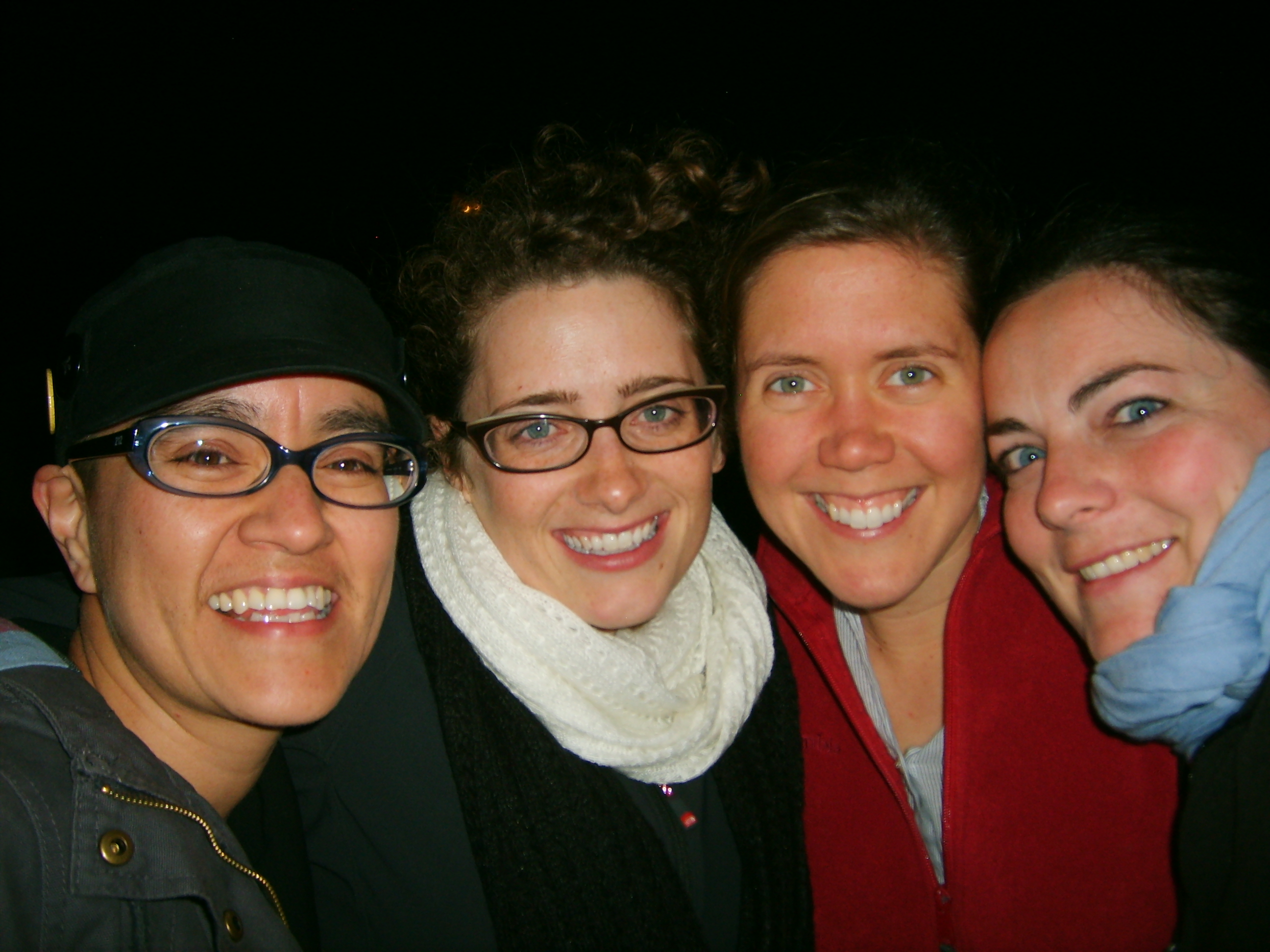
Sometimes when I write, especially when I am writing an academic paper but even when I am writing for this blog, I imagine that I am writing it to my feminist peer-group. I am part of a group of four feminist women who have intentionally decided to stay involved in our religious traditions. We are Unitarian Universalist, American Baptist, Presbyterian, and Disciples of Christ, and we started our peer-group in order to enCourage, support, and inspire each other as we participate in our churches with our full feminism selves. We get together regularly and we listen deeply to each other, we celebrate, we cry, we mourn, we rage, we laugh, and, of course, we eat together. On many occasions we have each expressed that we are better versions of ourselves because we are part of each others lives.
One of the reasons it is easier for me to write to my peer-group instead of my academic audience is because I know that my peer-group is invested in my empowerment, my liberation, and my continual be-coming – they understand that my well-being contributes to theirs, and vice versa. Thus, when I write for them, I do not fear; I trust that my peer-group will truly hear me and encourage me, and that when they raise questions and point out weaknesses in my writing, they do so not in an attempt to tear down my work but in order to strengthen it and build on it.
My peer-group
My peer-group, while being able to point out the blind spots and shortcomings on my work, never fail to recognize, honor, and express appreciation for my contribution as well. They hear me to speech and understand the importance of that for bringing out my academic best. Continue reading “Hearing Each Other to Speech in the Academy By Xochitl Alvizo”
It has been said time heals all wounds, I do not agree. The wounds remain, in time the mind, protecting its sanity, covers them with scar tissue and the pain lessens, but it is never gone. Rose Kennedy
This past Saturday, August 6, would have been my 34th wedding anniversary. Next Saturday, August 13 will be the wedding of my once fiancé. The former lasted 20 years, the latter 10. I have recently begun the delicate dance of getting to know another man; continuing to second-guess myself as if I’m a schoolgirl with her first crush, only I’m not. I’m a woman drawing upon 30 years of the good, the bad, and the ugly. Without sounding like Carrie Bradshaw from Sex and The City, I am asking myself what does a feminist relationship look like as it unfolds? How do I trust another with a heart that is held together by Elmer’s glue? And more importantly, how do I make myself present to another without past wounds surfacing and then projected onto the innocent?
In a recent post, XochitlAlvizo wrote on the difference, as she understands it, between sacrifice and love. All too often, argues Xochitl, we confuse the two, believing our sacrifice is what redeems us and others, when in reality, it is always love. The distinction, while at times difficult to discern, is what can bring life to a healthy, loving relationship. I can’t imagine not being steeped in a committed relationship without some sacrifice on my part. But when does this practice of sacrifice become the support system for sustaining love? How do I hold the balance of love and at times sacrifice for another without losing love of self? Continue reading “Love, Loss and Longing: The Rebooting of a Feminist Heart By Cynthia Garrity-Bond”