Reclaiming Sacred Music by Mary Sharratt

Women Singing Earth by Mary Southard

Here is a hymn of praise, a beautiful and intimate piece meant to be sung. Reader, I invite you to guess the author of this text and the sacred figure to whom this work is addressed.

Hail, O greenest branch,
sprung forth on the breeze of prayers.

. . . . a beautiful flower sprang from you
which gave all parched perfumes
their aroma.
And they have flourished anew
in full abundance.

The heavens bestowed dew upon the meadows,
and the entire earth rejoiced,
because her flesh
brought forth grain,
and because the birds of heaven
built their nests in her.

Behold, a rich harvest for the people
and great rejoicing at the banquet.
O sweet Maiden,
no joy is lacking in you . . . .
Now again be praised in the highest.

Continue reading “Reclaiming Sacred Music by Mary Sharratt”

Eve is the Hero of the Garden of Eden, Part 1 by Janet Maika’i Rudolph

She is a tree of life to those who embrace her

and those who lay hold of her are blessed.

Proverbs 3:18 (Berean Study Bible)

Eve’s story, as it has been passed onto us from the Bible, makes Her responsible for manki . . .ahem . . .humankind’s being cursed for all time. The story as our culture sets it up is that the serpent is an evil tempter with Eve as a weakling co-conspirator. Both Eve and the serpent are considered guilty parties, responsible for their own drawing down of the curse.

At the risk of being rude: BULLSHIT!

In truth, Eve’s story is a powerful tale complete with a magical talking serpent. And it only communicates directly with Eve, and never with Adam. Why?

BECAUSE THIS IS EVE’S STORY.

Continue reading “Eve is the Hero of the Garden of Eden, Part 1 by Janet Maika’i Rudolph”

Lei by Elisabeth Schilling

Mauro Drudi’s installation of LEI (SHE/HER/YOU – formal) in the Chiesa de San Cristoforo on the Sicilian island of Ortigia where I usually take a bus to daily has become the shrine of women I’ve been searching for. Each time I cry, I am glad I can feel something: those tears are a mixture of communion, comfort, and recognition.

When one enters the church, there are two converging walls. On either side, a woman’s face is painted in shadow and light, gazing off toward the light, is reproduced over and over so that the number of women looks almost countless. They are the same face, a reproduction of Antonello da Messina’s “Annunziata” in the mode of pop art. The difference is not in expression. They all wear the same thoughtful, complicated, neutral countenance, holding deep thoughts and experiences of suffering and wise knowing, both acceptance and maybe resistance; they have lived and might be any age, although I see in our connection my own. The difference is between glossy, unblemished surfaces of wood vs. surfaces weathered, slightly ragged, sometimes scribbled on with ink. The former, found on the right when one enters supposedly represents the “positive” woman, the “western woman [. . . representing someone] happy, gorgeous, well-kept.” On the left, about these representations, Drudi says, “Which artist can paint the skin of a woman who has been abused, beaten, exploited, captivated or disfigured with acid? In my opinion, nobody, and so I let the material speak: the wall of a beach hut destroyed by a storm; woods and materials used and abused [. . .]; exhausted panels deriving from carrying tons of goods, tables, packagings, production wastes.”

Continue reading “Lei by Elisabeth Schilling”

In the Shadow of Santa Rosa by Sara Wright

Last night I had a nightmare.

I am dressed in a white cloak that obscures all but my face. The robe is splattered with paint and blood. I am awash in every color of the rainbow and dripping paint. I have been raped by strangers and no one is accountable.

This morning I could not get this frightful image out of mind but I had the strong sense that it had an impersonal aspect that had nothing to do with me.

This weekend at the Pueblo of Abiquiu the community celebrates the feast day of the first official saint of the Americas, Santa Rosa, and I planned to attend…

The people of Abiquiu call themselves Genizaros. Representing Apache, Navajo, Comanche, Kiowa, Pawnee, Ute and Wichita, detribalized Native peoples from the Plains that were captured and traded during the Indian wars of 18-19th centuries, and sold to New Mexicans as slaves and servants where they were stripped of their identity, instructed in Hispanic ways, and baptized as Christians. The People survived by incorporating Hispanic and Christian cultural practices into a distinct Genizaro consciousness, one that is distinct from the Indigenous Tewa speaking peoples (descendants of the Anasazi) who also live here in six pueblos along the Rio Grande. Continue reading “In the Shadow of Santa Rosa by Sara Wright”

“First Blood” Celebration by Esther Nelson

This semester I’m teaching a course titled “The Abrahamic Traditions: Women and Society.”  Because I believe story is one of the best ways to understand a point of view, I use a novel or memoir to accompany each tradition. The novel I use in the Judaism unit is Anita Diamant’s, The Red Tent.

The Red Tent focuses on Dinah, Leah and Jacob’s daughter.  Early in the novel, the narrator says, “My name [Dinah] means nothing to you.  My memory is dust….The chain connecting mother to daughter was broken and the word passed to the keeping of men who had no way of knowing.”

The biblical account (Genesis 34) tells us that Shechem, King Hamor’s son, “seized her [Dinah] and lay with her by force.”  It also says that Shechem’s “soul was drawn to Dinah” and “he loved the girl,” and insisted that his father arrange things so Dinah could be his wife.  Nowhere in the biblical account do we hear Dinah’s voice. She’s portrayed as a victim and used as a bartering tool by Jacob and his sons in their attempt to gain power in the region.  Jacob and his sons required that Hamor and all the men within his kingdom be circumcised as a condition for the marriage between Dinah and Shechem.  King Hamor agreed, but on the third day after the men were circumcised and in pain, Simeon and Levi, two of Jacob’s sons, entered the city “and killed all the males,” for “defiling” their sister.  “Should our sister be treated like a whore?” Dinah then disappears from the narrative.

Continue reading ““First Blood” Celebration by Esther Nelson”

Did You Have to Make Her a Prostitute? by Elizabeth Cunningham

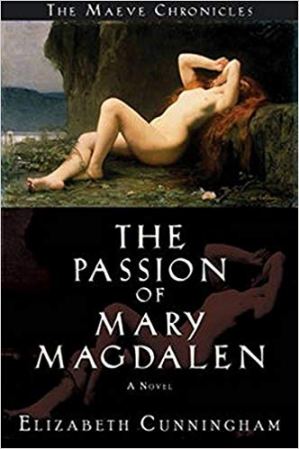
When I toured with The Passion of Mary Magdalen, opening by belting out the first paragraphs of the novel’s prologue in song, (ending with the line “when only a whore is awake!”) that question almost always came up.  In celebration of Mary Magdalen’s feast day, I’d like to offer answers that continue to evolve.

There is no scriptural evidence that Mary Magdalen was a prostitute. In a sermon, 6th century Pope Gregory I gave as his opinion: “This woman, whom Luke calls a sinner and John calls Mary, I think is the Mary from whom Mark reports that seven demons were cast out.” (This confusion and proliferation of Marys inspired me to make a joke. Q: How many holy Marys does it take to change a lightbulb? A: I don’t know. I keep losing count.)

In fact, very little is known about Mary Magdalen. There are fourteen references to her in the Gospels, then she disappears from the New Testament. The possibly Gnostic gospel of Mary dates to the 2nd century CE, and there is no scholarly consensus as to which Mary is the source of the tradition. Early on Mary Magdalen gave history the slip and took on an extended life in legends, which take her to Ephesus as well as to France where her alleged fingernails, bones, and skull reside and continue to be venerated.

Continue reading “Did You Have to Make Her a Prostitute? by Elizabeth Cunningham”

Thus Saith Eve BOOK REVIEW by Katie M. Deaver

“I am the Queen of Sheba and I am not impressed.”  This is the first line of one of the monologues from chris wind’s book Thus Saith Eve.  This book features 18 stories of biblical women, and a 19th, Lilith, from Jewish mythology.  Each monologue offers a new interpretation and gives a voice to the women that we think we know.

In this book the voices and personalities of women such as Noah’s wife, Mary of Bethany, Zipporah, and Vashti are reimagined in an exciting and empowering way.  Each of the stories also features an appendix where the reader can learn more about the biblical or mythological context of the woman who is telling her story.

As in her other works, wind uses historical people, events, and understandings to build a truly wonderful source of feminist fiction.  In addition to being an extremely enjoyable and thought provoking read, the monologues can also be used for audition and performance pieces.  On her website wind explains that two of the monologues, “I am Eve” and “I am Mary” can be performed with specific musical selections in the background.  You can find those selections linked to her website above.


Continue reading “Thus Saith Eve BOOK REVIEW by Katie M. Deaver”

Four Worlds Poem by Sara Wright

They came from

Life giving Waters,

emerging from a Lake

at the Beginning of time.

Avanyu –

Serpent,

Spirit of the River

pecked into stone

or painted

on canyon walls

embodies their story.


The Tewa settled above

the Great River Banks.

Roaring water flowed

through tributaries

mountain gorges.

The People gave thanks.

  Water meant Life.

Each village was the center

of the Tewa’s First world.


Bound together by

Women who tended

holy household shrines,

prayed for rain,

created fires,

gathered seed,

ground food,

grew babies,

dug clay to shape

earthen pots.

This was the Second world

of the Tewa.

Continue reading “Four Worlds Poem by Sara Wright”

My Grandmother is a Gangster… a Spiritual Gangster by Valentina Khan

My grandmother is a gangster… a spiritual gangster

I recently attended a funeral for a relative-in-law. The grassy patch at the cemetery was filled with many familiar faces as well as unfamiliar. My side of the family was asked to come. My father, mother and even teeny tiny little 4 foot 9 grandmother showed up. I emphasize her height because it has nothing to do with her stature… and this is where my story begins.

My grandmother aka “Mama Shamsey” is from my maternal side. She grew up in Tehran, Iran. She was a young bride to a handsome intellectual who was French educated but a deeply spiritual and passionately religious Iranian Shia Muslim. He truly believed people should never discuss politics or religion. He knew how to be open and compassionate with people of differing opinions than his. They married, had 5 children, my mother was the eldest. When she was just entering her tender teenage years, many of her peers were flocking to Europe to be educated in Germany or France. She however had the dream of going to school in America, so in the 70’s this family of 7 made the great migration over to America.

Continue reading “My Grandmother is a Gangster… a Spiritual Gangster by Valentina Khan”

Meeting my Disr by Deanne Quarrie

Deanne Quarrie, D.Min.Who are the Dsir?

Freyja, known as “Ancestor Spirit”, is viewed as the timeless, self-renewing energy in the universe. She witnesses and shapes the direction of creation and undoing. She is not the originating, creating Goddess, but rather a conduit for energy and life. Women who learn Seidr become like her, living conduits. Continue reading “Meeting my Disr by Deanne Quarrie”