The Cuisine Cards by Laurie Goodhart

Suit of Tomatoes

With every wonderful, heart-wrenching, deeply researched, and inspiring  post I read on F.A.R., I feel less inclined to share my own somewhat out-of-step contributions to this world. Nevertheless, I keep reminding myself that they are the things that I do, and I do them because I feel compelled, and have consistently been compelled in those two specific directions — art and agriculture/wildcrafting — since childhood. Also, the paintings and prints are a product of my always thinking about and feeling into both feminism and spirituality, and the fruits of the intersection of the two. So here is another offering.

I’ve always had a fondness for the visual aspect of playing cards, and collect books on them. One image of an uncut sheet of cards printed in 1585 in Frankfurt, where the black and white cards were jammed in every which way on large sheets of paper, inspired the look of these four prints, The Cuisine Cards.

They are conceived as celebrating food and cultures from various parts of the world. The face cards are non-hierarchical in terms of rank and gender. The 10 is a Table of the suit’s food, then there are the Shaper, Mover, and Taster, who, although usually carrying on in a certain sequential order, each contribute equal value to the whole experience of eating food. Two suits have all female face cards and two all male.

Continue reading “The Cuisine Cards by Laurie Goodhart”

Becoming Scrub by Sara Wright

In the precious hour before dawn I walk down to a river that no longer empties into the sea – the circle of life has been broken – the earth’s veins and arteries are hopelessly clogged by human interference (stupidity) – the birds and animals that used to be able to rely on the river waters for food and resting places can no longer do so because dams control the water flow and westerners “own” the water. This morning black stone sculptures appeared overnight because the water level has been dropped another foot. And yet, acknowledging the flowing waters in their death throws seems like an important thing to do. For now, at least, the river turns crimson, reflecting the raging beauty of a pre dawn sky, and I am soothed by water rippling quietly over round stone.

I open the rusty gate to enter the Bosque, a place of refuge, for the cottonwoods and for me. Now I am surrounded by desert scrub and graceful matriarchs arc over my head. As I traverse the well  – trodden path I enter a meditative state without effort. Soon I am walking in circle after circle passing through the same trees and desert scrub hearing voices.

Continue reading “Becoming Scrub by Sara Wright”

The Door by John Erickson

Faith is something we get from each other, and sometimes in the most magical of circumstances, faith becomes embodied by the person you love the most.

I have a Ph.D. in American Religious History but I’ve never been much of a religious person.  It’s been one of the conundrums of my life but nevertheless, I found religion and its role in influencing, for good and bad, the lived experiences of the LGBTQ community something worth exploring.

I’ve been struggling with writing this post ever since I graduated and officially became “Dr. John.” In preparing for my defense, the Chair of my Dissertation Committee requested that at the start of the defense, he wanted me to introduce my project, its overall scope, and most importantly why I wrote it.

Why did I write it?  How does one answer why they chose to devote 8 years of their life to a single subject in search of an original idea?  While some would sit and grapple with this question, I knew what the answer was all along because it always was (and always will be) about my maternal grandmother, Gladys Hritsko.

I wanted to know what made me different.  Throughout my dissertation, I interviewed people who, much like myself, grew up in similar small towns, attended the same conservative church services, and heard the same damning things that I did about my sexuality being preached from the pulpit. Many of my subjects were deeply hurt by religion and it set some of them up for years of searching and painful memories and experiences that both forced them to leave their religious and faith-based communities they grew up in or, in the worst case, being kicked out by their family as a result of their religion.

Continue reading “The Door by John Erickson”

Can We Celebrate the Dark? Can We Sleep? by Carol P. Christ

According to Marija Gimbutas, the religion of Old Europe celebrated the Goddess as the power of birth, death, and regeneration in all of life. Agricultural peoples understand that seeds must be kept in a cold dark place during the winter if they are to sprout when planted in the spring. People who work hard during the long days that begin in spring, peak at midsummer, and continue through the fall, are grateful for the dark times of the year when they can rest their weary bones on long winters’ nights. Long winters’ nights are a time for dreams, a time when people gather around the hearth fire to share songs and stories that express their understanding of the meaning of the cycles of life.


The Indo-Europeans were not an agricultural people. Herders, nomads, and horseback riders, they celebrated the shining Gods of the Sky whose power was reflected in their shining bronze armor and shining bronze weapons. When the Indo-European speaking peoples entered into a Europe, they married their Sun and Sky Gods to the Earth Mother Goddesses of the people they conquered. These were unequal marriages in which the Sun was viewed as superior to the Earth. The unhappy marriage of Hera and Zeus reflects this pattern, as do the many rapes of Goddesses and nymphs recorded in Greek and Roman mythology. Continue reading “Can We Celebrate the Dark? Can We Sleep? by Carol P. Christ”

Week 2 – Goddess Birthing Liberation: A Feminist Advent Daily Devotional by Trelawney Grenfell-Muir

If you have not yet realized that the Christmas story is a story of liberation from oppression, it is time to realize that. I like to dust off the patriarchy and mysogyny of scriptural writers to find the beautiful wisdom within the stories. Here is my daily devotional for the second week of Advent, the week of Peace. May our ever-birthing Goddess guide you to recognize and birth Peace, with all Creation. As the sky turns dark, may our candles shine ever brighter, together.


Feminist Advent Daily Devotional, Day 8:


The Peaceful Kin-dom

New shoots shall grow out from the stumps of old trees,

and branches shall grow out of their roots.

The spirit of Eternal Becoming rests on young prophets of Goddess,

the spirit of wisdom and understanding,

the spirit of counsel and might,

the spirit of knowledge and the reverence of Gaia.

Their delight shall be in the reverence of Gaia.

They shall not judge by the diseased eyes of their culture,

or decide by the distorted ears of falseness or deceit;

but with righteousness they shall proclaim justice for the poor,

and bring abundance to the meek of the earth;

they shall heal the earth with the birth canals of their mouths,

and with the breath of their lips they shall redeem the wicked.

Righteousness shall be the belt around their waists,

and faithfulness the belt around their wombs.

The wolf shall live with the lamb,

the leopard shall lie down with the kid,

the calf and the lion and the fatling together,

and a little girl shall lead them.

The cow and the bear shall graze,

their young shall lie down together;

and the lion shall eat straw like the ox.

The nursing child shall play over the hole of the asp,

and the weaned child shall put her hand on the adder’s den.

They will not hurt or destroy

on all my holy mountain;

for the earth will be full of the knowledge of the Eternal Womb

as her waters cover the sea.

Continue reading “Week 2 – Goddess Birthing Liberation: A Feminist Advent Daily Devotional by Trelawney Grenfell-Muir”

Week 1 Goddess Birthing Liberation: A Feminist Advent Daily Devotional by Trelawney Grenfell-Muir

If you have not yet realized that the Christmas story is a story of liberation from oppression, it is time to realize that. I like to dust off the patriarchy and mysogyny of scriptural writers to find the beautiful wisdom within the stories. Here is my daily devotional for the first week of Advent, the week of Hope. May our ever-birthing Goddess guide you to recognize and birth Hope, with all Creation. As the sky turns dark, may our candles shine ever brighter, together.

Feminist Advent Devotional, Day 1:

Isaiah 2:1-5, revised

The word that Isaiah, daughter of Amoz, saw concerning the kindred of faithful seekers.

In days to come the mountain of Peace shall be established as the highest of the mountains, and shall be raised above the hills; all Creation shall stream to it.

Many peoples shall come and say, “Come, let us go up to the mountain of Peace, to the house of Love and Justice; that we may learn her Wisdom and that we may walk in her paths.” For out of Gaia shall go forth instruction, and the Wisdom of the Eternal Womb from the Earth Mother.

She shall guide all Creation, and shall reconcile all the Earth; they shall beat their swords into plowshares, and their spears into pruning hooks; nation shall not lift up sword against nation, neither shall they learn war any more.

O kindred of faithful seekers, come, let us walk in the light of Hope!

Continue reading “Week 1 Goddess Birthing Liberation: A Feminist Advent Daily Devotional by Trelawney Grenfell-Muir”

A Predator by Sheree La Puma

Feminism and Religion Project Art work designed by Jaysen Waller – http://www.jaysenwaller.com/

“Have I had two roads, I would have chosen their third.”
― Mahmoud DarwishIn the Presence of Absence

Now I tell myself that I’m street smart. I did the Jack Kerouac “On the Road” trip when I was 18, driving cross country in the fall, even sleeping in my car. I’ve volunteered in the projects, been a motivational speaker in correctional camps. I’ve shooed away drug dealers south of Marrakech, been lost in the woods in Michigan, and lived in L.A., N.Y. and London. Despite the occasional bump and an oft damaged psyche, to this day I trust when I shouldn’t. There is some small part of me that longs to see good in everyone…believes there is something redeemable in the worst of men.

The problem is I need to remember that I am not the one with the power to heal the broken. That job belongs to God. My magical thinking has brought me to the edge of a precipice and as my partner of 13 years tells me “I worry about you because there is EVIL out there and you don’t see it.”  I used to scoff at that idea. After all, what does evil look like?  I’d surely recognize it.  But as I look back at past behaviors…picking up hitchhikers on the side of the road at 16, driving homeless drug addicts to recovery, meeting strangers posing as “men of God,” and “writers,” to help them get their careers going, I realize I’m exposing myself to harm on a daily basis.

Continue reading “A Predator by Sheree La Puma”

The Feast of Santo Tomas by Sara Wright

This morning I went up to the village plaza in Abiquiu to watch the dancers parade around the church with their saint who is also honored at this village festival held every year at the end of November.

This is one of the two Native American festivals that is honored each year by the genizaros who are mixed Spanish and American Indian people who embrace and practice the Catholicism that was once forced upon them.

This eclectic community is made up of descendants of Native American slaves. Those captured in warfare were brought here, converted to Catholicism, taught Spanish and held in servitude by New Mexican families. The young women and female children endured the usual atrocities perpetuated on captive females including rape at the hands of their captors. Some New Mexican male genizaros gained their freedom by serving as soldiers to defend frontier villages like Abiquiu from Indian raids. By the late 1700s, genizaros comprised one-third of the population of New Mexico. Ultimately these non – tribal peoples were assimilated into New Mexican culture.

The dances are beautiful to witness with the smallest female children dressed in predominantly white regalia some wearing a rainbow of ribbons, the young girls were dressed in red and white and had red circles of war paint inscribed on their cheeks, some of the older women also wore red, many carried turkey or eagle feathers in their hands. Most wore face paint.

Continue reading “The Feast of Santo Tomas by Sara Wright”

Celibacy Is the Lynch-Pin of Male Dominance according to Matilda Joslyn Gage by Carol P. Christ

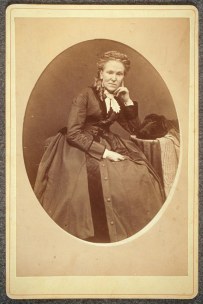
Matilda Joslyn Gage

Matilda Joslyn Gage was an activist in the nineteenth century struggle for women’s rights equal to Susan B. Anthony, and a writer and theorist equal to Elizabeth Cady Stanton. That she is not remembered is due in large part to Susan B. Anthony’s efforts to write her out of history.

Matilda Joslyn Gage was also a scholar of women’s history unrivaled in her time. In Woman Church, and State, Gage argued that “the most grievous wrong ever inflicted upon women was in the Christian teaching that she was not created equal with man.” (page 1) From this it follows that feminists must never lose sight of the role Christian teachings have played and continue to play in the unequal treatment of women.

According to Gage, women’s position in church and state did not improve in the Christian era. To the contrary it declined! Gage proved this thesis in chapters titled: The Matriarchate, Celibacy, Canon Law, Marquette, Witchcraft, Wives, Polygamy, Woman and Work, and The Church of Today. Continue reading “Celibacy Is the Lynch-Pin of Male Dominance according to Matilda Joslyn Gage by Carol P. Christ”

Archy and Mehitabel by Barbara Ardinger

Archy the Cockroach and Mehitabel the Cat were introduced to the world in 1916 by Don Marquis, a columnist for the New York Evening Sun. Marquis was more than a mere columnist; he was a social commentator and satirist admired by nearly every famous writer of the first quarter of the 20th century. Franklin P. Adams, for example, said Marquis was “far closer to Mark Twain than anybody I know” (see note).

As the story goes, Marquis said he came into his office one morning to find a big cockroach jumping about on his typewriter keys. The cockroach kept climbing up the metal frame and hurling itself headfirst onto a key, one slow letter after another. He couldn’t use the shift lock (except one time when he hit it accidentally and produced an entire uppercase column), so his writing is lowercase. After about an hour, Marquis reported, the cockroach fell to the floor, exhausted after typing just one page. He never could manage punctuation, and he also had trouble with the carriage return—how many of us remember how those old typewriters worked?—but he somehow hit it every time. (My grandfather had an old typewriter like this. The keys were very stiff. I felt like my little fingers were gonna break when I tried to type.)


In his previous life, Archy was a free verse poet. As he explains to Marquis,

expression is the need of my soul

i was once a vers libre bard

but i died and my soul went into the body of a cockroach

it has given me a new outlook upon life

i see things from the under side now

Continue reading “Archy and Mehitabel by Barbara Ardinger”