As I post this, May 10, a full moon, known as the “Bright Moon” or “Flower Moon” is in the sky. This full moon occurs during a season of transition when living thing things renew and bloom. For those of us in the Northern Hemisphere, it’s spring, but another transition is already underway. For many of us, spring is nearing close to summer in temperatures; in plant, animal, and insect life; and in our schedules. I am concluding a long, demanding spring semester and yearning for summer. Even though I welcome the transition, I know that like all change, it holds both opportunity and challenge. The full moon prompts me to look at the upcoming summer with clear, examining eyes
 As I post this, May 10, a full moon, known as the “Bright Moon” or “Flower Moon” is in the sky. This full moon occurs during a season of transition when living thing things renew and bloom. For those of us in the Northern Hemisphere, it’s spring, but another transition is already underway. For many of us, spring is nearing close to summer in temperatures; in plant, animal, and insect life; and in our schedules. I am concluding a long, demanding spring semester and yearning for summer. Even though I welcome the transition, I know that like all change, it holds both opportunity and challenge. The full moon prompts me to look at the upcoming summer with clear, examining eyes.
It’s strange–perhaps downright heretical–for a Christian to talk about the power of the moon. Continue reading “Moonlight Reflections by Elise M. Edwards”


 I have recently noticed an interesting thing: just like the Buddhist goal of ending suffering requires consideration of others, so often feminist change requires thinking about other women.
 Our first ritual on the Goddess Pilgrimage to Crete is a death ritual in which we honor the memory of those who have gone before us. Like so many things on the pilgrimage, the death ritual evolved. I did not consciously plan to begin with death. Rather, the death ritual inserted itself at the beginning of the tour. Now I understand that the timing is right.
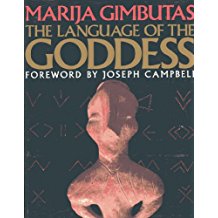 Marija Gimbutas coined the term “Old Europe” c.6500-3500 BCE to describe peaceful, sedentary, artistic, matrifocal, matrilineal and probably matrilocal agricultural societies that worshipped the Goddess as the power of birth, death, and regeneration in all of life.
 While waiting to get off a plane last week, I overheard a serious young woman explaining a recent theological insight to her half-asleep and equally young husband. “You see,” she began, “what I just learned is that though He owes us nothing and does not reward us for our good deeds, nonetheless, He takes pleasure in them.”
 This time last year our move was for me to take a job. No more football. And a move not for football meant massive shifts in the daily life of our family.
 The concept of divine omnipotence is the ultimate expression of male dominance as control. Divine omnipotence is the view that everything that happens in the world happens according to the will of a divinity, who is in control of everything that happens in the world. When someone dies or great suffering occurs, we are told, “everything happens for a purpose,” “it was meant to be,” or “everything happens according to the will of God—or Goddess.” In our recent book
 The reason for this blog, and for writing it on this day, is to celebrate and remember the life and legacy of Sor Juana Inés de la Cruz.
 Years ago, in an early postpartum blur, I took a crack at writing a piece on an old personal blog about the question of an at-home mother’s claim to the feminist label. The process of writing it was really an opportunity for me to work out some of my own thoughts about my lived feminism within the framework of my life at that moment as a mother who was at home full time with three young children; a toddler and a brand new set of infant twins. I was completely unprepared for what happened in the comments section of my personal online musings.
